

Recent reports of delays in Nvidia’s next-generation AI infrastructure, including systems based on the Vera Rubin platform, are causing a noticeable shift in the narrative around the company. Until recently, the market was focused almost exclusively on the scale of demand for AI infrastructure and Nvidia’s ability to meet it. Today, however, an increasingly important question is the pace of execution of this cycle and its actual operational efficiency.
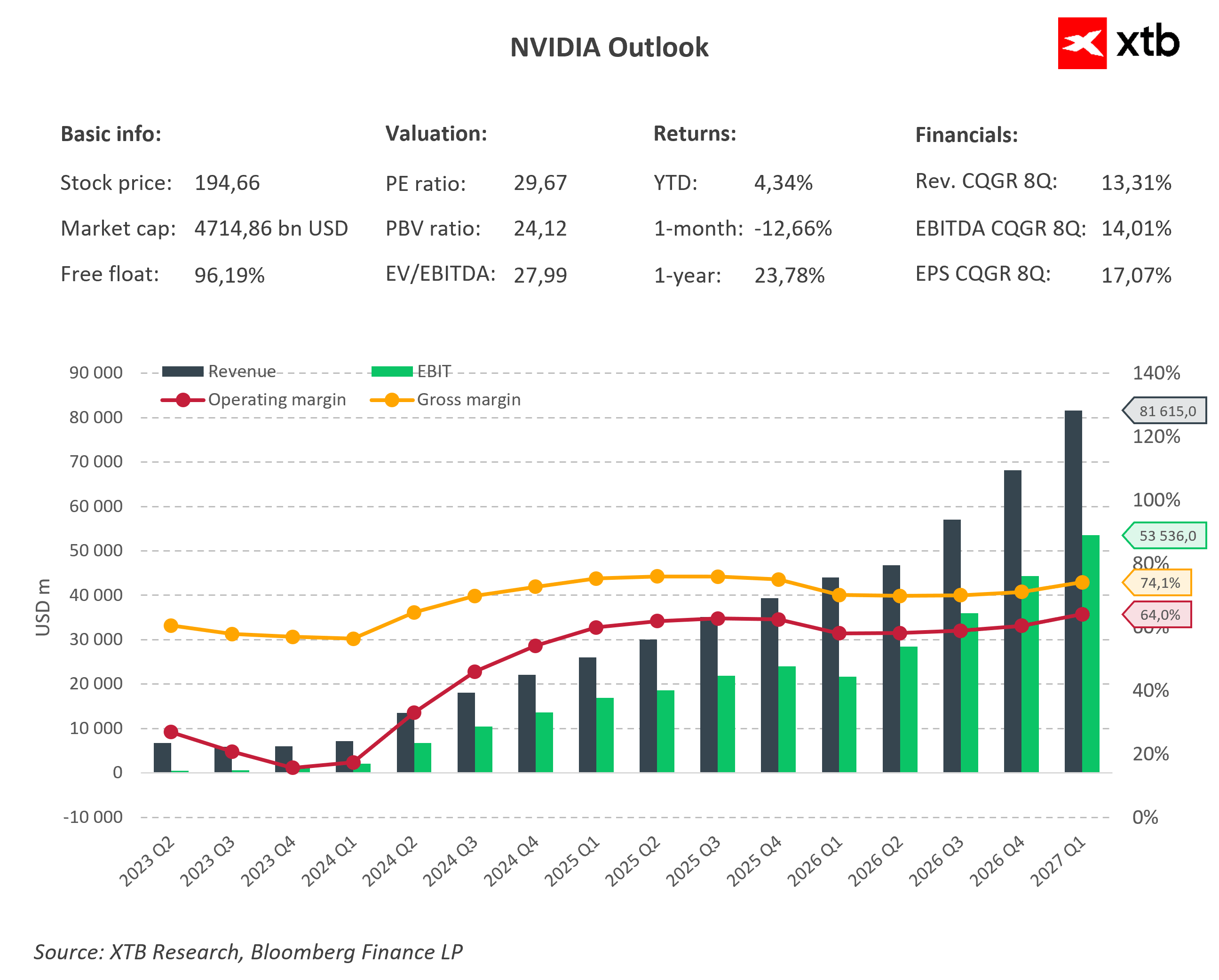
On one hand, production delays in the most advanced systems can be seen as natural friction within an extremely complex supply chain. The technological scale of the current investment cycle is unprecedented, and each step toward higher performance requires increasingly sophisticated manufacturing and integration processes. From this perspective, delays do not change the underlying trend but merely stretch it over time.
On the other hand, the market is beginning to pay closer attention to whether the pace of infrastructure build-out is starting to outstrip the pace of its real-world utilization. In this context, signals from major hyperscalers, including Meta, are particularly important, as they are reportedly exploring the potential commercialization of unused computing capacity. Such a move, even if marginal, suggests that the system may be experiencing periodic oversupply relative to current demand for AI computation.
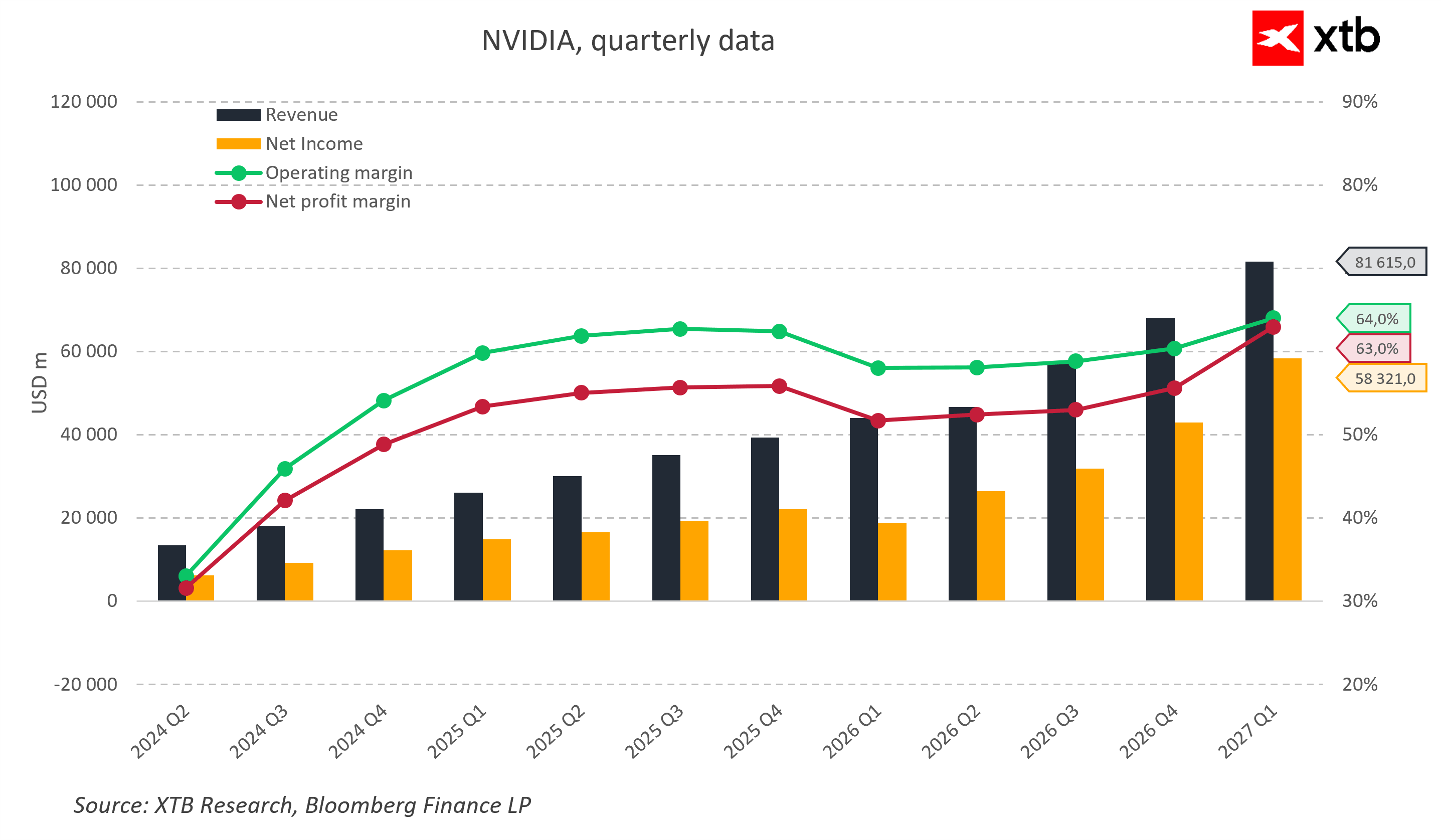
In the short term, this creates a mixed picture for Nvidia. Delays in deliveries of next-generation systems may raise concerns about the continuity of revenue growth in the most advanced product segment, which is also the one responsible for the highest margins and strongest growth dynamics. At the same time, supply constraints continue to support pricing power, as hyperscaler demand remains very strong and far from saturation.
In the medium term, the key question is whether these developments represent only a temporary effect of production complexity or the first signal of a phase in which the AI market begins to shift from rapid expansion toward a more selective investment approach. Previous technology cycles have shown that even within strong structural uptrends, there are periods when investment outpaces the real ability to monetize it, leading to natural phases of cooling in spending momentum.
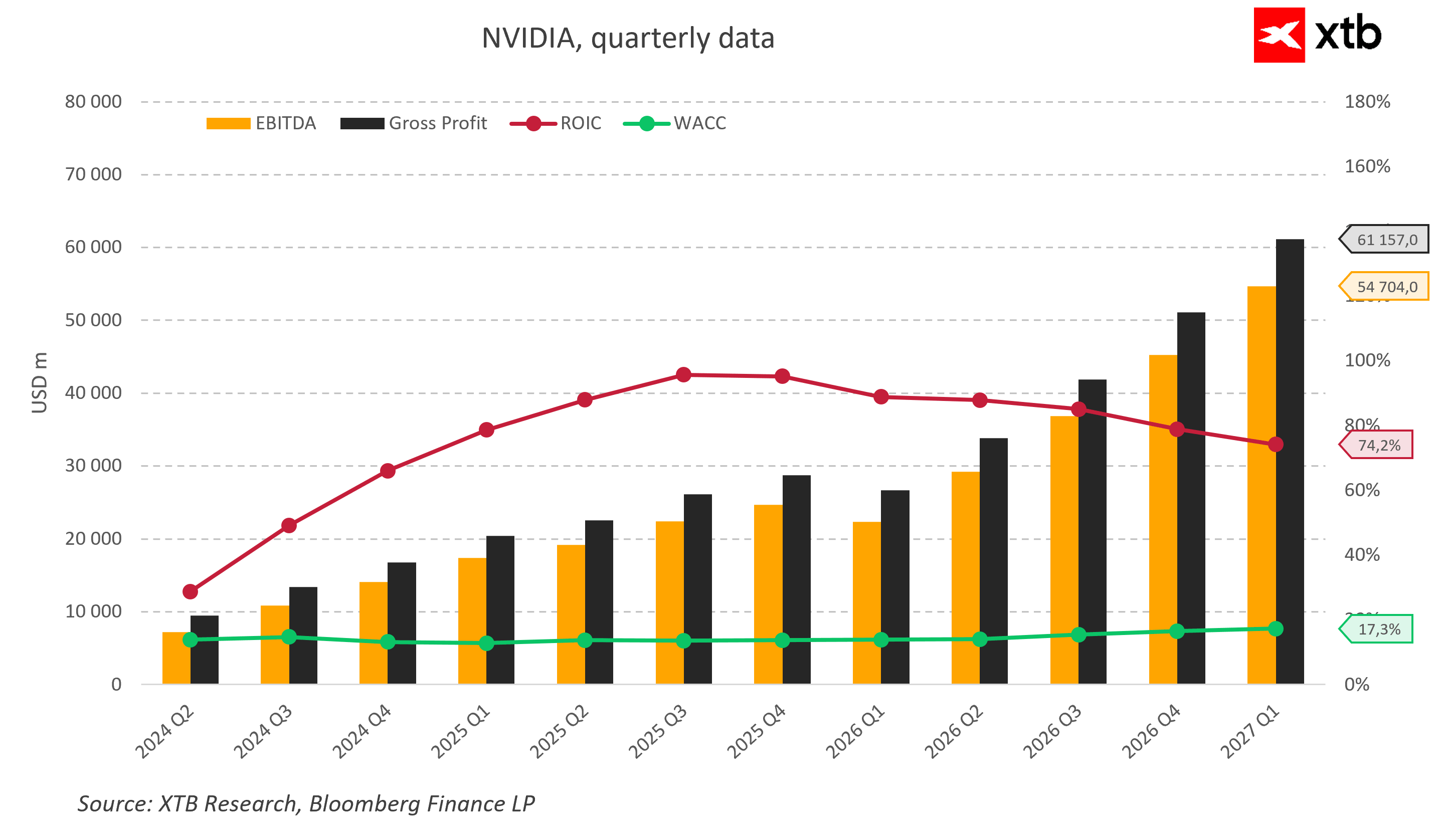
In the long term, however, the picture remains more stable. Demand for computing power driven by the development of large language models, agent-based systems, and business process automation continues to point to a structural increase in demand. Even if the pace of investment temporarily levels out, it does not change the fact that AI infrastructure, including next-generation platforms such as Rubin, remains one of the key pillars of the technological transformation of this decade.
At the same time, increasing importance is being placed on how efficiently existing infrastructure is being utilized. Emerging signals regarding the potential sale of unused computing capacity by some major players, including Meta, may indicate that the market is entering a more advanced stage of resource optimization. This would imply a shift in focus from pure capacity expansion toward monetization and better alignment with actual demand.
In this environment, Nvidia remains at the center of a paradoxical situation. On one hand, it continues to benefit from one of the strongest structural growth trends in the entire artificial intelligence ecosystem. On the other hand, it is becoming increasingly clear that this growth path will not be linear, and its pace will depend more heavily on the synchronization between infrastructure expansion and its actual utilization. It is this balance, rather than demand alone, that is increasingly shaping the narrative around the company.



Daily Summary: A sell-off with a spin-off

US OPEN: The market extends losses as investor concerns grow



Market Wrap: European indices decline amid US - Iran tensions📉 Semiconductors under pressure


Netflix disappoints Wall Street 🚩 Stock drops 9% after disappointing outlook
The material on this page does not constitute as financial advice and does not take into account your level of understanding, investment objectives, financial situation or any other particular needs.
All the information provided, including opinions, market research, mathematical results and technical analyses published on the website or transmitted to you by other means is provided for information purposes only and should in no event be interpreted as an offer of, or solicitation for, a transaction in any financial instrument, nor should the information provided be construed as advice of legal or fiscal nature.
Any investment decisions you make shall be based exclusively on your level of understanding, investment objectives, financial situation or any other particular needs. Any decision to act on information published on the website or transmitted to you by other means is entirely at your own risk. You are solely responsible for such decisions.
If you are in doubt or are not sure that you understand a particular product, instrument, service, or transaction, you should seek professional or legal advice before trading.
Investing in OTC Derivatives carries a high degree of risk, as they are leveraged based products and often small movements in the market could lead to much larger movements in the value of your investment and this could work against you or for you. Please ensure that you fully understand the risks involved, taking into account your investments objectives and level of experience, before trading, and if necessary, seek independent advice.
