

- First drop in 8 weeks: crude oil inventories decreased by 913,000 barrels.
- Record exports: U.S. oil exports surged to 5.2 million barrels per day.
- SPR release: 4.1 million barrels were released from strategic reserves due to the conflict in the Persian Gulf.

- First drop in 8 weeks: crude oil inventories decreased by 913,000 barrels.
- Record exports: U.S. oil exports surged to 5.2 million barrels per day.
- SPR release: 4.1 million barrels were released from strategic reserves due to the conflict in the Persian Gulf.
After eight weeks of uninterrupted increases, U.S. crude oil inventories finally recorded a decline, even despite a larger release of SPR stocks. Although financial markets are anxiously following reports from the Persian Gulf and hoping for a swift peace, the latest data brings some optimism, pointing to strong external demand and a dynamic increase in the U.S. role as a key exporter of the commodity. Even though the geopolitical situation remains tense, investors are hopefully looking for signs of de-escalation that could restore stability in the Strait of Hormuz region.
Key EIA report data:
- Crude oil stocks: decline of 0.9 million barrels (to a level of 463.8 million barrels), which surprised the market as an increase in stocks was expected.
- Strategic Petroleum Reserve (SPR): decline of 4.1 million barrels (to 409.2 million) in connection with the emergency release of supplies by the Department of Energy.
- U.S. oil exports: massive increase of 1.1 million barrels a day, reaching a level of 5.2 million barrels a day.
- Gasoline stocks: sharp decline of 6.3 million barrels, significantly above the projected 1.7 million draw. This was the largest decline in at least several months.
- Distillate stocks: decline of 3.1 million barrels, putting them about 6% below the five-year average for this time of year.
- Domestic production: remained at a stable level of 13.6 million barrels a day.
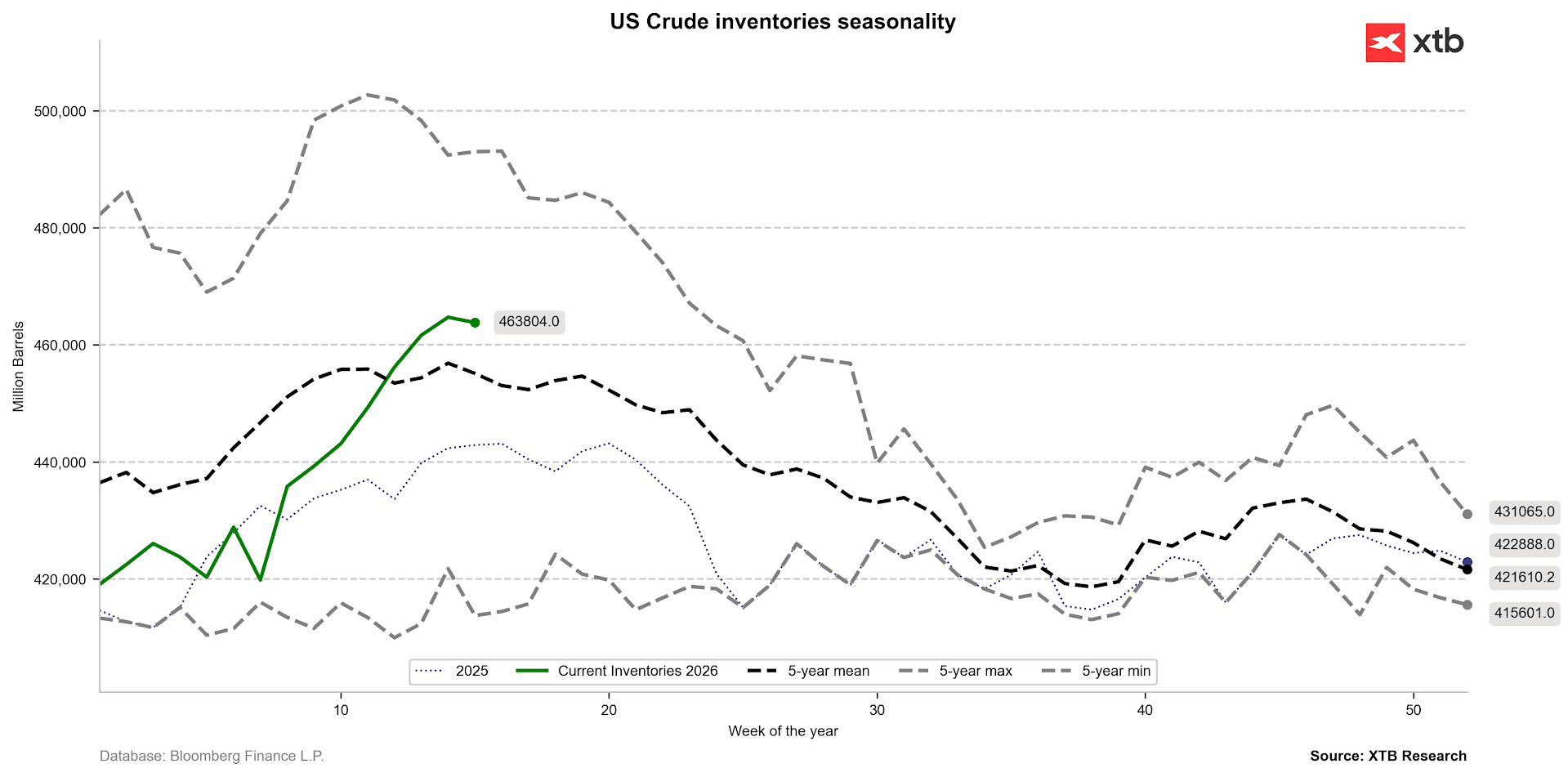 After many weeks of increases, we have a drop in commercial inventories, even despite the release of strategic reserves. Source: Bloomberg Finance LP, XTB.
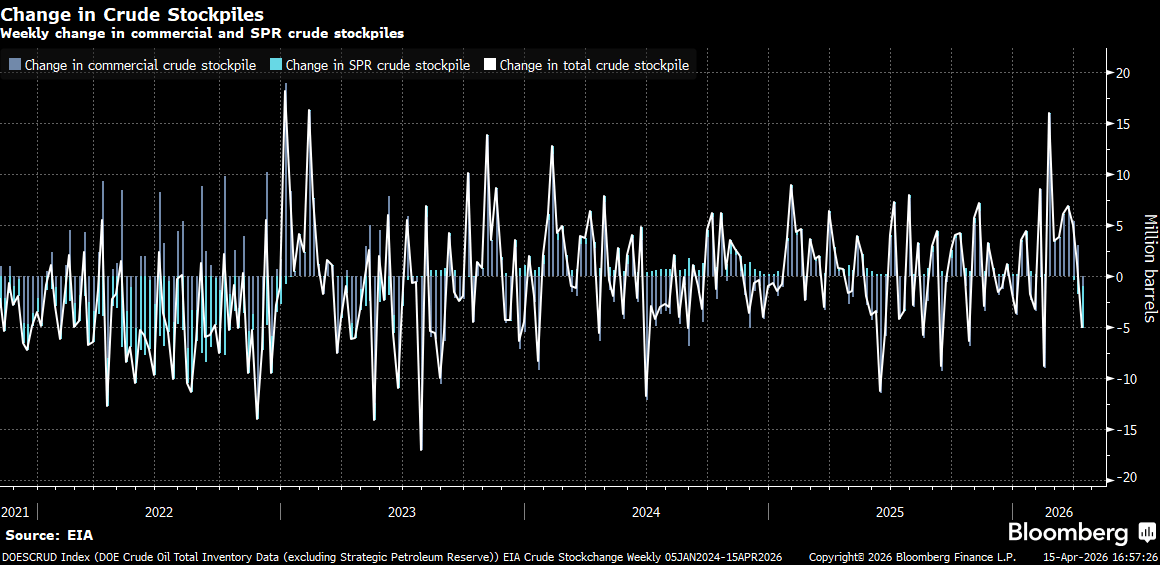 Currently, we are observing a very large decline in stocks from the SPR. A similar situation took place in 2022. Source: Bloomberg Finance LP.
Commentary
The latest EIA report provides interesting conclusions regarding the resilience of the U.S. energy sector. The most striking fact is the real decline in commercial inventories despite a massive injection of oil from the Strategic Petroleum Reserve (SPR). The release of over 4 million barrels from state reserves is a direct response to the blockade of the Strait of Hormuz, which cut off a significant part of global exports. The fact that inventories fell despite such supply testifies to extremely strong domestic and additional external demand.
The main driver of these changes is the expansion of American exports. The result of 5.2 million barrels a day is proof that the USA is becoming a guarantor of energy security during the conflict in the Middle East. At the same time, a drop in imports by 1 million barrels a day further tightened the domestic balance.
However, the positive tone of the data is tempered by the geopolitical background. The market is clearly "playing for peace." Every barrel leaving U.S. storage is worth its weight in gold as long as exports through the Strait of Hormuz remain halted. Very strong gasoline demand (increase to 9.1 million barrels a day) suggests that the U.S. domestic economy is still running at high speed, which, combined with declining fuel stocks, may support prices in the short term. Investors remain cautious, however, hoping that diplomacy will eventually prevail over forceful arguments in the Persian Gulf region.
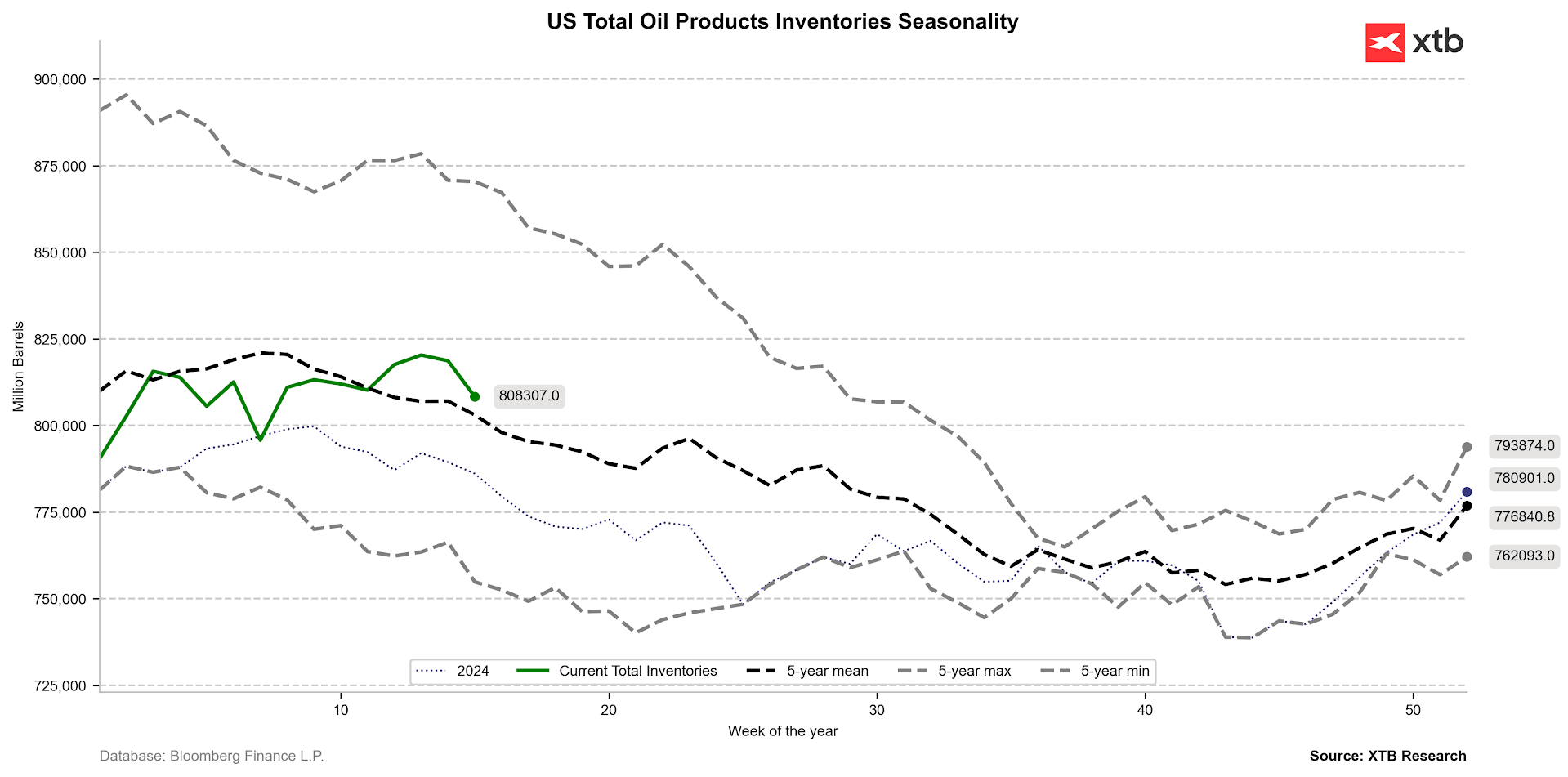 Inventories of oil and all products are falling quite clearly, approaching the 5-year average. Source: Bloomberg Finance LP, XTB.
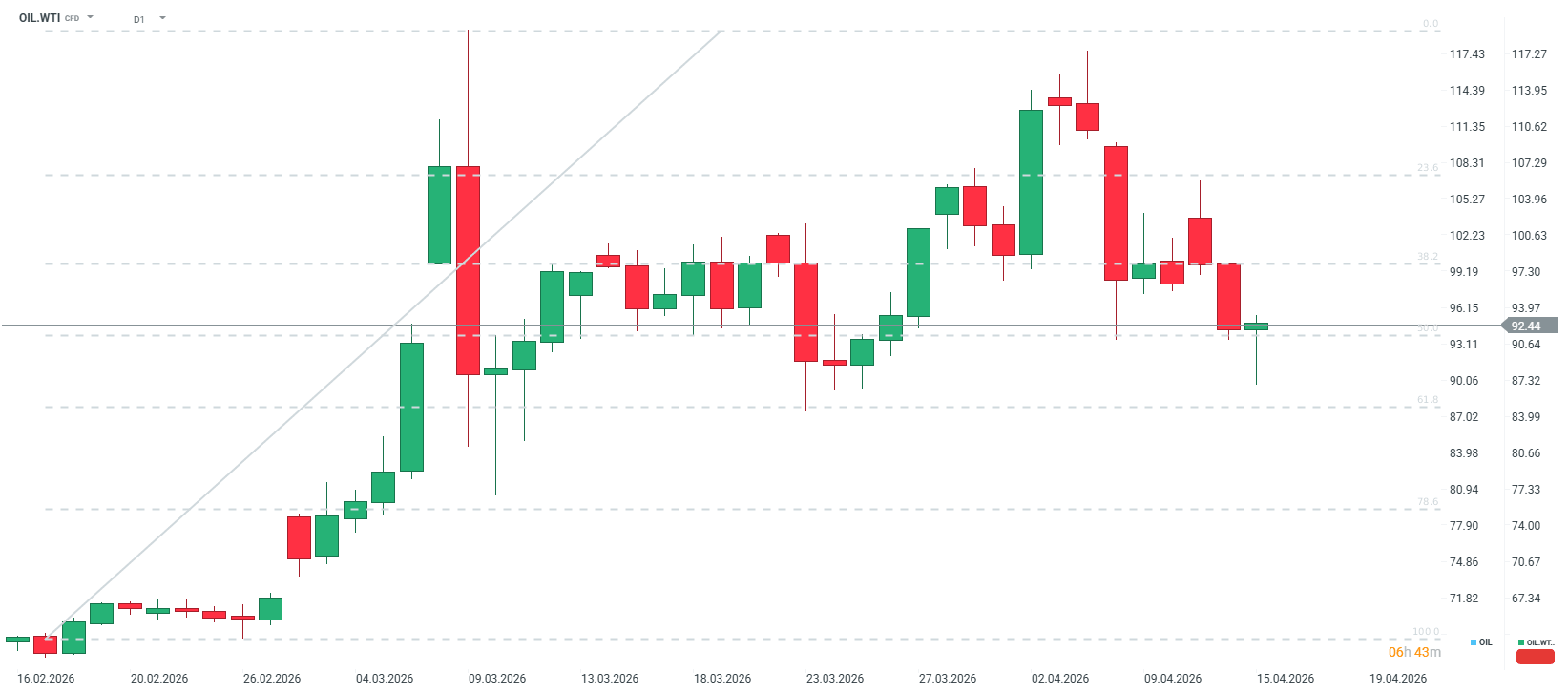 Oil will rebound slightly just before the rolling of futures contracts (rolling will be downward due to extreme backwardation). However, it is worth noting that the market is starting to have doubts about the quick start of negotiations between the US and Iran, and additionally, the physical market is extremely tight. Source: xStation5.
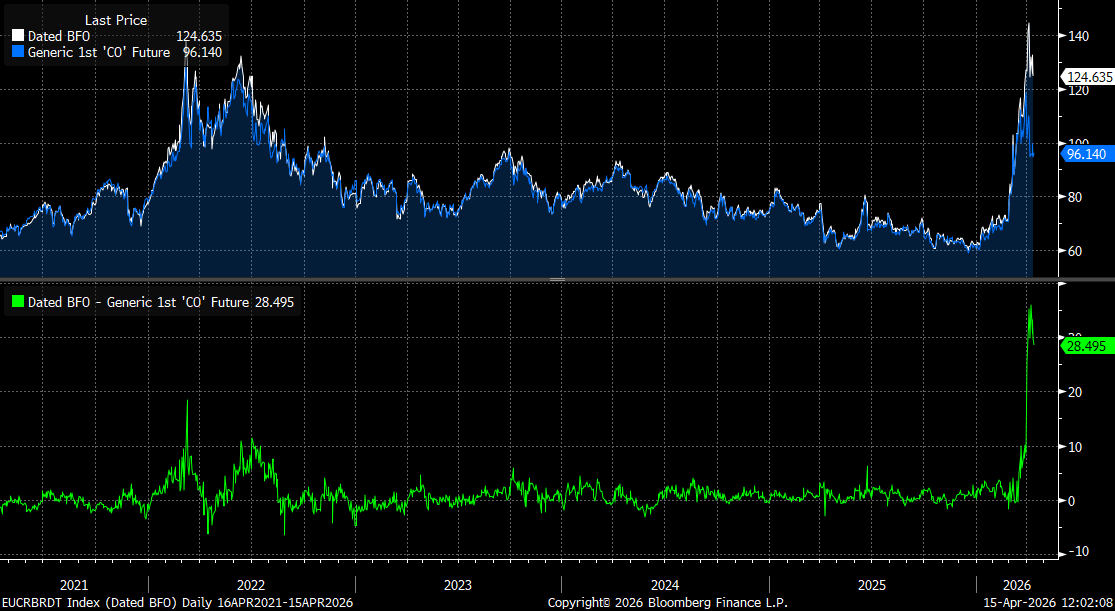 The difference between the spot price for Brent and the June contract is nearly 30 dollars per barrel. Source: Bloomberg Finance LP, XTB.



Daily Summary: Bitcoin Excites Investors Despite the Fed's Hawkish Shift🏛️



What could halt the uptrend❓


BREAKING: US industrial production & manufacturing data lower than expected

Cocoa falls as African harvests rise and ICE inventories approach a two-year high
The material on this page does not constitute as financial advice and does not take into account your level of understanding, investment objectives, financial situation or any other particular needs.
All the information provided, including opinions, market research, mathematical results and technical analyses published on the website or transmitted to you by other means is provided for information purposes only and should in no event be interpreted as an offer of, or solicitation for, a transaction in any financial instrument, nor should the information provided be construed as advice of legal or fiscal nature.
Any investment decisions you make shall be based exclusively on your level of understanding, investment objectives, financial situation or any other particular needs. Any decision to act on information published on the website or transmitted to you by other means is entirely at your own risk. You are solely responsible for such decisions.
If you are in doubt or are not sure that you understand a particular product, instrument, service, or transaction, you should seek professional or legal advice before trading.
Investing in OTC Derivatives carries a high degree of risk, as they are leveraged based products and often small movements in the market could lead to much larger movements in the value of your investment and this could work against you or for you. Please ensure that you fully understand the risks involved, taking into account your investments objectives and level of experience, before trading, and if necessary, seek independent advice.