



Key inventory changes (weekly)
- Crude oil inventories: +3.00 million barrels (a decline of about 1.1 to 1.6 million barrels was expected).
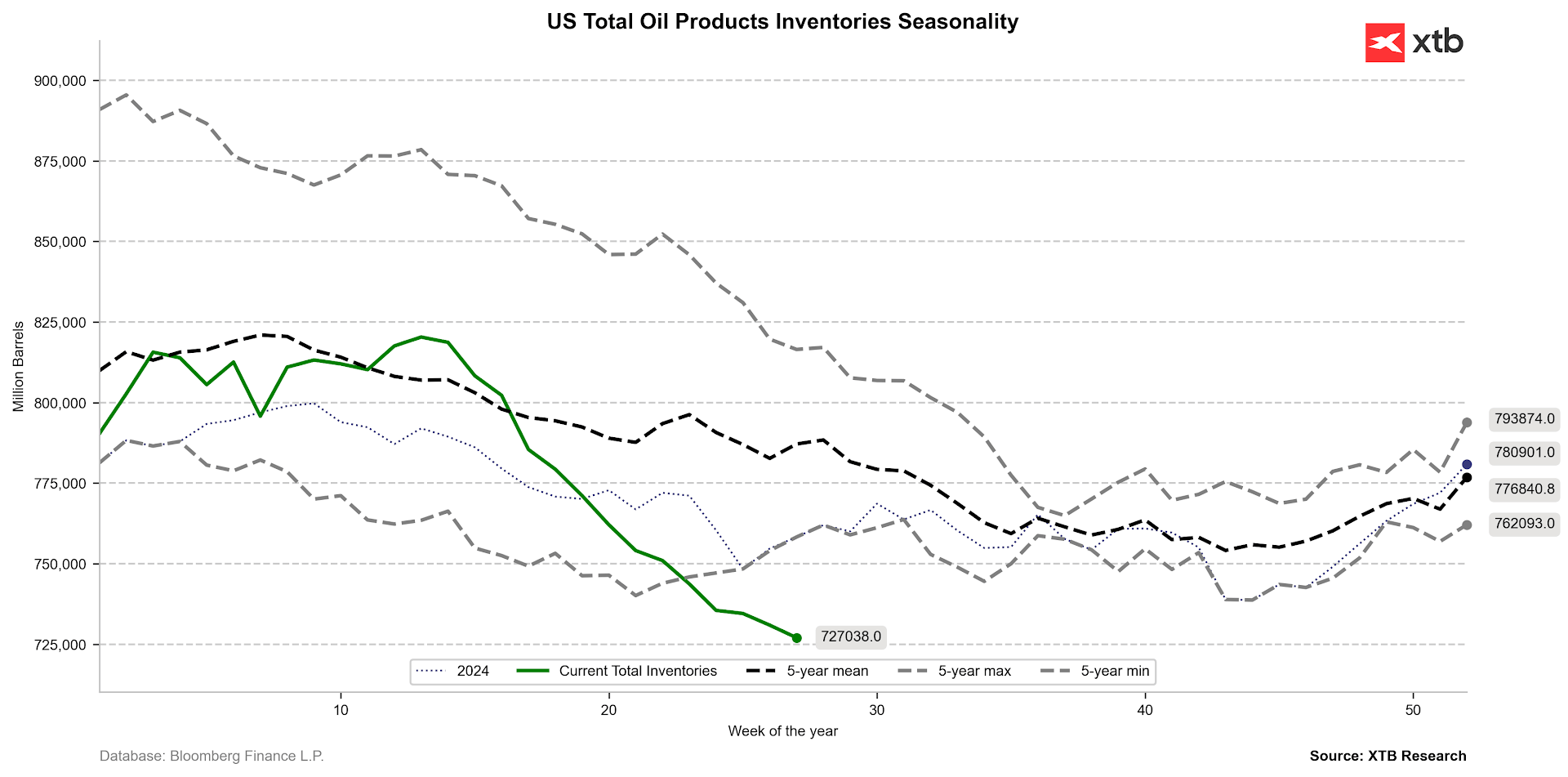
- Distillate inventories: -4.98 million barrels (a rise of +1.05 million barrels was expected).
- Gasoline inventories: -1.90 million barrels (a decline of -1.5 million barrels was expected).
- Cushing inventories: -0.052 million barrels (a slight decline).
- Refinery capacity utilization: -0.8 percentage points (a smaller decline of -0.2 percentage points was expected).
- Oil imports: +350 thousand barrels per day (bpd).
- Domestic oil production: +50 thousand barrels per day (bpd).
Market commentary
The latest EIA report brings a strongly mixed, though ultimately quite balanced, set of data. On one hand, there is a big surprise regarding crude oil inventories themselves, which rose by a full 3 million barrels instead of the decline expected by the market. This is the first inventory increase since the second half of April. This was contributed to by, among other things, a clear increase in imports (+350 thousand bpd) and a slight decline in raw material processing by refineries, whose utilization fell more than forecast (by 0.8 percentage points).
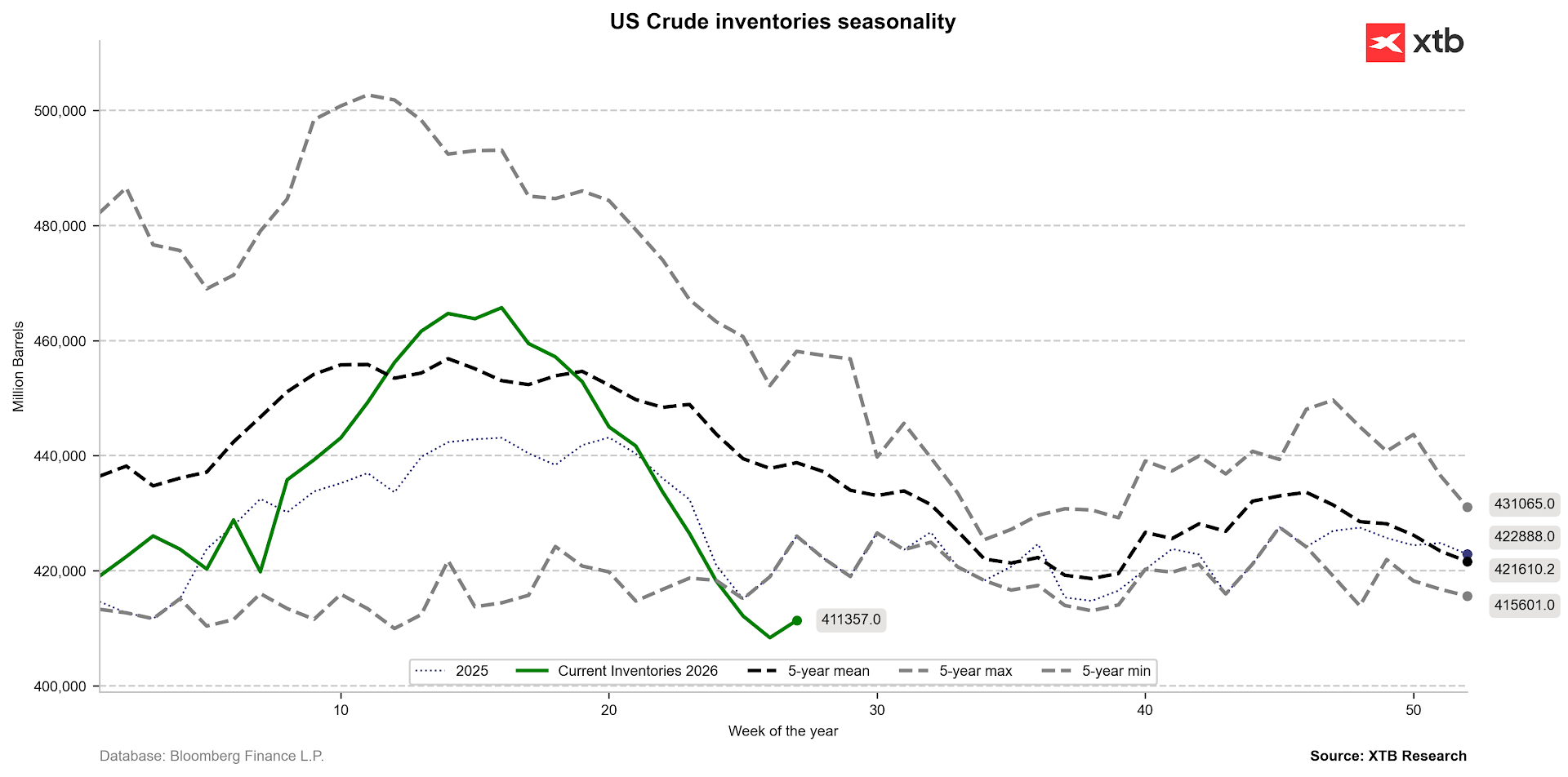
On the other hand, this same decline in refinery activity, combined with sustained demand, has led to a very deep depletion of finished fuel inventories. The decline in distillate inventories by nearly 5 million barrels (versus an expected increase!) and a stronger-than-forecast decline in gasoline inventories are acting strongly bullish on oil product prices and are effectively neutralizing the "bearish" tone of the crude oil itself.
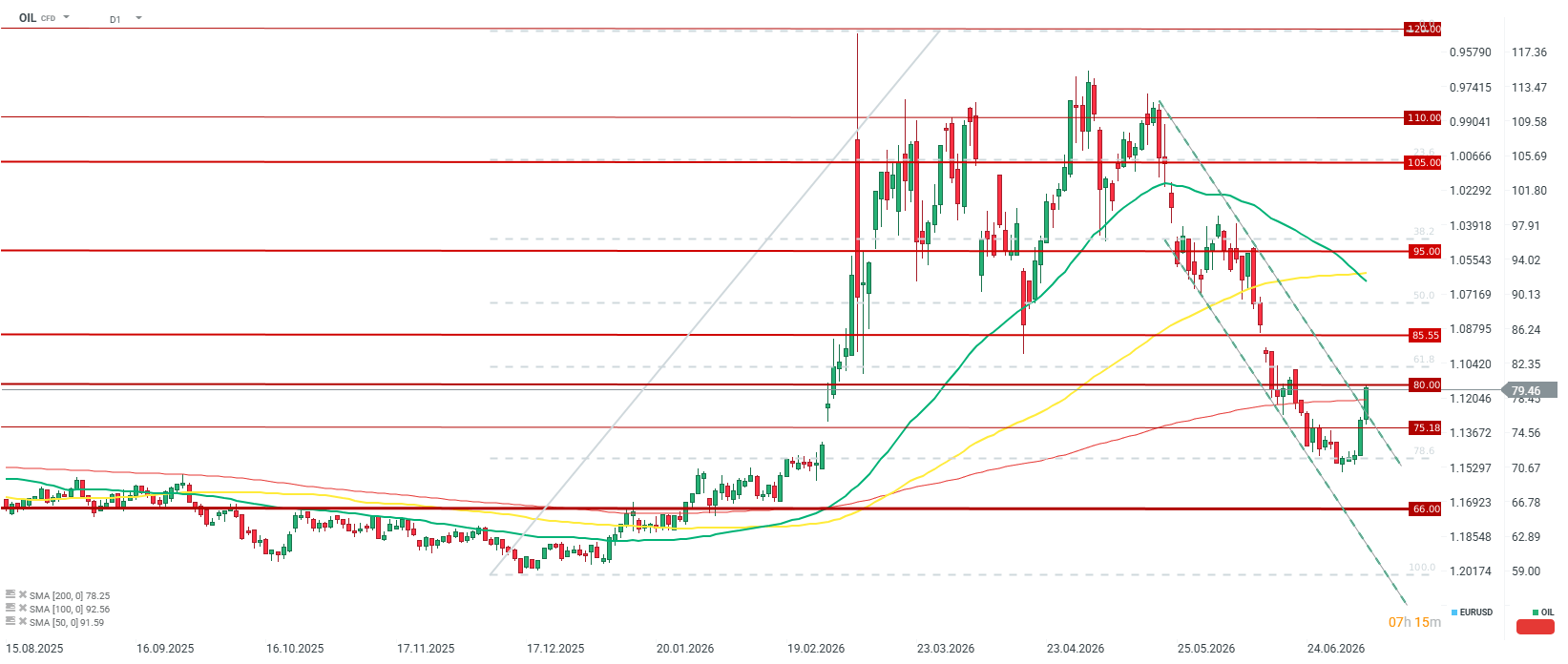
Despite these interesting shifts in US storage data, the price reaction of the commodity (Brent around 79.50 USD) reminds us of the broader context. The reaction to weekly EIA reports may currently be limited or short-lived because to a large extent, everything now depends on the geopolitical situation in the Middle East. The tensions there, the risk of conflict escalation, and the potential threat to supply continuity are now dictating the main direction for oil prices in global markets, pushing typical fundamental data from the US slightly into the background. After earlier uncertainty, Donald Trump has again announced readiness to attack Iran, which is driving price increases to nearly 80 USD per barrel.



Three Markets to Watch Next Week (09.10.2026)



Daily Summary: A Shallow Rebound Ahead of Earnings Season


Strong rise in natural gas prices 📈🚨



US OPEN: Trump de-escalates, OpenAI supports Wall Street sentiment
The material on this page does not constitute as financial advice and does not take into account your level of understanding, investment objectives, financial situation or any other particular needs.
All the information provided, including opinions, market research, mathematical results and technical analyses published on the website or transmitted to you by other means is provided for information purposes only and should in no event be interpreted as an offer of, or solicitation for, a transaction in any financial instrument, nor should the information provided be construed as advice of legal or fiscal nature.
Any investment decisions you make shall be based exclusively on your level of understanding, investment objectives, financial situation or any other particular needs. Any decision to act on information published on the website or transmitted to you by other means is entirely at your own risk. You are solely responsible for such decisions.
If you are in doubt or are not sure that you understand a particular product, instrument, service, or transaction, you should seek professional or legal advice before trading.
Investing in OTC Derivatives carries a high degree of risk, as they are leveraged based products and often small movements in the market could lead to much larger movements in the value of your investment and this could work against you or for you. Please ensure that you fully understand the risks involved, taking into account your investments objectives and level of experience, before trading, and if necessary, seek independent advice.