



American shoppers hit the brakes in July as rising service costs offset a slump in goods spending, leaving real consumption completely flat. With core PCE matching estimates at 3.3% and Q2 price deflators revised higher, today’s data gives the Federal Reserve little reason to rush into any change of the interest rates.
Key Takeaways
- Core PCE price index rose 0.2% MoM and 3.3% YoY in July, matching consensus estimates.
- July headline PCE rose 0.2% MoM and 3.7% YoY. Annual reading was slightly higher than expected but in line with reading from June.
- Real Spending Stalls: July nominal consumer spending rose 0.2% MoM, but real (inflation-adjusted) spending was flat at 0.0% MoM.
- According to BEA data, a $86.2 billion increase in services spending was offset by a $49.9 billion decline in goods spending.
- Personal Income Beats: Personal income increased 0.4% MoM in July (vs. 0.2% expected), while disposable personal income (DPI) rose 0.5% MoM. The personal saving rate stood at 3.0%.
- Q2 GDP Growth Unrevised at 1.5%: Q2 real GDP was unrevised at a 1.5% annualized rate (down from 2.1% in Q1).
- Upward Revisions for Personal Consumption: Q2 consumer spending was revised up to 3.4% (vs. 3.2% preliminary), pushing real final sales to private domestic purchasers up to 4.2%. Meanwhile, the Q2 GDP Deflator was revised up to 6.4% (vs. 6.2% preliminary) which which indicates further inflationary pressure
- Q2 Core PCE rose to 3.6% (vs. 3.4% preliminary), and Q2 headline PCE price index rose to 5.3% (vs. 5.1% preliminary).
- Supercore Inflation Measures Firm: Q2 PCE excluding food, energy, and housing was revised up to 3.4% (vs. 3.2% preliminary), while Q2 PCE services excluding energy and housing accelerated to 3.7% (vs. 3.4% preliminary).
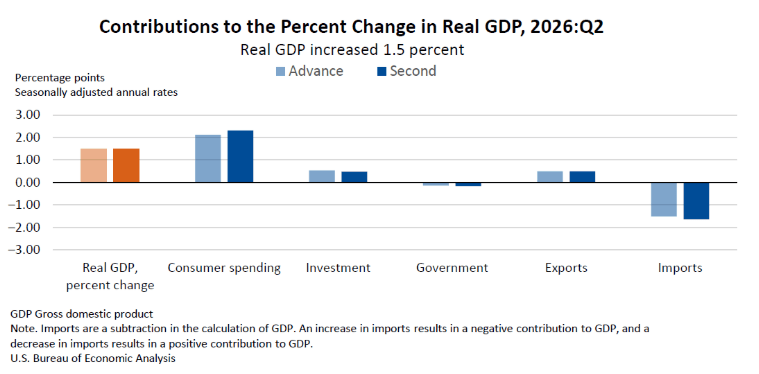
The major revision to the contributions came from consumer spending which was revised higher. Source: BEA
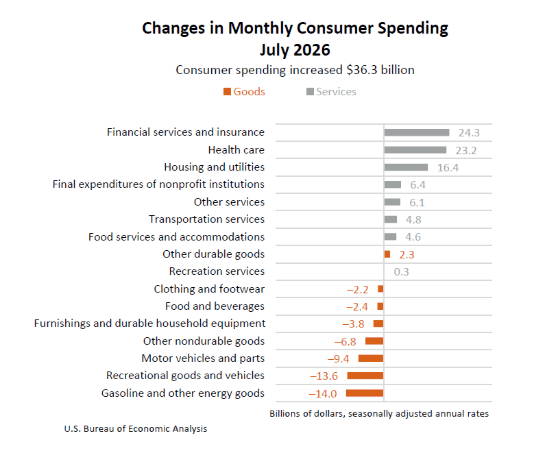 In July consumer spending growth was driven entirely by service-sector gains, led by financial services and healthcare, which fully offset widespread contraction across physical goods categories. Source: BEA
Data Commentary
The combined data points to a picture of persistent underlying price pressures alongside a flat but rather high consumer momentum at the start of Q3. Although the Q2 real annualized GDP reading was unrevised at 1.5%, upward revisions to personal consumption to 3.4% and private domestic sales (4.2%) show internal demand remained stronger than initial estimates suggested.
However, the significant upward revisions across all Q2 price deflators, most notably the GDP Deflator hitting 6.4% and Core PCE reaching 3.6% indicate that quarterly disinflation stalled more than previously thought. Entering July, while wage growth supported a 0.4% rise in personal income, real spending stagnated at 0.0% MoM. Consumers are increasing nominal outlays primarily to absorb higher service prices while curtailing physical goods purchases.
Market reaction
- US short-term rate futures trimmed earlier gains following the release. Upward revisions to Q2 price deflators strengthens the idea of the interest rate hikes at the end of the year
- The US Dollar Index held its gains, firming slightly against the euro
- S&P 500 futures (US500) moved slightly lower. The combination of sticky price deflators and flat real consumer spending weighs modestly on corporate earnings expectations and risk appetite.
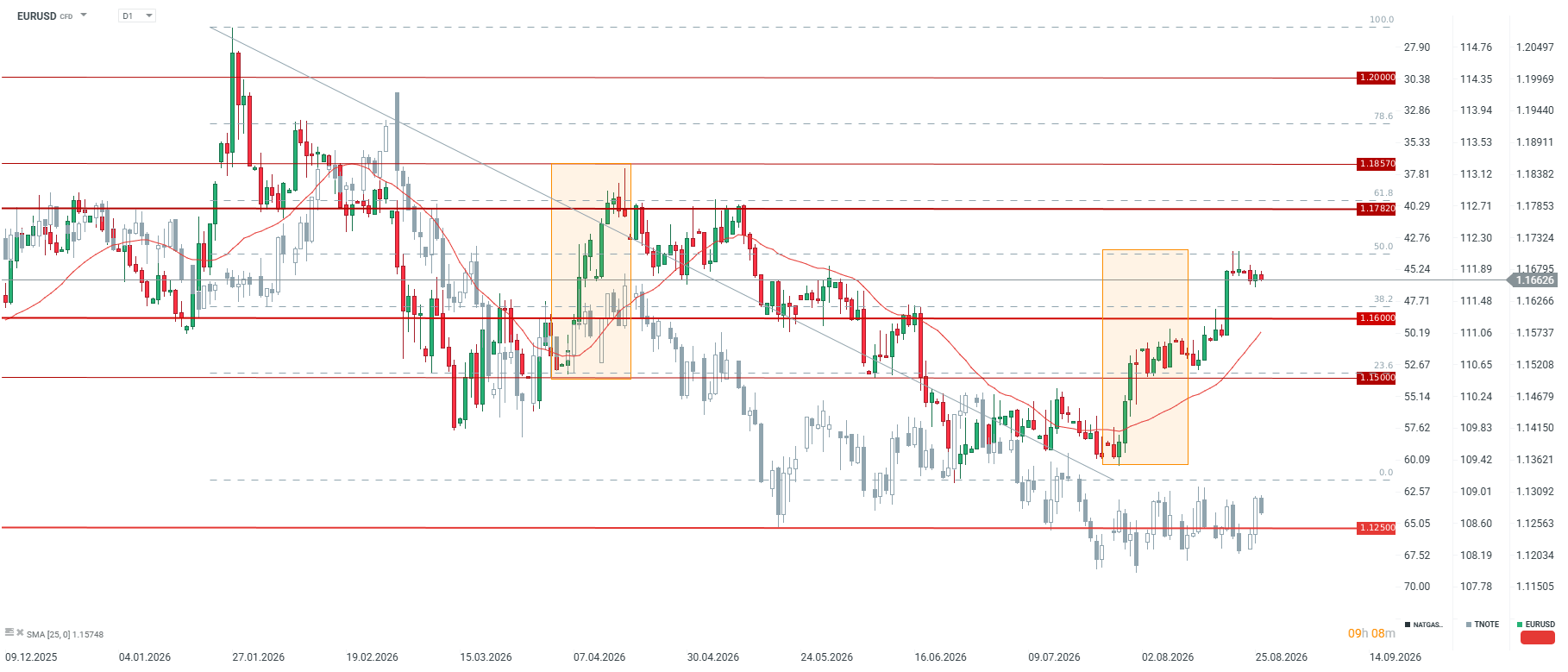 Reaction was rather mutted and EURUSD decreased slightly after the release of the data, especially due to inflationary data picture. Source: xStation5



Yen loses ground after the BoJ decision

Hawkish remarks by BOJ Governor strengthen the yen – key takeaways

🏯Chart of the Day: Yen in a Trap. BoJ Hike That Weakened the Currency (18.09.2026)



Macro Calendar – Dovish BoJ Pivot and Key Data from Europe and the US
The material on this page does not constitute as financial advice and does not take into account your level of understanding, investment objectives, financial situation or any other particular needs.
All the information provided, including opinions, market research, mathematical results and technical analyses published on the website or transmitted to you by other means is provided for information purposes only and should in no event be interpreted as an offer of, or solicitation for, a transaction in any financial instrument, nor should the information provided be construed as advice of legal or fiscal nature.
Any investment decisions you make shall be based exclusively on your level of understanding, investment objectives, financial situation or any other particular needs. Any decision to act on information published on the website or transmitted to you by other means is entirely at your own risk. You are solely responsible for such decisions.
If you are in doubt or are not sure that you understand a particular product, instrument, service, or transaction, you should seek professional or legal advice before trading.
Investing in OTC Derivatives carries a high degree of risk, as they are leveraged based products and often small movements in the market could lead to much larger movements in the value of your investment and this could work against you or for you. Please ensure that you fully understand the risks involved, taking into account your investments objectives and level of experience, before trading, and if necessary, seek independent advice.