

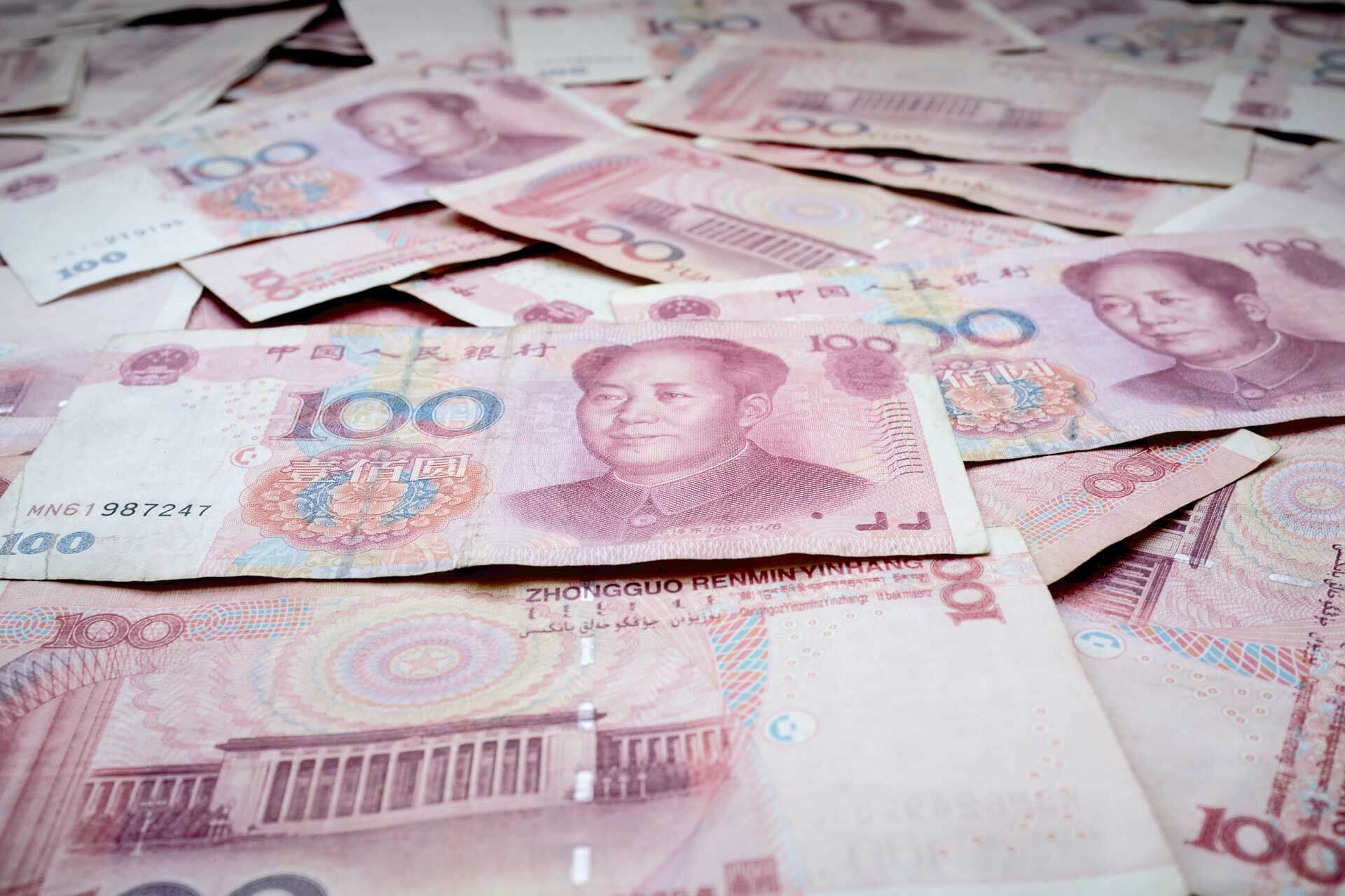
The escalation of the trade war between China and the U.S. has motivated the People’s Bank of China (PBOC) to make an unprecedented move, raising the USDCNH reference rate above 7.20. Investors had viewed this level as a symbolic threshold for the stability of the Chinese currency. However, the latest plans to further support exports and liquidity in the stock market have shifted expectations for the official rate to above 7.30.

USDCNH returned to consolidation despite continued announcements of potential monetary policy easing in China. Source: xStation5
Trump and China’s Internal Struggles
The latest round of the “tariff ping-pong” was, for China, a trial of honour. Within just one week, the entire trade flow with the U.S. was subjected to tariffs exceeding 100%, and Beijing did not back down from Trump’s moves, even though it arguably has more to lose, especially in the short term.
Recent data confirms persistent deflation, which highlights the core issue of the Chinese economy in recent years—weak domestic demand. Exports have served as a lifeline for production in need of buyers. However, the productivity of Chinese manufacturers could soon result in increased deflationary pressure, as excess supply gets blocked by tariffs at Chinese ports. Donald Trump's withdrawal of tariffs on consumer electronics helped restore some market optimism, but it does little to ease the pressure on the government to stimulate domestic demand through fiscal measures.
A New Course for Chinese Monetary Policy
By raising the USDCNH reference rate, the PBOC is, in a way, stepping back from its recent efforts to stabilize the yuan. A weaker yuan and more competitive exports may cost China an outflow of capital from investors losing trust in Chinese assets.
Nevertheless, according to former PBOC advisor Yu Yongding, downward pressure on the yuan doesn't necessarily rule out plans to keep the currency under control. In the event of excessive capital outflows, the PBOC is prepared to inject liquidity to prevent a sell-off of Chinese assets (through bond purchases, preferential loans for stock buybacks, and further rate cuts), similar to what occurred in mid-2024.

The yuan sold off sharply as the PBOC raised the USDCNH reference rate above the psychological 7.20 level (red line). Source: XTB Research



Daily Summary: End of an Extremely Intense Week (19.06.2026)


Three markets to watch next week: EURUSD, OIL, NASDAQ (19.06.2026)


🚩 Gold loses 1.5% as Goldman Sachs cuts its 2026 bullion price target



Market wrap: Limited volatility and a strong dollar
The material on this page does not constitute as financial advice and does not take into account your level of understanding, investment objectives, financial situation or any other particular needs.
All the information provided, including opinions, market research, mathematical results and technical analyses published on the website or transmitted to you by other means is provided for information purposes only and should in no event be interpreted as an offer of, or solicitation for, a transaction in any financial instrument, nor should the information provided be construed as advice of legal or fiscal nature.
Any investment decisions you make shall be based exclusively on your level of understanding, investment objectives, financial situation or any other particular needs. Any decision to act on information published on the website or transmitted to you by other means is entirely at your own risk. You are solely responsible for such decisions.
If you are in doubt or are not sure that you understand a particular product, instrument, service, or transaction, you should seek professional or legal advice before trading.
Investing in OTC Derivatives carries a high degree of risk, as they are leveraged based products and often small movements in the market could lead to much larger movements in the value of your investment and this could work against you or for you. Please ensure that you fully understand the risks involved, taking into account your investments objectives and level of experience, before trading, and if necessary, seek independent advice.
