


The main factor driving market volatility
The defining event of Friday was the announcement by Iranian Foreign Minister Seyed Abbas Araghchi that the Strait of Hormuz would be fully opened for the duration of the ceasefire between Israel and Lebanon. This declaration triggered an immediate, spectacular surge in global stock markets and a sharp outflow of capital from the oil market. President Trump thanked Iran for opening the strait, while confirming that the U.S. naval blockade of Iranian ports remains in effect until a formal peace agreement is reached. The market priced in this scenario as the most likely, although the agreement remains fragile and the ceasefire itself formally expires on April 21.
Geopolitics
The ten-day ceasefire between Israel and Lebanon went into effect on Thursday at 5:00 p.m. Eastern Time, and Friday’s reopening of the Strait of Hormuz was a direct result of it. Axios reported that Washington and Tehran are negotiating a three-page peace plan, a key element of which is the transfer of Iranian uranium to the U.S. in exchange for $20 billion in frozen funds. An Iranian official warned, however, that the opening of the strait is conditional and depends on the U.S. adhering to the terms of the ceasefire, and that Iran views the naval blockade itself as a violation of the ceasefire. Despite the euphoric mood, analysts emphasize that the differences between the parties, including on the nuclear issue, remain significant and require serious talks.
Economic data and the Fed
Mary Daly, president of the Federal Reserve Bank of San Francisco, advocated a "wait-and-see" approach to interest rates, noting that the current, slightly restrictive monetary policy is appropriate for current conditions. The interest rate swap market has priced out rate hikes in the U.S., while for the ECB, a 25-basis-point move in July remains all but certain. Analysts at Piper Sandler warned that the rapid stock market rebound masks weaker market breadth indicators and described current technical fundamentals as a “fragile foundation.” Daly does not have a vote on the FOMC this year, which limits her direct influence on decisions.
Indices
The S&P 500 surpassed the 7,100-point mark for the first time in history, closing the day up more than 1.2%. The Dow Jones rose by more than 916 points, or nearly 2%, while the Nasdaq Composite gained 1.3%, setting new all-time highs. The Russell 2000 surpassed its previous record of 2,735 points set on January 22, rising 2.5% to reach a new all-time high. For the week, the S&P 500 gained a total of 4%, the Dow 3%, and the Nasdaq as much as 6%.
Shares
The biggest winners of the day were companies in the tourism and transportation sectors: Royal Caribbean rose nearly 10%, and United Airlines rose over 9%. The energy sector came under heavy pressure: APA Corporation fell over 9%, Valero over 8.5%, Exxon Mobil 5%, and Chevron over 4%. A clear standout was Critical Metals, whose shares jumped by over 40% after the Greenlandic government approved the acquisition of a stake in the rare earths mine Tanbreez Mining. Netflix recorded a significant decline of over 10%.
Currencies
The Dollar Index (USDIDX) fell by more than 0.2%, resuming its downward trend in response to the de-escalation of the conflict in the Middle East and the publication of an Axios report on the peace plan under negotiation.
Commodities
Oil prices plummeted following the announcement that the Strait of Hormuz had reopened: WTI futures fell by nearly 11% to around $82 to $85 per barrel, while Brent dropped by about 9% to 11% to around $88 to $90. This marks the worst weekly performance for oil since April 2020, when prices fell by over 19% in a single week. Gold, however, continued to rise by 1.38%, reaching $4,856 per ounce, suggesting that uncertainty about the agreement’s durability is prompting some investors to maintain positions in safe-haven assets. Saudi Arabia warned that the normalization of energy flows will take time, as insurance companies remain cautious about the temporary and uncertain truce.
Cryptocurrencies
Bitcoin broke through the $77,000 barrier, rising by more than 3.36% and reaching its highest level since February. The catalyst for the gains was a positive diplomatic climate, news of a peace plan being negotiated between the U.S. and Iran, and an influx of capital into BTC-based ETFs. The 14-day RSI approached the 70-point level, entering the technically overbought zone, which calls for caution despite strong upward momentum. Institutional investors are increasingly treating crypto as a hedge against geopolitical uncertainty, which translates into a rapid price rebound with every positive signal from the diplomatic front.



Three Markets To Watch (20.04.2026)


Parabolic rallies on European markets ahead of the weekend💡
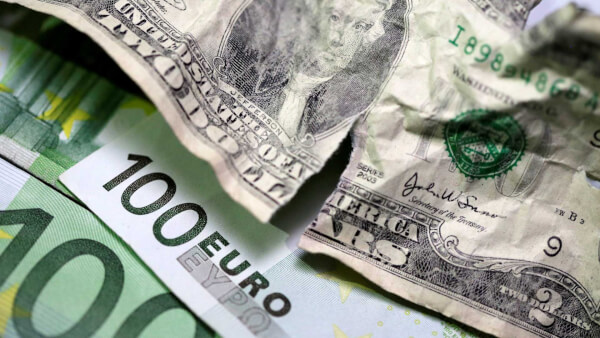


Dollar Plummets After Opening of the Strait of Hormuz 💲📉 The Start of a Sharp Correction❓



Rallies in European airline valuations
The material on this page does not constitute as financial advice and does not take into account your level of understanding, investment objectives, financial situation or any other particular needs.
All the information provided, including opinions, market research, mathematical results and technical analyses published on the website or transmitted to you by other means is provided for information purposes only and should in no event be interpreted as an offer of, or solicitation for, a transaction in any financial instrument, nor should the information provided be construed as advice of legal or fiscal nature.
Any investment decisions you make shall be based exclusively on your level of understanding, investment objectives, financial situation or any other particular needs. Any decision to act on information published on the website or transmitted to you by other means is entirely at your own risk. You are solely responsible for such decisions.
If you are in doubt or are not sure that you understand a particular product, instrument, service, or transaction, you should seek professional or legal advice before trading.
Investing in OTC Derivatives carries a high degree of risk, as they are leveraged based products and often small movements in the market could lead to much larger movements in the value of your investment and this could work against you or for you. Please ensure that you fully understand the risks involved, taking into account your investments objectives and level of experience, before trading, and if necessary, seek independent advice.
