

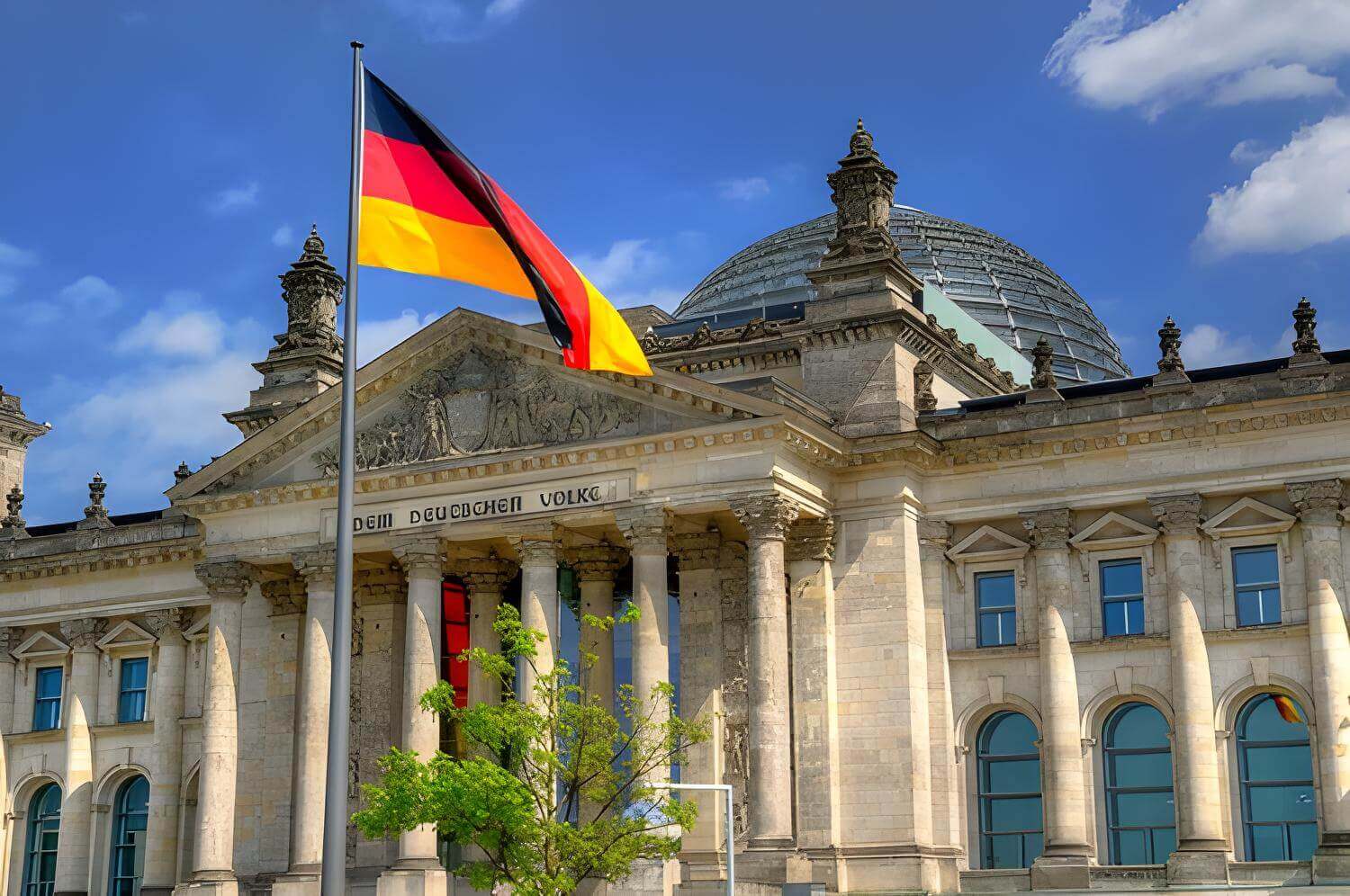
The Bundestag elections on Sunday brought a clear result: the new German Chancellor will be Friedrich Merz, and the election itself is won by the so-called Union. For the markets, this is a result in line with expectations, so in the short term the reaction of the markets is rather subdued. In the long term, however, the election may gain significance in terms of the situation for German business and Europe as a whole.
Election results
The CDU and CSU coalition won 28.5% of the vote, clearly becoming the strongest faction, followed by the AfD with 20.8%, and then the SPD, which achieved a historically weak result. Such a large fragmentation of the new parliament could make it difficult to pass the reforms proposed by the CDU/CSU. Current projections show that even if the FDP and BSW do not enter the Bundestag, the CDU/CSU, SPD and possibly the Greens may not achieve the two-thirds majority (420 seats) needed to approve key constitutional appointments. At this point, although Merz's win pleases the markets, implementation of his policy demands may be very difficult.
Who is Germany's new chancellor?
Friedrich Merz is regarded in the media world as a tough opponent of migration and a long-time rival of Angela Merkel's policies. Financial markets, on the other hand, are very fond of the chancellor's professional record. Merz worked as a judge and then as a lawyer at the renowned law firm Mayer Brown LLP, which focuses primarily on serving investment funds and major corporations. He also held senior positions at BlackRock Germany and HSBC Trinkaus & Burkhardt, and served on the boards of EY Germany, Borussia Dortmund and Deutsche Börse. A strong connection to business, then, gives hope that Germany's new policies will support local business.
What changes does Friedrich Merz propose?
- Like a social conservative and a politician with strong ties to business, Merz advocates first and foremost lowering income and corporate taxes. No less important are his high-profile promises to develop artificial intelligence and to create an attractive center in Germany for innovative start-ups.
- The new chancellor wants to reform Germany's debt brake, which limits how much debt the government can take on. This is particularly important at a time when the specter of a sustained economic downturn looms over Germany's economy, as the release of new funds could help the country recover from its current economic woes.
- Merz advocates a significant tightening of Germany's migration policy. In this aspect, it is worth citing the act of recognition from the far-right AfD party, which supported Friedrich in the Bundenstag in January. So this shows that the immigration issue is one of the most important demands for the new chancellor to fulfill, given that the far-right is the second strongest party in Germany.
Will European relations with the US improve under Merz?
Perhaps the biggest reason for European markets to rejoice earlier this week is the news that Donald Trump has welcomed Merz's victory, and that Germany's conservative chancellor may help rebuild relations with the U.S. president at a crucial time for Europe's relationship with the U.S. Time will tell if good vibes will prevail between the two politicians.
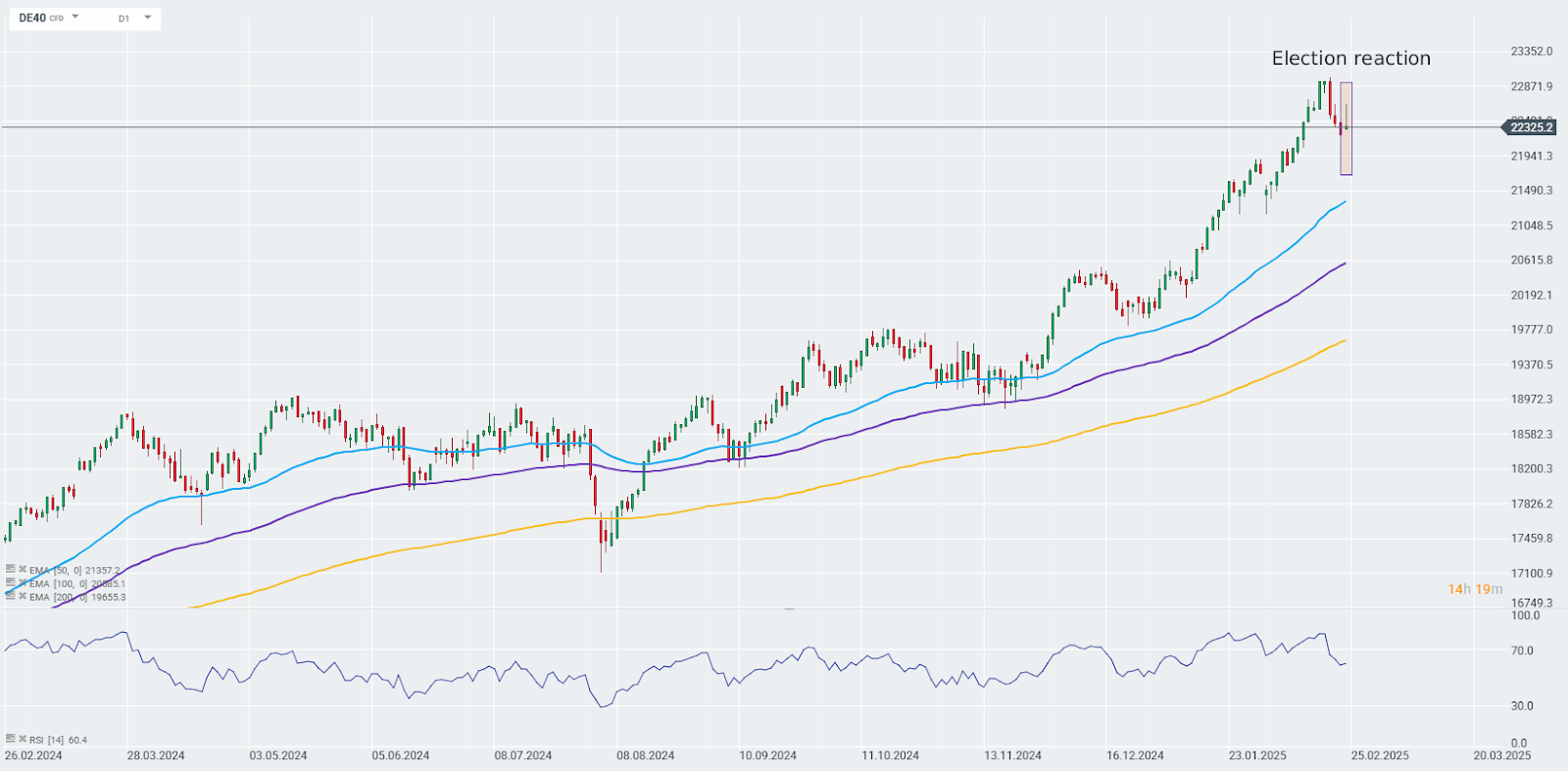
The German DAX has now almost completely erased the gains we saw at the very beginning of the German session. However, this does not change the fact that the index continues to maintain a dynamic uptrend until the DE40 breaks below the 50-day exponential moving average (blue curve on the chart). The most important resistance now remains the historical peak at 22,950 points. Source: xStation



Daily Summary: Equities Diverge as Tech Lags, Europe Rallies on Earnings & PMIs (24.07.2026)



Three markets to watch next week (24.07.2026)



US OPEN: Nasdaq hits 1-month low! Geopolitics bring AI trade down!



Market Wrap: European Stocks Are Trying to Rebound as the Week Comes to an End💡
The material on this page does not constitute as financial advice and does not take into account your level of understanding, investment objectives, financial situation or any other particular needs.
All the information provided, including opinions, market research, mathematical results and technical analyses published on the website or transmitted to you by other means is provided for information purposes only and should in no event be interpreted as an offer of, or solicitation for, a transaction in any financial instrument, nor should the information provided be construed as advice of legal or fiscal nature.
Any investment decisions you make shall be based exclusively on your level of understanding, investment objectives, financial situation or any other particular needs. Any decision to act on information published on the website or transmitted to you by other means is entirely at your own risk. You are solely responsible for such decisions.
If you are in doubt or are not sure that you understand a particular product, instrument, service, or transaction, you should seek professional or legal advice before trading.
Investing in OTC Derivatives carries a high degree of risk, as they are leveraged based products and often small movements in the market could lead to much larger movements in the value of your investment and this could work against you or for you. Please ensure that you fully understand the risks involved, taking into account your investments objectives and level of experience, before trading, and if necessary, seek independent advice.
