

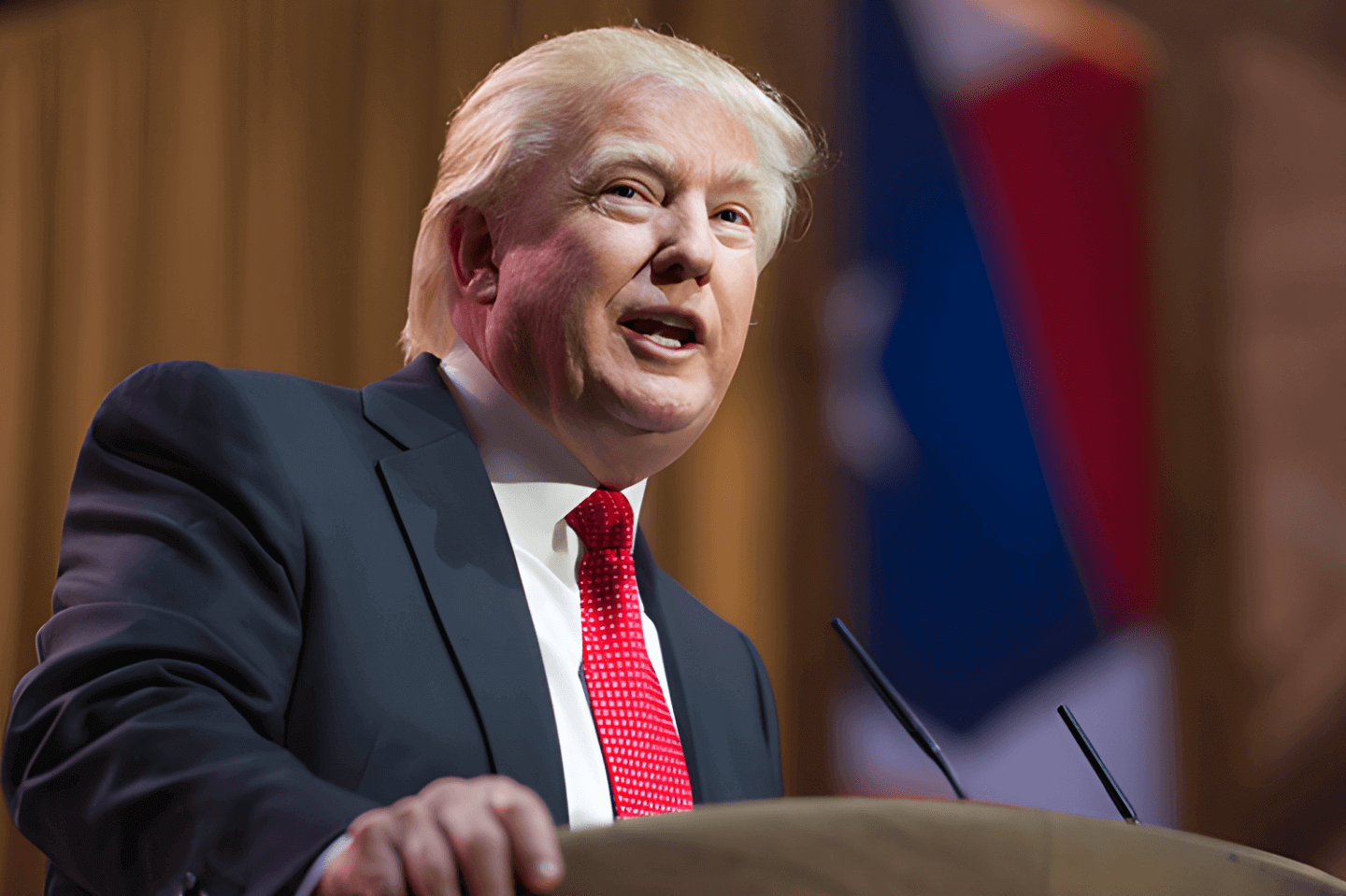

President Donald Trump reversed his stance twice in the space of a single day — first announcing that the deal with Iran was “dead” following the attacks on merchant ships in the Strait of Hormuz, and then suggesting that Tehran was desperately seeking an agreement. This 180-degree turnaround in the space of a dozen or so hours clearly illustrates how Trump’s unpredictable communication affects market sentiment in real time.
From ‘the deal is over’ to ‘they want the deal so badly’
On Wednesday 8 July, US index futures fell and oil prices soared by more than 5% after Trump declared that the truce with Iran was “over” following Iran’s attack on merchant ships. The S&P 500 closed the session down 0.28 per cent at 7,482.71 points. Just a few hours later, Trump changed his tone, claiming that Iran had “just phoned” and “wants a deal very, very badly”, though he noted that he did not know whether Tehran could be trusted to honour the terms. This news immediately triggered a reversal in market sentiment — futures contracts on US indices turned green. When a reporter asked why Iran was attacking merchant ships if it wanted a deal so badly, Trump replied briefly: “Because they’re a bit mad.”
This pattern is nothing new — since March, futures contracts have repeatedly reacted sharply to successive rounds of Trump’s rhetoric towards Iran, falling at times following threats of strikes and rebounding at other times following signs of an impending agreement.
Spain: from a ‘lost country’ to a ‘very generous partner’
A similar narrative shift affected Spain. At the NATO summit in Ankara, Trump described Madrid as a “lost cause” and a “completely hopeless” partner, ordering Treasury Secretary Scott Bessent to immediately suspend all trade with Spain, including visas. The reason was Spain’s refusal to accept NATO’s new defence spending target of 5 per cent of GDP, as well as its earlier blocking of the use of joint military bases for attacks on Iran.
On the flight back to Washington aboard Air Force One, Trump changed his tone, claiming that Spain had “come round completely” and had been “very generous” — it had “honoured the request for numerous payments”. Prime Minister Pedro Sánchez, for his part, described the conversation as “very cordial”, noting that it had focused mainly on the World Cup and golf, rather than military spending.
How likely is an embargo on Spain?
Despite his statements, Trump has real, albeit limited, legal means at his disposal to impose an embargo.
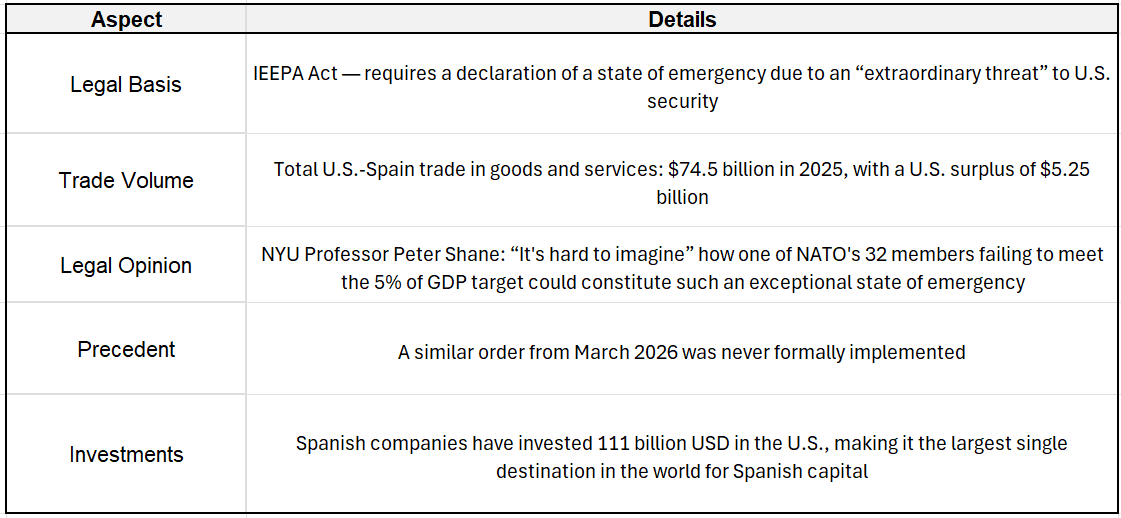
The Department of the Treasury, the Department of Commerce and the Office of the US Trade Representative are due to draw up a “list” of Spanish products potentially subject to an embargo in the coming days, which suggests a selective rather than a blanket approach. It is worth bearing in mind that EU trade rules require a uniform approach towards all EU countries, which complicates unilateral action against Spain alone.
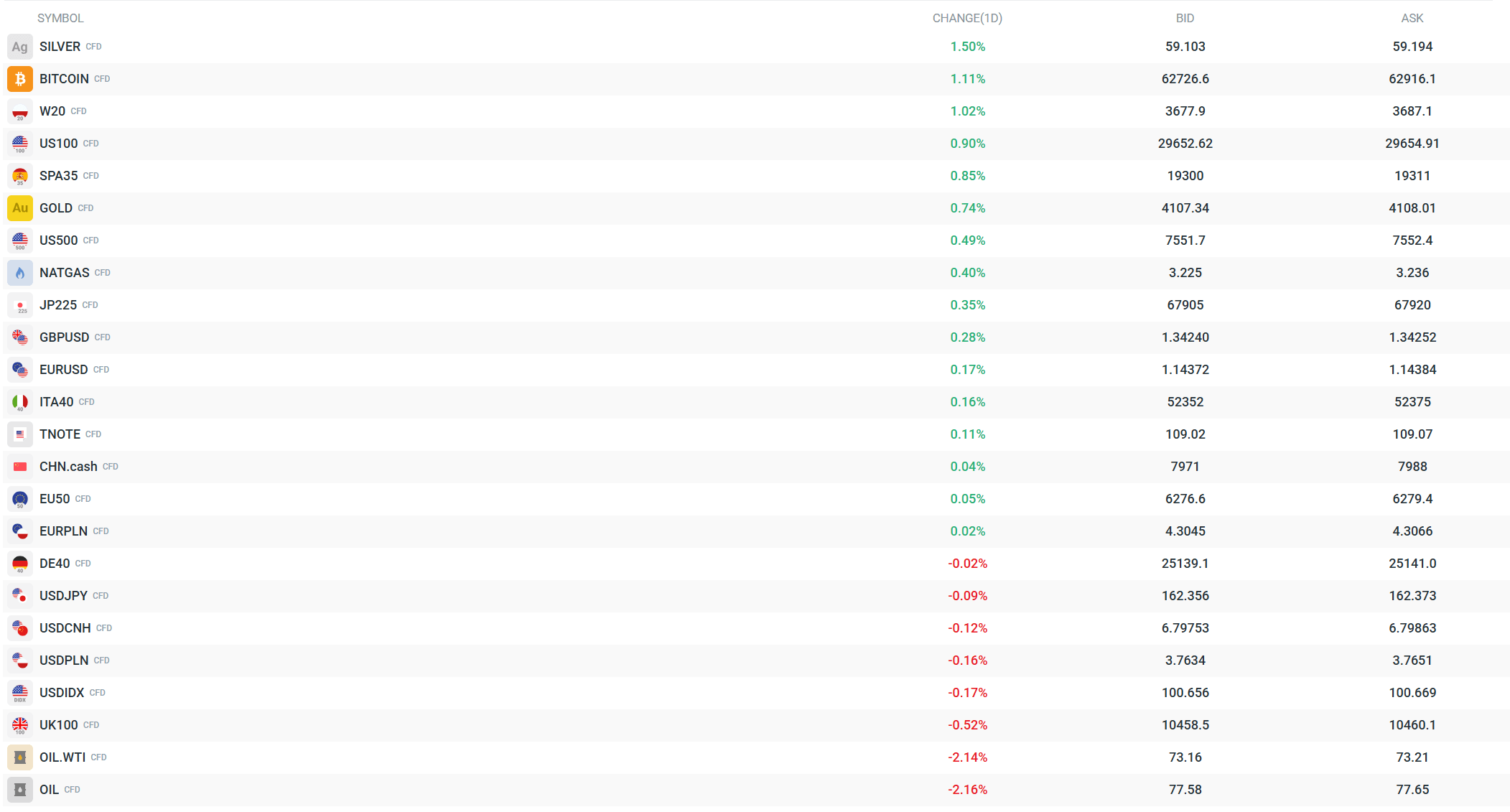
The markets are performing very well this morning. Spanish shares are up 0.8%, whilst oil is down by over 2%. Source: xStation



Daily Summary: Bitcoin Excites Investors Despite the Fed's Hawkish Shift🏛️


What could halt the uptrend❓


Russia is taking over Nestlé's domestic assets 🍫 Shares are down nearly 3% 💥

BREAKING: US industrial production & manufacturing data lower than expected
The material on this page does not constitute as financial advice and does not take into account your level of understanding, investment objectives, financial situation or any other particular needs.
All the information provided, including opinions, market research, mathematical results and technical analyses published on the website or transmitted to you by other means is provided for information purposes only and should in no event be interpreted as an offer of, or solicitation for, a transaction in any financial instrument, nor should the information provided be construed as advice of legal or fiscal nature.
Any investment decisions you make shall be based exclusively on your level of understanding, investment objectives, financial situation or any other particular needs. Any decision to act on information published on the website or transmitted to you by other means is entirely at your own risk. You are solely responsible for such decisions.
If you are in doubt or are not sure that you understand a particular product, instrument, service, or transaction, you should seek professional or legal advice before trading.
Investing in OTC Derivatives carries a high degree of risk, as they are leveraged based products and often small movements in the market could lead to much larger movements in the value of your investment and this could work against you or for you. Please ensure that you fully understand the risks involved, taking into account your investments objectives and level of experience, before trading, and if necessary, seek independent advice.