


-
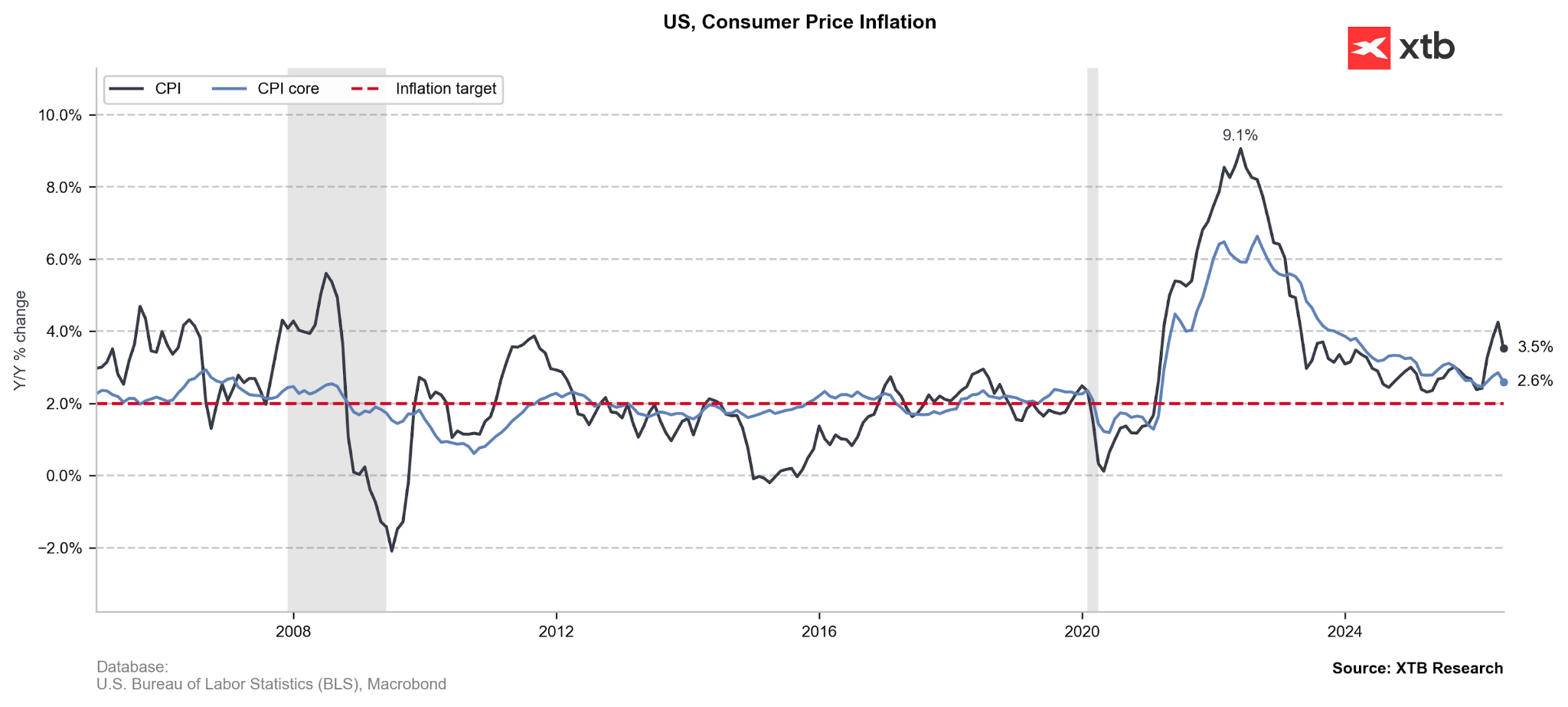
On a month-on-month basis, prices fell for the first time since 2020 – by as much as 0.4%.
-
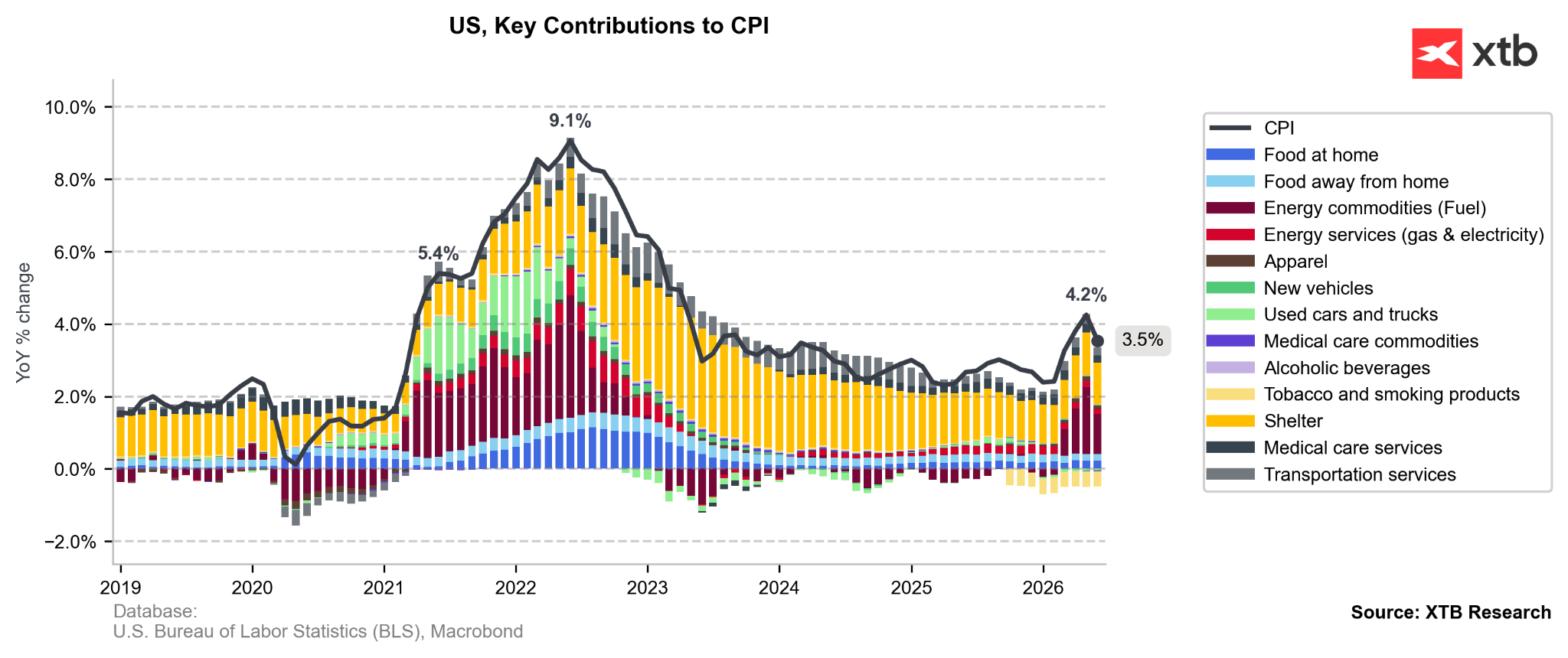
Fuel prices are down 9.7% compared with May.
-
Crucially, the core measure remained unchanged month-on-month (0.0%), down year-on-year (2.6%).
-
The probability of an FOMC rate increase as early as September has fallen to around 66%.
-
One rate hike before the end of the year is now the baseline scenario.
-
The EUR/USD pair strengthened by 0.6%.
-
This is not the end of the volatility – Kevin Warsh’s first testimony before the US Congress is due at 3PM.

-
On a month-on-month basis, prices fell for the first time since 2020 – by as much as 0.4%.
-
Fuel prices are down 9.7% compared with May.
-
Crucially, the core measure remained unchanged month-on-month (0.0%), down year-on-year (2.6%).
-
The probability of an FOMC rate increase as early as September has fallen to around 66%.
-
One rate hike before the end of the year is now the baseline scenario.
-
The EUR/USD pair strengthened by 0.6%.
-
This is not the end of the volatility – Kevin Warsh’s first testimony before the US Congress is due at 3PM.
In light of lower energy commodity prices, many anticipated a June decline in US inflation. Its magnitude has significantly surprised the markets, however. On a monthly basis, prices fell for the first time since the COVID year of 2020, dropping by as much as 0.4%. Perhaps even more importantly, core inflation (2.6%), a measure that excludes the most volatile energy and food prices, came in far lower than expected.
Figure 1: US CPI Inflation (2005 - 2026)
 Source: XTB Research, 14.07.2026
What does the data reveal?
Had the drop in inflation relied solely on lower fuel prices at petrol stations (down 9.7% compared to May) and continued modest growth in food prices (up by only 0.2% month-on-month), the reading could have been dismissed. In such a volatile geopolitical environment, both of these components can significantly distort the perception of real inflationary pressure.
The point, however, is that even after excluding the most volatile elements, prices in June did not rise (core measure: 0.0% m/m). Furthermore, in many sectors such as healthcare, apparel, and the secondary car market, price decreases were observed.
Figure 2: US CPI Inflation by Segment Contribution [y/y] (2018 - 2026)
 Source: XTB Research, 14.07.2026
Market less convinced regarding US rate hikes
Such a major surprise naturally brought about a repricing of the Fed's interest rate path as valued by the markets. Due to the recent escalation of tensions between the USA and Iran, investors at the beginning of the week began pricing in two hikes by the FOMC before the end of the year. Currently, the base scenario has returned to a single move upwards. The probability of a hike as early as September has fallen to approximately 66%.
Dollar down, Nasdaq up
This is the key factor driving the weakness of the dollar. The EURUSD pair strengthened by 0.6% and returned to the level seen at the end of last week (1.145).
Expectations of a less aggressive tightening of monetary policy by the Fed naturally also support the US stock market. The Nasdaq 100 index is gaining 0.9%.
High volatility does not end here?
Kevin Warsh's first report to the US Congress lies ahead of us. Today at 3:00 PM, the FOMC Chairman will answer questions from the House of Representatives. Tomorrow at the same time, he will appear before the Senate. Historically, the first day of hearings has carried the greatest market volatility.
We can expect Warsh to be asked about his plan to bring inflation back to target. He will most likely also have to explain the abandonment of forward guidance. However, the crucial question may be how his approach to the economy and monetary policy differs from that presented by Trump. This is particularly significant in the face of ongoing concerns regarding the loss of independence by the Federal Reserve.
—
Michał Jóźwiak, Financial Markets Analyst, XTB



Daily Summary: Bitcoin Excites Investors Despite the Fed's Hawkish Shift🏛️


What could halt the uptrend❓


BREAKING: US industrial production & manufacturing data lower than expected



Market warp: Rate Forecasts and Semiconductors in the Spotlight
The material on this page does not constitute as financial advice and does not take into account your level of understanding, investment objectives, financial situation or any other particular needs.
All the information provided, including opinions, market research, mathematical results and technical analyses published on the website or transmitted to you by other means is provided for information purposes only and should in no event be interpreted as an offer of, or solicitation for, a transaction in any financial instrument, nor should the information provided be construed as advice of legal or fiscal nature.
Any investment decisions you make shall be based exclusively on your level of understanding, investment objectives, financial situation or any other particular needs. Any decision to act on information published on the website or transmitted to you by other means is entirely at your own risk. You are solely responsible for such decisions.
If you are in doubt or are not sure that you understand a particular product, instrument, service, or transaction, you should seek professional or legal advice before trading.
Investing in OTC Derivatives carries a high degree of risk, as they are leveraged based products and often small movements in the market could lead to much larger movements in the value of your investment and this could work against you or for you. Please ensure that you fully understand the risks involved, taking into account your investments objectives and level of experience, before trading, and if necessary, seek independent advice.