


-
Germany (PMI Composite): The index dropped sharply to 48.3 from 51.9, marking an unexpected contraction in private-sector activity for the first time since May 2025.
-
Germany (PMI Services): The gauge plummeted to 46.9, its lowest level since 2022, fueled by heightened uncertainty surrounding the conflict with Iran.
-
France (PMI Composite): Activity fell to 47.6 (down from 48.8), a 14-month low representing the fourth consecutive month below the 50.0 expansion threshold.
-
France (PMI Services): The services sector sank to 46.5 as the conflict made consumers significantly more cautious with their spending.
-
Manufacturing Surprise: Despite the services slump, manufacturing in both nations remained in growth territory, with France reaching a nearly four-year high of 52.8. However, analysts warn this may be temporary, driven by customers purchasing in advance to hedge against shortages and price hikes.
Middle East Conflict Stalls Eurozone Recovery
The latest PMI data indicates that the Eurozone's economic recovery has been stopped in its tracks by the war in the Middle East. The conflict with Iran has emerged as the primary destabilizing factor, hitting the services sector particularly hard through a combination of heightened uncertainty and surging energy and transport costs.
In Germany, Europe’s largest economy, the services sector experienced its most significant plunge in over three years. While manufacturing remains resilient for now, S&P Global economists warn that darkening business sentiment and intensifying price pressures—the fastest rate of increase in three years—could soon lead to labor market weakness. The Berlin government has introduced €1.6 billion in fuel-price relief to cushion the blow, but the overall mood remains pessimistic.
The situation in France mirrors this trend, with service-sector weakness dragging economic activity to its lowest level in over a year. Businesses are contending with the highest levels of uncertainty since 2022, and French inflation has returned to 2% after previously undershooting central bank targets.
For the European Central Bank, the data presents a complex challenge. While economic activity is faltering, sharply rising input-cost inflation complicates the path forward. Although policymakers are expected to remain on hold this month, the persistent upward pressure on prices could eventually force the ECB to consider further interest-rate hikes.
EURUSD Extends Declines
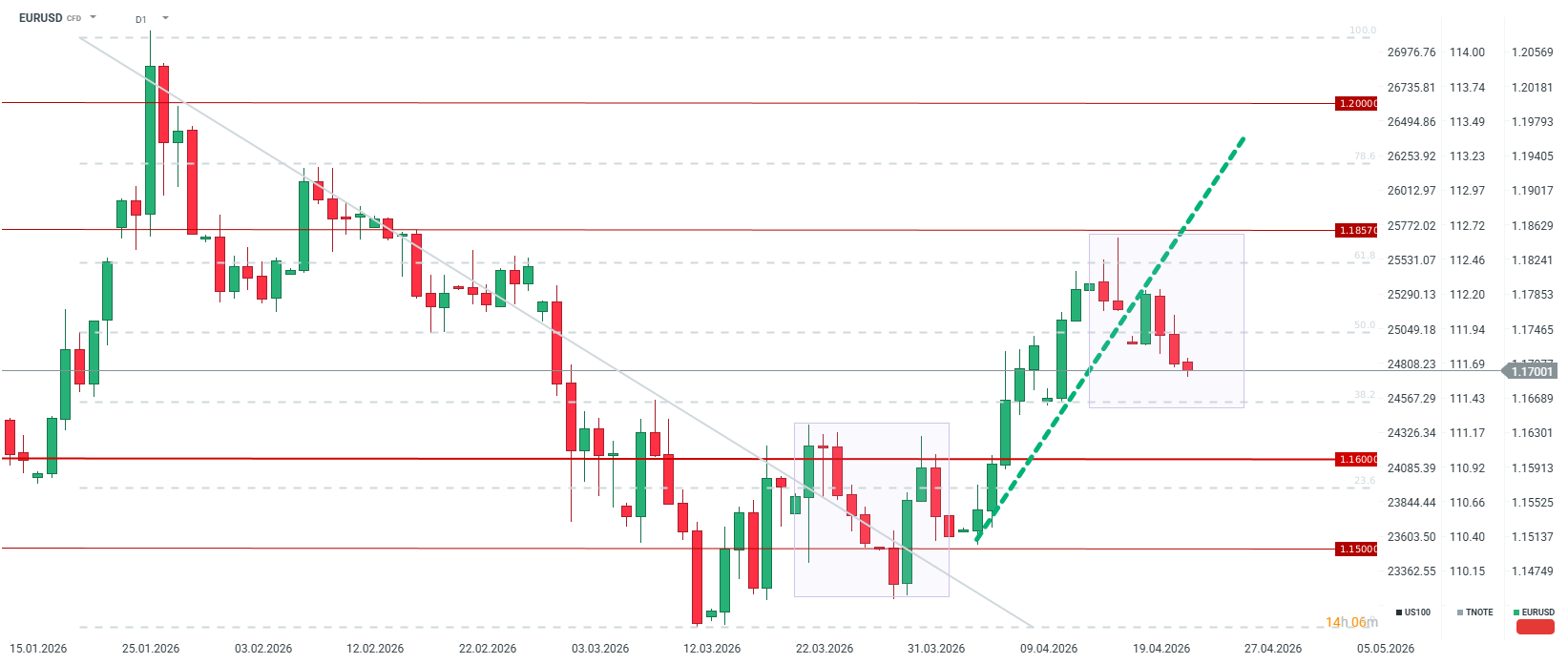
Following the weak European data and persistent geopolitical risk, EURUSD has extended its downward trajectory, further pressured by rising U.S. Treasury yields. The pair is currently testing the 1.1700 level, marking its most significant bearish wave since late March.
Technically, the pair has broken its upward trendline, reflecting the market's focus on Middle East risks and a preference for the U.S. dollar as a safe haven. Key support is now localized near the 38.2% Fibonacci retracement level of the major downward wave seen at the start of the year. If energy prices remain elevated and the conflict persists, the dollar's dominance is expected to continue.4



Daily Summary: Bitcoin Excites Investors Despite the Fed's Hawkish Shift🏛️



What could halt the uptrend❓


BREAKING: US industrial production & manufacturing data lower than expected



Market warp: Rate Forecasts and Semiconductors in the Spotlight
The material on this page does not constitute as financial advice and does not take into account your level of understanding, investment objectives, financial situation or any other particular needs.
All the information provided, including opinions, market research, mathematical results and technical analyses published on the website or transmitted to you by other means is provided for information purposes only and should in no event be interpreted as an offer of, or solicitation for, a transaction in any financial instrument, nor should the information provided be construed as advice of legal or fiscal nature.
Any investment decisions you make shall be based exclusively on your level of understanding, investment objectives, financial situation or any other particular needs. Any decision to act on information published on the website or transmitted to you by other means is entirely at your own risk. You are solely responsible for such decisions.
If you are in doubt or are not sure that you understand a particular product, instrument, service, or transaction, you should seek professional or legal advice before trading.
Investing in OTC Derivatives carries a high degree of risk, as they are leveraged based products and often small movements in the market could lead to much larger movements in the value of your investment and this could work against you or for you. Please ensure that you fully understand the risks involved, taking into account your investments objectives and level of experience, before trading, and if necessary, seek independent advice.