


-
European Stagflation: Germany has drastically cut its 2026 GDP forecast from 1.0% to just 0.5% while inflation expectations remain elevated. Combined with the ongoing energy crisis and the threat of jet fuel shortages, the Eurozone is facing a high risk of stagflation.
-
The Euro’s Safe Haven Limitation: ECB Chief Economist Philip Lane has acknowledged that the Euro cannot currently rival the US Dollar as a global safe haven. The lack of a unified "safe asset" (comparable to US Treasuries) and political fragmentation remain significant structural barriers.
-
Cautious ECB Policy: Despite inflationary pressures, the ECB is expected to hold rates steady in April. However, markets are pricing in nearly two hikes by the end of the year, contingent on TTF gas price spikes and the duration of the Middle East conflict.
-
USD Dominance (EURUSD): The currency pair remains under downward short-term pressure due to a clear growth divergence between a resilient US economy and a stagnating Europe. Speculative positioning reflects this, as investors continue to favor the greenback amid heightened geopolitical uncertainty.

-
European Stagflation: Germany has drastically cut its 2026 GDP forecast from 1.0% to just 0.5% while inflation expectations remain elevated. Combined with the ongoing energy crisis and the threat of jet fuel shortages, the Eurozone is facing a high risk of stagflation.
-
The Euro’s Safe Haven Limitation: ECB Chief Economist Philip Lane has acknowledged that the Euro cannot currently rival the US Dollar as a global safe haven. The lack of a unified "safe asset" (comparable to US Treasuries) and political fragmentation remain significant structural barriers.
-
Cautious ECB Policy: Despite inflationary pressures, the ECB is expected to hold rates steady in April. However, markets are pricing in nearly two hikes by the end of the year, contingent on TTF gas price spikes and the duration of the Middle East conflict.
-
USD Dominance (EURUSD): The currency pair remains under downward short-term pressure due to a clear growth divergence between a resilient US economy and a stagnating Europe. Speculative positioning reflects this, as investors continue to favor the greenback amid heightened geopolitical uncertainty.
The situation in the Eurozone, particularly in its "engine," Germany, is deteriorating rapidly in the face of the ongoing conflict with Iran. It is worth noting that Germany, like other European countries, relies heavily on energy imports; therefore, a continued impasse regarding the closure of the Strait of Hormuz worsens the long-term outlook for the Euro.
-
Drastic GDP Forecast Cuts: The German Ministry of Economy has slashed its GDP growth forecast for 2026 by half – from 1.0% to just 0.5%. The outlook for 2027 has also been revised downward to 0.9%.
-
Inflationary Pressure: Despite the economic slowdown, inflation in Germany is expected to rise to 2.7% in 2026 and 2.8% in 2027. The Bundesbank warns that the "real pain" associated with the Middle East crisis is still ahead, and Europe could face a jet fuel shortage within the next six weeks.
-
Trade Risks: While Donald Trump has limited authority to impose broad tariffs, the potential for sector-specific tariffs remains, which could heavily impact the crucial German economy.
ECB Interest Rate Outlook: Caution and a Lack of Alternatives
Statements from European Central Bank policymakers indicate a difficult balancing act between fighting inflation and supporting economic growth.
-
No April Hike: The ECB’s Gediminas Simkus clearly stated that the bank should not raise interest rates at the April meeting. The current deposit rate of 2.00% is considered appropriate given stable core inflation, despite spikes in headline inflation caused by energy prices.
-
Door Open for 2026: However, Simkus does not rule out a hike later this year, citing structural risks such as rising defense spending and supply chain disruptions.
-
Euro’s Weakness as a Safe Haven: ECB Chief Economist Philip Lane admitted that the Euro is currently unable to replace the Dollar as a global safe haven. Lane points to the lack of unified European "safe assets" (similar to U.S. Treasuries) and the political fragmentation of the Eurozone as primary barriers.
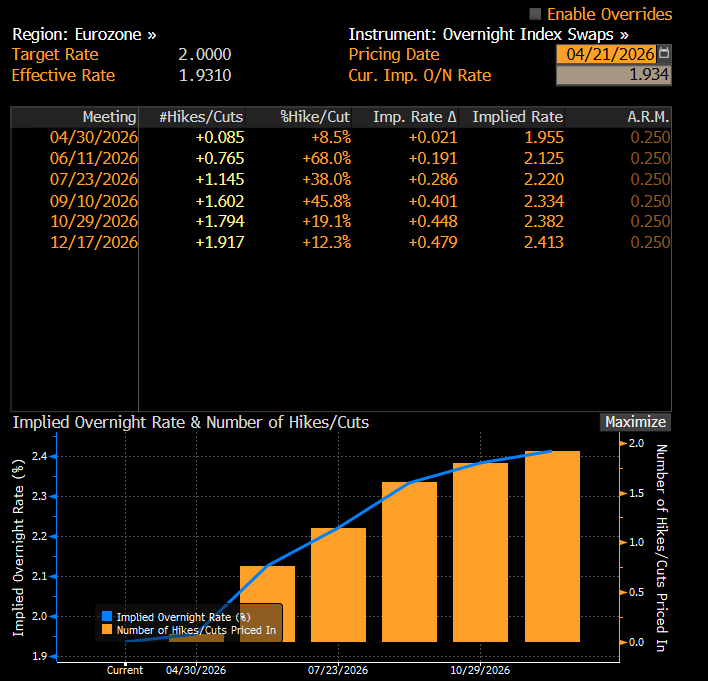 The market currently does not price in a significant chance of an April hike. Nevertheless, if inflation becomes a tangible problem, the prospect of a hike this year remains strong. Furthermore, the market is pricing in nearly two hikes by the end of the year. The first is possible in June or July, though the central bank will likely wait for the conflict to conclude or react to a sharp rise in TTF gas prices, which is a key factor for EURUSD. Source: Bloomberg Finance
EURUSD Analysis: The Dollar Remains King
The EURUSD pair is under clear downward pressure, resulting from a combination of fundamental and geopolitical factors.
-
Growth Divergence: While the U.S. shows relative resilience, Europe (led by Germany) is sinking into stagnation. Investors prefer the Dollar due to the depth and liquidity of the U.S. bond market, as noted by Philip Lane.
-
Risk Factors: Potential U.S. tariffs and a prolonged energy crisis in Europe (with oil risks above $100 and TTF gas above €60) continue to favor the Dollar.
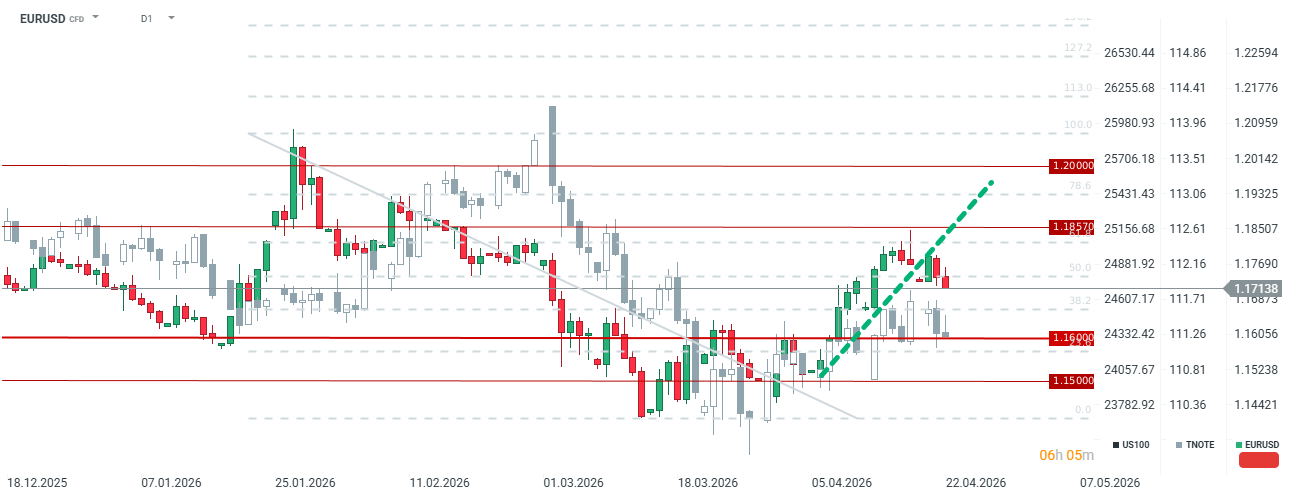
EURUSD is retreating significantly, hitting its lowest levels since April 13. The pair is breaking below its upward trendline, signaling that the market still sees substantial risk stemming from the Middle East conflict. Although EURUSD appears relatively well-valued based on yield spreads, speculative investors have recently begun to favor the U.S. currency, selling off the Euro. This situation could reverse once energy prices begin to decline and investors start rotating out of U.S. assets in search of other opportunities, especially considering the massive risks associated with U.S. debt and the upcoming midterm elections.
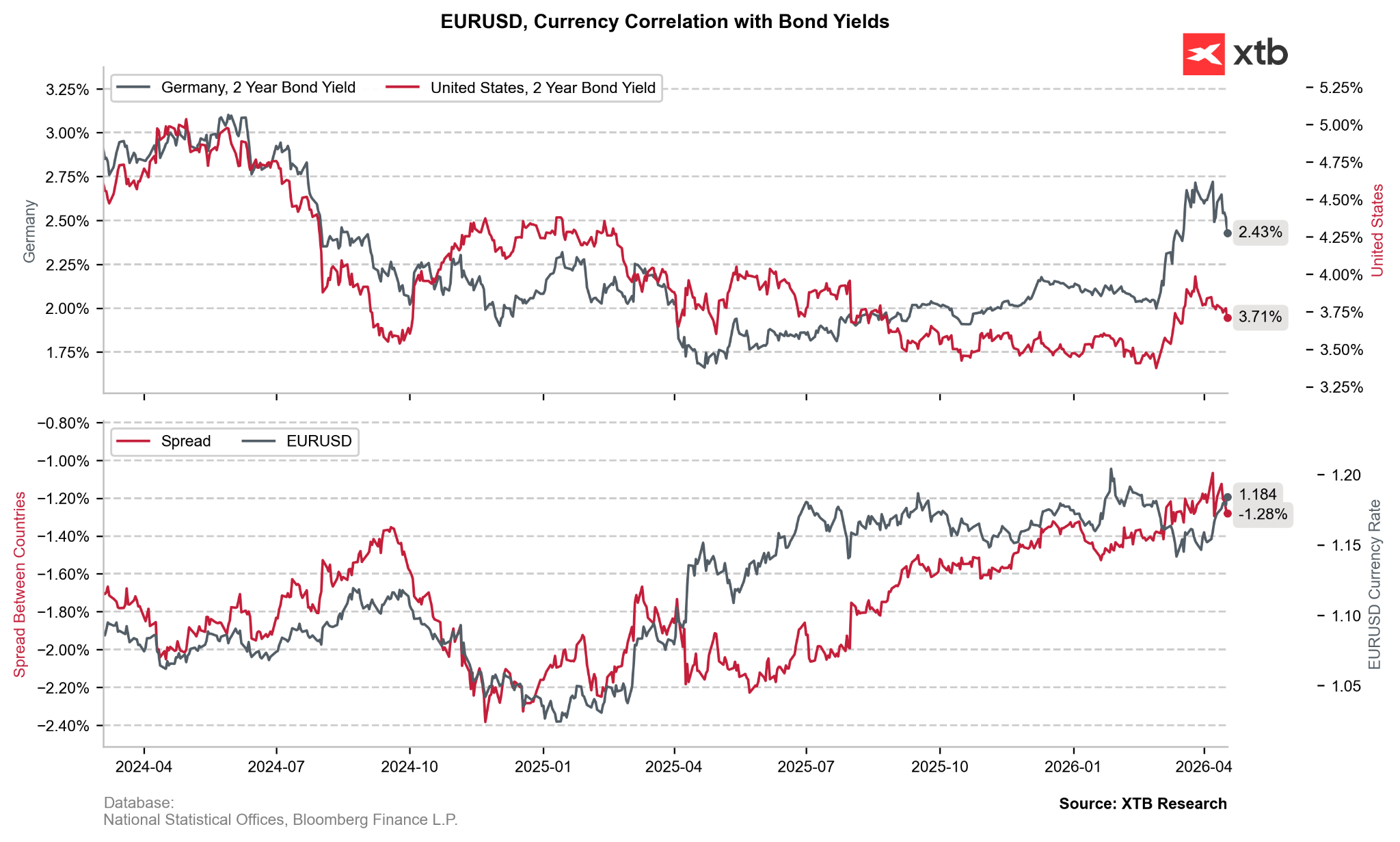
German bond yields have fallen significantly recently, even despite expectations of potential ECB rate hikes. Nevertheless, EURUSD remains fairly valued relative to yield spreads.
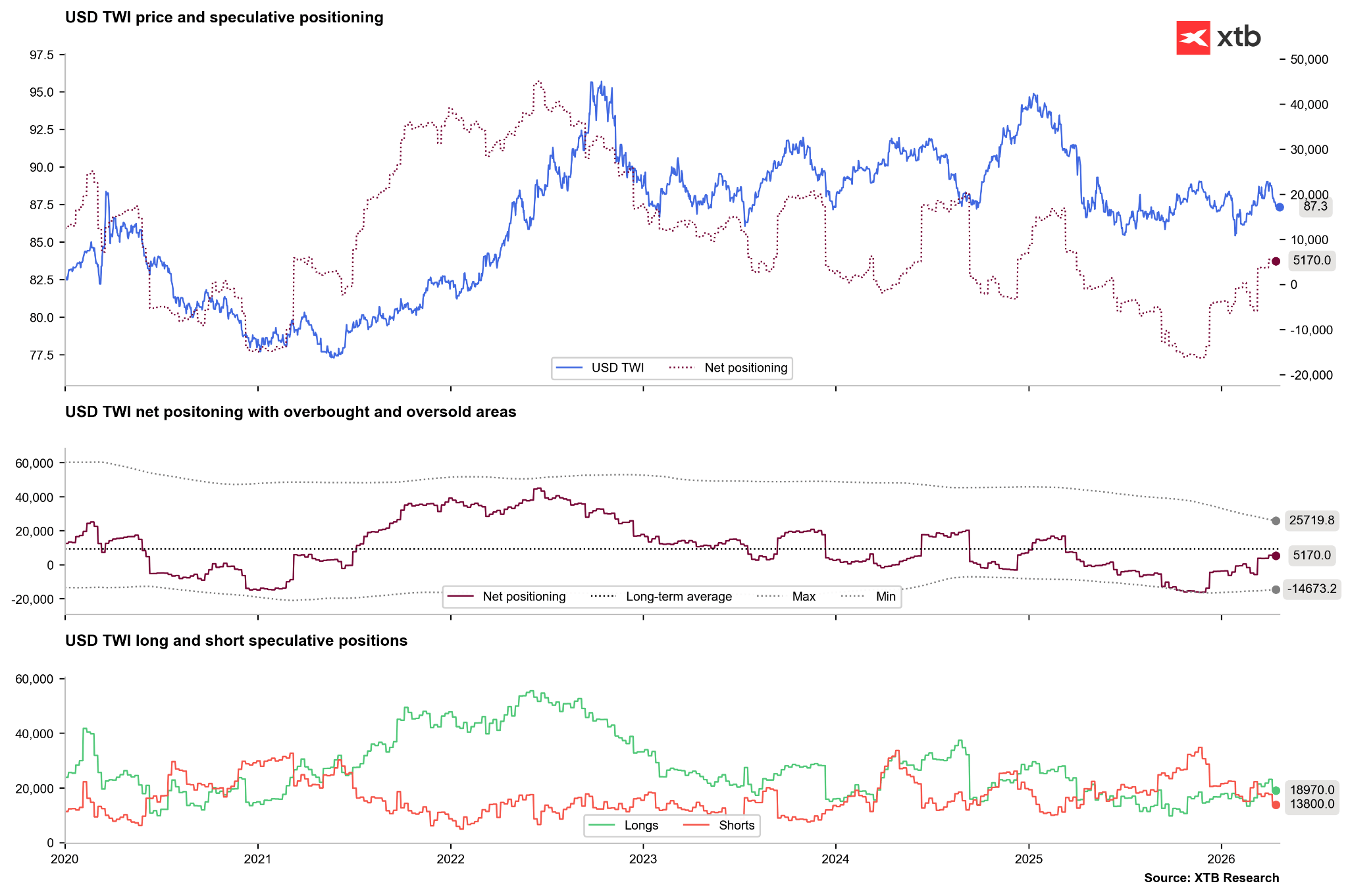
Investors aggressively offloaded long Euro positions in recent weeks, though the last 2-3 weeks saw a shift back toward positive net positioning. We could potentially see a repeat of the 2022 scenario, where after an initial sell-off, investors began closing short positions as energy price risks faded.
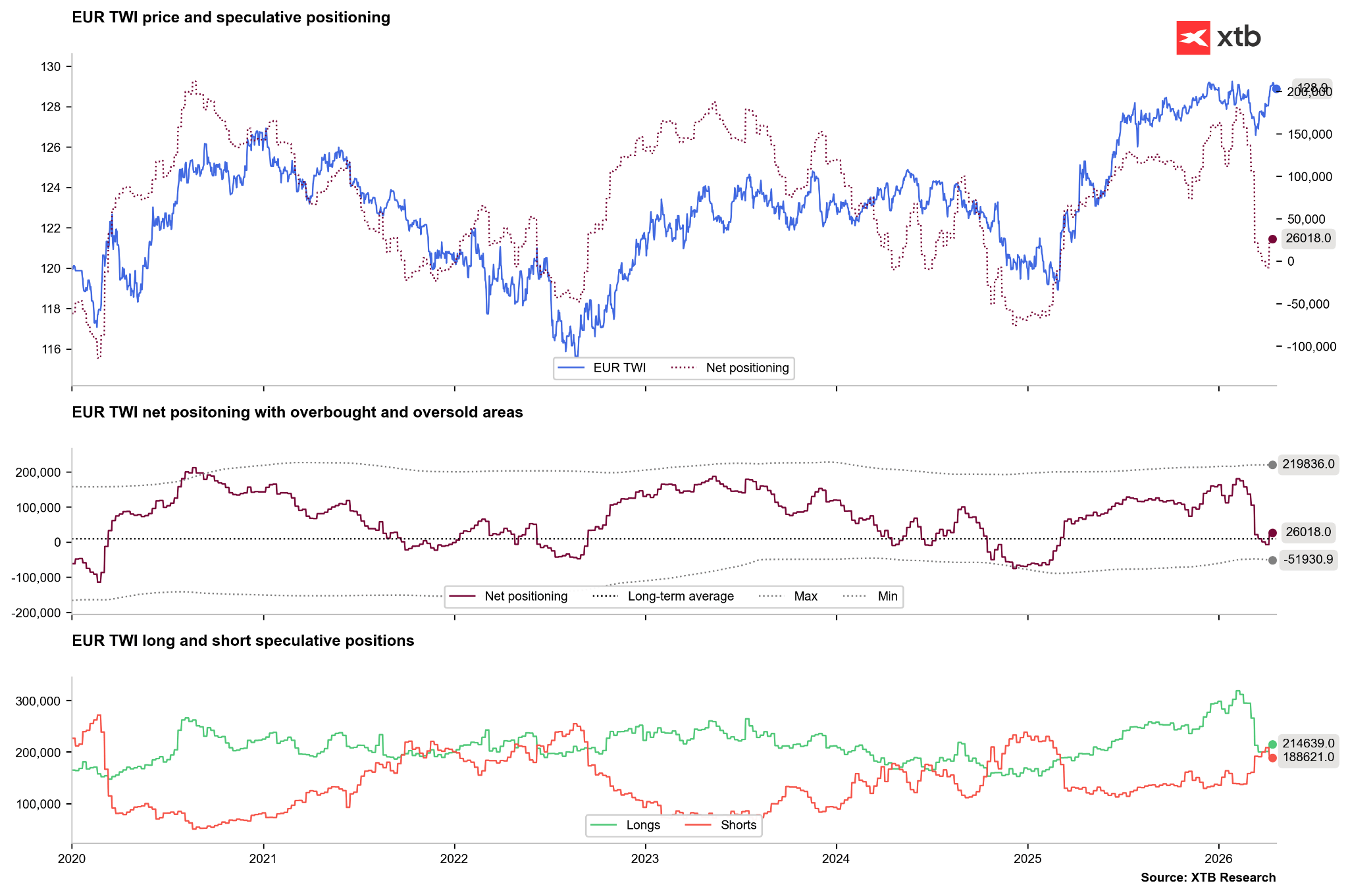
On the other hand, the market remains somewhat more convinced by the Dollar, though this is primarily driven by the covering of short positions, which pushed net positioning into positive territory. If long positions were to rebound in the coming weeks to levels not seen since early 2025, it could signal the development of a broader upward trend.
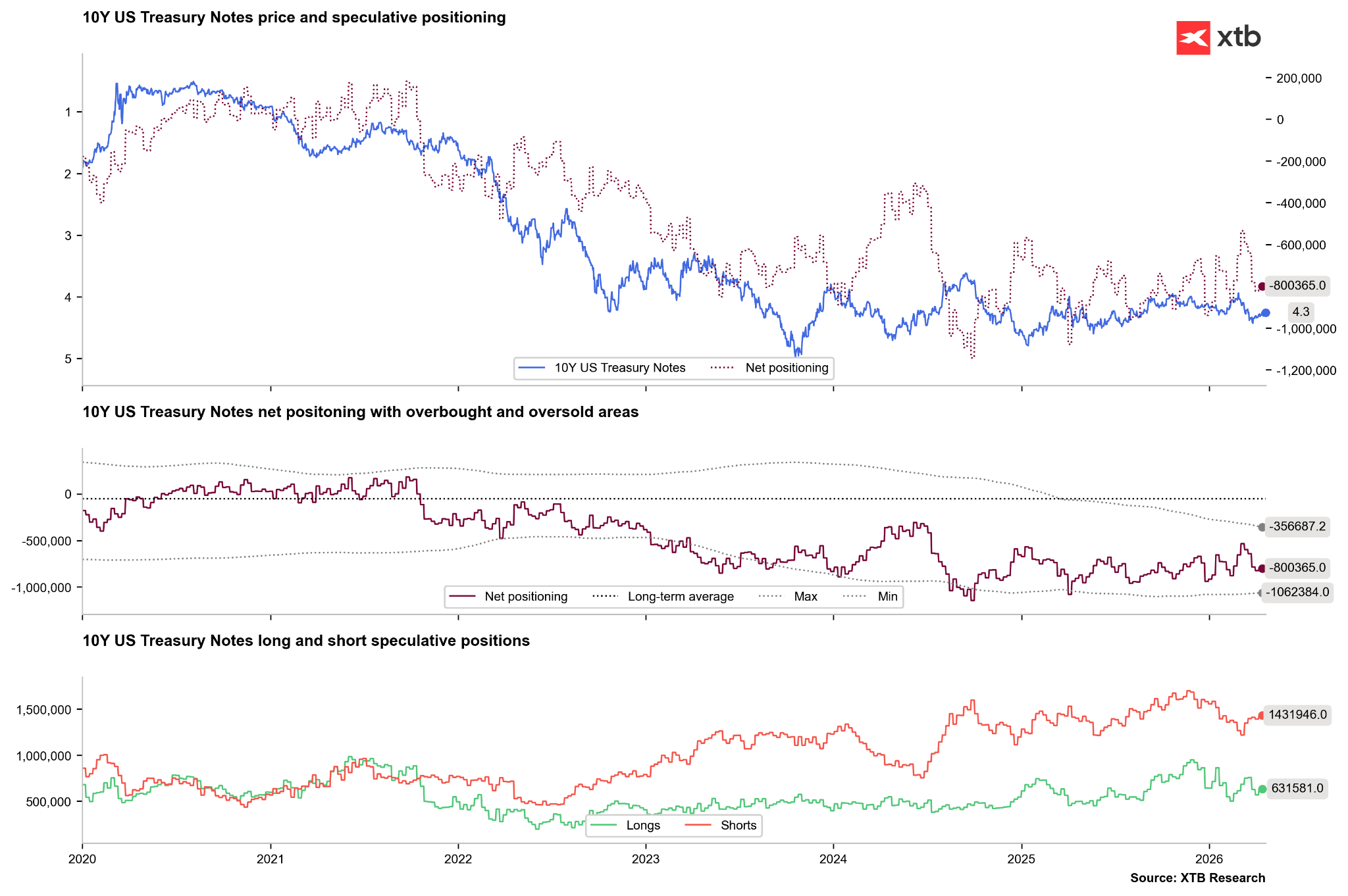
Simultaneously, U.S. bonds are facing renewed selling pressure, though not as severe as in late 2024 or 2025. A key factor regarding U.S. debt could be the new leadership under Kevin Warsh. During his Senate Banking Committee hearing, Warsh indicated he would not be "Trump's puppet" but expressed dissatisfaction with the Fed's current predefined policy. He also intends to move away from the Fed's preferred inflation metric, PCE. While Warsh did not signal immediate cuts, any such signals amid elevated inflation could trigger a sharp bond sell-off, which might not necessarily be positive for the Dollar.
Summary
The Euro faces clear internal challenges and a high dependency on terms of trade, which are strictly linked to commodity prices. Although the U.S. economy outperforms the Eurozone, EURUSD has not plunged as sharply as it did in 2022. If global conditions stabilize, the Euro—despite its weaknesses—could behave as it did in 2022/2023, albeit starting from significantly higher levels. Conversely, if the war drags on, the Dollar has every chance to remain "king" for many months to come.



Yen loses ground after the BoJ decision

Hawkish remarks by BOJ Governor strengthen the yen – key takeaways

🏯Chart of the Day: Yen in a Trap. BoJ Hike That Weakened the Currency (18.09.2026)



Macro Calendar – Dovish BoJ Pivot and Key Data from Europe and the US
The material on this page does not constitute as financial advice and does not take into account your level of understanding, investment objectives, financial situation or any other particular needs.
All the information provided, including opinions, market research, mathematical results and technical analyses published on the website or transmitted to you by other means is provided for information purposes only and should in no event be interpreted as an offer of, or solicitation for, a transaction in any financial instrument, nor should the information provided be construed as advice of legal or fiscal nature.
Any investment decisions you make shall be based exclusively on your level of understanding, investment objectives, financial situation or any other particular needs. Any decision to act on information published on the website or transmitted to you by other means is entirely at your own risk. You are solely responsible for such decisions.
If you are in doubt or are not sure that you understand a particular product, instrument, service, or transaction, you should seek professional or legal advice before trading.
Investing in OTC Derivatives carries a high degree of risk, as they are leveraged based products and often small movements in the market could lead to much larger movements in the value of your investment and this could work against you or for you. Please ensure that you fully understand the risks involved, taking into account your investments objectives and level of experience, before trading, and if necessary, seek independent advice.