


The ECB returns from its summer recess to a rate decision meeting. Given the euro area’s solid economic situation and inflation stabilizing near its target, the likelihood of further rate cuts appears low. The ECB's communication is expected to be similar to its July press conference, although several issues could lead to either euro strength or weakness.
ECB Nears Inflation Target
Eurozone inflation has stopped falling, a trend observed across key member states. This prolonged stabilization puts the ECB in a comfortable position, alleviating the need for further rate cuts. The deposit rate of 2.0% provides an additional cushion, allowing for a potential cut if significant economic problems arise.
Many commentators suggest the ECB may reconsider rate cuts later this year if a trade agreement with the United States leads to further disinflation and a strong euro exacerbates these processes. However, it's too early to consider this scenario, although a mention of such speculation by Lagarde at the press conference could weaken the currency.
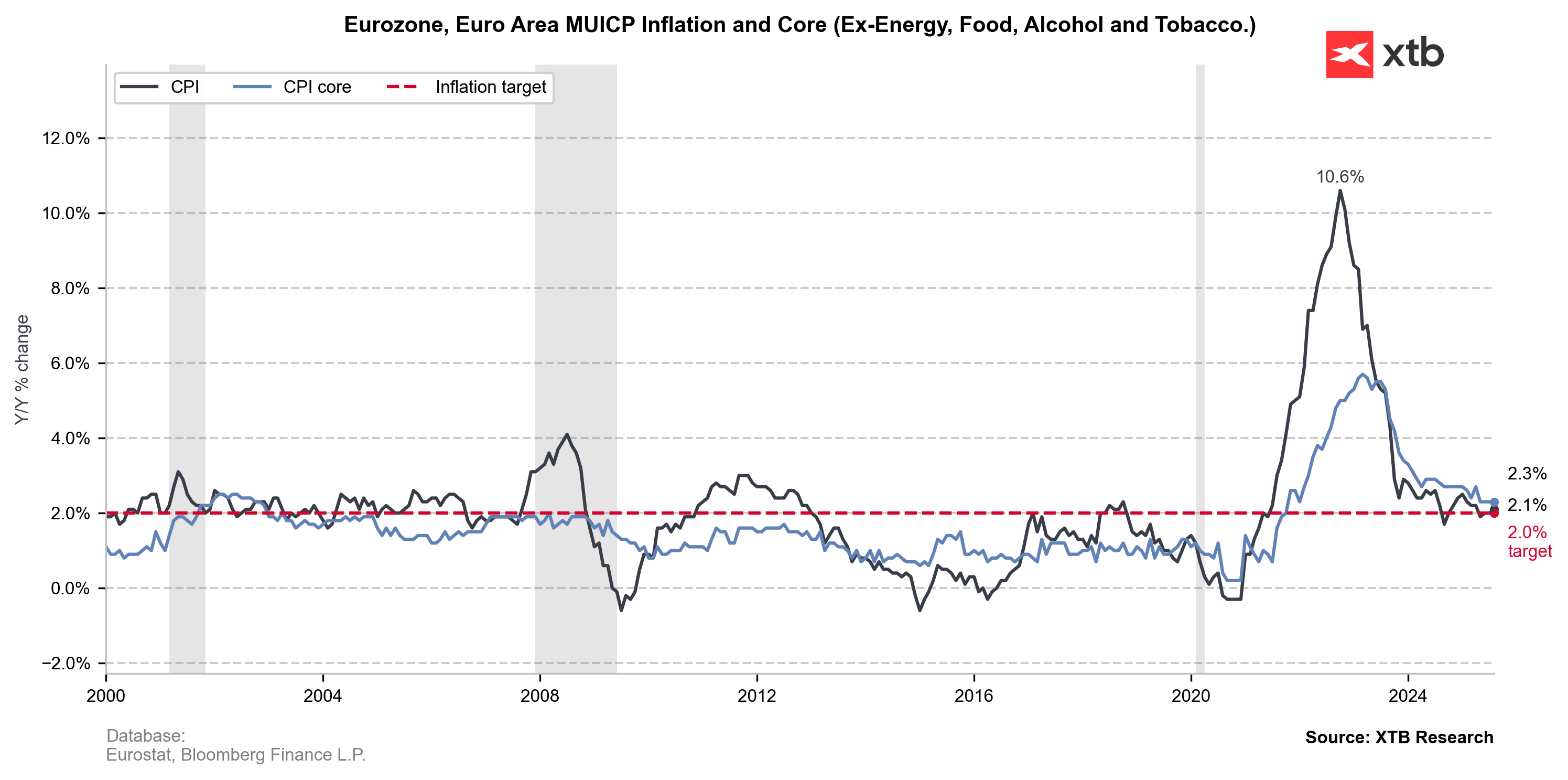
Eurozone inflation has gently rebounded from 2%, but ECB projections indicate the target will be met in the medium term. Source: XTB Research, Bloomberg Finance LP
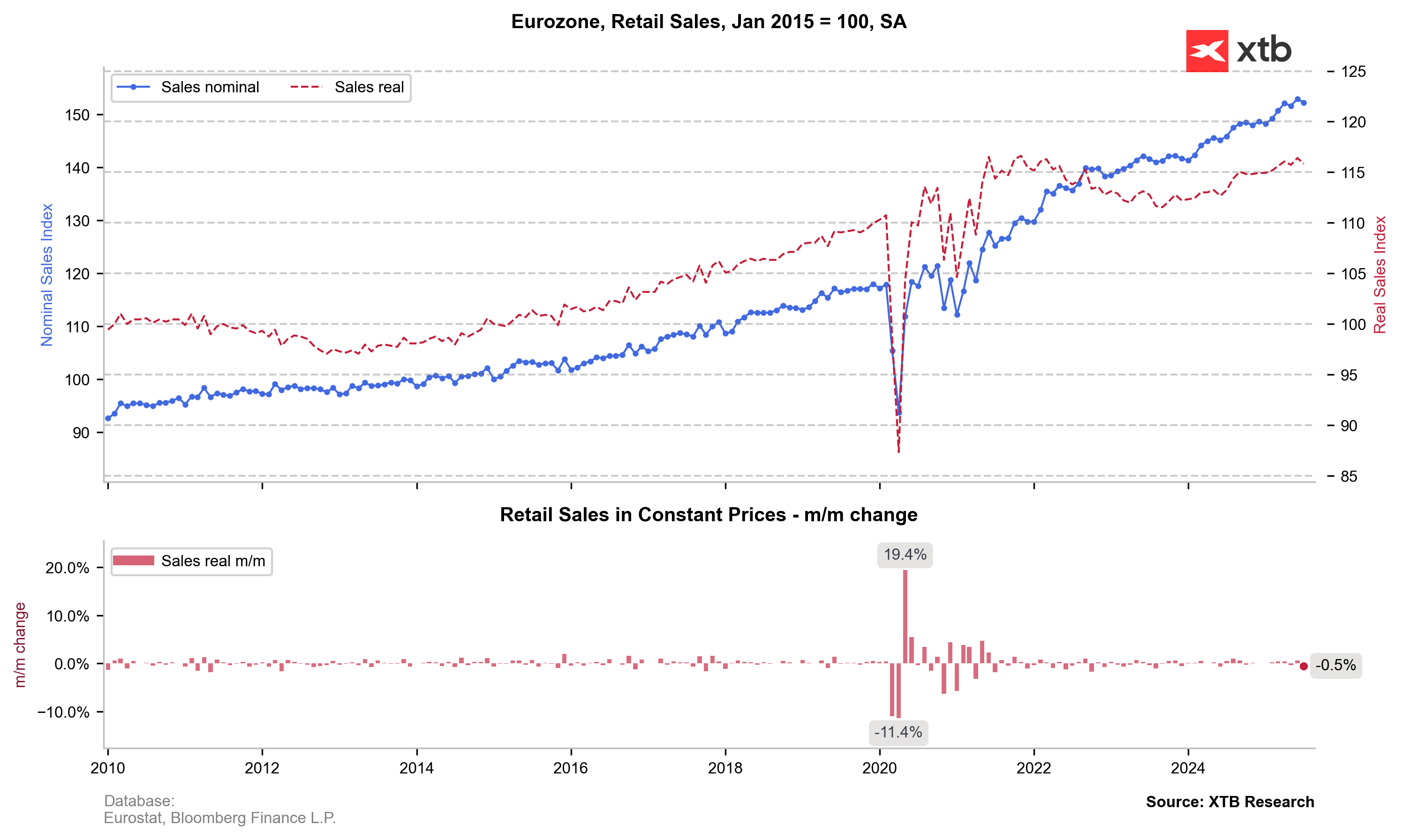
On the other hand, we have recently seen a slight weakness in retail sales, although in real terms, we have returned to the high levels of 2021. Source: XTB Research, Bloomberg Finance LP
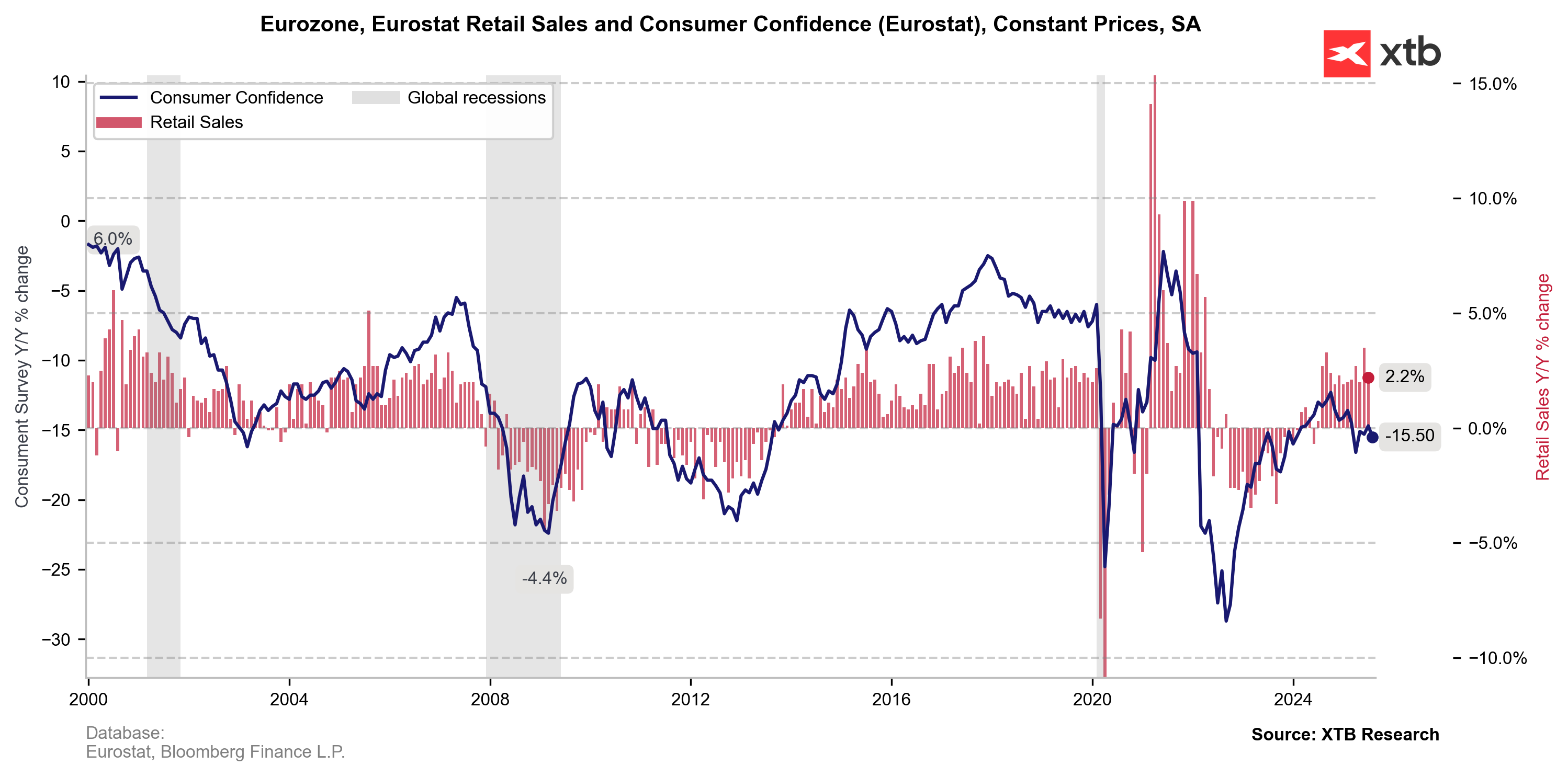
Consumer sentiment has attempted to rebound in recent months but is now trending downwards again. We have not seen a return to the 2016-2020 levels of consumer satisfaction in the eurozone. Retail sales are recovering year-on-year at a similar pace to that period, but it's important to note the low base from last year. Source: XTB Research, Bloomberg Finance LP
Economic Outlook Offers No Case for Pre-emptive Cuts
Eurozone business activity is experiencing a gradual and subdued expansion, despite persistent concerns about a decline in external demand due to Donald Trump's tariffs and continental fiscal challenges. According to August PMI data, the situation has improved in both manufacturing and services, although trends are changing in the largest EU economies.
In France, optimism is primarily driven by the highest employment growth in over a year, although companies warn that the new prime minister's proposed additional corporate taxes would primarily lead to layoffs. Conversely, a clear drop in orders has been recorded in Germany, where a combination of lagging domestic demand and high wages is forcing companies into significant restructuring.
Nevertheless, the easing of deep trade uncertainty, the gradual expansion of the business sector due to the transmission of less restrictive monetary policy, and stable inflation projections all legitimize the ECB's current pause.
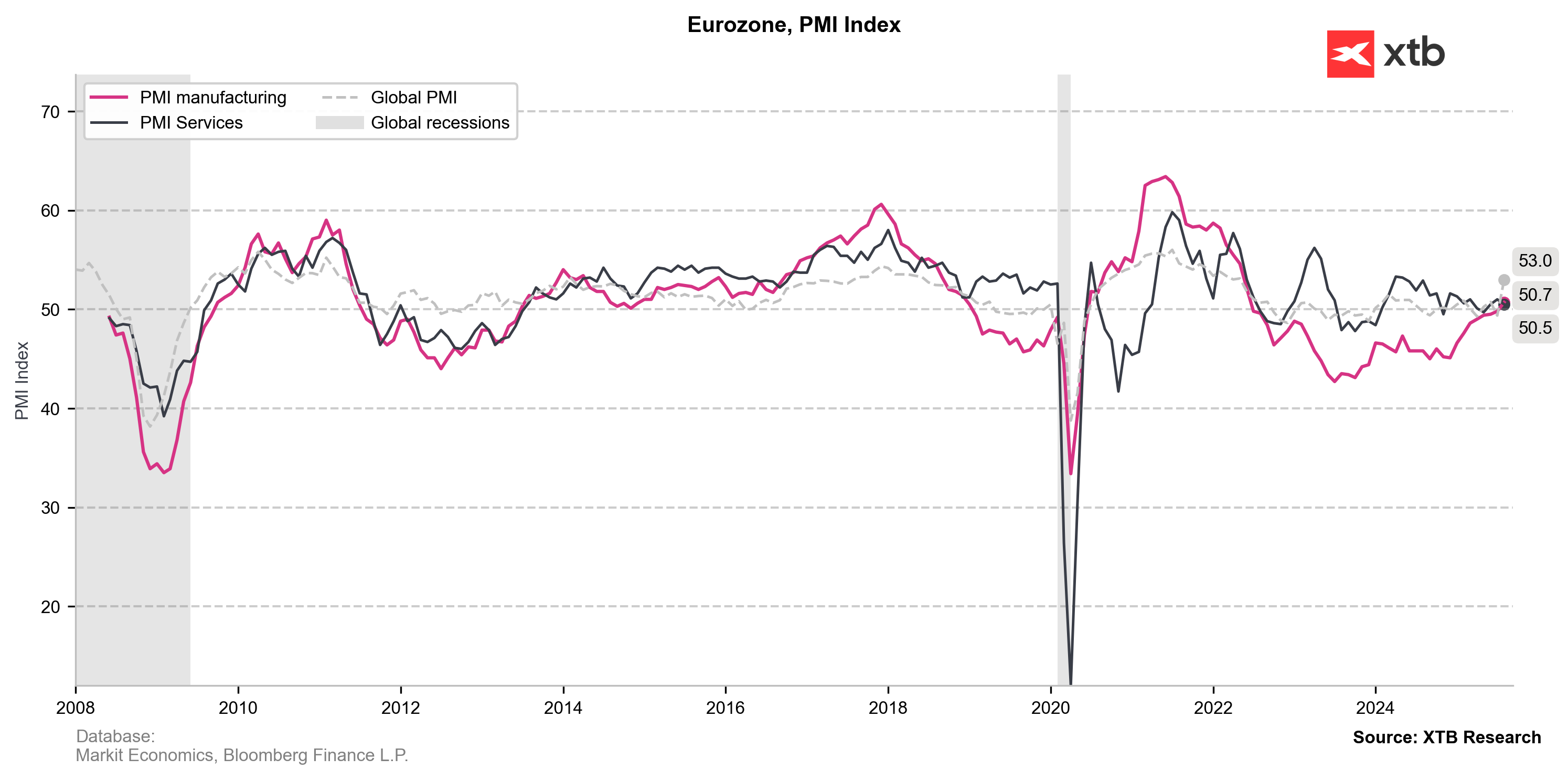
Business activity in Europe remains on the edge of expansion, far from the dynamism needed for a decisive improvement in sentiment. Nevertheless, we see a clear improvement compared to what we observed a few or several months ago. Source: XTB Research, Macrobond data
Markets Eye Stability and Potential Cuts from December
Market expectations point to no changes in interest rates for both Thursday's decision and the October meeting. A slightly higher probability is assigned to September, so any dovish statements could increase expectations for December. However, the market does not anticipate a full cut until mid-next year.
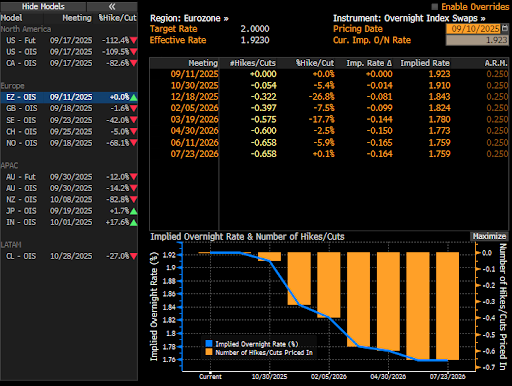
Source: Bloomberg Finance LP
EURUSD Situation
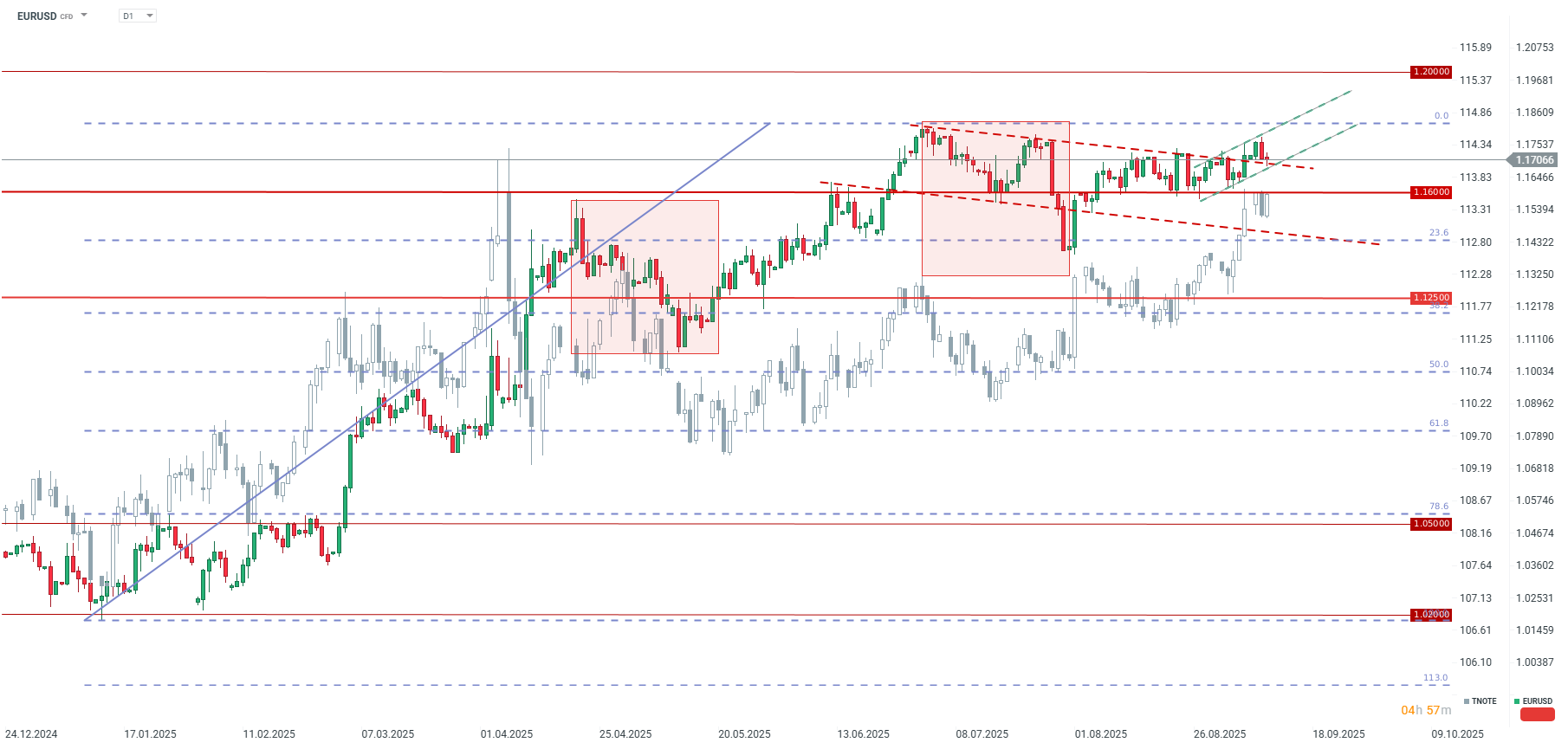
The world's most important currency pair started the week by rising to nearly 1.18, its highest level since late July. Volatility in the pair has clearly decreased as pressure on the dollar has lessened amid the trade war. However, a divergence in monetary policy between the ECB and the Fed is very close. The ECB is comfortable with its interest rates, and while the economy is not in great shape, the risk of recession seems low.
Conversely, in the US, the Fed is preparing for an entire cycle of cuts, and the labor market is sending extremely negative signals. As a result, the chances of reaching 1.20 this year remain realistic, although geopolitics could again play a significant role. If the conflict with Russia in Europe were to escalate, the euro and other regional currencies could lose value. However, if the pair reacts mainly to monetary and economic factors, the recent trend drawn by the upward trend channel may continue.



Morning Wrap: Will the market rebound after Thursday's sell-off❓


Daily Summary: Trump's War Threats Weigh on Markets. Wall Street Sinks into the Red

Tensions around Iran weigh on markets!


US Open: Alphabet and Tesla Weigh on Wall Street, While Oil Prices Renew Investor Concerns
The material on this page does not constitute as financial advice and does not take into account your level of understanding, investment objectives, financial situation or any other particular needs.
All the information provided, including opinions, market research, mathematical results and technical analyses published on the website or transmitted to you by other means is provided for information purposes only and should in no event be interpreted as an offer of, or solicitation for, a transaction in any financial instrument, nor should the information provided be construed as advice of legal or fiscal nature.
Any investment decisions you make shall be based exclusively on your level of understanding, investment objectives, financial situation or any other particular needs. Any decision to act on information published on the website or transmitted to you by other means is entirely at your own risk. You are solely responsible for such decisions.
If you are in doubt or are not sure that you understand a particular product, instrument, service, or transaction, you should seek professional or legal advice before trading.
Investing in OTC Derivatives carries a high degree of risk, as they are leveraged based products and often small movements in the market could lead to much larger movements in the value of your investment and this could work against you or for you. Please ensure that you fully understand the risks involved, taking into account your investments objectives and level of experience, before trading, and if necessary, seek independent advice.
