


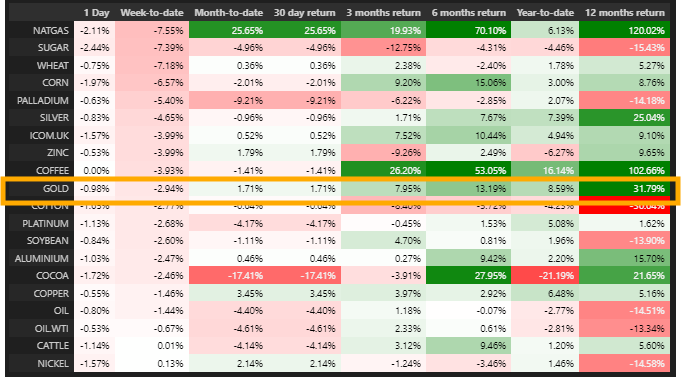
Gold has experienced its worst week since the second week of November, with losses reaching approximately 3%, compared to the 4.5% drop seen in November. While this week's decline is not the most severe across the commodities market, its magnitude is notable for the gold sector. This downturn casts doubt on the continued upward trajectory of gold prices and challenges recent forecasts that projected levels of $3,000, and even $3,100-$3,300 per ounce. What factors are influencing the gold market?
What drives gold recently?
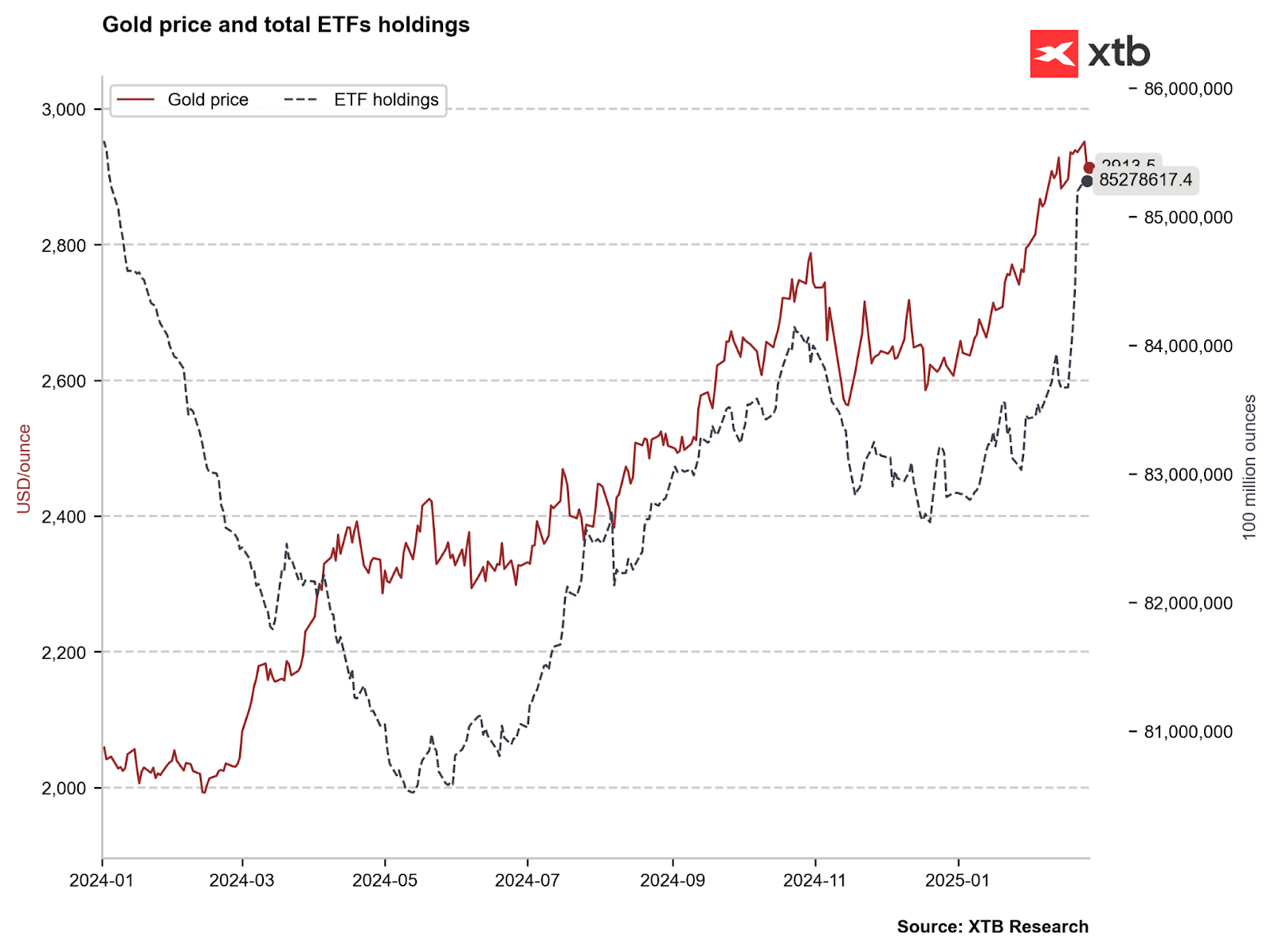
The recent surge in gold prices was fueled by geopolitical uncertainties and concerns over potential US import tariffs on gold. This led to a sharp increase in US prices and a rush to import gold before any trade restrictions could be imposed. Speculation also arose in the US regarding a potential revaluation of the government's gold reserves, which are currently valued at $42 per ounce, a price set in 1973. This undervaluation means that the US's 8,133 tons of gold reserves are valued at a mere $11 billion, while a market-value adjustment would raise this figure to $760 billion. Theoretically, the government could decide to improve its balance sheet by selling some of its gold.
Furthermore, central bank purchases have been a significant driver of gold prices in recent years. Although the Federal Reserve has remained on the sidelines, other central banks have been actively accumulating gold. Over the past three years, these banks have purchased more than 1,000 tons of gold annually, accounting for approximately one-fourth of global demand and production. Additionally, gold ETFs have seen substantial inflows, with over 1 million ounces added in a short period.
What's causing the sell-off?
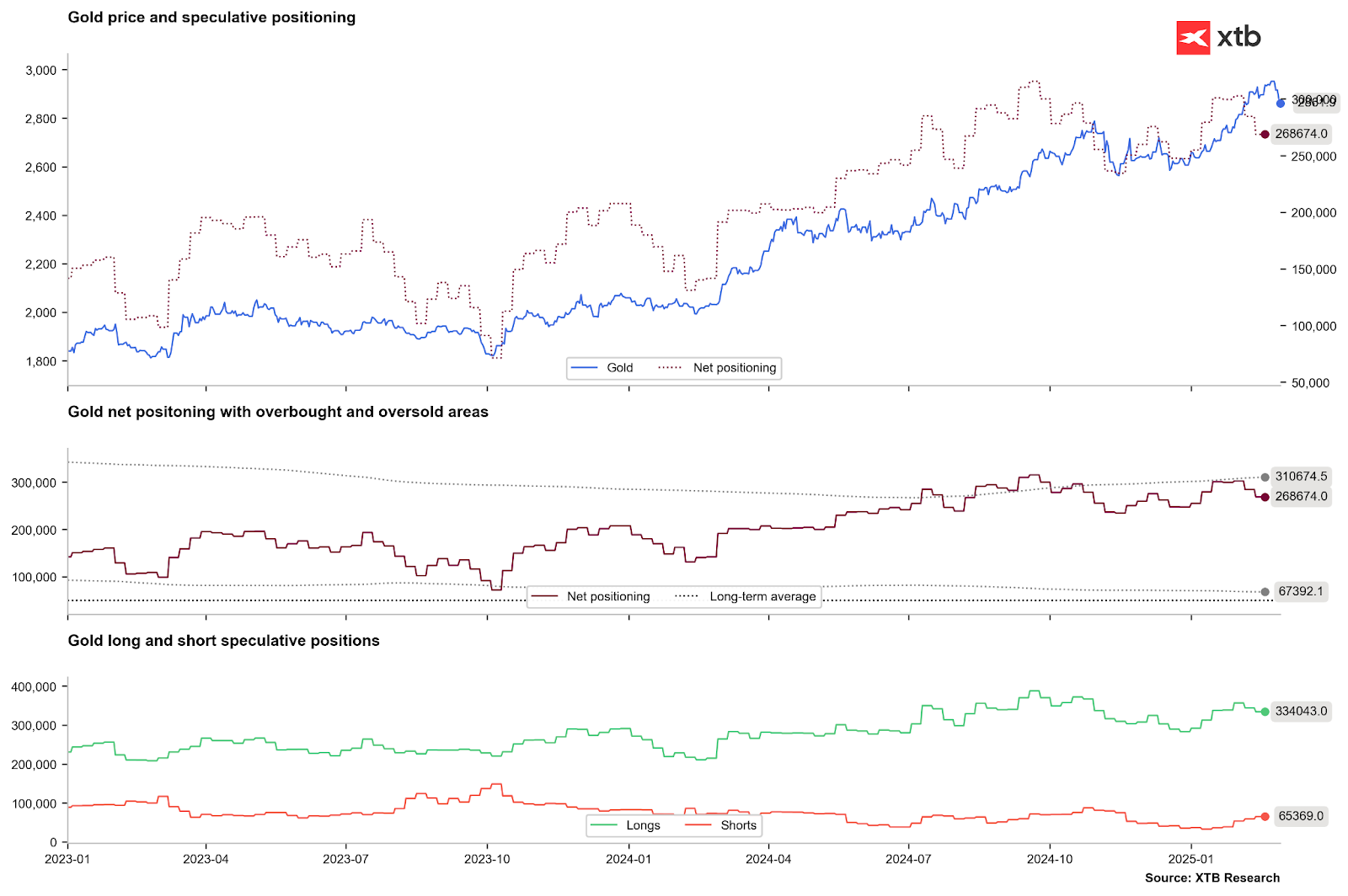
The sharp sell-off on Wall Street and month-end portfolio rebalancing have triggered a demand for liquidity and cash. Gold, being a highly liquid asset, has been used to meet these demands. Funds and investors may have been forced to close positions following the recent stock market downturn, leading to the sell-off in gold. This situation is reminiscent of the market conditions seen in 2020. Notably, gold has often experienced sell-offs alongside Wall Street declines in recent months. Gold ETFs are likely to face pressure to sell some of their holdings in the near term.
Outlook
Despite the recent sell-off, it is premature to declare a trend reversal. The market remains fraught with uncertainties, including potential tariffs, the ongoing war in Ukraine, and the unresolved situation in the Middle East. The recent price correction may attract new buyers and encourage existing investors to re-enter the market.
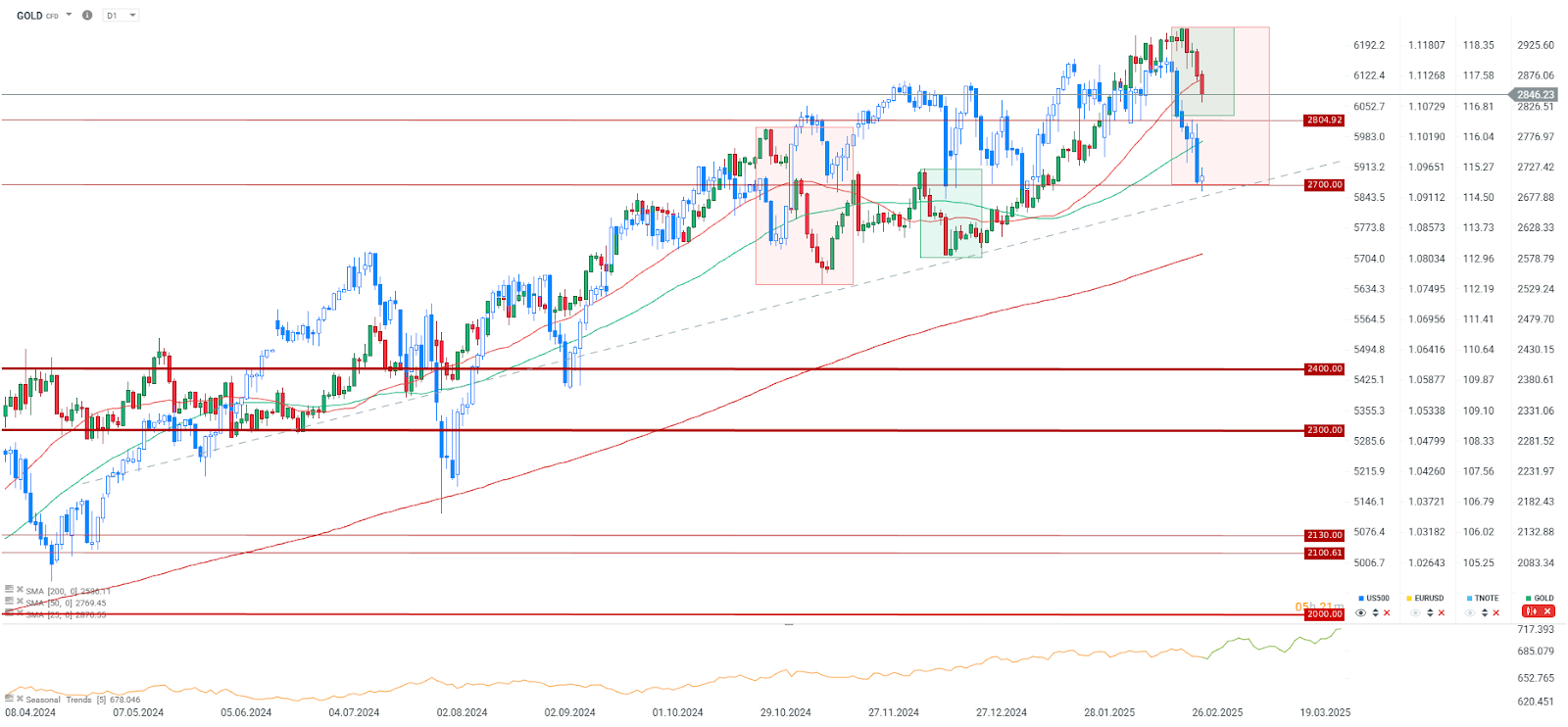
Gold has breached a key support level at $2,850 per ounce and the 25-period moving average. The next support level is around $2,810, coinciding with the range of the previous major correction in December 2024. A further decline could see support at $2,700, which aligns with the November correction range and the uptrend line from recent months.


When will the rise in oil prices reach us?



Daily Summary: Equities Diverge as Tech Lags, Europe Rallies on Earnings & PMIs (24.07.2026)



Three markets to watch next week (24.07.2026)


Oil Slides Ahead of the Weekend!
The material on this page does not constitute as financial advice and does not take into account your level of understanding, investment objectives, financial situation or any other particular needs.
All the information provided, including opinions, market research, mathematical results and technical analyses published on the website or transmitted to you by other means is provided for information purposes only and should in no event be interpreted as an offer of, or solicitation for, a transaction in any financial instrument, nor should the information provided be construed as advice of legal or fiscal nature.
Any investment decisions you make shall be based exclusively on your level of understanding, investment objectives, financial situation or any other particular needs. Any decision to act on information published on the website or transmitted to you by other means is entirely at your own risk. You are solely responsible for such decisions.
If you are in doubt or are not sure that you understand a particular product, instrument, service, or transaction, you should seek professional or legal advice before trading.
Investing in OTC Derivatives carries a high degree of risk, as they are leveraged based products and often small movements in the market could lead to much larger movements in the value of your investment and this could work against you or for you. Please ensure that you fully understand the risks involved, taking into account your investments objectives and level of experience, before trading, and if necessary, seek independent advice.
