

Gold prices continue to plummet today, falling by more than 2.5%, with prices dropping to around $4,700 per ounce—the lowest levels seen since early February 2026. This move is not merely a cosmetic correction but a full-fledged breakout to the downside following a multi-month bull run in the gold market, further amplified by the significant strengthening of the U.S. dollar following recent Fed decisions and statements, which have raised expectations of higher interest rates being maintained for a longer period. Another significant factor contributing to the visible downward pressure is the situation in Iran, which is driving up global fuel prices and further increasing expectations of a more conservative policy by the U.S. central bank.
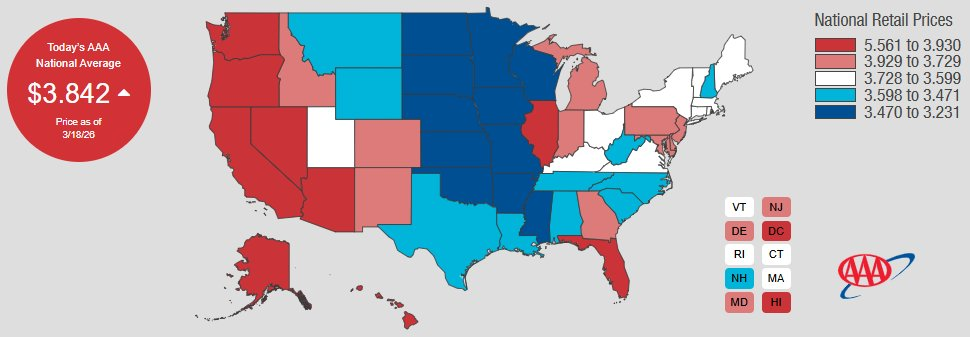
The chart above shows a breakdown by state of current retail fuel prices. Prices are highest in the western United States, primarily due to relatively high local tax rates. Source: gasprices.aaa
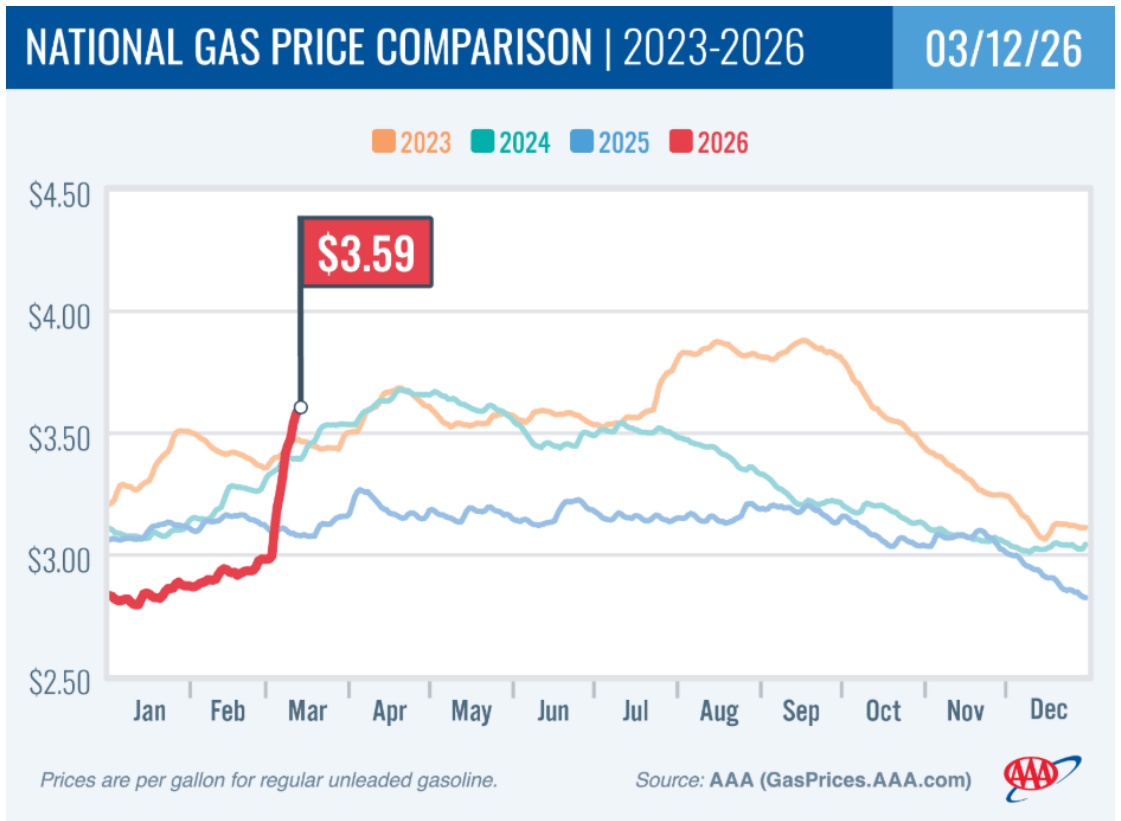
Interestingly, the price of regular gasoline in January was still hovering around $2.90 per gallon. According to data from March 12, the rate of increase is now even higher. Source: gasprices.aaa
The current decline in gold prices can largely be interpreted as a sharp repositioning following a prolonged bull market lasting over a year, which pushed gold prices to new all-time highs and attracted massive speculative capital. After such a strong rally, it is natural that part of the market decides to take profits—especially as the risk of “higher rates for longer” rises and the liquidity environment shifts, as was also evident in the recent sharp corrections in gold prices in March 2026. This break from the previous, almost one-sided uptrend means that in the short term, “flight-to-safety” psychology dominates, and the downward movement is driven by both stop-losses and the closing of leveraged positions.
A separate but crucial factor is the dollar’s rebound—gold is priced globally in USD, so a strengthening U.S. currency automatically puts downward pressure on gold prices. Historically, the gold–USD relationship is clearly negative: when the dollar index rises, demand for gold from outside the dollar zone weakens, and gold prices tend to retreat, a pattern frequently observed during periods of strong upward trends in the DXY. Research on long-term correlation shows that a rise in the dollar’s value is statistically linked to a decline in gold prices, confirming that the current slump is not merely an “internal” correction in the gold market but also a reaction to changing conditions in the foreign exchange market.
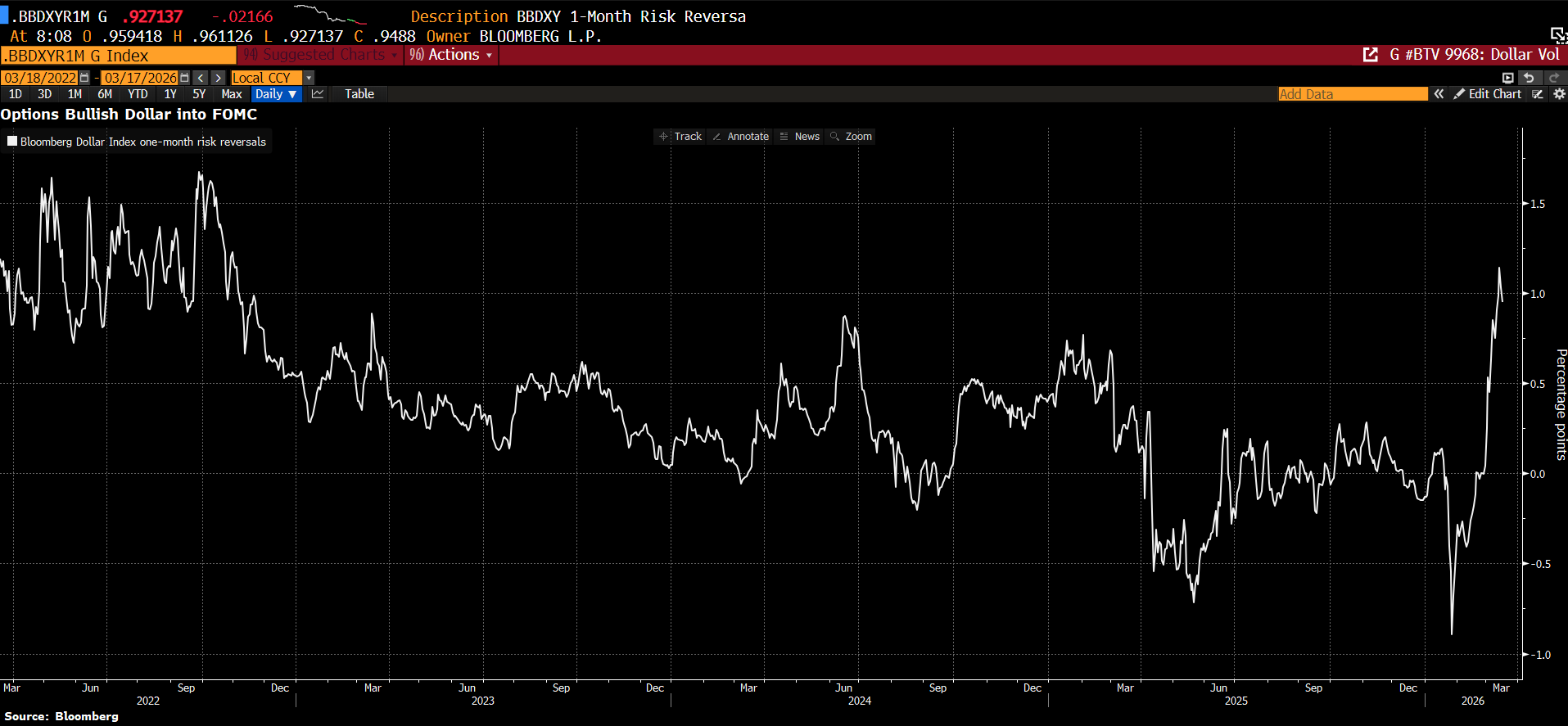
Bullish sentiment toward the U.S. dollar has risen sharply in recent times. This is clearly reflected in the options market, where the premium paid for call options relative to put options has risen to its highest levels since September 2022. Source: Bloomberg Financial Lp
How long could the decline last?
In theory, the decline in gold prices could continue as long as the dollar maintains its relative strength against major currencies, supported by expectations of higher real interest rates and the Fed’s restrictive policy. A strong USD reduces gold’s appeal as a safe haven for non-U.S. investors, raises its price in local currencies, and prompts some market participants to shift capital toward income-generating assets, which further limits demand potential for the metal. Only a more pronounced weakening of the dollar—whether due to a shift in the Fed’s rhetoric or new global risk factors—could create the conditions to halt this sell-off and restore gold to its role as the leading safe-haven asset.
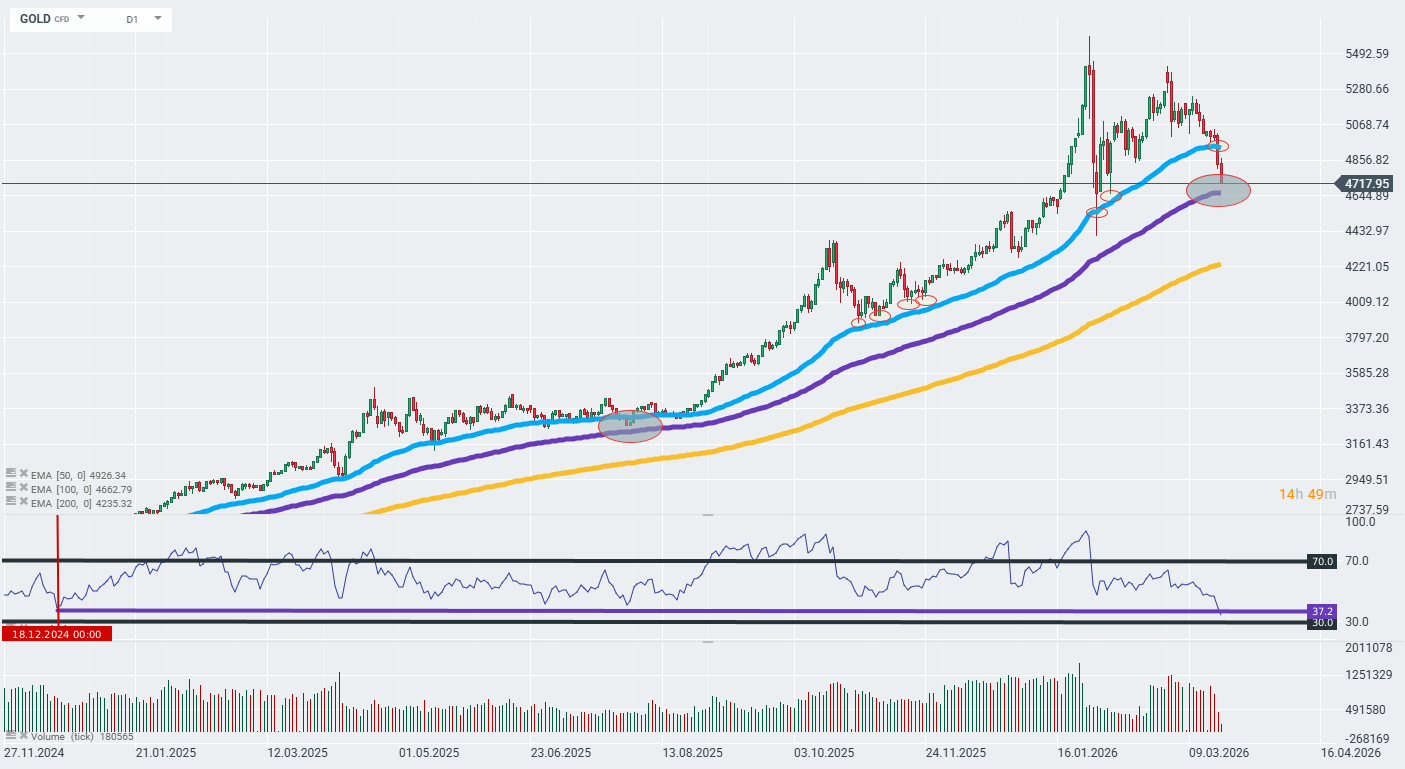
GOLD prices have fallen below the 50-day EMA for the first time since early February 2026 and are approaching the 100-day EMA zone, which, on the other hand, has not been tested from below since December 2024. The uptrend faces a test given the scale of the declines, but it is by no means out of the question that, should there be a sudden thaw in the Middle East situation, buyers might be able to defend the uptrends seen so far. Source: xStation

Market Wrap: Airlines Under Pressure, Europe Resists Expensive Oil


🛢️Brent crude retreats from $90



Is Another DeepSeek Moment Coming? Moonshot AI Increases Pressure on AI Giants


Chart of the Day: USDJPY – The Dollar Wins Another Round, but Tokyo Is Preparing a Response
The material on this page does not constitute as financial advice and does not take into account your level of understanding, investment objectives, financial situation or any other particular needs.
All the information provided, including opinions, market research, mathematical results and technical analyses published on the website or transmitted to you by other means is provided for information purposes only and should in no event be interpreted as an offer of, or solicitation for, a transaction in any financial instrument, nor should the information provided be construed as advice of legal or fiscal nature.
Any investment decisions you make shall be based exclusively on your level of understanding, investment objectives, financial situation or any other particular needs. Any decision to act on information published on the website or transmitted to you by other means is entirely at your own risk. You are solely responsible for such decisions.
If you are in doubt or are not sure that you understand a particular product, instrument, service, or transaction, you should seek professional or legal advice before trading.
Investing in OTC Derivatives carries a high degree of risk, as they are leveraged based products and often small movements in the market could lead to much larger movements in the value of your investment and this could work against you or for you. Please ensure that you fully understand the risks involved, taking into account your investments objectives and level of experience, before trading, and if necessary, seek independent advice.
