


Source: investing
Volatility currently observed in the major contracts. Source: xStation
- The markets started the week on a very tense note, still dominated by the escalating geopolitical tensions in the Middle East.
- U.S. President Donald Trump has given Iran a 48-hour ultimatum, demanding that the Strait of Hormuz be reopened or face potential attacks on key infrastructure.
- The deadline expires on Monday evening, which is why the markets remain on high alert in case the conflict escalates further.
- Iran responded firmly, warning that any such actions would trigger retaliatory attacks targeting energy facilities throughout the Persian Gulf region, as well as desalination plants and nuclear power plants in neighboring Gulf Cooperation Council (GCC) countries.
- Fatih Birol, head of the International Energy Agency, described the situation as “very serious” and potentially worse than the oil crises of the 1970s. Birol noted that current disruptions are estimated at around 11 million barrels per day, which exceeds the combined losses from the two major oil shocks of that era.
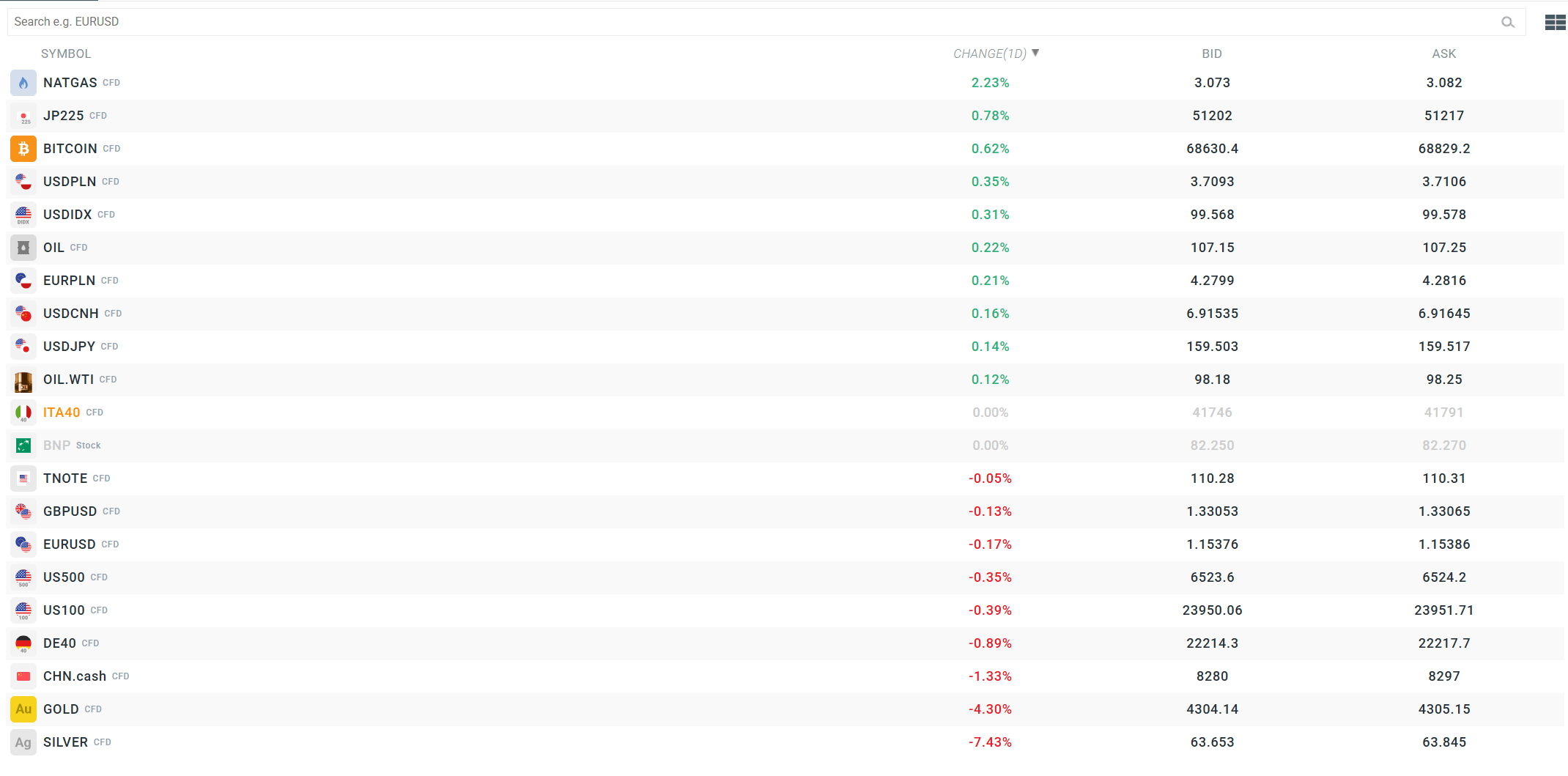
- In this environment, the U.S. dollar and the Canadian dollar are once again dominating the Forex market. The USDJPY pair has once again risen above the 159.500 yen per dollar level. Meanwhile, the currencies of the Antipodes are performing very poorly.
- However, the most significant movements capturing investors’ attention are being seen in precious metals, specifically gold and silver. Gold is down 4% and has fallen to $4,320 per ounce, while silver is down 5.6% and is trading near $65.
- The decline in the prices of these metals may be partly due to the continued appreciation of the U.S. dollar, which has historically shown a strong inverse correlation with sharp movements in the gold market.
- Futures contracts on U.S. and European indices point to declines in stock prices for companies in those regions during Monday’s trading session. The German DE40 is currently down 0.82%, the U.S. US500 is down 0.32%, and the Chinese CHN.Cash is down 1.29%. On the other hand, however, the contract for the Japanese JP225 is currently up nearly 0.72%, indicating that sentiment is mixed.
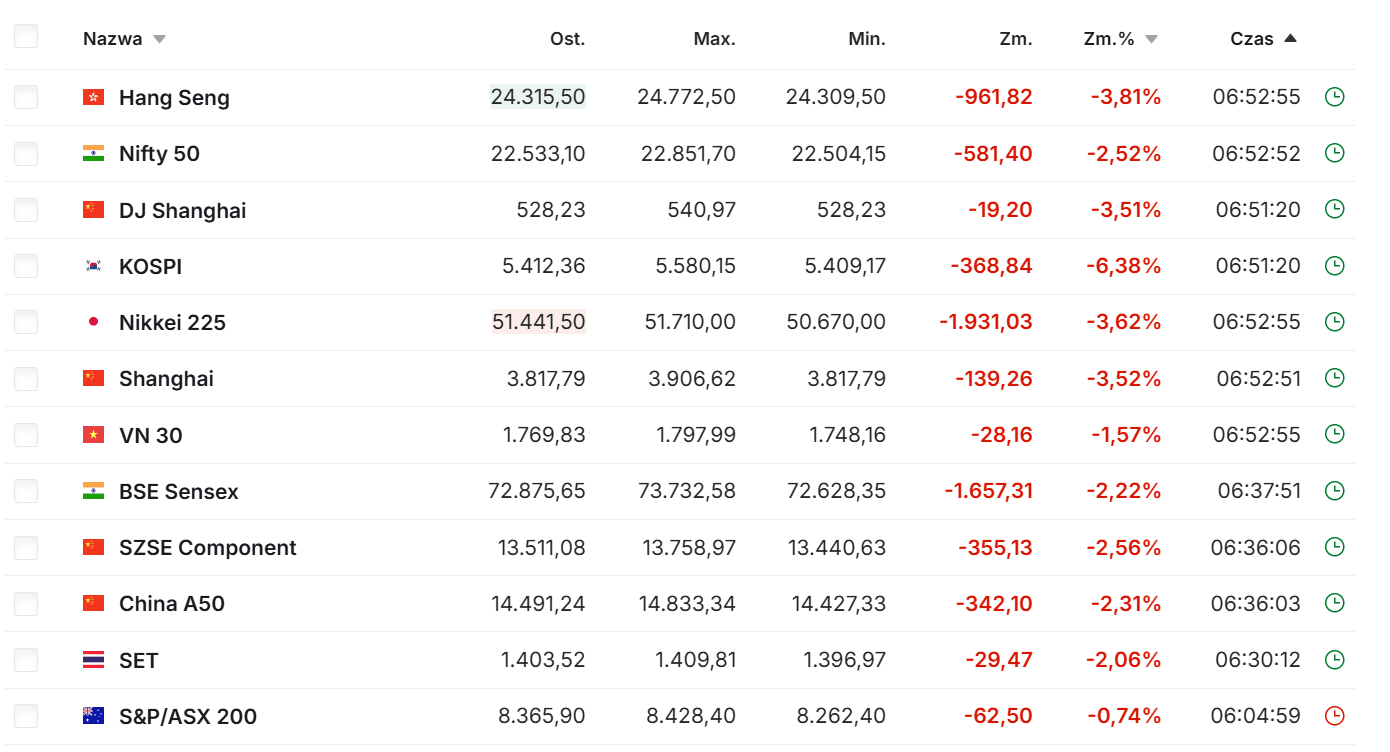
- The situation is quite different in the spot market, however. Here, stock markets are seeing very sharp declines. The Korean KOSPI and the Japanese Nikkei 225 are faring the worst, falling 6.3% and 3.6%, respectively.
- Crude oil prices—currently the main indicator of perceived inflationary risk from the Middle East—are rising, but by a relatively small margin given the geopolitical context of ultimatums and attacks on oil infrastructure. Brent prices are currently hovering near $107, up about 0.3%, while WTI prices are climbing to $98.

Market Wrap: Airlines Under Pressure, Europe Resists Expensive Oil


🛢️Brent crude retreats from $90



Is Another DeepSeek Moment Coming? Moonshot AI Increases Pressure on AI Giants


Chart of the Day: USDJPY – The Dollar Wins Another Round, but Tokyo Is Preparing a Response
The material on this page does not constitute as financial advice and does not take into account your level of understanding, investment objectives, financial situation or any other particular needs.
All the information provided, including opinions, market research, mathematical results and technical analyses published on the website or transmitted to you by other means is provided for information purposes only and should in no event be interpreted as an offer of, or solicitation for, a transaction in any financial instrument, nor should the information provided be construed as advice of legal or fiscal nature.
Any investment decisions you make shall be based exclusively on your level of understanding, investment objectives, financial situation or any other particular needs. Any decision to act on information published on the website or transmitted to you by other means is entirely at your own risk. You are solely responsible for such decisions.
If you are in doubt or are not sure that you understand a particular product, instrument, service, or transaction, you should seek professional or legal advice before trading.
Investing in OTC Derivatives carries a high degree of risk, as they are leveraged based products and often small movements in the market could lead to much larger movements in the value of your investment and this could work against you or for you. Please ensure that you fully understand the risks involved, taking into account your investments objectives and level of experience, before trading, and if necessary, seek independent advice.
