


- Natural gas prices are down over 4% this week and are hovering around a critical support level of $2.50 per million British thermal units (mmBtu). While the fundamentals haven't changed much, the price is dipping.
- It's currently warmer than usual, but not scorching hot.
- Demand for gas is expected to rise in the coming weeks, peaking in late July or early August. This increase is due to higher electricity needs for cooling. Don't forget, hurricane season starts mid-August, which could disrupt gas production.
A breakdown of the key factors for NATGAS:
Weather Forecast:
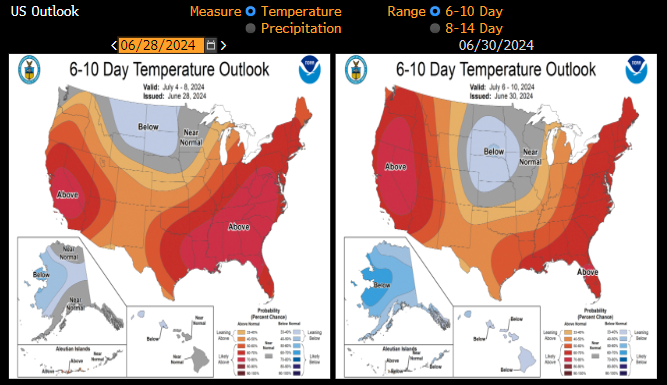
Compared to last Friday, the temperature outlook hasn't changed dramatically. It might be slightly cooler in the central US. Source: Bloomberg, NOAA
July Outlook:
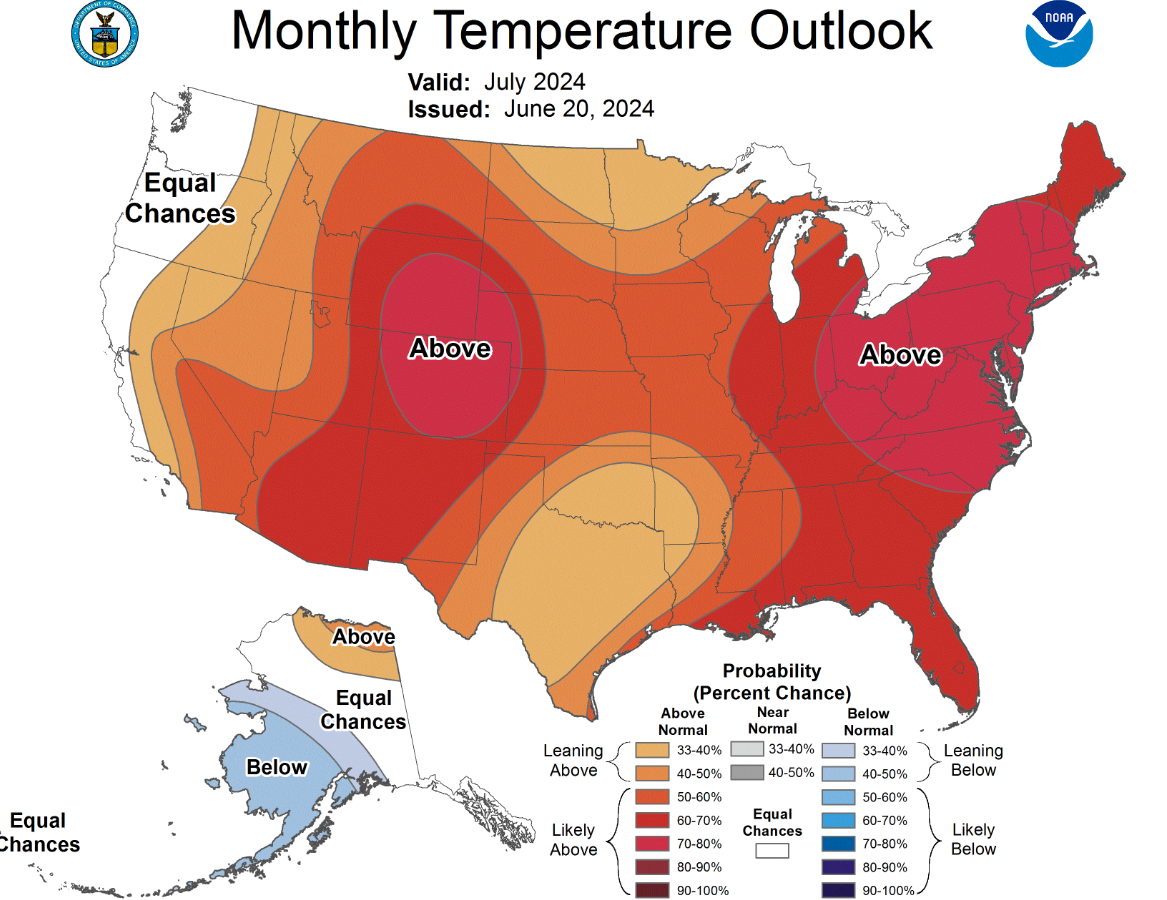
A report from June 20th by NOAA indicates a high chance (60-80%) of above-average temperatures across most of the US. Source: NOAA
Gas Demand and Cooling:
 The number of cooling degree days (a measure of cooling needs) is rising, but the forecast for this week isn't significantly higher than the previous two weeks. This could be contributing to the price pullback. However, the peak demand season is still to come in late July and early August. Source: Bloomberg Finance LP, XTB
Demand vs. Seasonal Average:
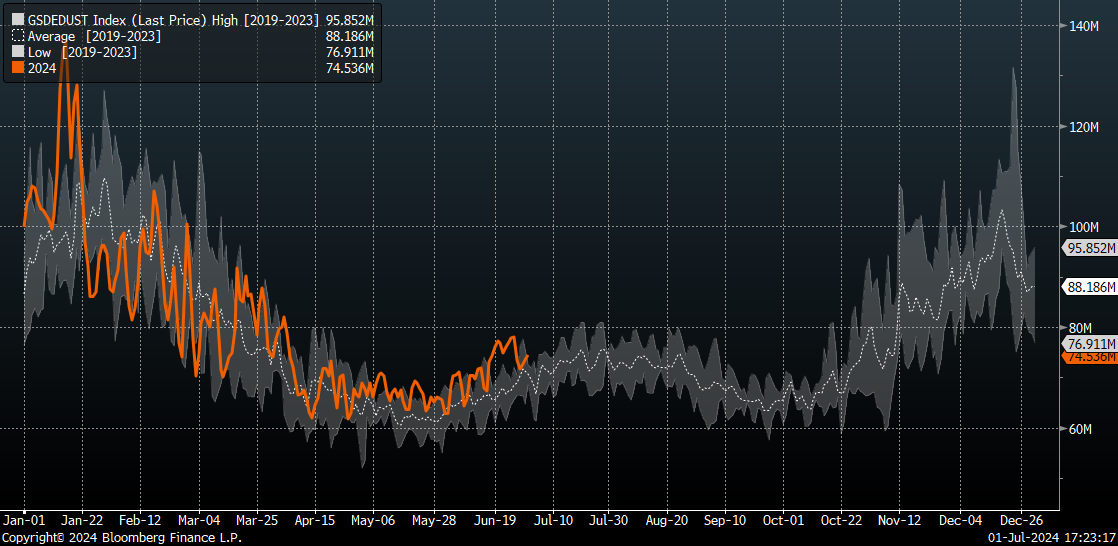
Gas demand has recently returned to around the 5-year average, and it's expected to climb further in the coming weeks based on seasonality. However, daily fluctuations shouldn't exceed 4-6 billion cubic feet per day (bcfd). Source: Bloomberg Finance LP, XTB
Seasonal Low:
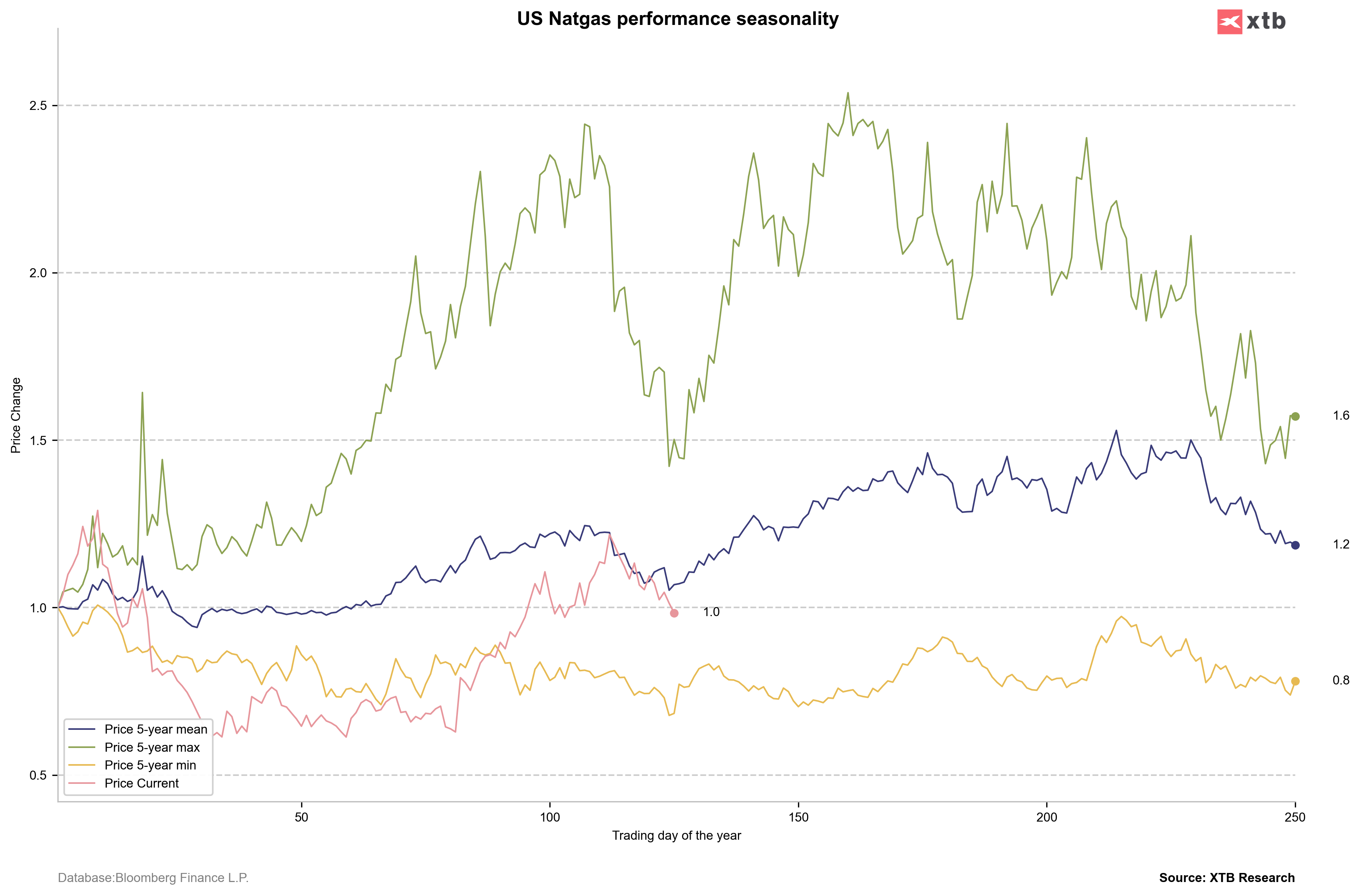
Based on historical prices over the past five years (average, minimum, and maximum), we might be past the seasonal low point. But it's important to consider that some of the average price increases are due to the upward sloping price curve for future contracts (contango). Source: Bloomberg Finance LP, XTB
Production Rebound:

Natural gas production is bouncing back, currently about 4 bcfd below its record highs. This is happening even though the number of drilling rigs has significantly declined. (Source: Bloomberg Finance LP, XTB)
Technical outlook:
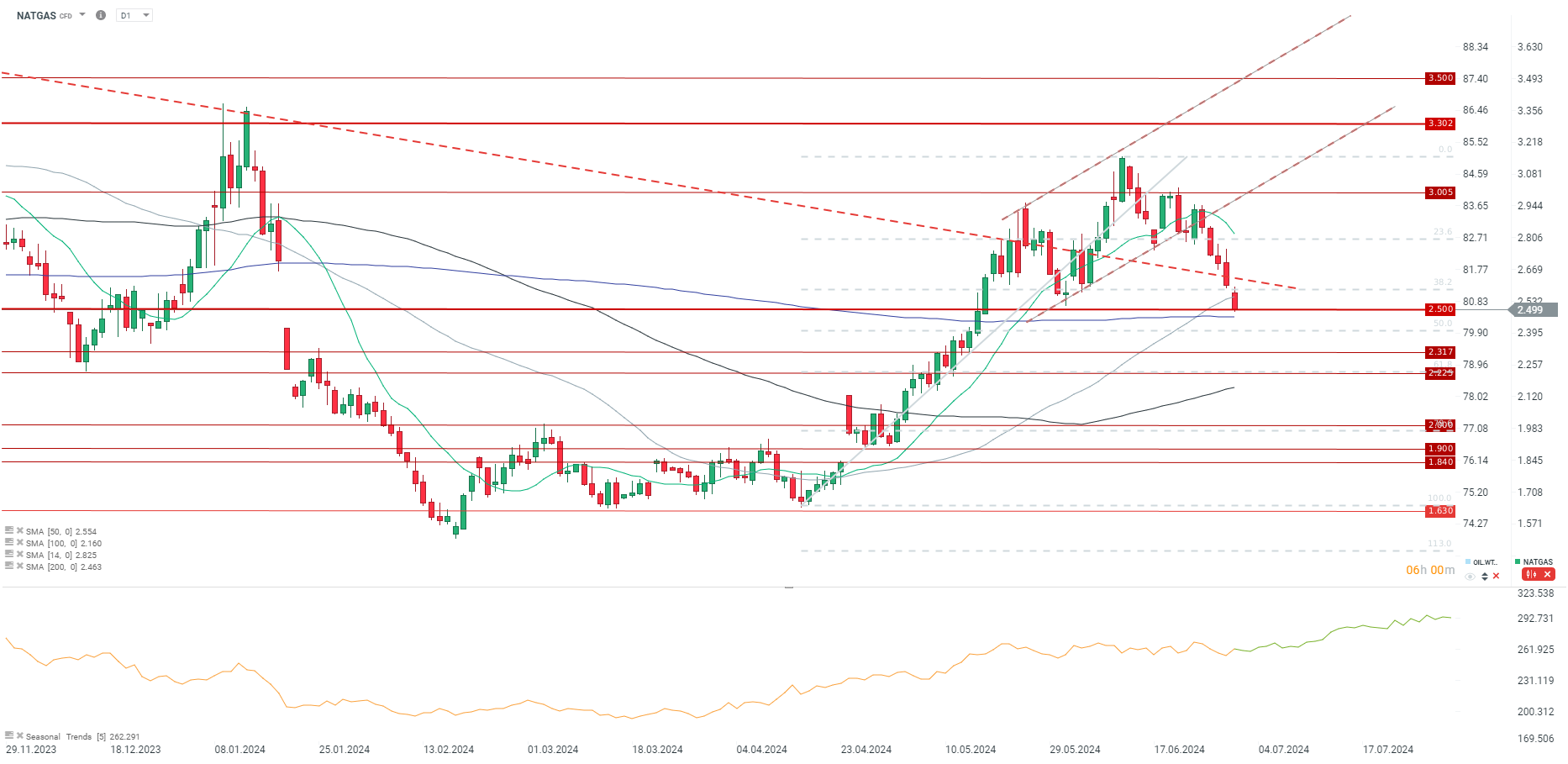 The price has decreased more than 4% in the beginning of July and is testing crucial support of 2.5 USD/MMBTU, slightly above 200-SMA average (purple line). If the price does not recover from the current area, it will be possible to go down even to the zone at the level of USD 2.2-2.3/MMBTU. On the other hand, the seasonality shows that the local low should be already behing us. Source: xStation5



Market Wrap: European banks under pressure, oil above $100

Morning wrap 📈 Oil at the highest level since 7 April, Wall Street uncertain ahead of the Fed



Daliy Summary: Iran Seeks Truce as Markets Brace for Wednesday

⚫Brent Oil Hits Highest Since April 13
The material on this page does not constitute as financial advice and does not take into account your level of understanding, investment objectives, financial situation or any other particular needs.
All the information provided, including opinions, market research, mathematical results and technical analyses published on the website or transmitted to you by other means is provided for information purposes only and should in no event be interpreted as an offer of, or solicitation for, a transaction in any financial instrument, nor should the information provided be construed as advice of legal or fiscal nature.
Any investment decisions you make shall be based exclusively on your level of understanding, investment objectives, financial situation or any other particular needs. Any decision to act on information published on the website or transmitted to you by other means is entirely at your own risk. You are solely responsible for such decisions.
If you are in doubt or are not sure that you understand a particular product, instrument, service, or transaction, you should seek professional or legal advice before trading.
Investing in OTC Derivatives carries a high degree of risk, as they are leveraged based products and often small movements in the market could lead to much larger movements in the value of your investment and this could work against you or for you. Please ensure that you fully understand the risks involved, taking into account your investments objectives and level of experience, before trading, and if necessary, seek independent advice.
