


- One-year inflation expectations rose to 3.4% (from 3.2%); three-year expectations remained unchanged at 3.0%; and five-year expectations increased to 3.0% (from 2.9%).
- The perceived probability of higher unemployment within a year climbed to 41.1% (+2.0 pp), while job-loss risk rose to 14.9% (+0.4 pp).
- Expectations for higher stock prices in the next 12 months rose to 39.8% (+0.9 pp), above the 12-month average of 38.0%.
- One-year inflation expectations rose to 3.4% (from 3.2%); three-year expectations remained unchanged at 3.0%; and five-year expectations increased to 3.0% (from 2.9%).
- The perceived probability of higher unemployment within a year climbed to 41.1% (+2.0 pp), while job-loss risk rose to 14.9% (+0.4 pp).
- Expectations for higher stock prices in the next 12 months rose to 39.8% (+0.9 pp), above the 12-month average of 38.0%.
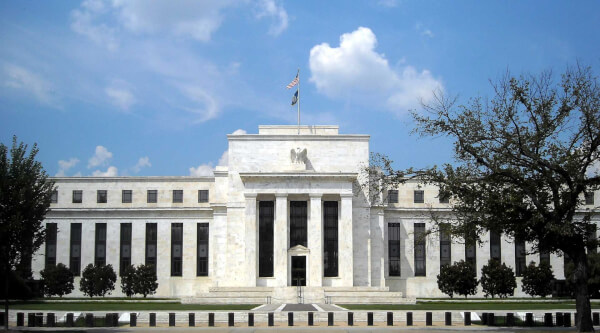
The New York Fed has just published its latest report based on household survey data covering inflation expectations and economic conditions. In September, household inflation expectations increased at the short-term horizon (1 year: 3.4%) and the long-term horizon (5 years: 3.0%), while remaining stable at the medium-term (3 years: 3.0%). Disagreement among respondents narrowed for both the 1- and 5-year outlooks. Inflation uncertainty declined for the 1-year horizon, remained unchanged for 3 years, and rose slightly for 5 years.
Home-price growth expectations held steady for the fourth straight month at 3.0%. Expected annual price changes increased for food (5.8%, +0.3 pp), gasoline (4.2%, +0.3 pp), medical care (9.3%, +0.5 pp), and rent (7.0%, +1.0 pp), while college-tuition costs declined to 7.0% (–0.8 pp).
Labor-market sentiment weakened despite a rebound in the share of respondents expecting to find a new job after job loss (47.4%, up from 44.9%, but still below the 12-month average of 51.0%). Expected wage growth fell to 2.4%, while respondents reported a higher likelihood of rising unemployment (41.1%), a modest increase in job-loss risk (14.9%), and higher voluntary-quit intentions (20.7%).
Regarding household finances, expected income growth remained stable at 2.9%, while spending growth slowed to 4.7%. The perceived risk of missing a debt payment declined to 12.6% (below the 12-month average of 13.5%). Households rate their current financial situation slightly better than a year ago but are less optimistic about the future. Expectations rose for higher taxes (3.6%), rising public debt (7.5%), a slight increase in savings rates (24.9%), and a greater likelihood of higher stock prices within the next year (39.8%).


BREAKING: ECB keep rates unchanged 📌 EURUSD back below 1,1700 📉 🇪🇺

BREAKING: Eurozone economy slows down unexpectedly❗️EURUSD without direction 🇪🇺

Economic Calendar: The Central Bank Festival in Full Swing
🔴 Fed Conference: Powell remains as a governor (LIVE)
The material on this page does not constitute as financial advice and does not take into account your level of understanding, investment objectives, financial situation or any other particular needs.
All the information provided, including opinions, market research, mathematical results and technical analyses published on the website or transmitted to you by other means is provided for information purposes only and should in no event be interpreted as an offer of, or solicitation for, a transaction in any financial instrument, nor should the information provided be construed as advice of legal or fiscal nature.
Any investment decisions you make shall be based exclusively on your level of understanding, investment objectives, financial situation or any other particular needs. Any decision to act on information published on the website or transmitted to you by other means is entirely at your own risk. You are solely responsible for such decisions.
If you are in doubt or are not sure that you understand a particular product, instrument, service, or transaction, you should seek professional or legal advice before trading.
Investing in OTC Derivatives carries a high degree of risk, as they are leveraged based products and often small movements in the market could lead to much larger movements in the value of your investment and this could work against you or for you. Please ensure that you fully understand the risks involved, taking into account your investments objectives and level of experience, before trading, and if necessary, seek independent advice.
