



Oil prices are rising on Thursday after U.S. President Donald Trump threatened Iran with “economic warfare” and additional financial sanctions against entities supporting Tehran. At the same time, the United Arab Emirates announced a suspension of trade with Iran, adding further tension to an already fragile supply backdrop in the region. Against this backdrop, OIL — the Brent crude contract — is up around 2% today and is trading at its highest level since July 24, as markets once again price in a higher geopolitical risk premium. The broader picture is becoming increasingly complex, while part of that premium may continue to build due to rising transportation risks. Importantly, the oil market is also set to see a contract rollover around midnight today.
- Another source of risk is transport security. The VL PROSPERITY tanker, with capacity of around 2.3 million barrels, was reportedly hit by a major cyberattack near the Strait of Gibraltar, with its communications disrupted for around 30 hours.
- According to a crew member, the attackers allegedly interfered with engine-room systems, cooling systems and fuel systems; if similar incidents become more frequent, they could increase insurance, freight and security costs on strategic shipping routes.
- The Strait of Hormuz remains a key risk for the physical oil market, as nearly 20% of global crude and refined-product flows passed through the waterway before the conflict, while current volumes remain several times lower than pre-war levels.
- China is increasingly turning to Russian crude to replace part of the disrupted supply from the Middle East, while imports of Iranian oil remain well below pre-war levels; August arrivals from Iran are estimated at around 340,000 barrels per day versus 1.14 million barrels per day in March.
- China is also increasing purchases of Russian crude shipped from European ports, directly intensifying competition with Indian refiners for barrels that have traditionally flowed to India.
- India’s imports of Russian crude are expected to fall to around 1.87 million barrels per day in August from 2.79 million barrels per day in July, while total crude imports could decline to roughly 4.17 million barrels per day from 5.06 million. This matters not only for crude itself, but also for refined products: if Indian refiners have less feedstock to process, diesel and gasoline exports could decline from September, further tightening an already strained Asian refined-products market.
OIL chart (D1 interval)
Oil has once again moved toward levels not seen since July 24. If the deadlock in the Strait of Hormuz persists and diplomatic talks between Washington and Tehran fail, prices could gradually move toward $100 per barrel. That move is far from guaranteed, however, and the U.S. autumn will be shaped by congressional midterm elections, which could increase political pressure on the administration and encourage renewed talks with Iran in an effort to achieve at least a temporary easing in oil prices and inflation risks.
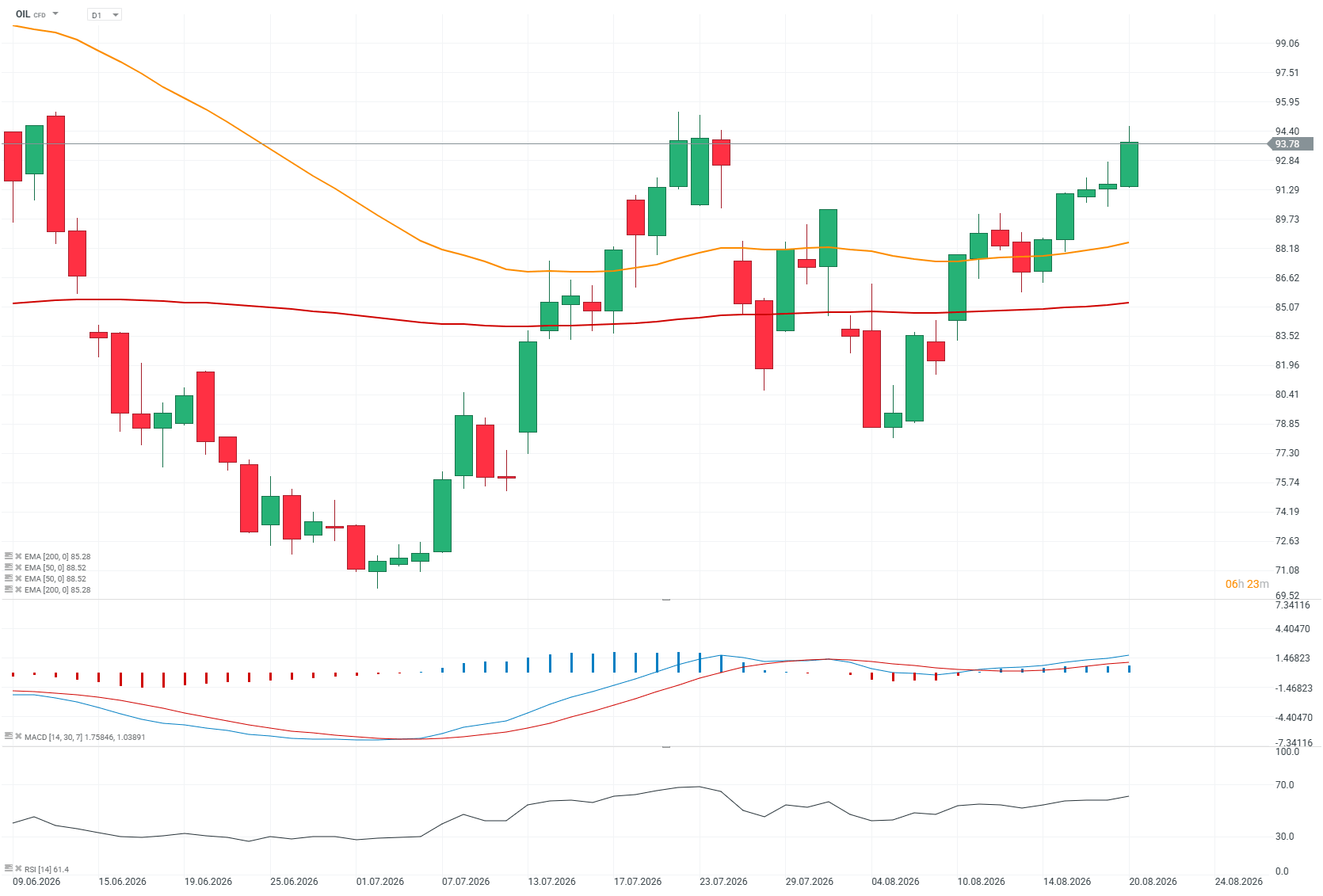 Source: xStation5



Daily Summary: US100 Hits New Highs on Weak NFP 🚨

Oil down nearly 5% following the announcement that European diesel reserves will be released💡


BREAKING: US NFP data surprises to the downside; USD dips🔥

🟡Gold takes a breath, because of oil, not NFP
The material on this page does not constitute as financial advice and does not take into account your level of understanding, investment objectives, financial situation or any other particular needs.
All the information provided, including opinions, market research, mathematical results and technical analyses published on the website or transmitted to you by other means is provided for information purposes only and should in no event be interpreted as an offer of, or solicitation for, a transaction in any financial instrument, nor should the information provided be construed as advice of legal or fiscal nature.
Any investment decisions you make shall be based exclusively on your level of understanding, investment objectives, financial situation or any other particular needs. Any decision to act on information published on the website or transmitted to you by other means is entirely at your own risk. You are solely responsible for such decisions.
If you are in doubt or are not sure that you understand a particular product, instrument, service, or transaction, you should seek professional or legal advice before trading.
Investing in OTC Derivatives carries a high degree of risk, as they are leveraged based products and often small movements in the market could lead to much larger movements in the value of your investment and this could work against you or for you. Please ensure that you fully understand the risks involved, taking into account your investments objectives and level of experience, before trading, and if necessary, seek independent advice.