

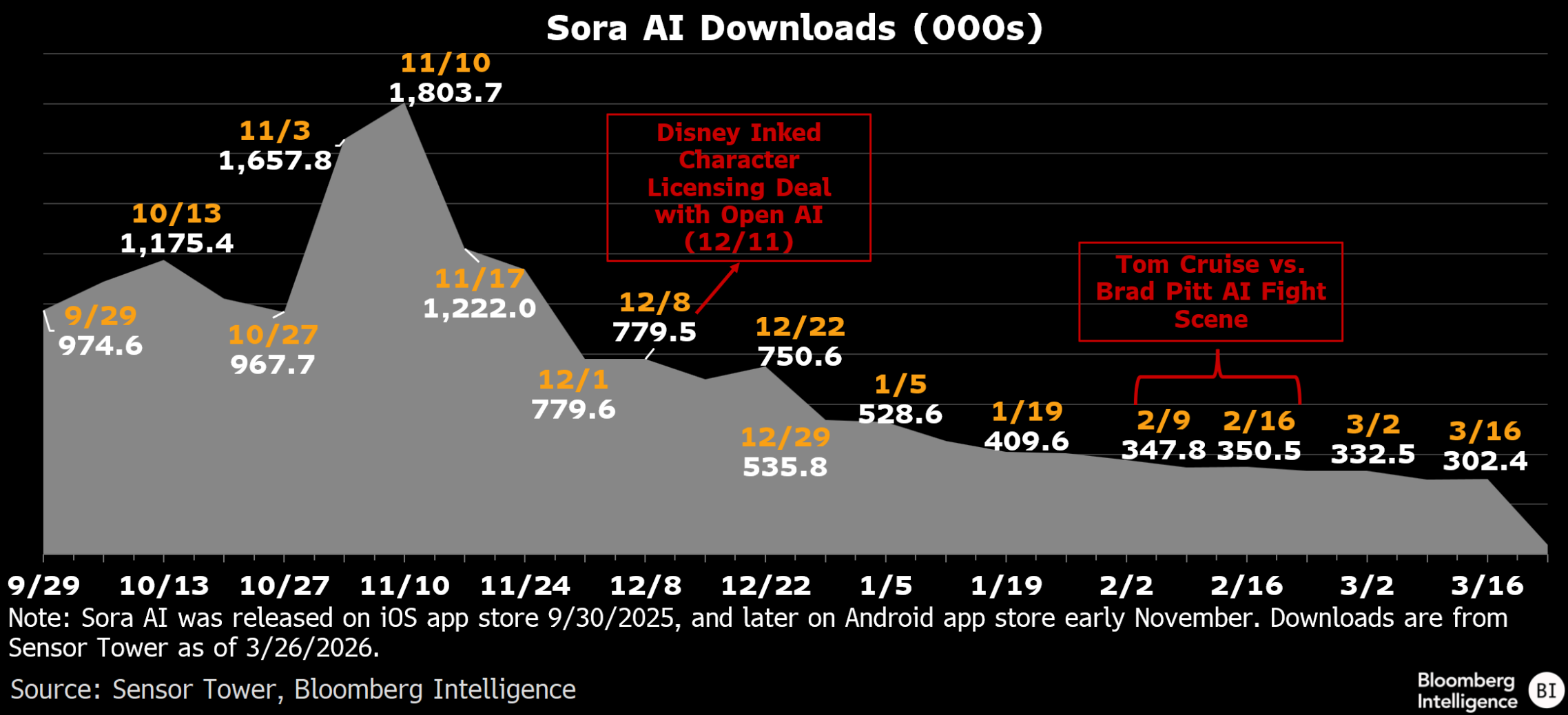
OpenAI, one of the leading representatives and symbols of the AI revolution, made its video-generation model, Sora, available to the general public about six months ago. The model, as many might have thought, was groundbreaking: even attentive observers were often “fooled” by the material it generated. Many saw it as the beginning of a difficult period, if not the end, for “conventional” cinema and many media industries. Yesterday, however, OpenAI announced that the time of the popular application has come to an end. What went wrong, and who could profit from it?
The details and the exact, real reasons behind OpenAI’s decision are not known. The prevailing view among journalists and many analysts in the LLM industry seems to be that the model was simply too unprofitable and/or not effective enough, and that the company is at a point where compute power and financial/human resources are needed much more elsewhere.
The financial resources in question also appear to be increasingly constrained. OpenAI is a private company, so a reliable analysis of its financials isn’t possible; however, Reuters reports that the company is offering private credit firms a return on capital of 17.5%. Such a high rate of return suggests the company may currently have serious difficulties attracting capital, which, it is worth remembering, it continues to burn at an alarming pace.
Shutting down Sora obviously signals trouble for AI-focused companies, but who might benefit from this shift in sentiment? It could be the companies most “punished” in valuations by a revolution that has not yet arrived, or firms able to identify the weaknesses of the technology.
If capital and consumers turn away from Video AI, the biggest beneficiaries could be large, traditional players that had the most to lose. The best examples here are Disney, Netflix, and Paramount.
Source: Bloomberg Finance Lp.
DIS.US, PSKY.US, NFLX.US (D1)
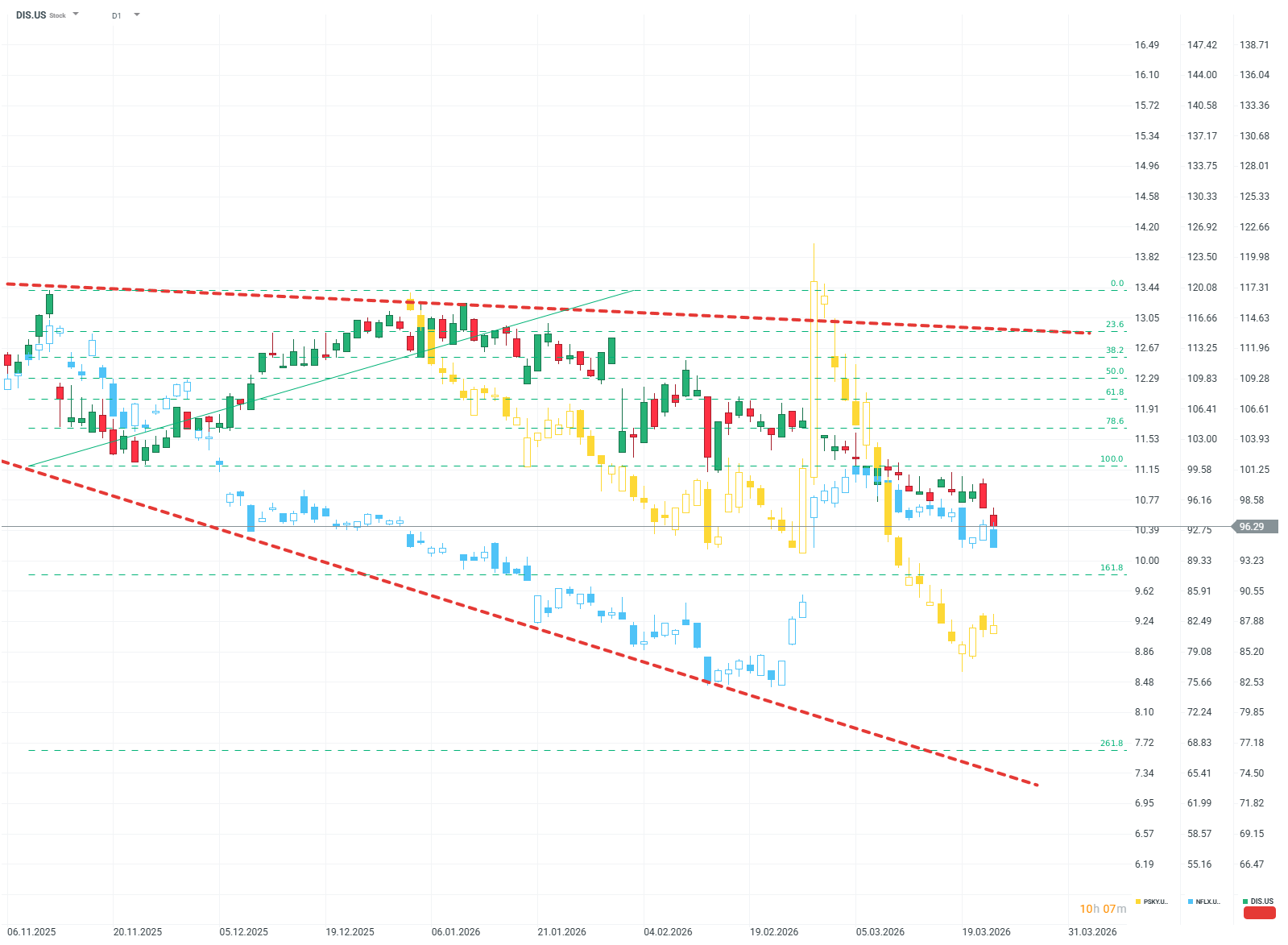
Media companies have suffered significant sell-offs amid fears about AI and the quality of their long-term strategies. After declines from recent highs in the double-digit range, a return to the upper bounds of the consolidation range may be possible. Source: xStation5.
Disney, as a global conglomerate, did not want to risk being left out of the revolution, even if it wasn’t fully convinced by it. Disney signed a cooperation agreement with OpenAI, granting it a license to its IP. By shutting down Sora, however, OpenAI is indirectly admitting that the cooperation with Disney turned out to be unproductive. Disney’s case shows that even with one of the most important assets of conventional publishers on its side, legally acquired intellectual property, a video-AI initiative can fail.
This could support the valuations of companies such as Netflix or Paramount. AI threatened the “premium” models of streaming platforms on several fronts, but the end of Sora means that the business “moat” of large distributors and producers remains insurmountable for engineers and programmers.


US OPEN: The market extends losses as investor concerns grow



Daily Summary: Lower inflation weakens the dollar and awakens gold and S&P 500 to gains

Worse than the Dot-com bubble: IBM stock crash


Daily Summary - Escalation in the Middle East. FOMC fears inflation
The material on this page does not constitute as financial advice and does not take into account your level of understanding, investment objectives, financial situation or any other particular needs.
All the information provided, including opinions, market research, mathematical results and technical analyses published on the website or transmitted to you by other means is provided for information purposes only and should in no event be interpreted as an offer of, or solicitation for, a transaction in any financial instrument, nor should the information provided be construed as advice of legal or fiscal nature.
Any investment decisions you make shall be based exclusively on your level of understanding, investment objectives, financial situation or any other particular needs. Any decision to act on information published on the website or transmitted to you by other means is entirely at your own risk. You are solely responsible for such decisions.
If you are in doubt or are not sure that you understand a particular product, instrument, service, or transaction, you should seek professional or legal advice before trading.
Investing in OTC Derivatives carries a high degree of risk, as they are leveraged based products and often small movements in the market could lead to much larger movements in the value of your investment and this could work against you or for you. Please ensure that you fully understand the risks involved, taking into account your investments objectives and level of experience, before trading, and if necessary, seek independent advice.
