


- Headline CPI: +0.3% m/m, +2.7% y/y (unchanged vs. November)
- Core CPI (ex food & energy): +0.3% m/m, +2.7% y/y (up from 2.6% in November)
- The December report may therefore give the impression of a return of price pressures due to distortions in the November data.
- Headline CPI: +0.3% m/m, +2.7% y/y (unchanged vs. November)
- Core CPI (ex food & energy): +0.3% m/m, +2.7% y/y (up from 2.6% in November)
- The December report may therefore give the impression of a return of price pressures due to distortions in the November data.
Today at 01:30 PM GMT we will receive the December US CPI print. This is the most important report of the week and, alongside NFP, one of the key releases from the Federal Reserve’s monetary policy perspective.
Inflation in the US likely edged slightly higher at the end of 2025. Consensus expects December CPI to come in at +0.3% m/m for both headline and core inflation. On a year-on-year basis, headline CPI is seen at 2.7%, while core CPI is expected to rebound to 2.7% from 2.6% in November. This modest uptick is mainly attributed to normalization after an unusually weak November reading, rather than the start of a new wave of inflationary pressure.
November CPI was distorted by the US government shutdown, which delayed price data collection and forced the Bureau of Labor Statistics (BLS) to rely on imputations—particularly in shelter components. According to Bloomberg Economics, this may have understated inflation by around 20 bps. As a result, the December report may appear to signal a return of price pressures as these one-off effects unwind. Some banks also point to the possibility of lingering distortions, suggesting that the first truly “clean” data may not arrive until February.
Markets price roughly a 95% probability that the Fed will keep interest rates unchanged at the upcoming meeting. Policymakers will monitor the impact of tariffs on prices, but most forecasts assume that inflation will gradually cool in 2026. Disinflation in housing and softer wage pressures are expected to outweigh tariff effects.
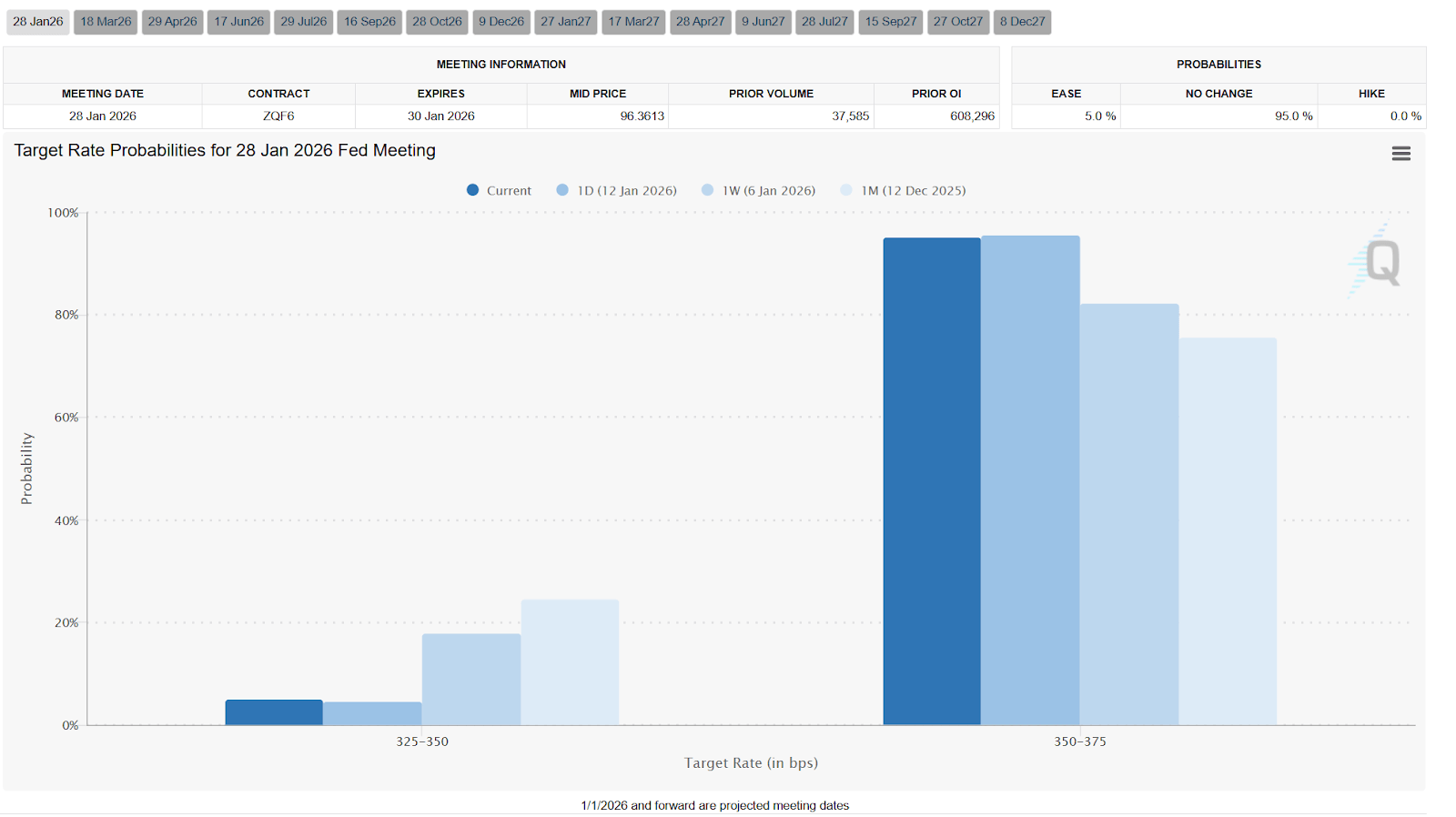
Interestingly, market pricing for the January decision has become increasingly hawkish day by day. This shift may help explain the recent rebound in the US dollar. Source: CME FedWatch Tool.
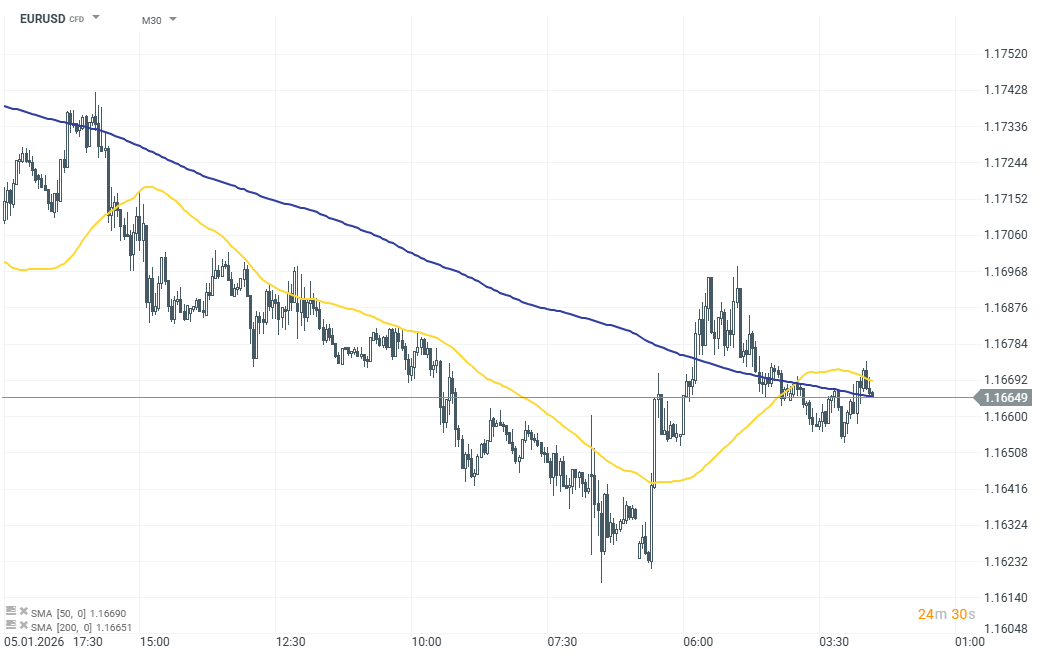
EURUSD (D1 timeframe)
The dollar remains relatively calm ahead of the release. EURUSD is trading slightly lower, down 0.02%. The pair is also influenced by heightened geopolitical uncertainty and ongoing developments around the US central bank, which may temper the market reaction to the CPI report.



Daily Summary: Trump's War Threats Weigh on Markets. Wall Street Sinks into the Red

Tensions around Iran weigh on markets!

US Open: Alphabet and Tesla Weigh on Wall Street, While Oil Prices Renew Investor Concerns


Wheat climbs to the highest level since May 2024 🚜 Black Sea export risks fuel rally
The material on this page does not constitute as financial advice and does not take into account your level of understanding, investment objectives, financial situation or any other particular needs.
All the information provided, including opinions, market research, mathematical results and technical analyses published on the website or transmitted to you by other means is provided for information purposes only and should in no event be interpreted as an offer of, or solicitation for, a transaction in any financial instrument, nor should the information provided be construed as advice of legal or fiscal nature.
Any investment decisions you make shall be based exclusively on your level of understanding, investment objectives, financial situation or any other particular needs. Any decision to act on information published on the website or transmitted to you by other means is entirely at your own risk. You are solely responsible for such decisions.
If you are in doubt or are not sure that you understand a particular product, instrument, service, or transaction, you should seek professional or legal advice before trading.
Investing in OTC Derivatives carries a high degree of risk, as they are leveraged based products and often small movements in the market could lead to much larger movements in the value of your investment and this could work against you or for you. Please ensure that you fully understand the risks involved, taking into account your investments objectives and level of experience, before trading, and if necessary, seek independent advice.
