



The two-week suspension of U.S. military operations against Iran triggered a sharp shake-up in the FX market today, reversing much of the movement seen in recent weeks. Across a broad range of currencies, cyclical currencies are the most actively bought, with the NZD, SEK, and ZAR leading the way, while the USD and CAD are at the very bottom of the strength rankings. Pairs such as NZDUSD, AUDUSD, and GBPUSD are rebounding sharply, benefiting from the simultaneous rise in U.S. index futures and the steep sell-off in oil following the largest one-day drop in crude prices in years. The dollar index is sliding by about 0.9%, which, amid a sharp rebound in risk appetite on the stock markets, is weakening demand for safe-haven assets and pushing defensive positions in the USD—and to some extent in the JPY—to the sidelines.
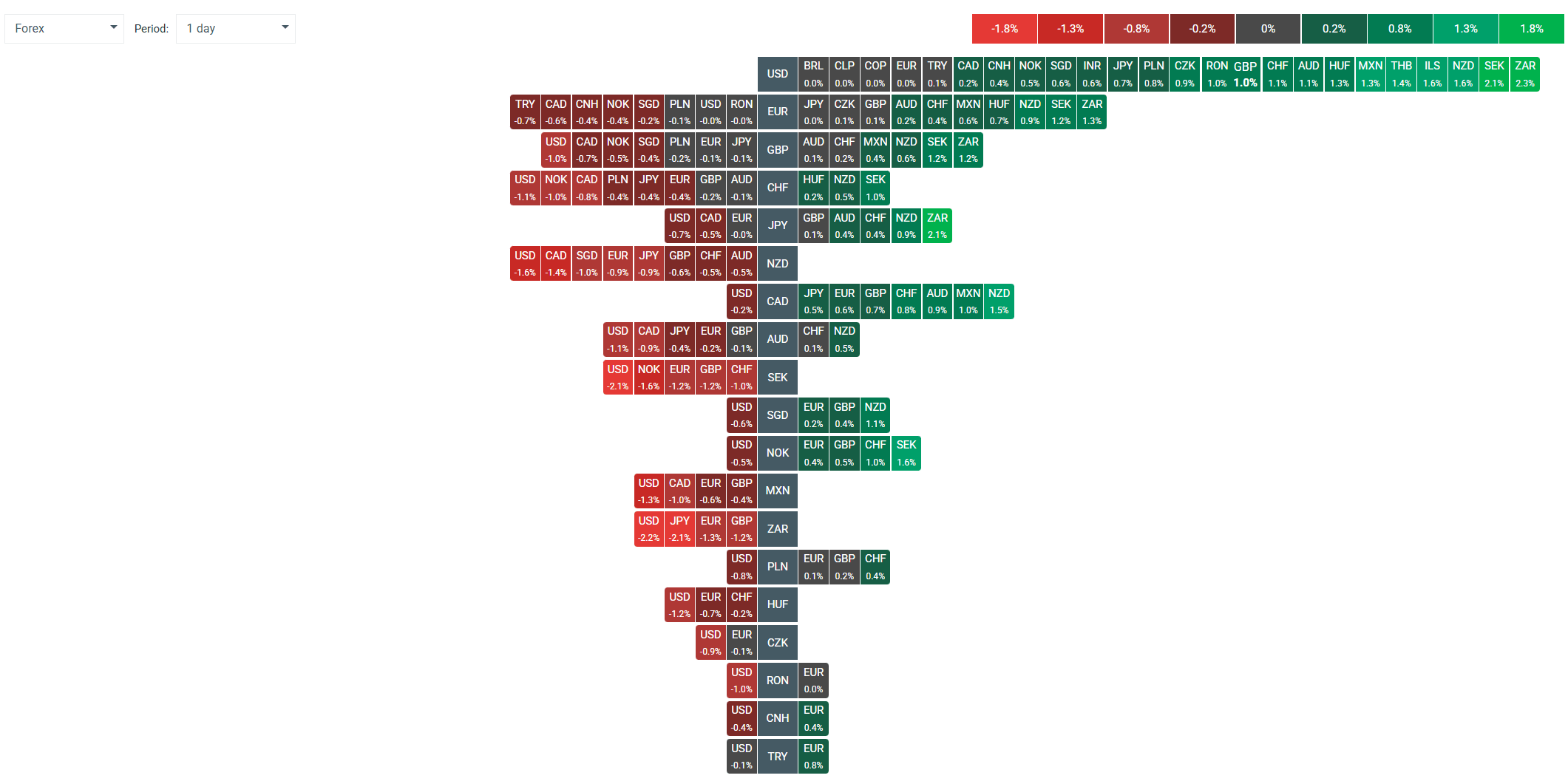
Today’s reaction follows the pattern seen in recent weeks, in which shifts in the intensity of the conflict with Iran quickly translate into movements among the dollar, the yen, oil, and gold, increasing volatility in major currency pairs. Above is a heatmap of volatility in the FX market. Source: xStation
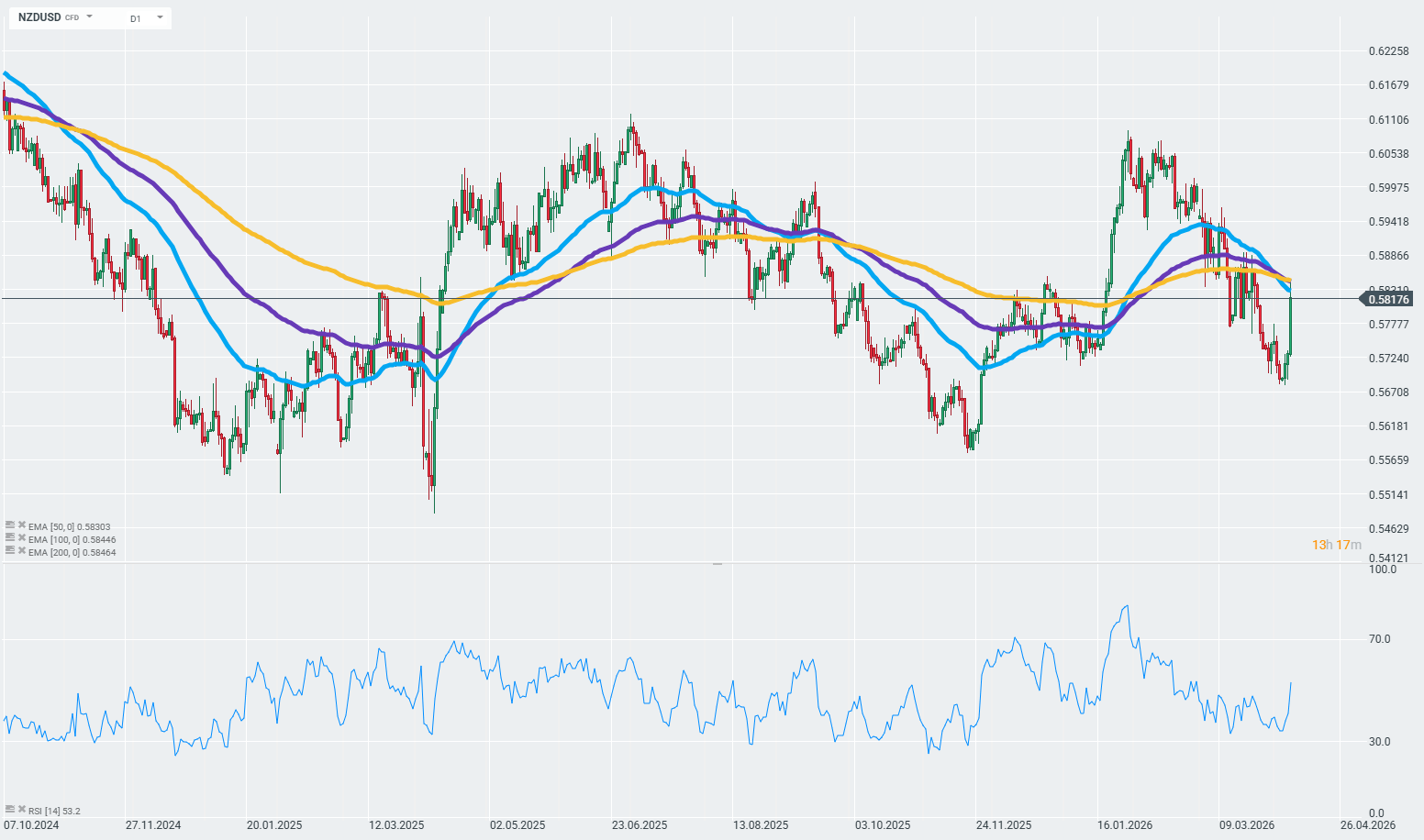
However, the biggest beneficiary of today’s combination of a hawkish central bank and global de-escalation remains the kiwi: following the RBNZ’s decision, NZD/USD rose temporarily by as much as 2% to around 0.5844, and is currently holding gains of around 1.7% at an exchange rate of approximately 0.5824. Investors interpreted the bank’s statement as a “hawkish pause”—the RBNZ clearly signaled its readiness for rapid rate hikes if inflation spreads beyond the energy sector and begins to affect wages and price expectations. At the same time, the bank emphasized that the supply shock linked to the earlier rise in oil prices is temporary, and that weaker domestic demand and rising spare capacity limit the risk of a second round of inflation. In this environment, the NZD benefits in two ways—as a currency with a relatively high interest rate premium and as a classic representative of the risk-on basket, which is now returning to favor following the suspension of U.S.-Iran hostilities. If the window for peace talks in Islamabad does not close too abruptly, the NZD’s current edge over the USD may hold, though ongoing instability in the region and the risk of a sudden escalation still call for caution when extending positions.
The NZDUSD pair tested an important long-term control point marked by the 200-day EMA today. The retest has so far proved unsuccessful.
Source: xStation



Daily Summary: Bitcoin Excites Investors Despite the Fed's Hawkish Shift🏛️



What could halt the uptrend❓


BREAKING: US industrial production & manufacturing data lower than expected



Market warp: Rate Forecasts and Semiconductors in the Spotlight
The material on this page does not constitute as financial advice and does not take into account your level of understanding, investment objectives, financial situation or any other particular needs.
All the information provided, including opinions, market research, mathematical results and technical analyses published on the website or transmitted to you by other means is provided for information purposes only and should in no event be interpreted as an offer of, or solicitation for, a transaction in any financial instrument, nor should the information provided be construed as advice of legal or fiscal nature.
Any investment decisions you make shall be based exclusively on your level of understanding, investment objectives, financial situation or any other particular needs. Any decision to act on information published on the website or transmitted to you by other means is entirely at your own risk. You are solely responsible for such decisions.
If you are in doubt or are not sure that you understand a particular product, instrument, service, or transaction, you should seek professional or legal advice before trading.
Investing in OTC Derivatives carries a high degree of risk, as they are leveraged based products and often small movements in the market could lead to much larger movements in the value of your investment and this could work against you or for you. Please ensure that you fully understand the risks involved, taking into account your investments objectives and level of experience, before trading, and if necessary, seek independent advice.