



Risky move or brilliant strategy? GameStop (GME), once the icon of "meme stocks," is challenging the e-commerce giant by proposing a takeover of eBay for a staggering $56 billion. While GameStop CEO Ryan Cohen is aiming high, the market and analysts view this offer with a heavy dose of skepticism, especially since a smaller player is attempting to swallow a company with a much larger market capitalization.
David and Goliath: Does It Make Sense?
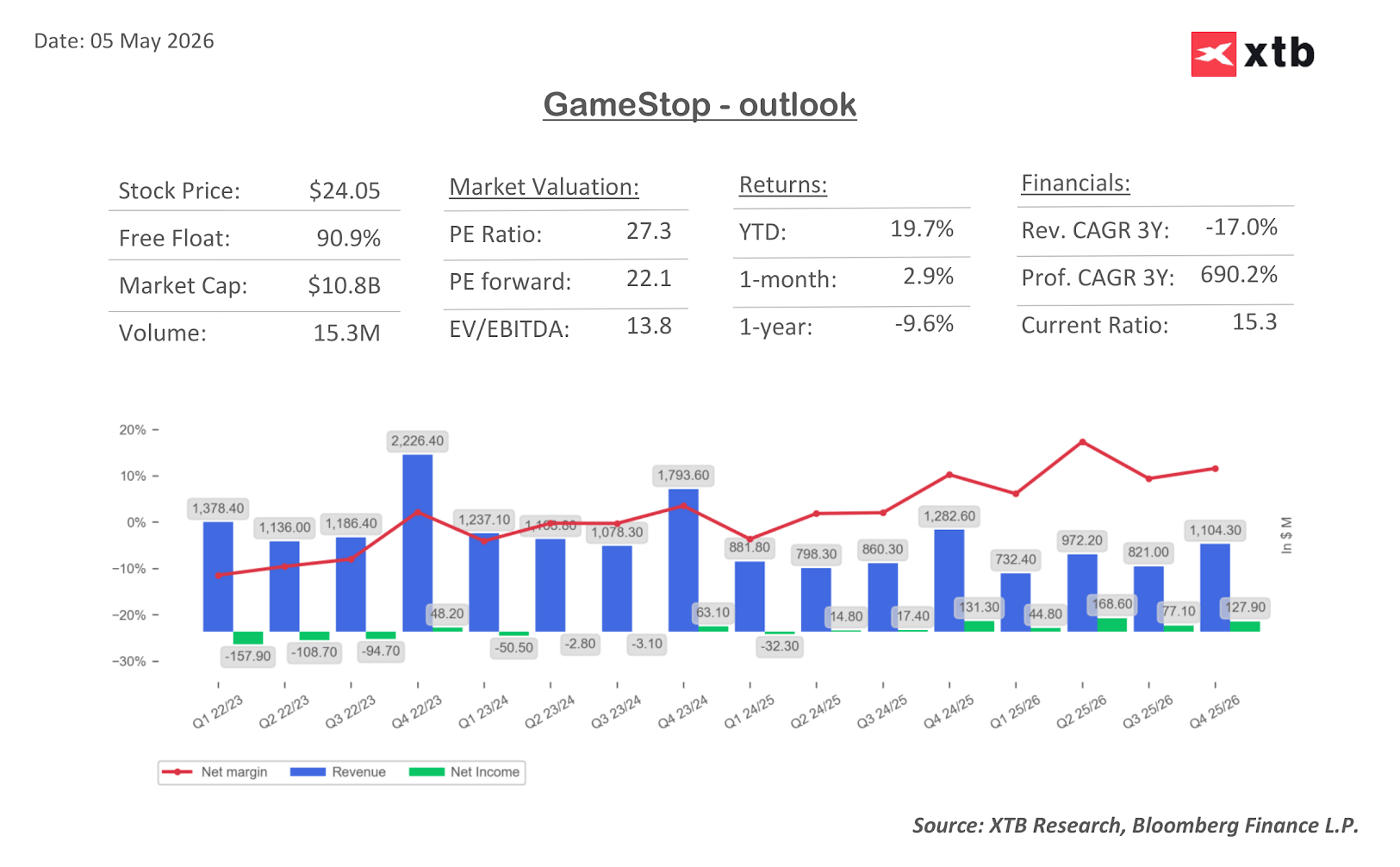
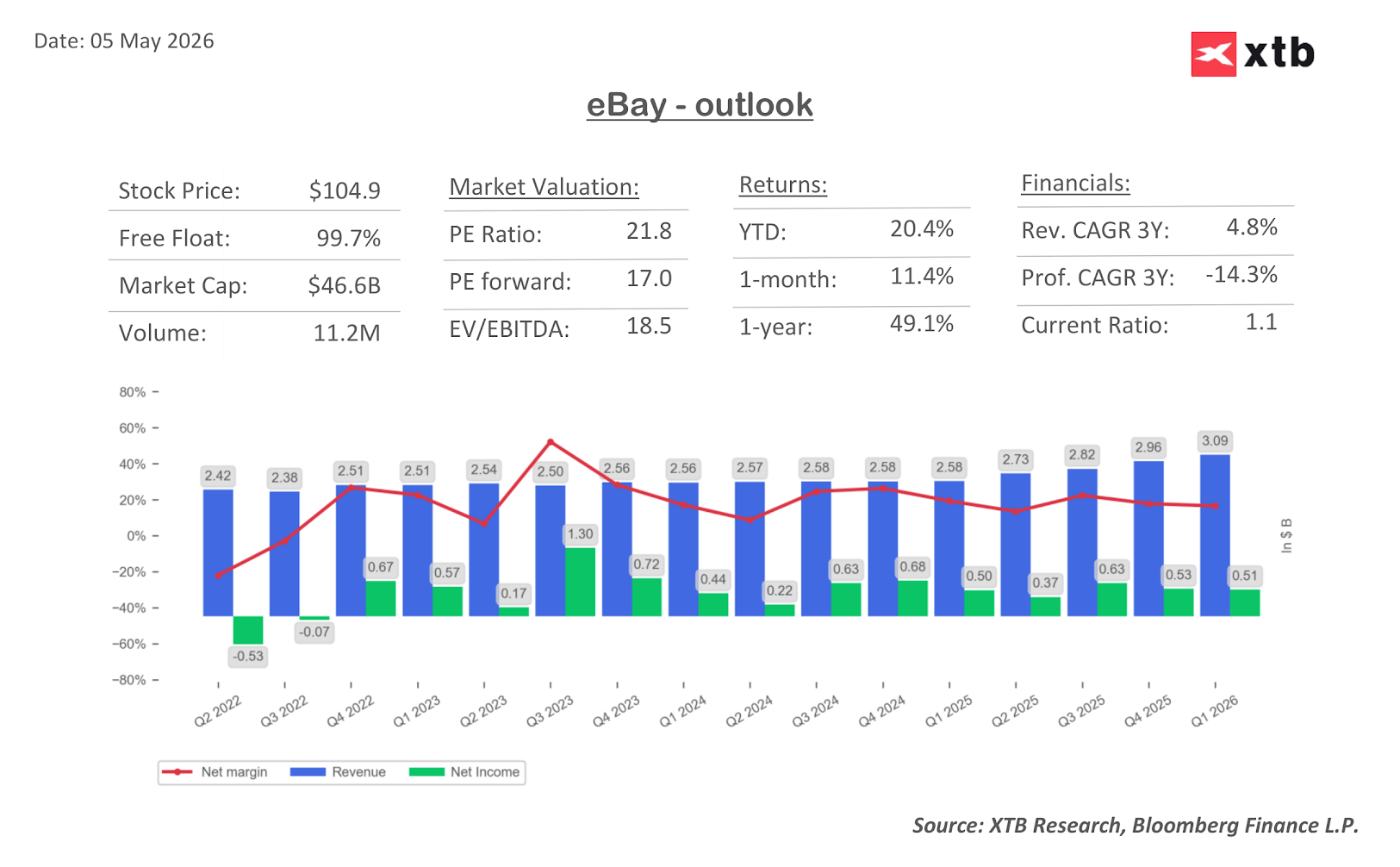
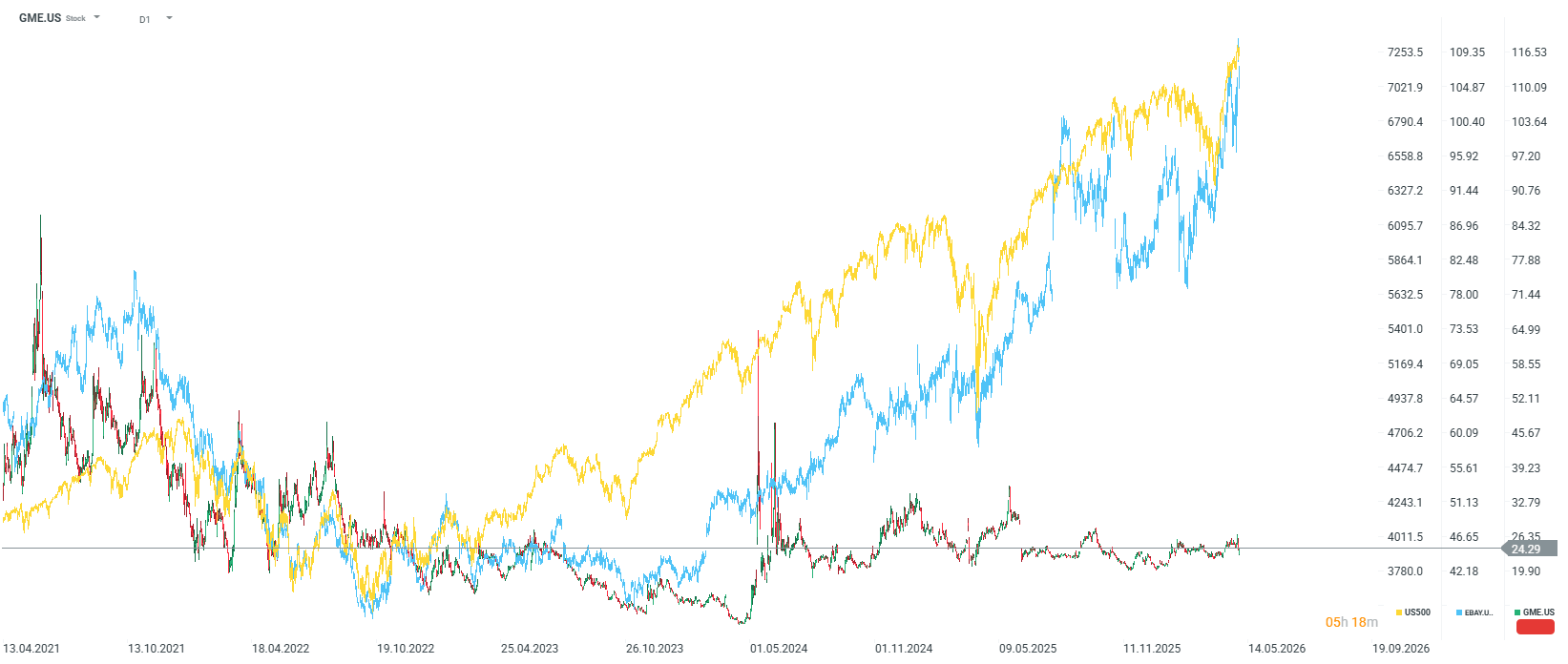
The GME proposal is a classic example of an attempt to take over a much larger entity. GameStop's market capitalization before the offer announcement was $12 billion , and it has since shrunk to just below $11 billion following a 10% drop in share price. In contrast, eBay was valued at approximately $46 billion. Furthermore, under CEO Jamie Iannone, eBay has performed excellently, outperforming the S&P 500 index over the last several years.
Comparison of Capitalization: Even during its 2021 peak, GameStop was worth roughly 2.5 times less than eBay. Source: Bloomberg FInance LP
Despite this, GameStop is no longer the "dying" store chain it was before the pandemic. Thanks to Ryan Cohen, the company has:
- Accumulated a massive financial cushion of about $9 billion in cash.
- Improved its profitability, with Cohen successfully dragging the formerly loss-making business into profit.
- Built a roughly 5% stake in eBay, positioning itself as an active shareholder.
The Math of Cuts: The Foundation of the Offer
According to GME, the key to this transaction's success is a drastic reduction in costs. Cohen promises to find $2 billion in annual savings within just 12 months of the closing. The plan includes:
- $1.2 billion reduction in sales and marketing expenses.
- $500 million reduction in general and administrative (G&A) costs.
- $300 million cut from the product development budget.
Company calculations suggest these deep cuts could raise eBay's earnings per share (EPS) from $4.26 to $7.79 in the first year. However, Morgan Stanley analysts warn they see no "low-hanging opportunities" for savings in eBay's cost structure. Aggressive cuts of nearly 40% to the overhead base could permanently damage the business.
Michael Burry Jumps Ship
The strongest warning signal for investors may be the decision of Michael Burry, the legendary investor from "The Big Short" who originally helped fuel GME's rally by taking a bullish stance in 2019. Burry announced that he has sold his entire position in GameStop.
He cited the excessive debt the combined company would carry as his primary concern, stating that a net-debt-to-EBITDA ratio exceeding 5x is unacceptable. Burry called this level of leverage a "knife edge" and noted that if eBay demands a higher price, the debt could reach levels bordering on distressed.
Return of Meme Stocks or Real Business?
GameStop will forever be remembered as the catalyst for the 2021 retail investor frenzy. Whether this bid can restore a meme stock bull market remains to be seen, but the initial market reaction is mixed: eBay shares rose 5% , while GameStop's price fell 10%. This suggests investors fear massive capital dilution and execution risk.
Cohen claims he wants to turn eBay into a company worth "hundreds of billions of dollars". His strategy involves using GME's physical stores as a national network for authentication, intake, and fulfillment, particularly for the growing collectibles market.
While GME is trying to evolve from a "meme" into a real business holding modeled after Buffett's "Instant Berkshire," many view the proposal as "fantasy dealmaking". As long as the offer relies on "financial acrobatics" and drastic cost-cutting rather than a visionary growth strategy, it may remain a market fantasy.



Morning Wrap: Can NFP Confirm Waller’s Dovish Turn?

Daily Summary: Nasdaq, Gold, and Bitcoin benefit from lower bond yields (03.09.2026)


US Open: Dovish Waller supports the stock market (03.09.2026)


Broadcom Delivers Record Results. The Market Is Already Looking Much Further Ahead
The material on this page does not constitute as financial advice and does not take into account your level of understanding, investment objectives, financial situation or any other particular needs.
All the information provided, including opinions, market research, mathematical results and technical analyses published on the website or transmitted to you by other means is provided for information purposes only and should in no event be interpreted as an offer of, or solicitation for, a transaction in any financial instrument, nor should the information provided be construed as advice of legal or fiscal nature.
Any investment decisions you make shall be based exclusively on your level of understanding, investment objectives, financial situation or any other particular needs. Any decision to act on information published on the website or transmitted to you by other means is entirely at your own risk. You are solely responsible for such decisions.
If you are in doubt or are not sure that you understand a particular product, instrument, service, or transaction, you should seek professional or legal advice before trading.
Investing in OTC Derivatives carries a high degree of risk, as they are leveraged based products and often small movements in the market could lead to much larger movements in the value of your investment and this could work against you or for you. Please ensure that you fully understand the risks involved, taking into account your investments objectives and level of experience, before trading, and if necessary, seek independent advice.
