


Oil has once again moved above $100 a barrel, with Brent now approaching $110. This time, however, the move is not simply about a higher geopolitical risk premium. The market is becoming increasingly concerned that the prolonged conflict is starting to have a real impact on the availability of crude.
The Strait of Hormuz remains the key issue. A significant share of global oil trade normally passes through the waterway, and the postponement of talks aimed at reopening it means investors still have no clear indication of when flows could return to normal. At the same time, problems are emerging along alternative routes. Houthi attacks are increasing risks to shipping through the Red Sea and Bab el Mandeb, while damage to Saudi Arabia’s East West pipeline has further reduced the country’s ability to move crude without relying on Hormuz.
This is an important shift for the oil market. The fewer alternative routes available, the harder it becomes to replace barrels that are unable to reach the market from the Middle East. As a result, every new attack on energy infrastructure or disruption to shipping is now having a much faster impact on prices.
China is also becoming an increasingly important part of the story. Chinese refiners are stepping up purchases of crude from Russia, Africa and the Americas as they try to replace lost Middle Eastern supplies. With overall availability already tight, one of the world’s largest oil importers is now competing more aggressively for available barrels. Physical crude deliveries into China are already trading at very large premiums to Brent, highlighting just how tight the physical market has become.
Until recently, China was able to cushion some of the disruption by drawing on its existing inventories. That flexibility is gradually fading, however, while imports are starting to recover. If Chinese refiners continue to increase purchases, pressure on an already constrained supply market could remain elevated.
This is why the current move in oil looks different from a typical short lived geopolitical spike. The market is no longer pricing only the risk of further escalation. It is increasingly pricing the possibility that physical crude availability itself could become a problem. With limited options for replacing disrupted supplies, even relatively small additional disruptions could have a significant impact on prices.
In the coming days, the key factors to watch will be developments around the Strait of Hormuz, the situation in the Red Sea and the status of Saudi Arabia’s oil infrastructure.
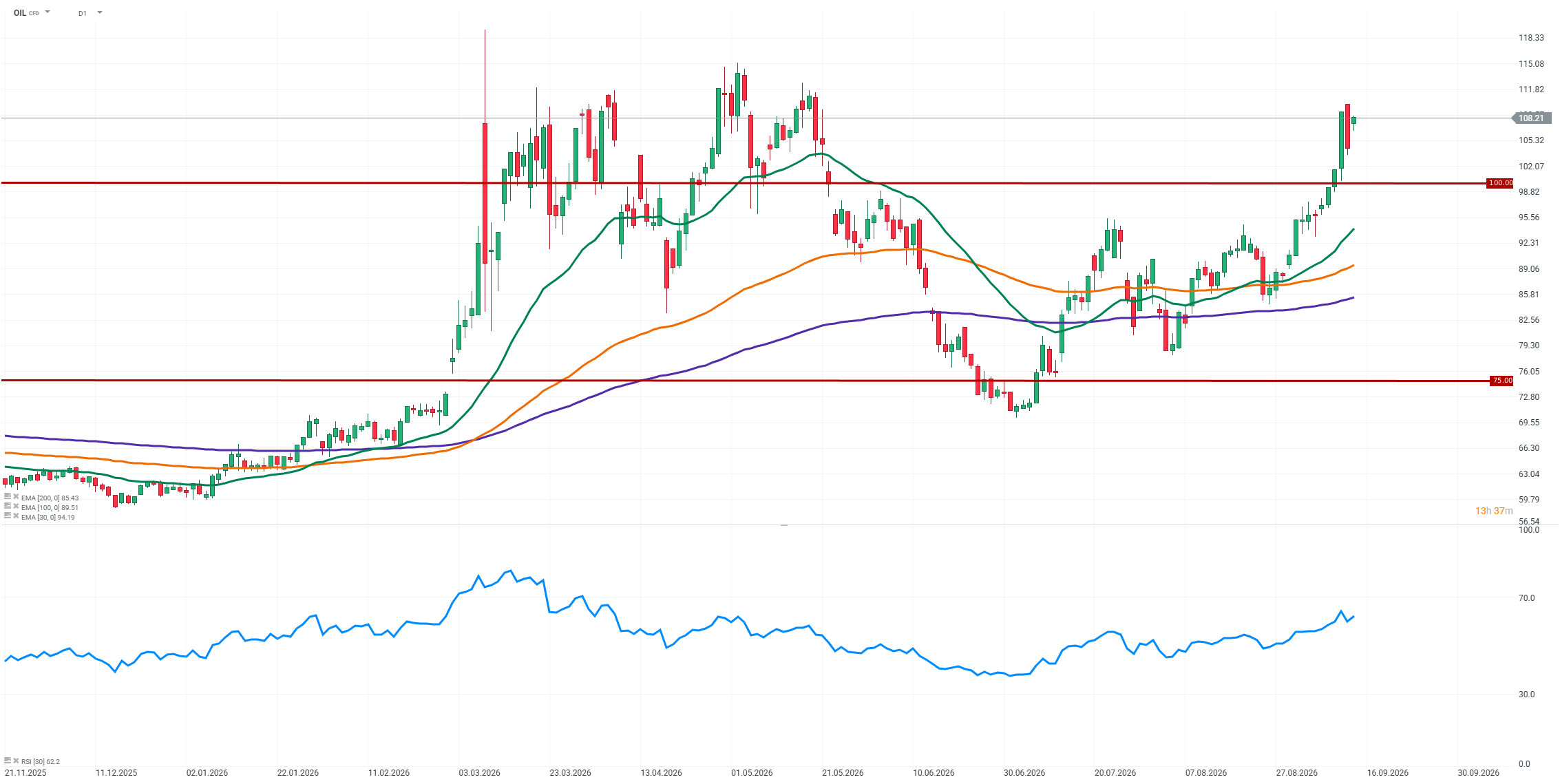
Source: xStation5



Daily summary: AI slowdown does not slow the rise in yields


The Yen weakens again 💴


US OPEN: AI slows, oil rises, markets fall


Market Wrap: European Stocks in the Red. AI Sinks, Oil Surges
The material on this page does not constitute as financial advice and does not take into account your level of understanding, investment objectives, financial situation or any other particular needs.
All the information provided, including opinions, market research, mathematical results and technical analyses published on the website or transmitted to you by other means is provided for information purposes only and should in no event be interpreted as an offer of, or solicitation for, a transaction in any financial instrument, nor should the information provided be construed as advice of legal or fiscal nature.
Any investment decisions you make shall be based exclusively on your level of understanding, investment objectives, financial situation or any other particular needs. Any decision to act on information published on the website or transmitted to you by other means is entirely at your own risk. You are solely responsible for such decisions.
If you are in doubt or are not sure that you understand a particular product, instrument, service, or transaction, you should seek professional or legal advice before trading.
Investing in OTC Derivatives carries a high degree of risk, as they are leveraged based products and often small movements in the market could lead to much larger movements in the value of your investment and this could work against you or for you. Please ensure that you fully understand the risks involved, taking into account your investments objectives and level of experience, before trading, and if necessary, seek independent advice.