


- CPI inflation (m/m): 1,1% (forecast: 1.1%; previous: 0.2%)
- HICP inflation (m/m): 1,2% (forecast: 1.2%; previous: 0.4%)
- CPI inflation (y/y): 2,7% (forecast: 2.7%; previous: 1.9%)
- HICP inflation (y/y): 2,8% (forecast: 2.8%; previous: 2.0%)
Why this data matters
The inflation reading in Germany is highly important because it directly influences decisions made by the European Central Bank. If price dynamics accelerate, it may prompt the central bank to keep interest rates elevated for longer and delay potential rate cuts. As a result, monetary policy remains more restrictive.
These figures also impact the euro. Higher-than-expected inflation tends to support the currency, as investors anticipate that interest rates in the eurozone will stay higher for an extended period.
The importance of this data goes beyond Germany itself, as it is the largest economy in Europe and often sets the tone for inflation trends across the entire euro area. For this reason, investors treat it as a key indicator ahead of the broader regional data release.
Inflation data also has a clear effect on financial markets. Higher inflation can push bond yields higher while putting pressure on equities due to the increased cost of money. Additionally, it leads to greater volatility in the foreign exchange market, particularly in euro-related currency pairs.
From a real economy perspective, rising inflation increases the burden on consumers by reducing purchasing power. Over time, this can limit spending and contribute to slower economic growth.
Current Data
Today’s inflation data from Germany shows a clear acceleration in price growth, even though the readings came in line with market expectations.
On a monthly basis, CPI inflation reached 1.1%, marking a sharp increase compared to the previous 0.2%. This suggests a strong rebound in short-term price pressures. Similarly, HICP inflation rose to 1.2% month-over-month, matching forecasts but significantly higher than the prior 0.4%, confirming a broad-based increase in prices across the economy.
On an annual basis, CPI inflation climbed to 2.7% from 1.9%, indicating that inflationary pressure is building again. Likewise, HICP inflation increased to 2.8% year-over-year from 2.0%, moving back above the European Central Bank target of around 2%.
The key takeaway is that while the data met expectations, its composition is hawkish. Inflation is accelerating both on a monthly and yearly basis, which may reduce the likelihood of near-term rate cuts and support a more cautious stance from the central bank.
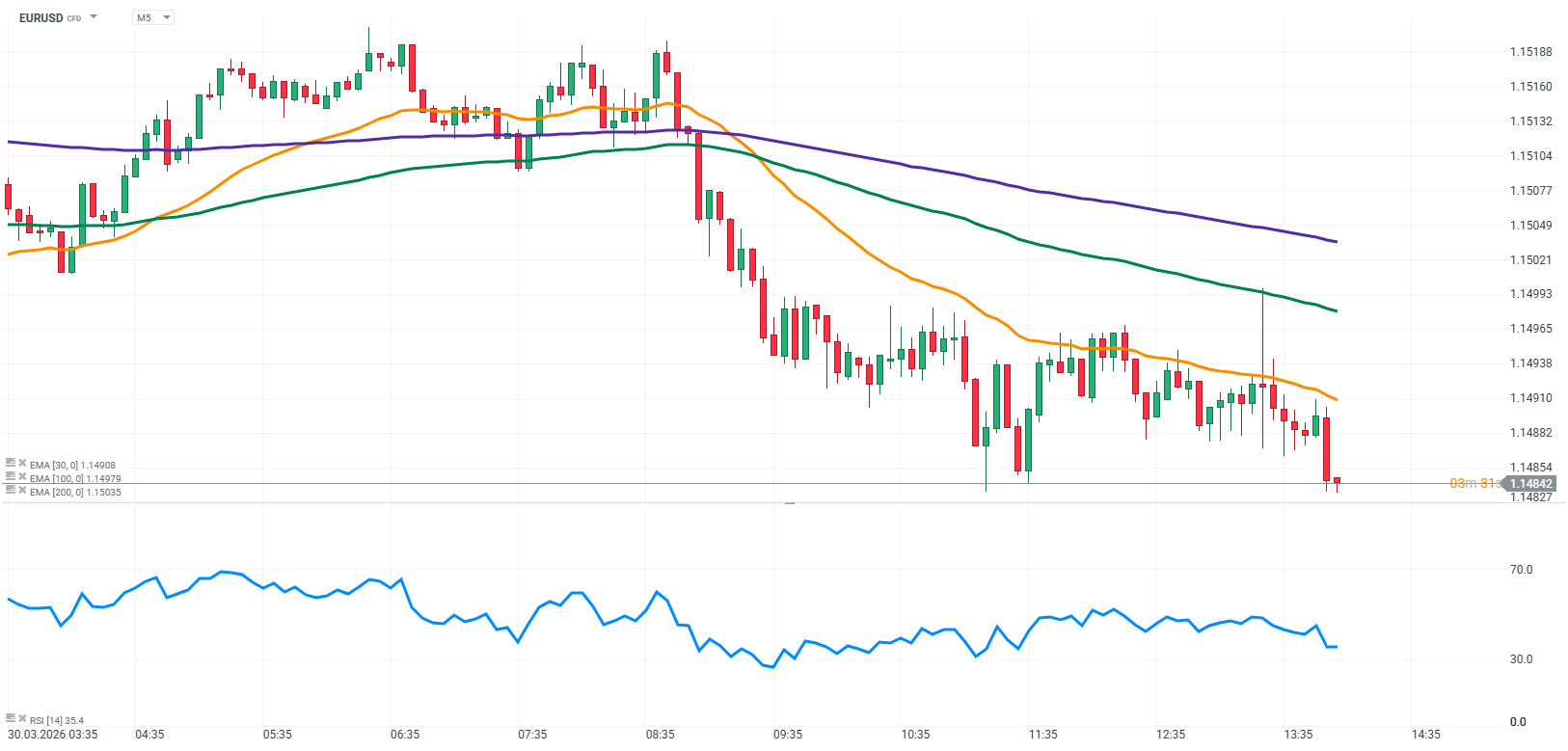
Source: xStation5

Powell Speaking: Markets Watch Fed Policy



US Open: A Tentative Start to the New Week on Wall Street!


Economic Calendar: German CPI in the Spotlight (30.03.2026)



Morning Wrap: Markets Show Signs of Recovery After the Weekend; What Will the Week Bring❓ (30.03.2026)
The material on this page does not constitute as financial advice and does not take into account your level of understanding, investment objectives, financial situation or any other particular needs.
All the information provided, including opinions, market research, mathematical results and technical analyses published on the website or transmitted to you by other means is provided for information purposes only and should in no event be interpreted as an offer of, or solicitation for, a transaction in any financial instrument, nor should the information provided be construed as advice of legal or fiscal nature.
Any investment decisions you make shall be based exclusively on your level of understanding, investment objectives, financial situation or any other particular needs. Any decision to act on information published on the website or transmitted to you by other means is entirely at your own risk. You are solely responsible for such decisions.
If you are in doubt or are not sure that you understand a particular product, instrument, service, or transaction, you should seek professional or legal advice before trading.
Investing in OTC Derivatives carries a high degree of risk, as they are leveraged based products and often small movements in the market could lead to much larger movements in the value of your investment and this could work against you or for you. Please ensure that you fully understand the risks involved, taking into account your investments objectives and level of experience, before trading, and if necessary, seek independent advice.
