



EURUSD is clawing back some of its recent losses, moving back above 1.12 to trade around 1.1220. However, the rebound has yet to signal a meaningful shift in the broader bearish trend. France’s deteriorating fiscal outlook continues to weigh on the single currency, while the prospect of another Federal Reserve rate hike in December poses an additional headwind.
The outlook for the pair remains finely balanced. A softer dollar has given EURUSD room to recover, but persistent US inflation could prompt markets to price in a more hawkish Fed stance. At the same time, rising French borrowing costs are adding to concerns over the euro area’s fiscal and financial stability.
Key Drivers for EURUSD
France’s Fiscal Outlook Weighs on the Euro
France’s public finances remain a key source of downside risk for the single currency. A sizeable budget deficit, heavy borrowing needs and ongoing political uncertainty are undermining confidence that the country can put its fiscal position on a more sustainable footing.
Yields on French 10-year government bonds have approached 5%, reaching levels not seen since the early 2000s. France is also planning to issue €340 billion in bonds in 2027, underscoring the scale of its financing requirements. Meanwhile, some French investment-grade corporate bonds are trading at lower yields than comparable French sovereign debt, highlighting growing investor scrutiny of the government’s credit risk.
For EURUSD, the key concern is the potential for further increases in French borrowing costs and a widening spread between French and German government bond yields. Such a move could fuel concerns over financial stability across the euro area and weigh further on the single currency. While France’s fiscal woes do not automatically imply further euro weakness, they remain a significant obstacle to a sustained recovery.
December Fed Rate Hike Remains a Live Risk
The Fed’s policy outlook is another key driver for EURUSD. The dollar does not need an immediate rate hike to remain supported; a growing conviction that the Fed could tighten policy again in December may be enough to underpin demand for the greenback.
On the one hand, signs of cooling in the US labour market argue for caution. On the other, inflation remains above the Fed’s target, and persistent price pressures could force policymakers to keep the door open to further tightening.
The next round of US inflation data and commentary from Fed officials will therefore be crucial. If the data point to sticky inflation, Treasury yields could move higher, giving the dollar fresh support ahead of the December meeting and limiting EURUSD’s recovery.
Fed-ECB Policy Divergence Could Tilt the Balance Towards the Dollar
Beyond the Fed’s absolute policy stance, the relative outlook for US and euro area interest rates remains important. If markets increasingly price in another Fed hike while anticipating a more cautious approach from the European Central Bank, the resulting shift in rate expectations could favour the dollar.
France’s fiscal strains add another layer of uncertainty to the euro’s outlook. Higher sovereign yields could tighten financial conditions across the euro area and amplify concerns about the region’s economic resilience. Although France’s debt problems do not necessarily imply an immediate change in ECB policy, they could influence market expectations for the bank’s next moves.
With fiscal risks weighing on the euro and the possibility of further Fed tightening supporting the dollar, the balance of risks remains tilted against a sustained EURUSD recovery.
EURUSD Rebounds, but the Broader Downtrend Remains Intact
From a technical perspective, EURUSD is attempting to stabilise after sliding towards 1.1160, its lowest level since last year. The move back above 1.12 suggests that dip-buyers are stepping in, but the rebound has yet to confirm a durable reversal.
A return towards 1.1160 would put the recent lows back in focus and raise the risk of a deeper sell-off, particularly if the dollar regains momentum. On the upside, holding above 1.12 and breaking through nearby resistance could extend the corrective bounce. A more convincing bullish reversal, however, would require support from the fundamental backdrop as well.
What’s Next for EURUSD?
The next few sessions should help determine whether the euro can build on its recovery or whether the rebound will offer sellers another opportunity to re-enter the market. On the US side, inflation data and their impact on December Fed rate expectations will be key. In Europe, investors will remain focused on France’s fiscal outlook, preparations for the 2027 budget and the spread between French and German sovereign yields.
In the near term, EURUSD could extend its rebound if the dollar remains on the back foot. Further out, however, France’s fiscal risks and the possibility of additional Fed tightening are likely to cap the pair’s upside.
Key Takeaways
-
EURUSD is back above 1.12, but the rebound has yet to confirm a sustained bullish reversal.
-
France’s fiscal outlook remains a headwind for the euro, with rising borrowing costs adding to investor concerns.
-
A December Fed hike remains a live scenario, potentially supporting the dollar ahead of the meeting.
-
Sticky US inflation could push Treasury yields higher, providing another tailwind for the greenback.
-
The 1.1160 area remains a key downside reference, while holding above 1.12 could help extend the corrective rebound.
For now, the euro needs more than a softer dollar to sustain its recovery. With French fiscal risks still in focus and a December Fed hike not yet ruled out, the latest bounce in EURUSD may prove to be a corrective move rather than the start of a lasting uptrend.
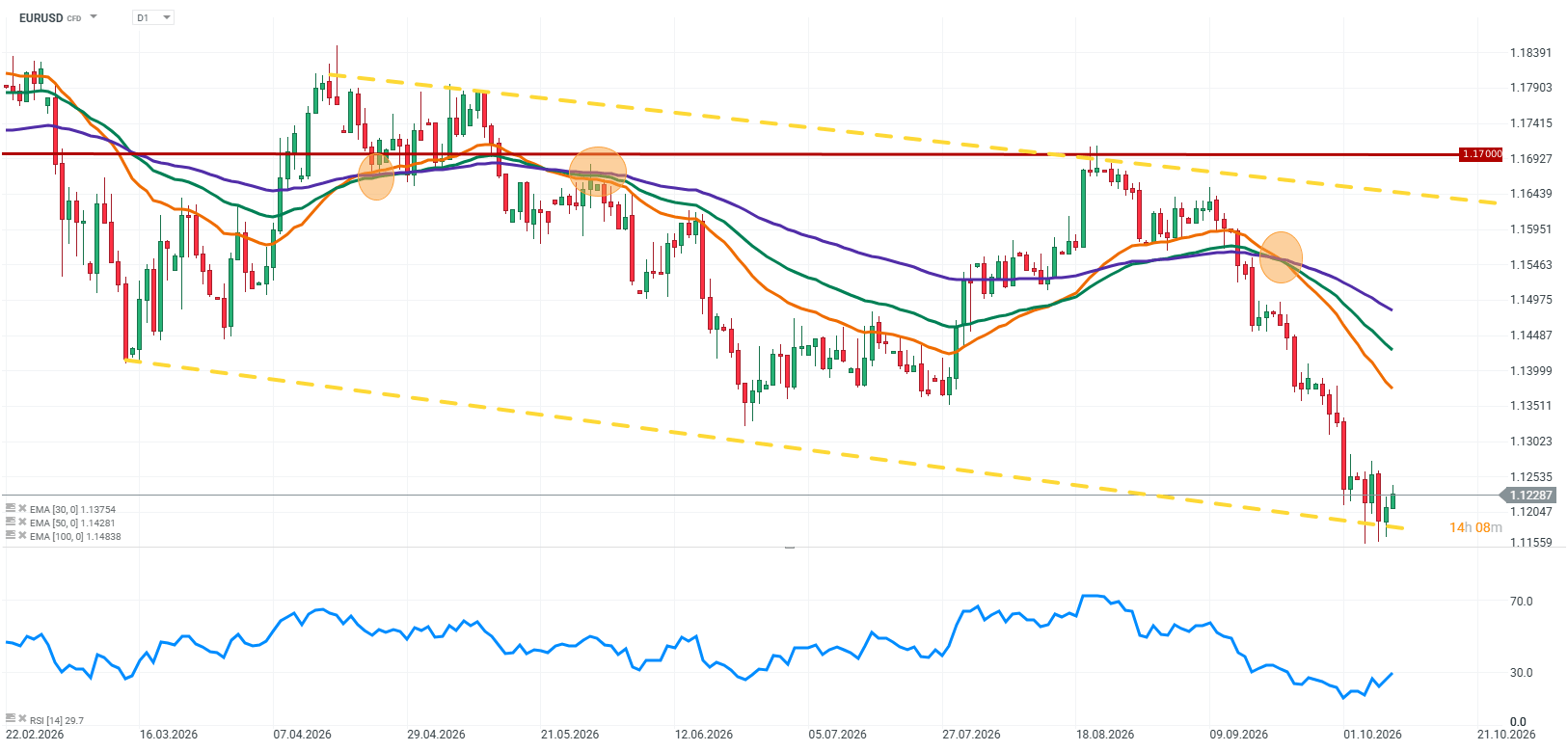
Source: XTB Research



Economic Calendar: Canada’s Jobs Report in Focus



Morning Wrap: OpenAI Revenue Concerns Weigh on Wall Street


Daily Summary: Trump and OpenAI keep the market on a roller coaster💡



U.S. attacks on Iran suspended 💥
The material on this page does not constitute as financial advice and does not take into account your level of understanding, investment objectives, financial situation or any other particular needs.
All the information provided, including opinions, market research, mathematical results and technical analyses published on the website or transmitted to you by other means is provided for information purposes only and should in no event be interpreted as an offer of, or solicitation for, a transaction in any financial instrument, nor should the information provided be construed as advice of legal or fiscal nature.
Any investment decisions you make shall be based exclusively on your level of understanding, investment objectives, financial situation or any other particular needs. Any decision to act on information published on the website or transmitted to you by other means is entirely at your own risk. You are solely responsible for such decisions.
If you are in doubt or are not sure that you understand a particular product, instrument, service, or transaction, you should seek professional or legal advice before trading.
Investing in OTC Derivatives carries a high degree of risk, as they are leveraged based products and often small movements in the market could lead to much larger movements in the value of your investment and this could work against you or for you. Please ensure that you fully understand the risks involved, taking into account your investments objectives and level of experience, before trading, and if necessary, seek independent advice.