


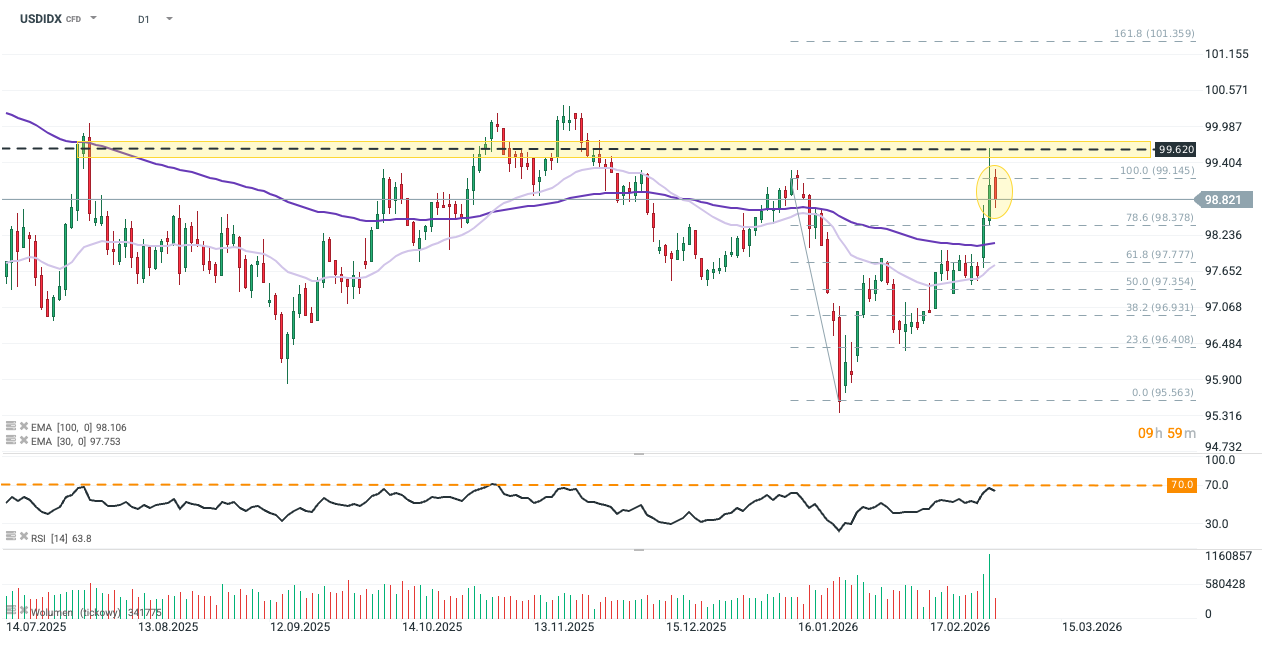
Dollar gains are stalling following a New York Times report suggesting that Iranian authorities shared information with the CIA regarding a readiness for negotiations. Despite Iran’s subsequent response — stating it does not trust the US, sees no grounds for talks, and intends to continue military operations as long as necessary — the US Dollar Index (USDIDX) halted its streak of dynamic gains, retreating approximately 0.2% after breaking above a 3-month high.
Source: xStation5
Beyond the "flight-to-safety" effect, dollar strength has been driven by a sharp rise in global inflation fears, which supports maintaining higher US interest rates. Fed officials had been communicating increasingly hawkish sentiment even before PCE inflation returned to 3%; consequently, an additional oil shock translated into a rapid rebound in US Treasury yields and a decline in already shaky expectations for rate cuts in 2026. However, given the scale of recent gains and the lack of prospects for conflict de-escalation, today’s correction may be merely technical and does not necessarily signal an end to upward pressure on the dollar.
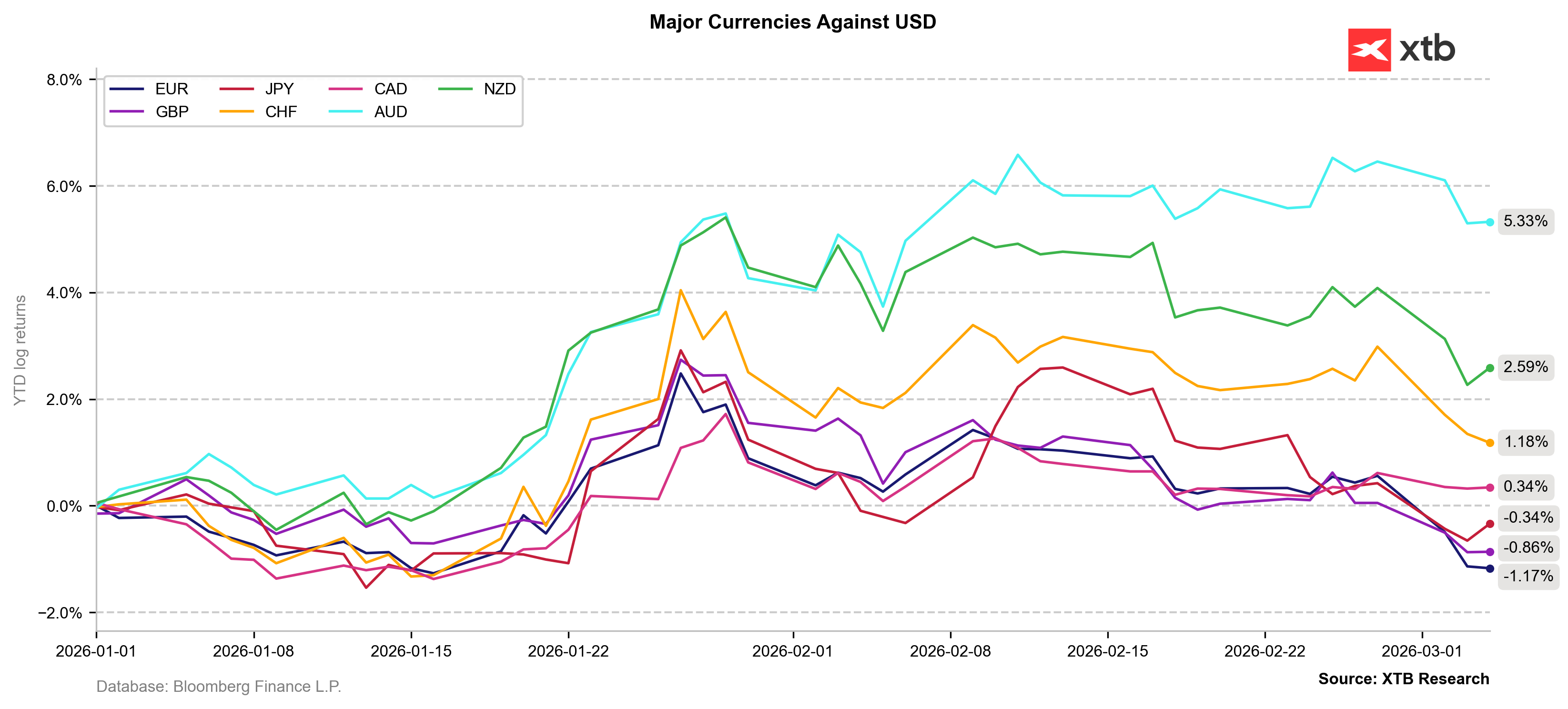
While new inflationary concerns are global in nature, the combined "inflation jitters + flight-to-safety" effect has turned most G10 currencies lower against the greenback. Even the Swiss franc saw a sharp correction. The hardest hit has been EUR/USD, which is down approximately 1.2% YTD. Source: XTB Research
The European Central Bank (ECB) faces an even tougher challenge, forced to weigh the resurgence of inflation against the real risk of recession on the Continent. Natural gas prices in Europe doubled in reaction to the escalating conflict and the suspension of LNG production in Qatar. Energy price relief in recent years was the primary factor helping to contain European inflation and contributing to the observed rise in business activity. A sustained increase in gas prices could, therefore, stifle the gradual recovery of the European economy.
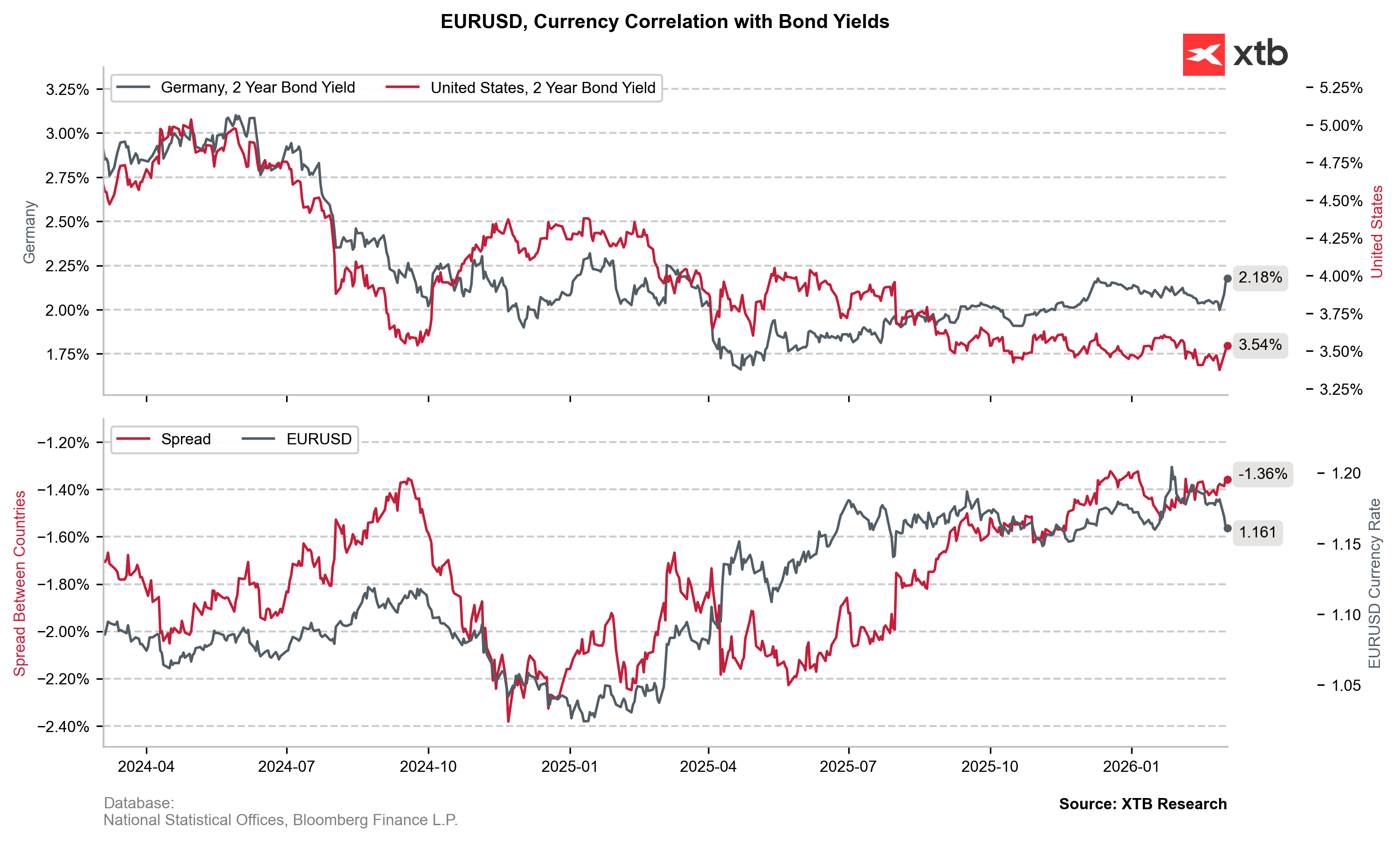
Despite a symmetrical rebound in yields on both sides of the Atlantic, EUR/USD plummeted due to Europe's exposure to gas price volatility, which threatens to wipe out recent gains in economic activity (GDP improvements, rising PMIs). Source: XTB Research
Despite a successful defense of technical support at 1.1600, sentiment surrounding the EUR/USD pair remains decidedly bearish, as confirmed by derivatives market data. The Risk Reversal indicator shows a persistent preference for put options over calls, meaning investors are still paying a high premium to hedge against further Euro declines over the coming month. This pessimism reflects growing concerns over the health of the European economy as it grapples with energy pressure and low gas storage levels—factors that, in the eyes of the market, cast doubt on the sustainability of the current recovery.
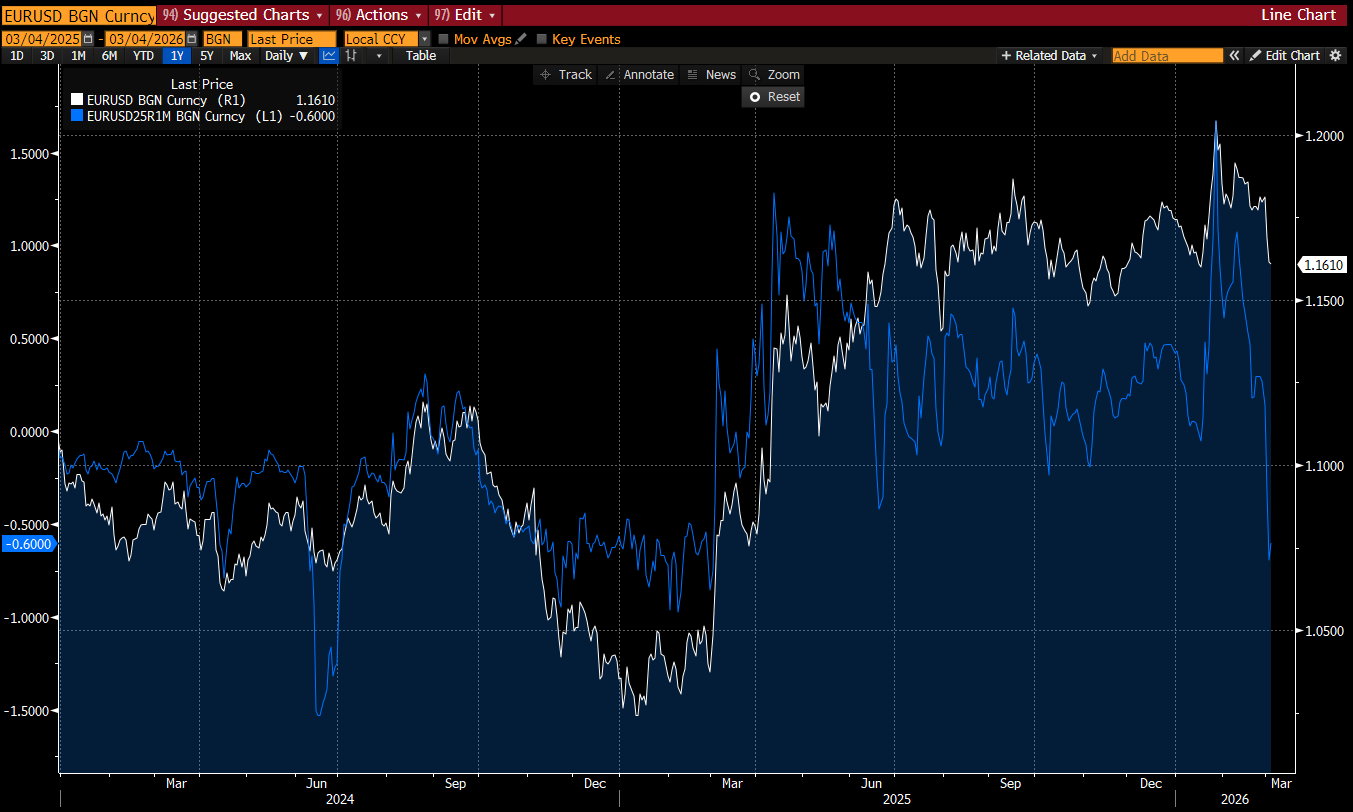
EUR/USD exchange rate (white) vs. 1-month market-implied Risk Reversal (blue, negative). Source: Bloomberg Finance LP


BREAKING: U.S. retail sales above expectations! EUR/USD is gaining!



Market Wrap: European stocks join the bullish rally 🚀 Euro Stoxx +3%

BREAKING: Eurozone PMI stronger than expected 📈 EURUSD gains


AU200.cash: mixed signals from the Australian economy ⚔️
The material on this page does not constitute as financial advice and does not take into account your level of understanding, investment objectives, financial situation or any other particular needs.
All the information provided, including opinions, market research, mathematical results and technical analyses published on the website or transmitted to you by other means is provided for information purposes only and should in no event be interpreted as an offer of, or solicitation for, a transaction in any financial instrument, nor should the information provided be construed as advice of legal or fiscal nature.
Any investment decisions you make shall be based exclusively on your level of understanding, investment objectives, financial situation or any other particular needs. Any decision to act on information published on the website or transmitted to you by other means is entirely at your own risk. You are solely responsible for such decisions.
If you are in doubt or are not sure that you understand a particular product, instrument, service, or transaction, you should seek professional or legal advice before trading.
Investing in OTC Derivatives carries a high degree of risk, as they are leveraged based products and often small movements in the market could lead to much larger movements in the value of your investment and this could work against you or for you. Please ensure that you fully understand the risks involved, taking into account your investments objectives and level of experience, before trading, and if necessary, seek independent advice.
