



Shares of European automotive groups are posting strong gains during Wednesday’s session following the European Commission’s decision to introduce quantitative limits on imports of hybrid cars. Volkswagen is up nearly 6%, Stellantis 5.5%, BMW 5%, and Renault more than 4%. Gains also extend to automotive component makers, including Continental and Michelin. Brussels’ decision may reduce price pressure in one of the most important segments of the European car market.
The regulations, which will take effect on 1 December, will cover cars equipped with conventional hybrid systems, as well as mild hybrids and plug-in hybrids. Unlike the tariffs previously imposed on Chinese electric cars, the new rules prevent imports of vehicles above the country-specific limits that have been allocated. Although the restrictions apply to most non-EU manufacturers, their consequences will be felt most strongly by China.
The annual equivalent of the quota granted to Beijing is about 350,000 cars, roughly half of the expected imports from that country this year. According to ACEA, the share of Chinese brands in Europe’s conventional hybrid market rose from 2% in 2024 to 14% in the first half of 2026. This expansion partly reflects a shift in strategy by Chinese manufacturers after the EU imposed additional tariffs on fully electric cars in 2024.
A growing market and growing problems
Brussels’ intervention comes at a time of a clear improvement in demand in the European automotive market, with Asian manufacturers increasingly benefiting from it. According to ACEA data, in the first ten months of 2026 the number of new car registrations in the EU rose by about 5.4% year on year to 9.46 million vehicles.
In context, registrations of conventional and mild hybrids increased by 9.6%, plug-in hybrids by 17%, and fully electric cars by 50%. At the same time, sales of cars powered exclusively by gasoline engines fell by around 20%.
Hybrids now account for more than 46% of the EU new car market in total. This segment is a particularly important and increasingly significant source of revenue for European groups during a difficult period for the industry.
The scale of the problem is illustrated by data included in the European Commission’s investigation. An analysis of comparable car models showed that prices of imported hybrids were on average 18.3% lower than prices of vehicles produced in the EU. In some segments, the difference approached 30%. Meanwhile, the profitability indicator for European hybrid producers fell by 57% compared with 2023, with capacity utilization remaining above 60%.
Outlook
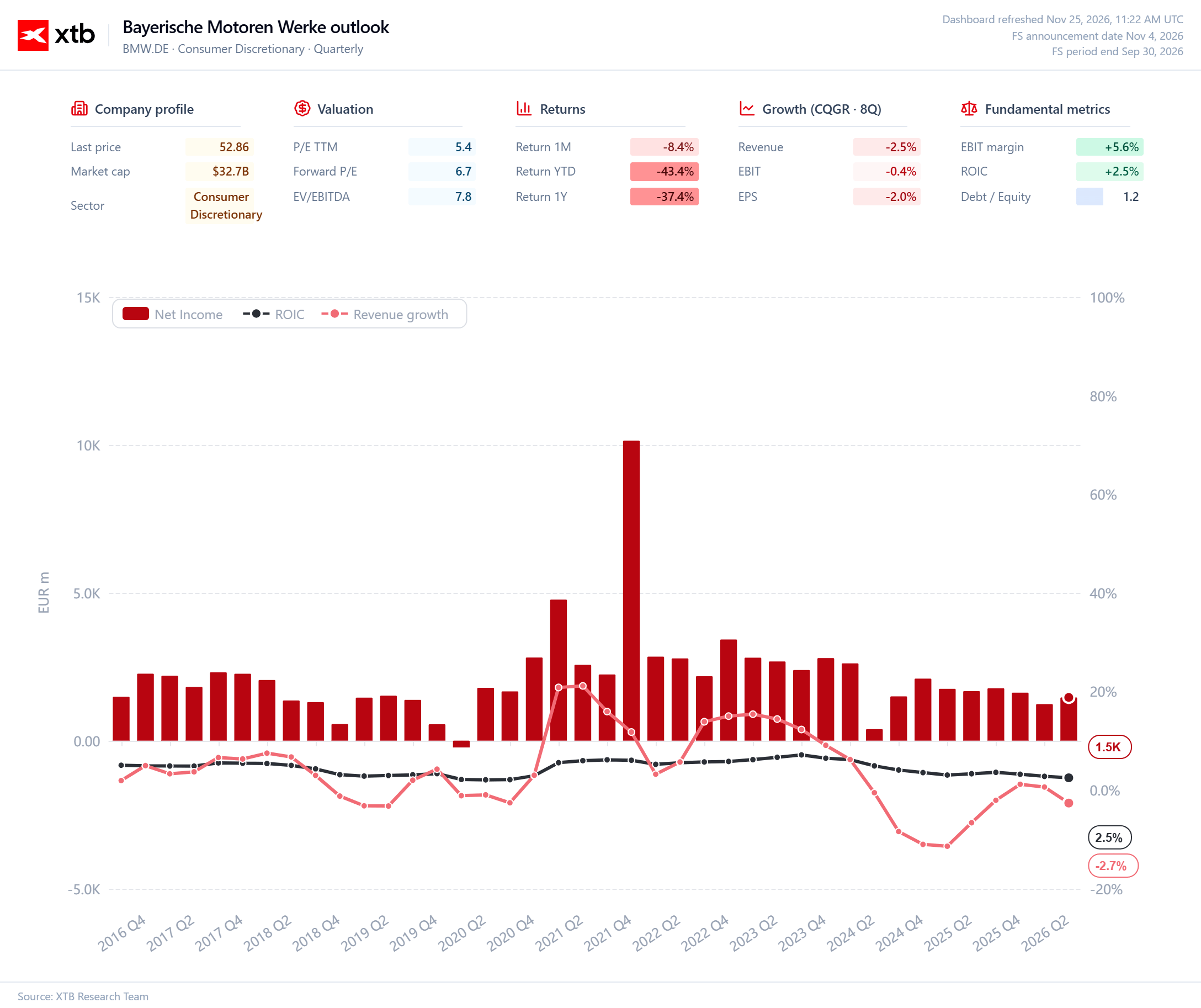
From shareholders’ perspective, the most important consequence of the new regulations may prove to be not so much regaining market share as reducing the need to compete on price. In an industry characterized by a high share of fixed costs, a simultaneous improvement in average selling prices and capacity utilization can lead to a disproportionately large increase in operating profits.
According to Citi analysts, Renault could be a particular beneficiary of the regulations, as its exposure to Europe’s mass-market segment makes it especially vulnerable to competition from Chinese brands. The bank also points to potential price improvement in the fleet sales segment. At the same time, analysts note that it is still too early to raise forecasts for volumes and margins.
However, the regulations are not without costs for European groups themselves. Quotas are allocated by the country of origin of the vehicle, not by the nationality of the manufacturer. The restrictions will therefore also cover part of the production of European brands carried out in Turkey, Morocco, or China.
The strong stock market reaction reflects improved profitability prospects for the sector, but not necessarily its long-term competitiveness. Europe may limit imports of cheaper cars, but it cannot permanently eliminate the cost advantage of their manufacturers in this way.



US OPEN: AI sector slump and return of inflation push Wall Street toward 7,000 pts


BREAKING: Germany accelerates, France slows down. PMIs show widening gap



🔴Morning Wrap: Technical rebound after AI crash and Asian interventions

Market Wrap: Global stocks post 7th consecutive session of losses, Anthropic failed to reassure the market (20.11.2026)
The material on this page does not constitute as financial advice and does not take into account your level of understanding, investment objectives, financial situation or any other particular needs.
All the information provided, including opinions, market research, mathematical results and technical analyses published on the website or transmitted to you by other means is provided for information purposes only and should in no event be interpreted as an offer of, or solicitation for, a transaction in any financial instrument, nor should the information provided be construed as advice of legal or fiscal nature.
Any investment decisions you make shall be based exclusively on your level of understanding, investment objectives, financial situation or any other particular needs. Any decision to act on information published on the website or transmitted to you by other means is entirely at your own risk. You are solely responsible for such decisions.
If you are in doubt or are not sure that you understand a particular product, instrument, service, or transaction, you should seek professional or legal advice before trading.
Investing in OTC Derivatives carries a high degree of risk, as they are leveraged based products and often small movements in the market could lead to much larger movements in the value of your investment and this could work against you or for you. Please ensure that you fully understand the risks involved, taking into account your investments objectives and level of experience, before trading, and if necessary, seek independent advice.