



Today’s publication of the FOMC minutes at 8:00 PM CET should confirm the slightly hawkish nature of the decision to hold rates at 3.50–3.75% during the March meeting, despite Powell's moderate tone at the press conference. The minutes are expected to show broad support within the Committee for the "no rush to cut" narrative, highlighting inflationary risks associated with the oil market shock following the conflict in the Middle East. While suggestions regarding hikes appeared during the last conference, the current potential ceasefire may indicate that the energy market shock will be short-lived. Furthermore, FOMC members clearly pointed out in the post-meeting statement that the impact of the war itself is difficult to assess at this stage. Nevertheless, there is room for the minutes to be perceived as hawkish.
Key points of the March meeting
The March FOMC was described as a "hawkish hold": a decision in line with expectations but with a clear hawkish undertone:
-
The dot plot showed a median of one rate cut in 2026, but as many as 7 out of 19 members see no need for any cuts. Moreover, given the current inflation outlook (with two important publications this week), the chances of cuts have clearly diminished, and the market even saw a 20% chance of a hike.
-
The rise in oil prices above $100/bbl (war in Iran) complicated inflation projections. Powell spoke of "uncertainty" and the need to "look through the energy shock."
-
Macro data (solid GDP growth, stable labor market) does not force immediate easing, despite a slight cooling of activity.
What to look for in the minutes?
The protocol will likely expand on the meeting's discussion in several key areas:
-
Inflation and the energy shock: Does the majority see the rise in oil prices as a transitory "supply shock," or a risk of spillover into core inflation and inflation expectations? More hawkish voices regarding "persistent risk" will strengthen the "higher for longer" perception. However, it is worth remembering that Powell steps down as Fed Chair in May.
-
Balance of risks: The minutes will show whether risks to inflation dominate concerns about a slowdown: a tilt toward inflation will mean a more hawkish tone.
-
Division within the Committee: References to "several participants" who see a need for tightening in a scenario of persistent inflation above 3% PCE. It is worth noting, however, that most hawkish FOMC members are rotating members. The majority of FOMC members are currently rather neutral.
-
Conditions for cuts: A high bar: the return to disinflation must be sustainable before the Fed considers easing. This could mean that an opportunity to cut will only arise at the end of this year under highly favorable conditions.
Could there be a suggestion of a hike?
There likely won't be any direct announcements, as the Fed avoids such strong statements, although Powell himself admitted during the conference that words regarding possible hikes in extreme scenarios were spoken. What did expectations show?
-
The median assumes one cut, but the hawkish wing of the FOMC (looking at the dot plot) suggests a readiness to hold rates longer or even hike if oil remains above $100, wages accelerate, or inflation expectations become unanchored.
-
The minutes may contain conditional phrasing: "should inflationary pressures persist, a return to tightening may be necessary"—this is enough for the market to price in a "hike option." It is worth emphasizing, however, that inflation should remain below the current interest rate level.
-
Comparison with the conference: Powell was balanced, but the protocol may reveal broader hawkish discussions "behind the scenes."
Impact on the Dollar – reaction scenarios
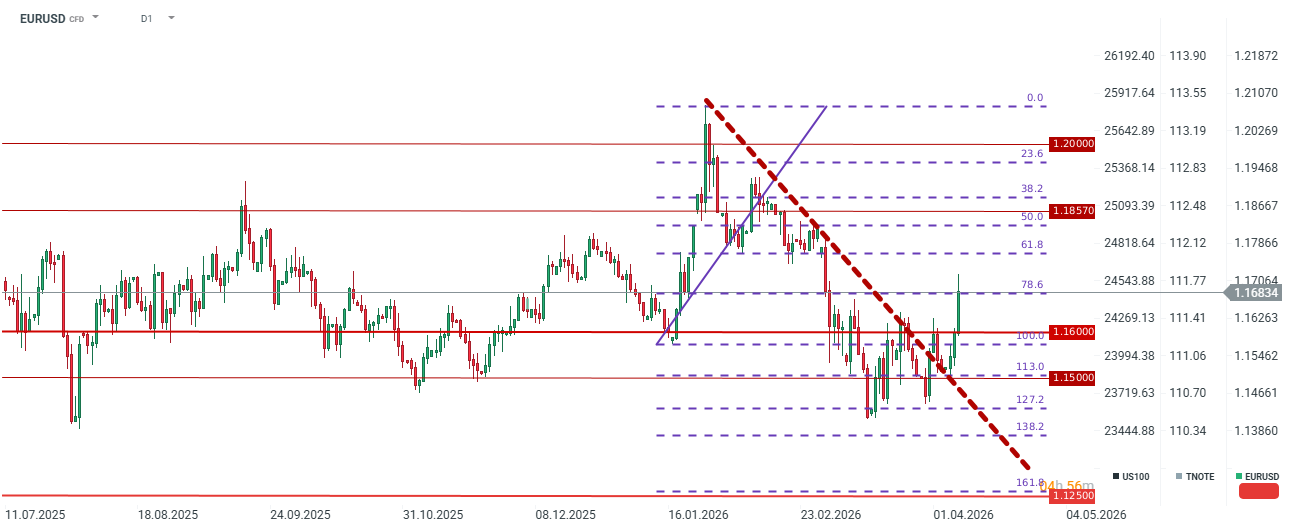
The US dollar has come under pressure following the ceasefire agreement between Iran and the USA. Nevertheless, there is room to recover some value in the event of clearly hawkish comments in the records of the last FOMC meeting. EURUSD rose toward 1.1700 today but is currently pulling back significantly, and there is a chance of a retreat below 1.1650. However, if the minutes suggest that the current oil shock is merely transitory and inflation will return to rapid declines, then EURUSD should return above 1.1700.
Additional support for the USD: It is worth mentioning that the dollar still holds safe-haven status. Recent reports of continued attacks could lead to a limitation of the dollar's weakness. The market may also reduce expectations for a return to interest rate cuts.


Yen loses ground after the BoJ decision
Hawkish remarks by BOJ Governor strengthen the yen – key takeaways

🏯Chart of the Day: Yen in a Trap. BoJ Hike That Weakened the Currency (18.09.2026)



Macro Calendar – Dovish BoJ Pivot and Key Data from Europe and the US
The material on this page does not constitute as financial advice and does not take into account your level of understanding, investment objectives, financial situation or any other particular needs.
All the information provided, including opinions, market research, mathematical results and technical analyses published on the website or transmitted to you by other means is provided for information purposes only and should in no event be interpreted as an offer of, or solicitation for, a transaction in any financial instrument, nor should the information provided be construed as advice of legal or fiscal nature.
Any investment decisions you make shall be based exclusively on your level of understanding, investment objectives, financial situation or any other particular needs. Any decision to act on information published on the website or transmitted to you by other means is entirely at your own risk. You are solely responsible for such decisions.
If you are in doubt or are not sure that you understand a particular product, instrument, service, or transaction, you should seek professional or legal advice before trading.
Investing in OTC Derivatives carries a high degree of risk, as they are leveraged based products and often small movements in the market could lead to much larger movements in the value of your investment and this could work against you or for you. Please ensure that you fully understand the risks involved, taking into account your investments objectives and level of experience, before trading, and if necessary, seek independent advice.