

Kevin Warsh’s appointment as the new Chair of the Federal Reserve opens a new chapter in US monetary policy, but it also places him in an extremely difficult position. For months, Donald Trump has openly called for immediate interest rate cuts, arguing that borrowing costs remain too high and are holding back the economy. The problem, however, is that current macroeconomic conditions leave the Fed with very little room to maneuver.
The latest CPI and PPI inflation readings for April came in even higher than economists’ already revised forecasts, reinforcing the view that inflationary pressure in the US economy remains strong. Under such conditions, rapid rate cuts would be difficult to justify from an economic standpoint and could easily be perceived as a political decision rather than a data driven one.
This is where the biggest risk for Warsh begins to emerge. If the new Fed Chair attempted to repay Trump for his political support by pushing for rate cuts despite persistent inflation, he would immediately face accusations of compromising the central bank’s independence. For financial markets, this would signal that the Fed is beginning to follow the expectations of the White House rather than macroeconomic data. Such a scenario could undermine the credibility of the entire institution.
Moreover, even the Fed Chair does not have complete freedom of action. Decisions on interest rates are made collectively by the FOMC, including other governors and presidents of regional Federal Reserve banks. This means Warsh would not be able to force through rate cuts on his own if the rest of the committee believes inflation remains too high.
A far more likely scenario is that Warsh will attempt to reshape the Fed in a different way by continuing to reduce the central bank’s balance sheet. This is an issue he has spoken about repeatedly even before his nomination. Warsh has long criticized the massive expansion of the Fed’s assets following recent crises and believes the central bank has become too deeply involved in financial markets.
At the same time, geopolitical tensions are making the situation even more complicated for the new Chair. The ongoing conflict in the Persian Gulf continues to keep oil and energy prices elevated, which in turn fuels inflationary pressure. As long as energy prices remain high, the Fed will have limited room to ease monetary policy without risking another acceleration in inflation. The bond market is already signaling concerns that inflation and elevated yields could remain in place for much longer.
Warsh is therefore stepping into the Fed at an exceptionally difficult moment, caught between political pressure from Trump and the harsh reality of persistent inflation. It will quickly become clear whether he intends to act primarily as a loyal presidential appointee or as an independent guardian of US monetary stability.
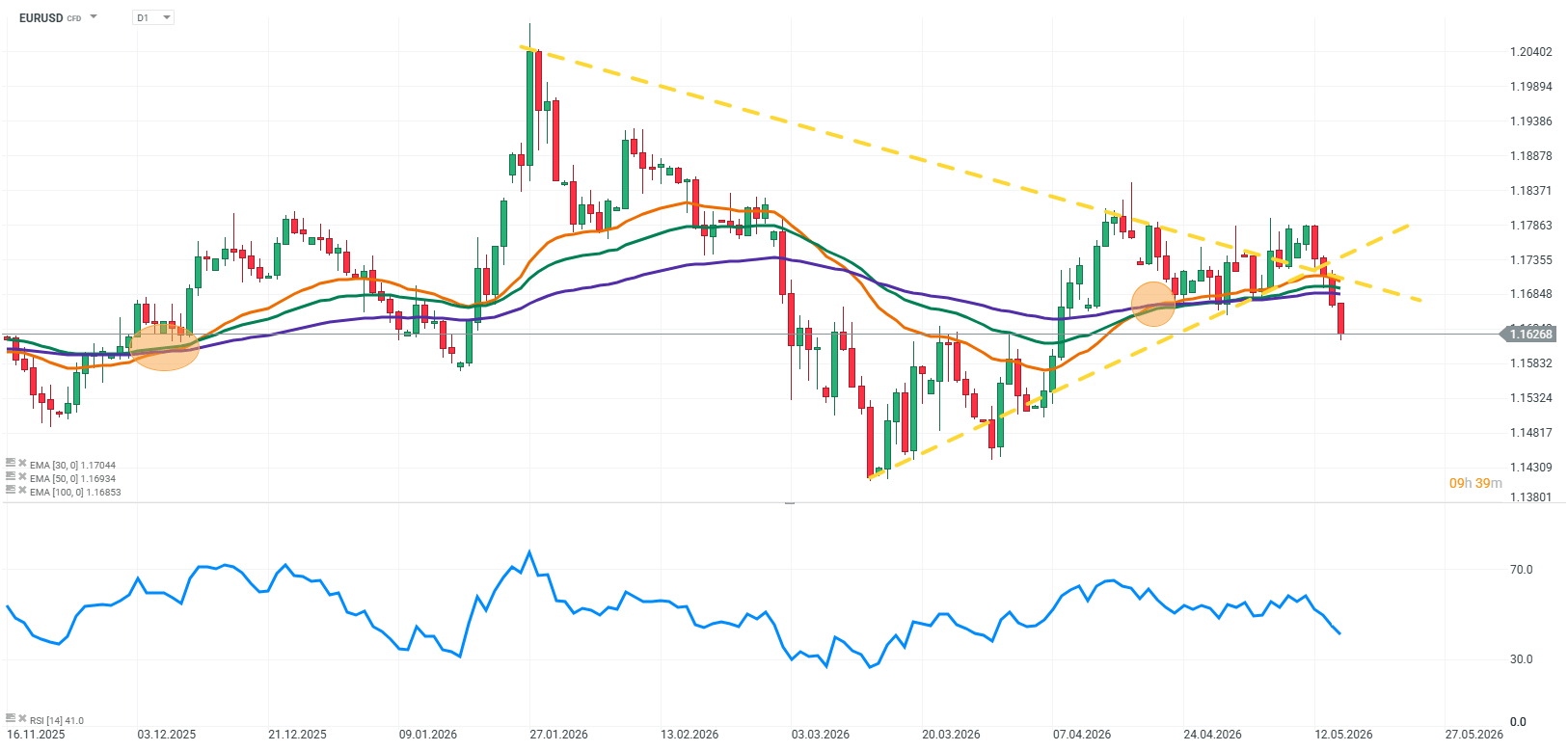
Source: xStation5


Daily summary: Wall Street climbs higher as oil falls 📈 SpaceX surges 28%


Oil slides 2.5% to $88 as Middle East tensions ease 📉 Is the uptrend over?


Wall Street Rebounds as Oil Prices Fall 📈 Adobe Shares Drop 8% After Earnings

BREAKING: USDIDX decline despite strong University of Michigan data
The material on this page does not constitute as financial advice and does not take into account your level of understanding, investment objectives, financial situation or any other particular needs.
All the information provided, including opinions, market research, mathematical results and technical analyses published on the website or transmitted to you by other means is provided for information purposes only and should in no event be interpreted as an offer of, or solicitation for, a transaction in any financial instrument, nor should the information provided be construed as advice of legal or fiscal nature.
Any investment decisions you make shall be based exclusively on your level of understanding, investment objectives, financial situation or any other particular needs. Any decision to act on information published on the website or transmitted to you by other means is entirely at your own risk. You are solely responsible for such decisions.
If you are in doubt or are not sure that you understand a particular product, instrument, service, or transaction, you should seek professional or legal advice before trading.
Investing in OTC Derivatives carries a high degree of risk, as they are leveraged based products and often small movements in the market could lead to much larger movements in the value of your investment and this could work against you or for you. Please ensure that you fully understand the risks involved, taking into account your investments objectives and level of experience, before trading, and if necessary, seek independent advice.
