



The monetary policy outlook in Australia is once again shifting toward further tightening. Reserve Bank of Australia (RBA) Deputy Governor Andrew Hauser warned that the inflation outlook is significantly worse than the central bank had previously forecast and that price pressures could prove more persistent than expected. Particular concern surrounds underlying inflation, as measured by the trimmed mean, which is likely to exceed the RBA’s earlier projections in the third quarter. Hauser also highlighted the risk of inflation expectations becoming unanchored, noting that some businesses are beginning to treat inflation of 3–3.5% as the new normal. His remarks significantly increased expectations of another interest rate hike as early as November 3. The probability of a 25 bp increase to 4.85% rose from around 20–22% to nearly 50%, although market-implied probabilities vary depending on the time of measurement. This would mark the fifth rate hike in 2026, following September’s increase in the cash rate to 4.60%.
Australia’s inflation problem reflects both external and structural factors. According to the latest data, CPI inflation accelerated to 4.0% YoY in August from 3.5% in July, while trimmed mean inflation remained at 3.6%, well above the RBA’s target range. Price pressures are being reinforced by elevated energy costs linked to the conflict in the Middle East, capacity constraints, and weak productivity growth. In addition, the global investment boom surrounding artificial intelligence is increasing demand for certain technology-related goods. According to the RBA, businesses are increasingly passing higher costs on to consumers, making it more difficult to bring inflation sustainably back to target.
The Australian economy is showing increasingly clear signs of slowing, complicating the central bank’s policy decisions. The unemployment rate rose to 4.7% in September, its highest level in five years, while employment fell by 39,300. Hauser acknowledged that previous rate hikes are beginning to weigh on economic activity, but argued that this does not eliminate the threat of persistent inflation. The RBA therefore faces a difficult trade-off between restoring price stability and avoiding an excessive slowdown in economic activity. The key upcoming event remains the release of Q3 inflation data on October 28, just days before the November policy meeting. A stronger-than-expected trimmed mean reading could tip the balance toward another rate hike. Goldman Sachs, UBS, and ANZ all expect the RBA to raise rates in November.
Hawkish signals from the RBA have supported the Australian dollar, allowing it to recover some of the losses suffered following last Thursday’s weaker labor market data. The AUD is the strongest-performing currency among the G10 today, having appreciated by 1.39% against the U.S. dollar since last Friday.
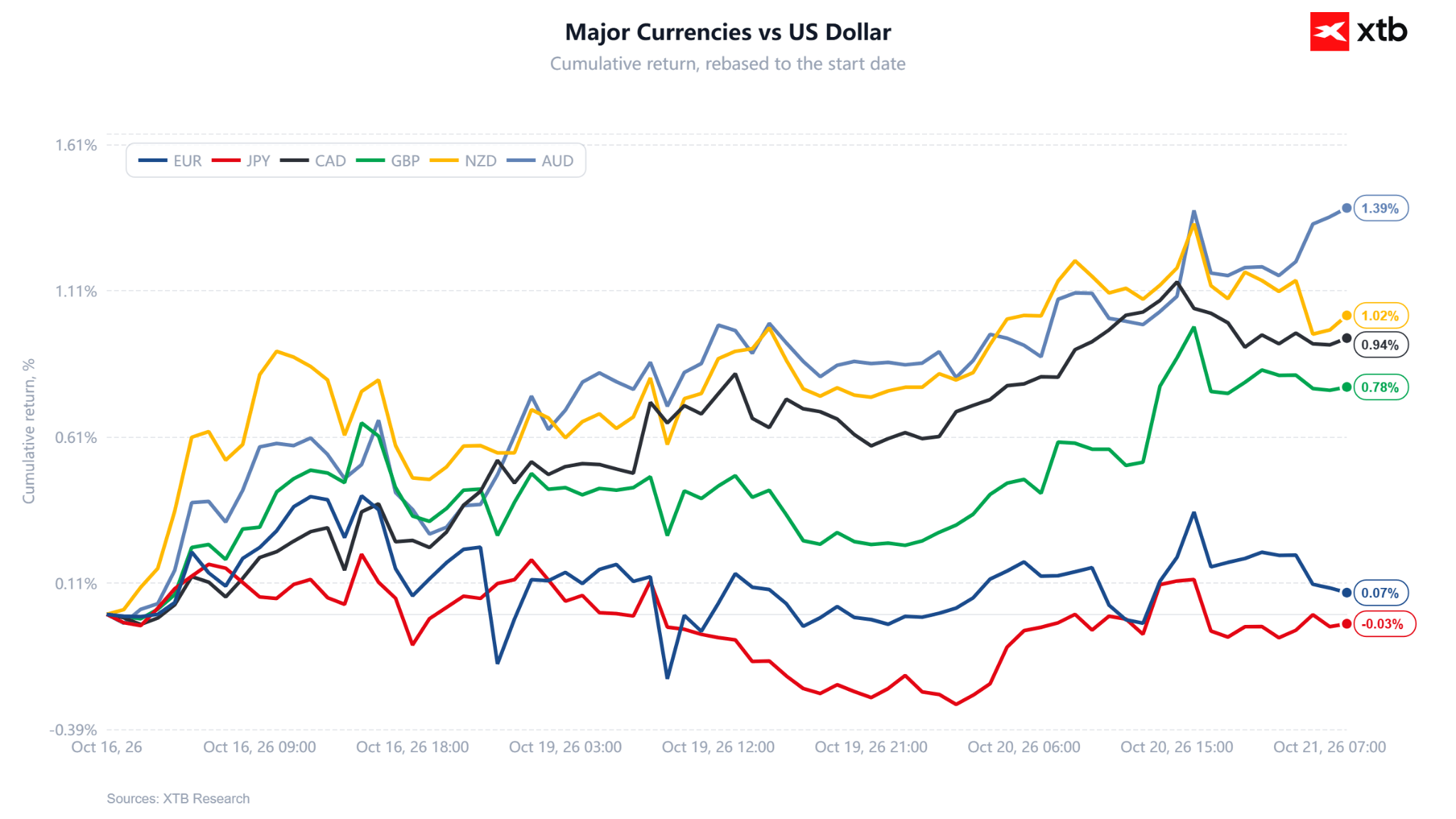
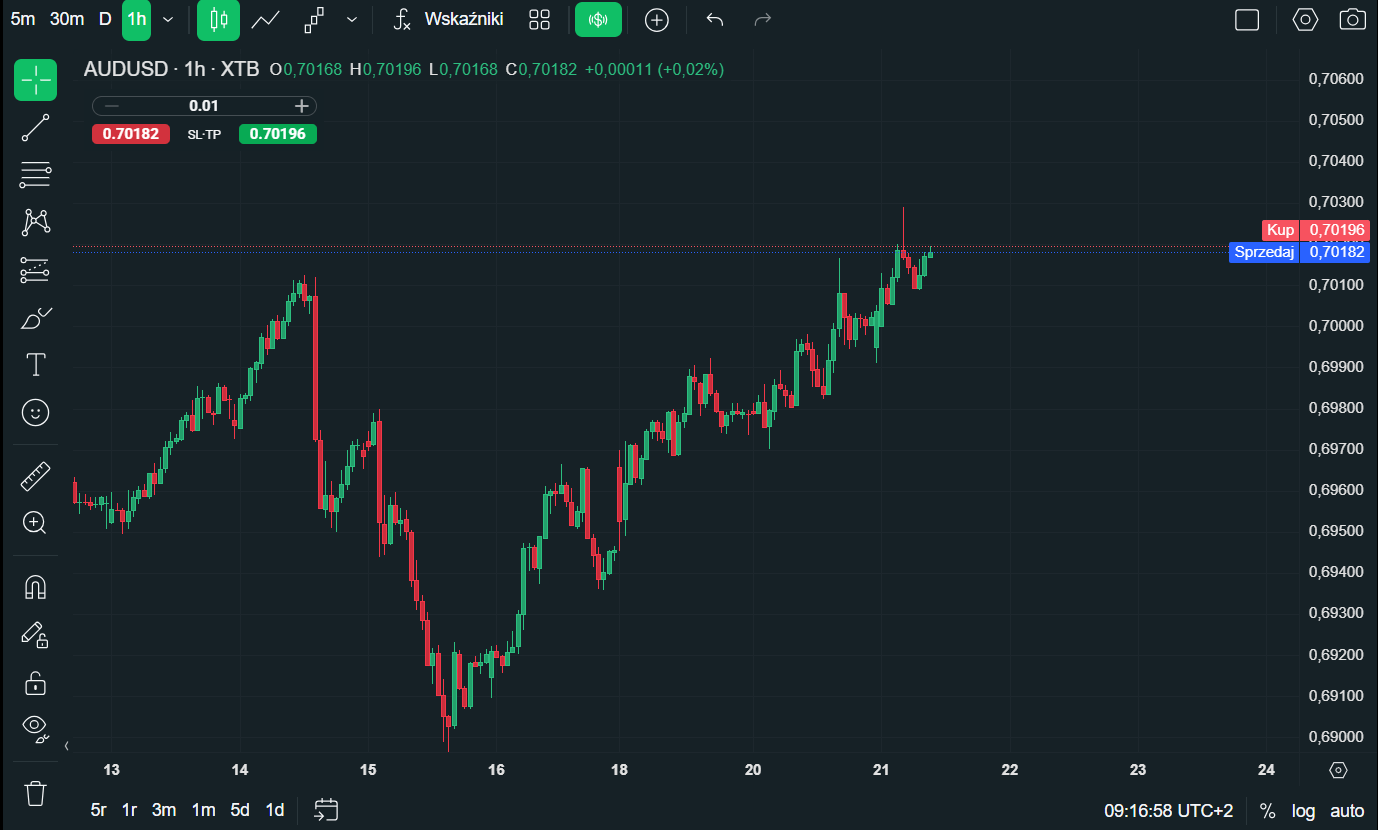
Today’s appreciation of the Australian currency has been further supported by renewed expectations of a November rate hike. The next move in AUDUSD will largely depend on the upcoming CPI data scheduled for late October.



Daily Summary: Buyers Refuse to Give In

US Natural gas extends declines 🔥📉



US OPEN: The wave of AI concerns is building again, oil returns near highs



Macro Calendar - UK Labor Market, ZEW Sentiment, and Wall Street Giants' Reports
The material on this page does not constitute as financial advice and does not take into account your level of understanding, investment objectives, financial situation or any other particular needs.
All the information provided, including opinions, market research, mathematical results and technical analyses published on the website or transmitted to you by other means is provided for information purposes only and should in no event be interpreted as an offer of, or solicitation for, a transaction in any financial instrument, nor should the information provided be construed as advice of legal or fiscal nature.
Any investment decisions you make shall be based exclusively on your level of understanding, investment objectives, financial situation or any other particular needs. Any decision to act on information published on the website or transmitted to you by other means is entirely at your own risk. You are solely responsible for such decisions.
If you are in doubt or are not sure that you understand a particular product, instrument, service, or transaction, you should seek professional or legal advice before trading.
Investing in OTC Derivatives carries a high degree of risk, as they are leveraged based products and often small movements in the market could lead to much larger movements in the value of your investment and this could work against you or for you. Please ensure that you fully understand the risks involved, taking into account your investments objectives and level of experience, before trading, and if necessary, seek independent advice.