

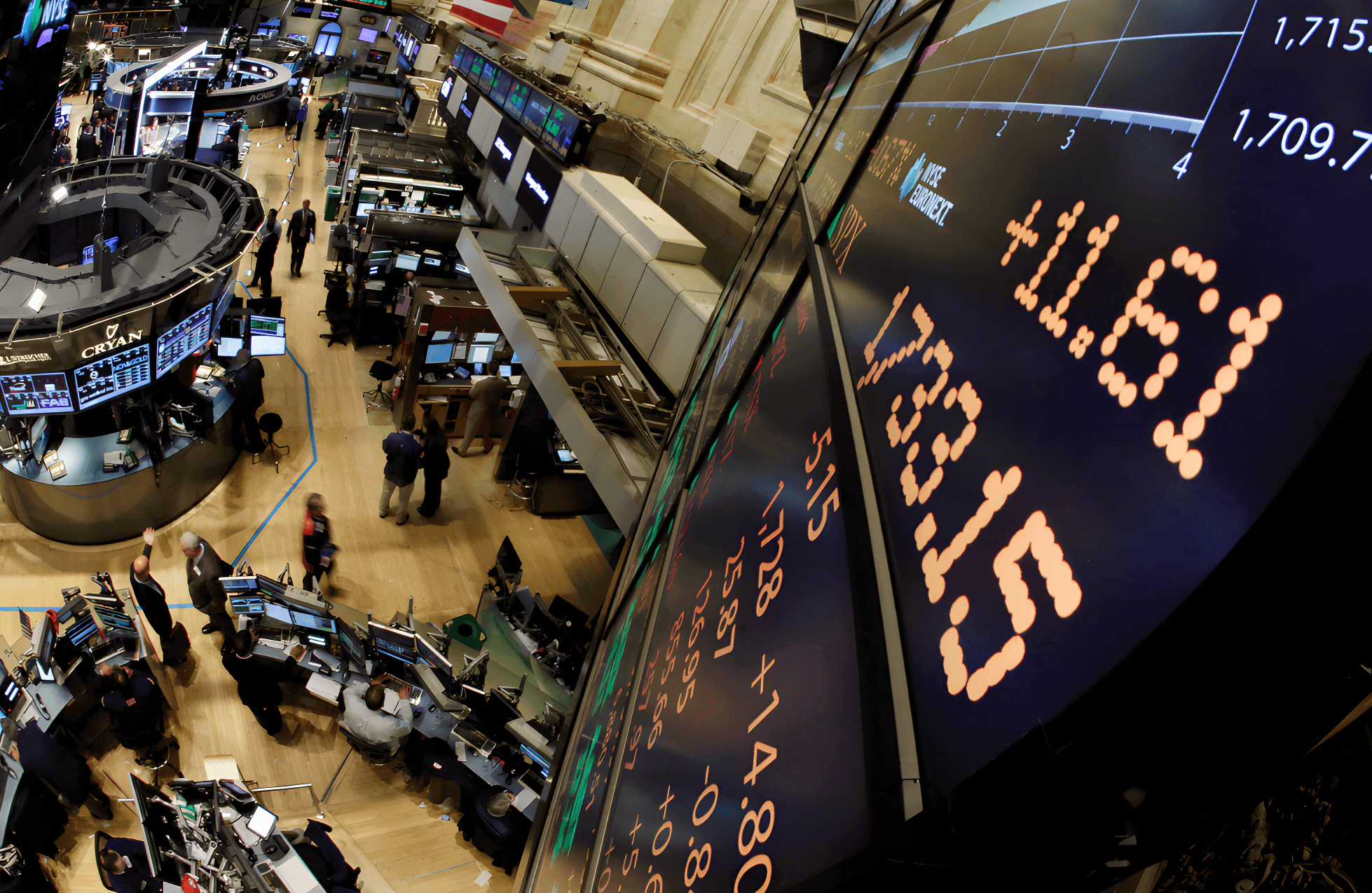
The start of today's Wall Street session brings a cooling of sentiment, with major indices opening in the red. Not long ago, American benchmarks were testing historical highs, but over the past few days, investors have been forced to swiftly revise their positions. The market has found itself caught in a vise between a costly technological battle in the artificial intelligence sector and growing information noise coming from the Middle East.
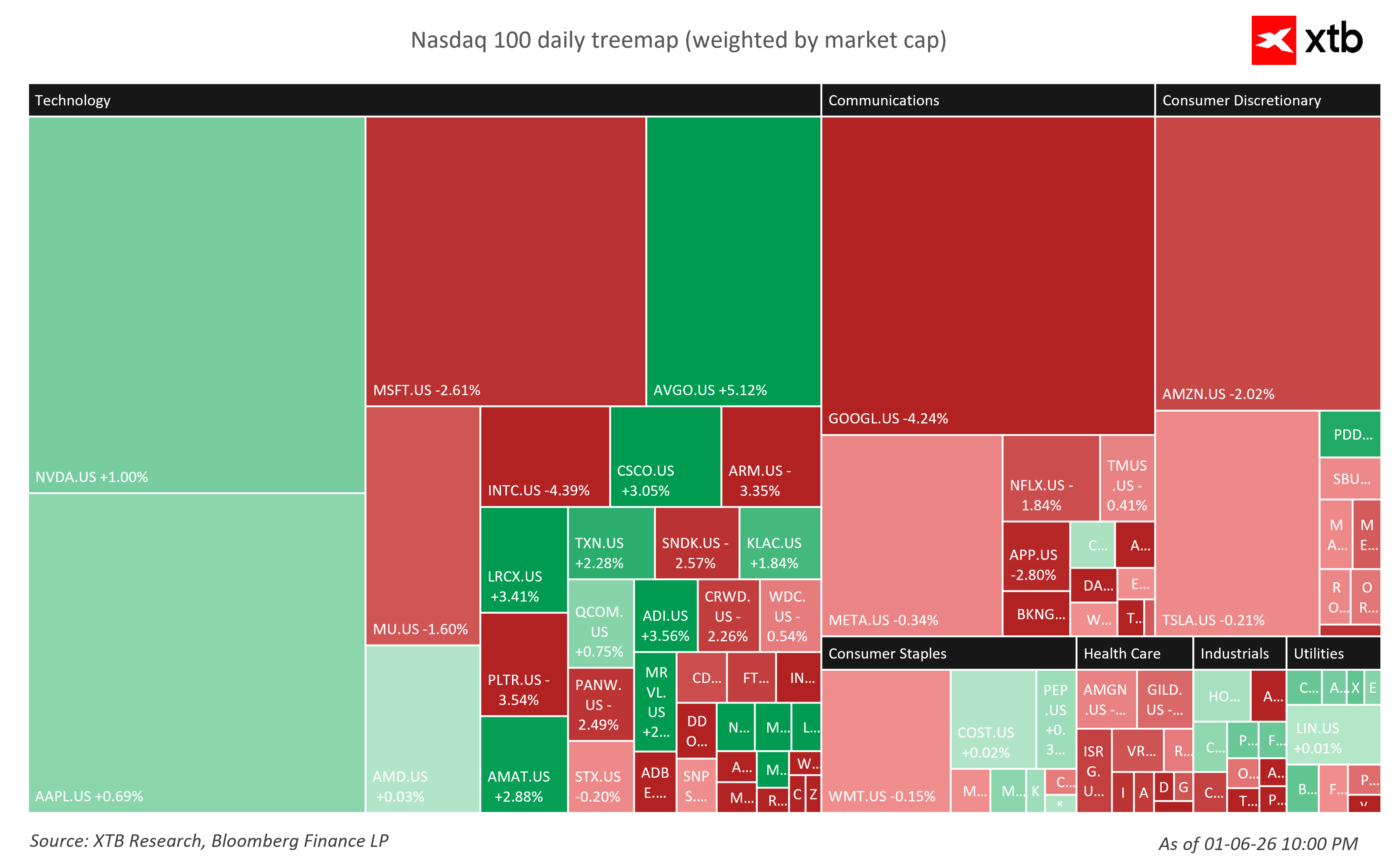
The technology sector, which has been the backbone of the rally for months, remains the main source of pressure. Today, however, it is starting to weigh on the indices due to the rising costs of maintaining a leading position in the AI race. Particular attention is being drawn to Alphabet's (GOOGL.US) plans, as the company intends to raise up to $80 billion in additional capital to finance its infrastructure. The sheer scale of these expenditures sends a clear signal to the market that the technological revolution is consuming vast amounts of capital, which naturally raises questions about the pace of monetization and future return on investment. Although demand for AI solutions remains very strong, investors are increasingly beginning to question the relationship between rising expenditures and future profitability.
Geopolitics remains the second crucial factor. Uncertainty surrounding US–Iran talks and the influx of conflicting information are keeping volatility elevated. On one hand, there are suggestions of a potential breakthrough in negotiations in the coming days; on the other hand, the lack of concrete agreements and reports of an impasse maintain caution among market participants. In the background, the risk of disruptions in the Strait of Hormuz—a vital region for global oil supplies—remains present, fueling concerns over a potential inflationary impulse and limiting room for a more dovish Fed policy.
As a result, today's market weakness fits into a broader picture of growing selectivity. After a period of almost unconditional enthusiasm for AI and Big Tech, the market is visibly transitioning into a phase where the key factors are no longer just growth narratives, but also cost discipline and the real ability to generate returns on massive investments.
Source: xStation5
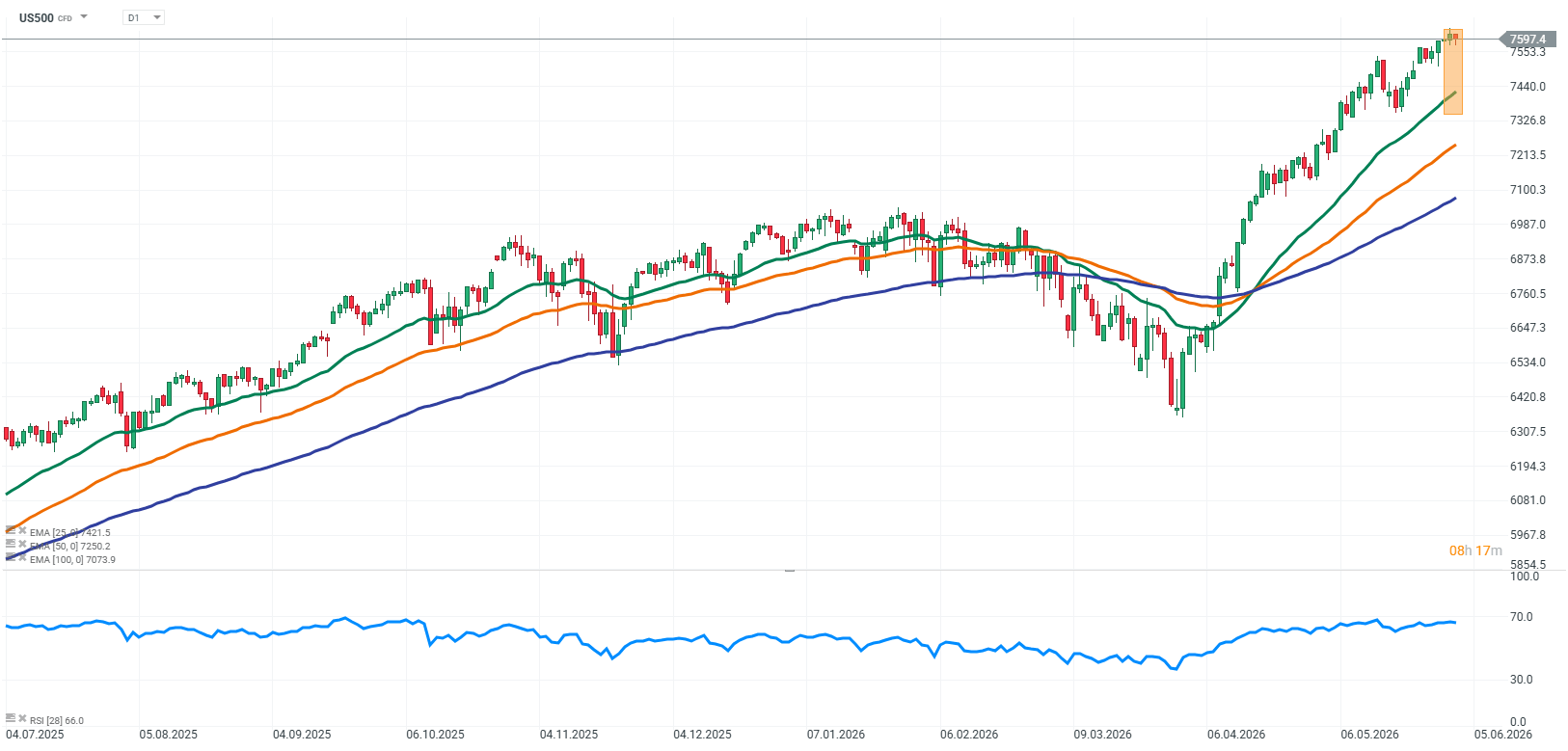
S&P 500 futures (US500) are under slight selling pressure today, though their quotes are hovering close to the baseline. It is difficult to talk about a strong bearish impulse in the market right now. Instead, a state of clear anticipation and investor uncertainty dominates, with market participants holding back on larger commitments ahead of the influx of subsequent macroeconomic and geopolitical signals. The market is moving within a narrow trading range, reflecting a temporary balance of power between the desire to take profits at high levels and the lack of unequivocal reasons for a deeper selloff.
Source: xStation5
Corporate News
Broadcom (AVGO.US) shares are up about 6% following the presentation of its new "Edge AI" solutions portfolio for smart homes and businesses, including devices featuring Wi-Fi 8 technology developed in collaboration with Samsung (SMSN.UK). The new chipsets, equipped with neural processing units (NPUs), are designed to process AI tasks locally at the edge of the network, which will reduce latency and offload cloud infrastructure.
Hewlett Packard Enterprise (HPE.US) shares surged 25% after announcing stellar financial results and raising its future outlook. This comes as companies are buying their servers in bulk (both traditional and AI-focused) and are willing to pay significantly higher prices to protect themselves against hardware shortages in the market.
Super Micro Computer (SMCI.US) introduced its new AMD Helios platform, a ready-to-deploy, energy-efficient server system that, thanks to a partnership with ARM, allows for more computing power packed into a single server rack while consuming less electricity. This platform is designed for data centers and artificial intelligence systems, enabling rapid deployment and easy scaling of capacity without the need to build infrastructure from scratch. As a result, companies can expand their AI data centers faster and more affordably, while keeping energy consumption down.
Jensen Huang, CEO of Nvidia, declared that Marvell Technology (MRVL.US) could become the next $1 trillion chipmaker. This represents a continuation of Nvidia's strategy to invest in technology partners that support AI infrastructure. In this case, Marvell provides custom networking chips and data connectivity solutions for AI data centers.



Daily Summary: The Two Faces of AI – Market Fuel and Costly Burden

AI War: Nvidia's Chinese Paradox and the Myth of Technological Decoupling

Arm is moving beyond architecture: The $15 billion AI chip revenue goal could be reached early


BREAKING: JOLTS data beats expectations!
The material on this page does not constitute as financial advice and does not take into account your level of understanding, investment objectives, financial situation or any other particular needs.
All the information provided, including opinions, market research, mathematical results and technical analyses published on the website or transmitted to you by other means is provided for information purposes only and should in no event be interpreted as an offer of, or solicitation for, a transaction in any financial instrument, nor should the information provided be construed as advice of legal or fiscal nature.
Any investment decisions you make shall be based exclusively on your level of understanding, investment objectives, financial situation or any other particular needs. Any decision to act on information published on the website or transmitted to you by other means is entirely at your own risk. You are solely responsible for such decisions.
If you are in doubt or are not sure that you understand a particular product, instrument, service, or transaction, you should seek professional or legal advice before trading.
Investing in OTC Derivatives carries a high degree of risk, as they are leveraged based products and often small movements in the market could lead to much larger movements in the value of your investment and this could work against you or for you. Please ensure that you fully understand the risks involved, taking into account your investments objectives and level of experience, before trading, and if necessary, seek independent advice.
