


Current Reading (April Data)
-
Actual Result: 6.88 million job openings
-
Market Forecast: 6.866 million job openings
-
Previous Value: 6.866 million job openings
Why This Report Matters
The JOLTS report is widely considered one of the most important and reliable indicators of macroeconomic health in the US, and its significance stems from several key factors. First and foremost, it is one of the Federal Reserve's (Fed) favorite analytical tools. Unlike the unemployment rate, which is a lagging indicator that only reacts during an advanced stage of a crisis, the number of job openings is a leading indicator—reflecting the real, current intentions and spending plans of employers. Furthermore, the report allows for a direct comparison between the number of available job openings and the number of people actively seeking employment.
Massive Surprise in the US Labor Market: JOLTS Smashes Analyst Forecasts
The latest release of the April JOLTS report, published on June second, 2026, brought a massive surprise as the number of job openings in the US skyrocketed to 7.618 million. The market consensus and the previous reading were perfectly aligned, both expecting a figure of 6.866 million openings, which means the actual number of available jobs exceeded forecasts by more than 750,000. This massive surge breaks the recent trend of gradual market cooling and proves that US companies demand for new labor remains incredibly strong, immediately altering current macroeconomic expectations.
For the Federal Reserve, this leading indicator represents an absolute game changer and a powerful pro-inflationary impulse. Such a drastic increase in the number of job openings relative to the number of unemployed individuals automatically raises concerns about a return of strong wage pressure, as companies will be forced to compete for workers with higher salaries. Consequently, the reading of 7.618 million puts the Fed in a difficult position and acts as a strong hawkish signal. It may force central bankers to abandon plans for imminent interest rate cuts or maintain borrowing costs at a restrictive level for a much longer time, an reality to which financial markets must now rapidly adjust.
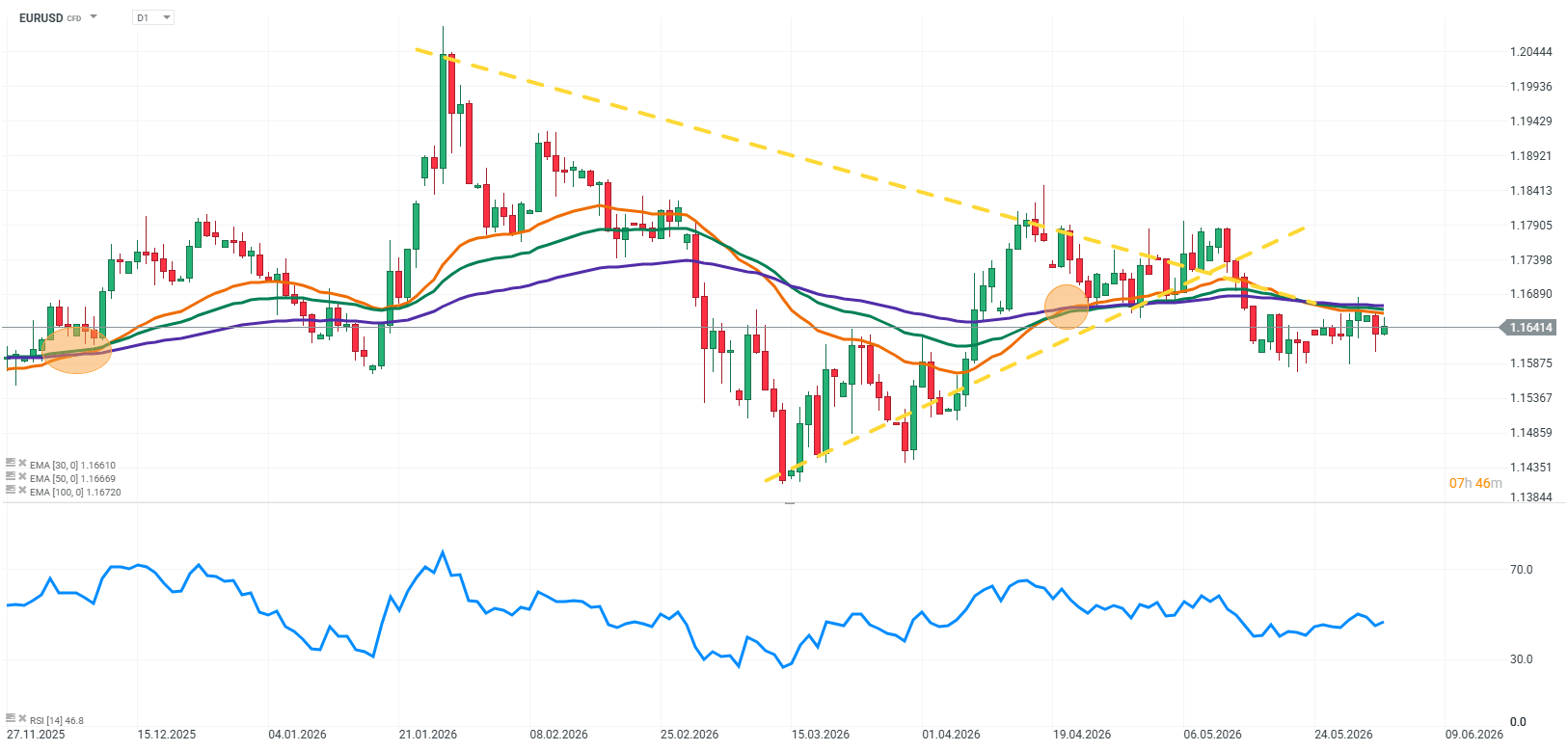
Source: xStation5



Daily Summary: The Two Faces of AI – Market Fuel and Costly Burden


US Open: Wall Street loses momentum as AI costs and Middle East tensions cool sentiment



Oil on hold as the market bets on diplomacy


Bitcoin falls 3% to $68k amid cyclical summer cryptocurrency weakness 📉
The material on this page does not constitute as financial advice and does not take into account your level of understanding, investment objectives, financial situation or any other particular needs.
All the information provided, including opinions, market research, mathematical results and technical analyses published on the website or transmitted to you by other means is provided for information purposes only and should in no event be interpreted as an offer of, or solicitation for, a transaction in any financial instrument, nor should the information provided be construed as advice of legal or fiscal nature.
Any investment decisions you make shall be based exclusively on your level of understanding, investment objectives, financial situation or any other particular needs. Any decision to act on information published on the website or transmitted to you by other means is entirely at your own risk. You are solely responsible for such decisions.
If you are in doubt or are not sure that you understand a particular product, instrument, service, or transaction, you should seek professional or legal advice before trading.
Investing in OTC Derivatives carries a high degree of risk, as they are leveraged based products and often small movements in the market could lead to much larger movements in the value of your investment and this could work against you or for you. Please ensure that you fully understand the risks involved, taking into account your investments objectives and level of experience, before trading, and if necessary, seek independent advice.
