

In recent months, investor attention in the artificial intelligence sector has been primarily focused on chipmakers such as Nvidia, AMD, Micron, and Broadcom, the hardware layer without which today’s AI boom would not have been possible. However, it is becoming increasingly clear that as model scale grows and their demand for computing power accelerates, the key element of the ecosystem is no longer just the semiconductor itself, but the entire infrastructure required to utilize it. This shift also means that not only data centers are gaining importance, but also the scale of capital required to build and maintain them, which is well illustrated by SpaceX’s recent actions, including its announced bond issuance aimed at strengthening funding for further infrastructure expansion.
In this broader context, it is becoming increasingly evident that the capital being raised is not solely intended to expand computing capacity for internal projects, but is also part of building a new, potentially multibillion-dollar revenue stream. A clear example of this direction is SpaceX’s latest agreement with Reflection AI, which involves the use of the Colossus 2 data center in Memphis under a long-term access model to computing power. The AI startup will pay for this capacity over a multi-year horizon, further underscoring the shift away from short-term cloud usage toward long-term securing of infrastructure necessary for AI development. The scale of this contract is particularly significant, with its total potential value reaching approximately 6.3 billion dollars over the full duration of the agreement, placing it among the largest infrastructure deals in the entire artificial intelligence sector.
At first glance, this may appear to be a standard provider–client relationship in the cloud services market, but the scale and structure of the contract suggest something far more fundamental. In practice, SpaceX is increasingly being seen not only as a user of AI infrastructure, but also as its operator and a potential demand aggregator, monetizing excess computing capacity at a level comparable to the largest cloud providers. This represents an attempt to enter a space historically dominated by companies such as Amazon Web Services, Microsoft Azure, and Google Cloud, with a focus on highly specialized infrastructure optimized for the most demanding AI workloads.
Until recently, data centers such as Colossus were primarily associated with Elon Musk’s internal projects. Today, however, it is becoming increasingly clear that they may evolve into an independent source of revenue and a standalone business pillar. In this framework, SpaceX is not only providing physical infrastructure, but also effectively acting as an intermediary for access to one of the key resources of the AI era: computing power.
Within this structure, SpaceX is pursuing a somewhat different strategy than chipmakers. Rather than competing in the semiconductor layer, it is focusing on building and commercializing the environment in which those chips operate, effectively positioning itself between hardware manufacturers and AI model developers. The agreement with Reflection AI illustrates this dynamic well, as it shows that SpaceX infrastructure is no longer merely a technological backbone, but a product being sold to external parties under long-term contracts.
From a market perspective, this may signal that computing infrastructure is becoming one of the most strategic and simultaneously most constrained resources in the entire AI ecosystem. As model complexity increases, it is no longer just about who builds the algorithms, but primarily about who controls access to the power required to train and run them. In this scenario, agreements such as the one with Reflection AI can be seen as a key element of a broader structural shift, where value is moving toward infrastructure, energy, and long-term contracts for computing power.
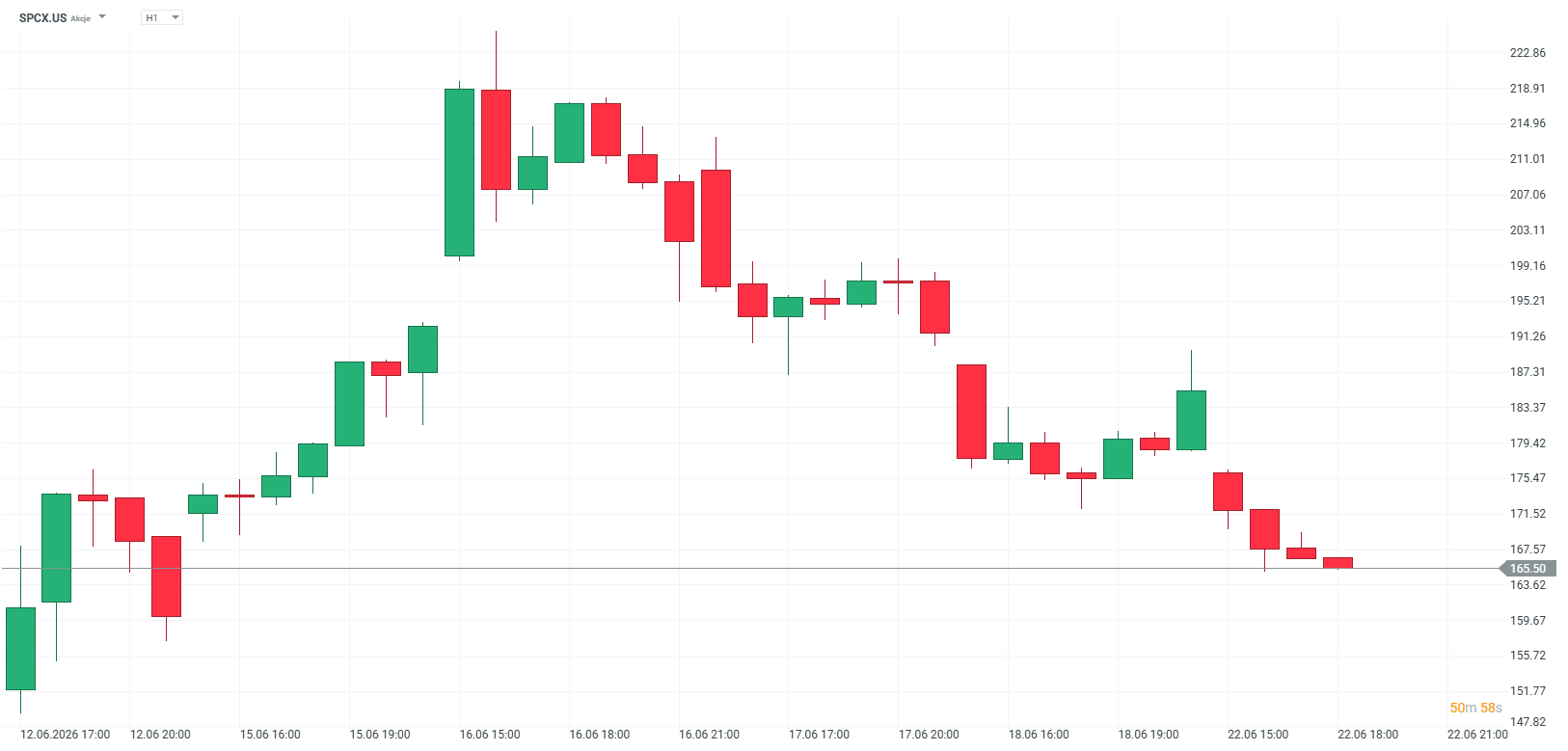
Source: xStation5


SpaceX shares under debt pressure


US Open: Wall Street Buys Into Peace Hopes


🚩 Booz Allen Hamilton Stock: The Biggest Loser in the U.S. Defense Sector?



Market Wrap: Markets Dampen Early Optimism; Political Shock in the UK💥
The material on this page does not constitute as financial advice and does not take into account your level of understanding, investment objectives, financial situation or any other particular needs.
All the information provided, including opinions, market research, mathematical results and technical analyses published on the website or transmitted to you by other means is provided for information purposes only and should in no event be interpreted as an offer of, or solicitation for, a transaction in any financial instrument, nor should the information provided be construed as advice of legal or fiscal nature.
Any investment decisions you make shall be based exclusively on your level of understanding, investment objectives, financial situation or any other particular needs. Any decision to act on information published on the website or transmitted to you by other means is entirely at your own risk. You are solely responsible for such decisions.
If you are in doubt or are not sure that you understand a particular product, instrument, service, or transaction, you should seek professional or legal advice before trading.
Investing in OTC Derivatives carries a high degree of risk, as they are leveraged based products and often small movements in the market could lead to much larger movements in the value of your investment and this could work against you or for you. Please ensure that you fully understand the risks involved, taking into account your investments objectives and level of experience, before trading, and if necessary, seek independent advice.
