


Rising inflation expectations are re-emerging as a key macro risk, driven primarily by energy shocks linked to geopolitical tensions in the Middle East. The data from NY Fed survey reinforces a familiar pattern: short-term expectations react sharply to shocks, while longer-term inflation credibility remains intact - for now.
- One-year inflation expectations in the New York Fed’s March survey rose to 3.4%, vs 3.5% exp. and up from 3% previously and back at the levels seen in December.
- Three-year inflation expectations increased only slightly, to 3.1% from 3.0%. Five-year inflation expectations remained unchanged at 3.0%.
- The overall message is that short-term inflation fears have clearly intensified, but longer-term expectations still look relatively anchored. The main driver of the move was energy.
- Expected gasoline price growth jumped to 9.4% year-on-year, up 5.3 percentage points month-on-month.
- That is the highest reading since March 2022, which underlines how strongly consumers react to energy shocks.
- The link to headline inflation is straightforward, because higher fuel costs feed directly into inflation expectations.
- All of the inflation measures are still running above the Fed’s 2% target.
- That suggests the disinflation process remains incomplete, even if inflation is no longer accelerating across every category.
- Geopolitical tensions and tariffs are now making the path back to target more difficult.
- John Williams kept a relatively calm tone despite the stronger survey readings.
- He said policy is still “well positioned,” which signals that the Fed is not ready to react mechanically to one inflation-related shock.
- He also said headline inflation could run at around 2.75% in 2026, with more visible pressure around the middle of the year.
- The current policy rate remains in the 3.5% to 3.75% range, and the Fed is still pointing to one cut this year.
- From a macro perspective, this looks more like a supply-side inflation shock than a sign of overheating demand.
- The immediate issue is not excessive consumption, but the pass-through from higher energy prices.
- The bigger question is whether this remains temporary or starts to generate second-round effects in broader prices and wages.
- The survey also showed a weaker consumer backdrop. Households became more pessimistic about their current and future financial situation.
- Expectations for unemployment one year ahead rose to the highest level since April 2025, that suggests the labor market is not cracking yet, but sentiment is becoming softer at the margin.
For markets, the report strengthens the higher-for-longer narrative, especially if energy pressure remains elevated. At the same time, stable longer-term inflation expectations reduce the risk of an aggressive hawkish repricing. In other words, the data is uncomfortable for the Fed, but not yet alarming enough to force a policy shift.
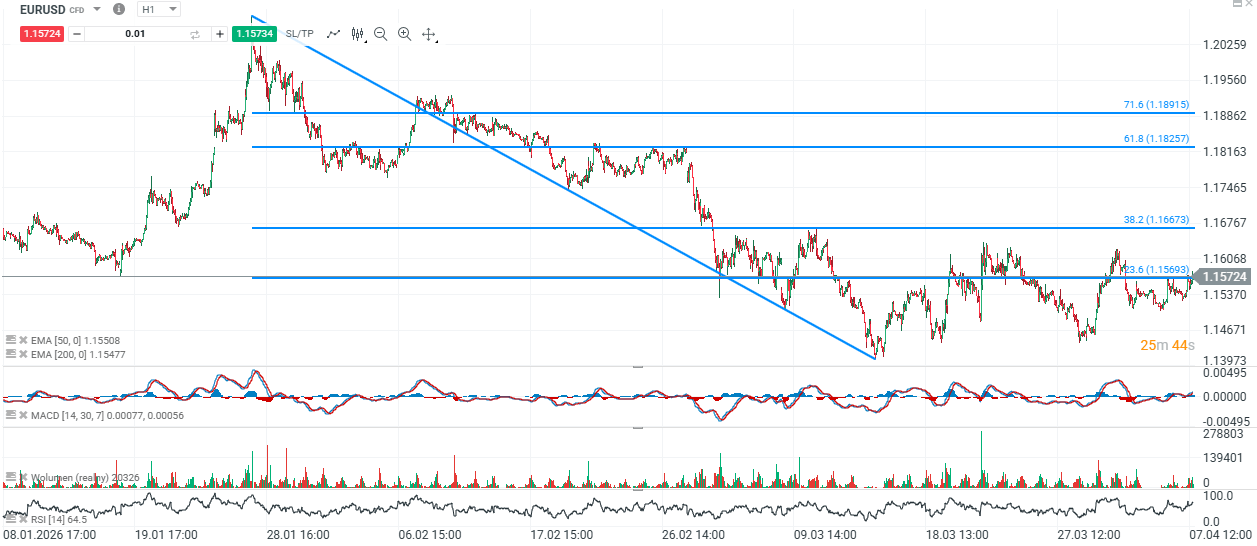
Source: xStation5



Daily summary: Wall Street climbs higher as oil falls 📈 SpaceX surges 28%


Oil slides 2.5% to $88 as Middle East tensions ease 📉 Is the uptrend over?



Wall Street Rebounds as Oil Prices Fall 📈 Adobe Shares Drop 8% After Earnings


BREAKING: USDIDX decline despite strong University of Michigan data
The material on this page does not constitute as financial advice and does not take into account your level of understanding, investment objectives, financial situation or any other particular needs.
All the information provided, including opinions, market research, mathematical results and technical analyses published on the website or transmitted to you by other means is provided for information purposes only and should in no event be interpreted as an offer of, or solicitation for, a transaction in any financial instrument, nor should the information provided be construed as advice of legal or fiscal nature.
Any investment decisions you make shall be based exclusively on your level of understanding, investment objectives, financial situation or any other particular needs. Any decision to act on information published on the website or transmitted to you by other means is entirely at your own risk. You are solely responsible for such decisions.
If you are in doubt or are not sure that you understand a particular product, instrument, service, or transaction, you should seek professional or legal advice before trading.
Investing in OTC Derivatives carries a high degree of risk, as they are leveraged based products and often small movements in the market could lead to much larger movements in the value of your investment and this could work against you or for you. Please ensure that you fully understand the risks involved, taking into account your investments objectives and level of experience, before trading, and if necessary, seek independent advice.
