



The publication of this week's most critical macroeconomic data is scheduled for 1:30 PM – July CPI inflation in the United States. The latest labour market reading (NFP) missed expectations significantly, calling further monetary policy tightening by the Fed into question.
The market has recently revised its expectations regarding the next moves from the FOMC. Until recently, investors had fully priced in an interest rate hike for September. Currently, the market-implied probability of such a move is akin to a coin toss.
What stands behind the dovish repricing?
-
The unreliable rhetoric of Kevin Warsh
During the last conference concluding the FOMC meeting, the Fed Chair again emphasised an uncompromising approach to inflation, attempting to convince markets of his purported hawkishness. While this was sufficient in June, investors expected much more in July.
Investors are beginning to doubt whether bold announcements will be followed by action, recalling Warsh’s statements from a year ago. At that time, he frequently signalled support for cuts in interviews – on FOX News, he openly sided with the President, stating that Donald Trump’s frustration with Powell’s monetary policy was fully justified, while criticising the institution for lowering interest rates too slowly and for an excessive attachment to backward-looking economic data.
-
Weak NFP data
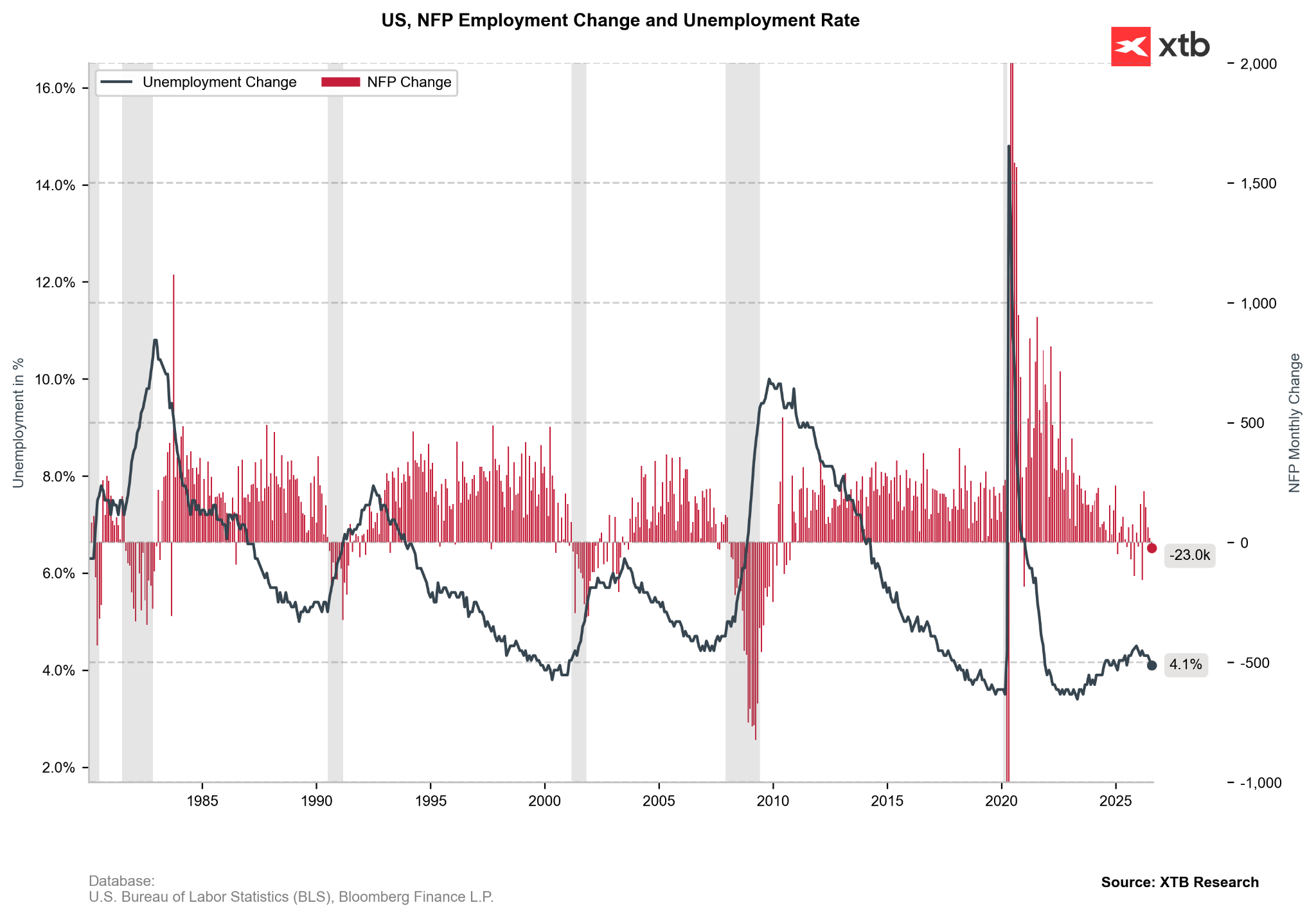
The number of new jobs in the US economy (non-farm sectors) fell by 23,000 in July, missing expectations by 5 standard deviations. Assuming the data follows a standard distribution, we would have to wait 290,000 years for another such reading.
It is hard to deny that the data was simply poor – to the drop of 23,000, one must add the downward revisions of the data for the last two months (by 103,000). However, it is worth noting that the decline was largely conditioned by a lower number of jobs in the public education sector, which can be seen as a seasonal factor. Furthermore, the unemployment rate (4.1%) surprised to the downside; this is said to be the preferred indicator for many FOMC policymakers in current conditions.
The labour market remains, it seems, in a 'low fire-low hire' state – until committee members receive convincing evidence that layoffs are rising, the absolute priority should be stabilising inflation at the desired level.
Figure 1: NFP and Unemployment Rate (1980 - 2026)
 Source: XTB Research, 12.08.2026
What did the last CPI reading show?
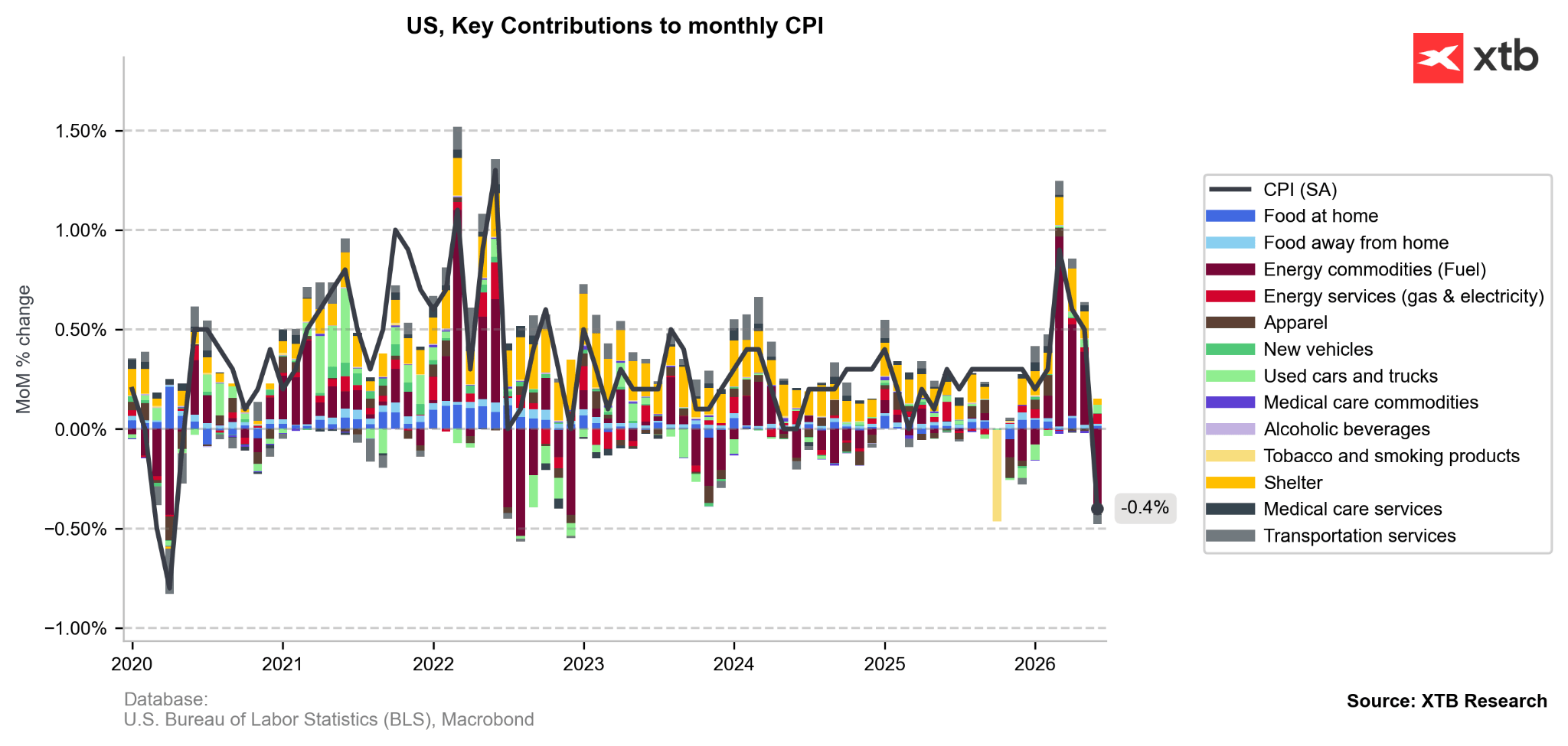
In June, data came in well below expectations. Particularly encouraging was the lack of price growth in core terms, i.e., excluding the most volatile energy and food prices. Shelter cost growth slowed, which may be particularly good news for the FOMC.
Figure 2: US CPI Inflation + Key Contributions [m/m] (2019 - 2026)
 Source: XTB Research, 12.08.2026
What can we expect today?
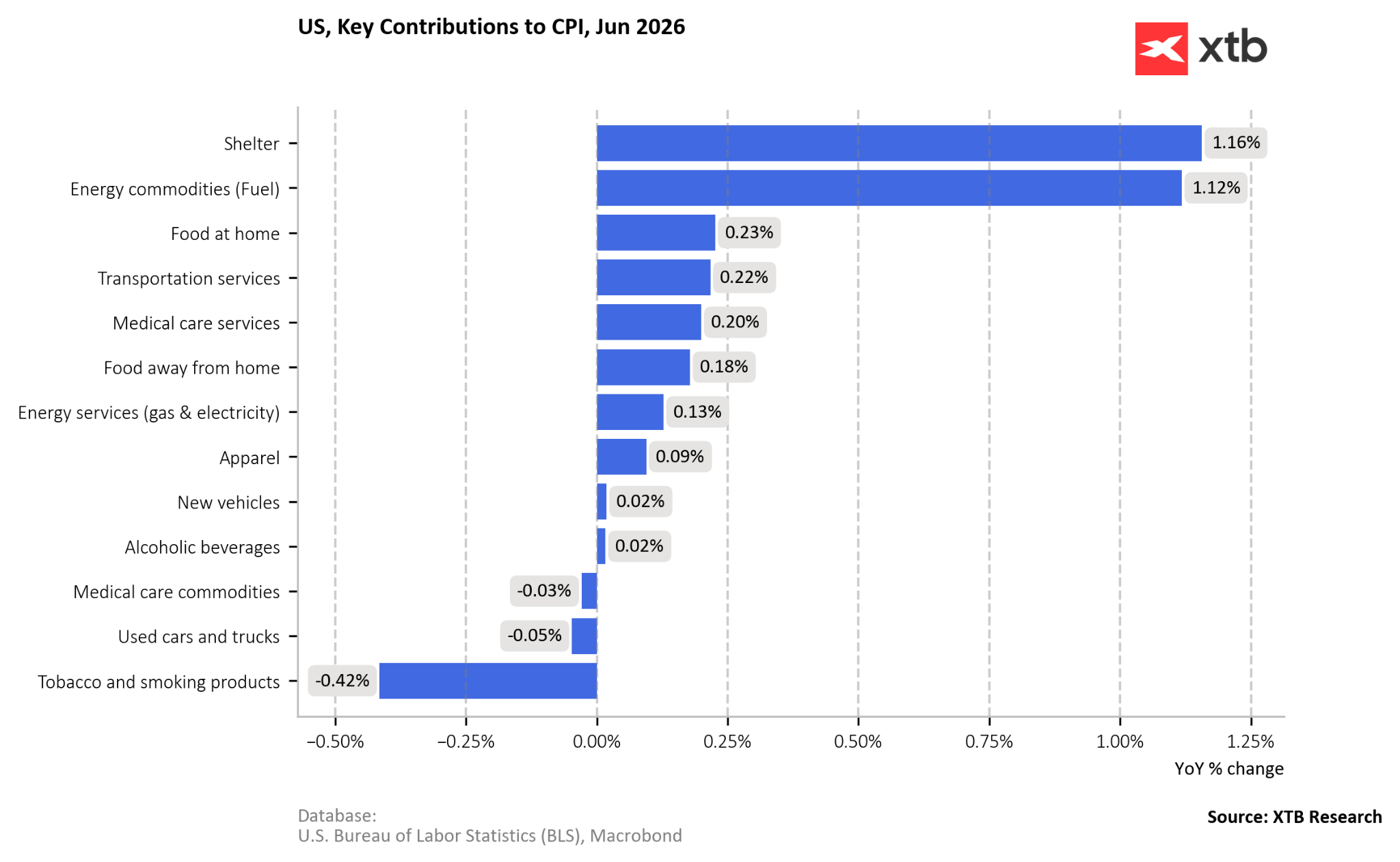
Attention will focus on the core measure, which is expected to fall to its lowest level since March 2021 (the consensus is 2.5%). Its momentum in the services sector will be particularly interesting.
Figure 3: Key Contributions to June CPI Inflation
 Source: XTB Research, 12.08.2026
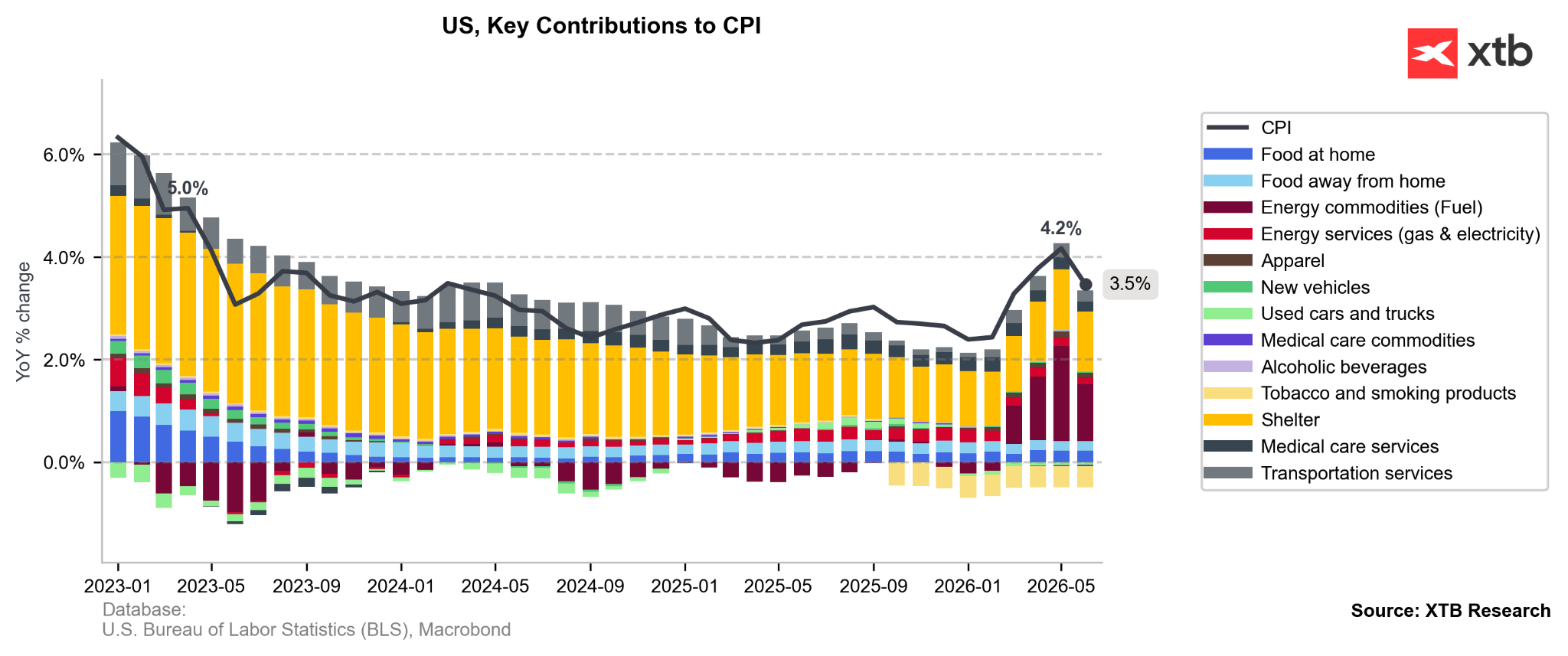
The headline measure is also expected to continue its downward movement (expectations at 3.4%), which should be driven, among other things, by lower fuel prices. These should also influence lower airfare and hotel prices. However, an increase in food prices is expected.
What else is worth knowing?
- The effect of tariffs seems already fully priced in by the market – this is visible in categories such as audio equipment, tools, or sports equipment.
- The severe memory chip shortage should continue to drive up computer and software prices.
Figure 4: Impact of Sectors on Change in US Annual Inflation Dynamics (2023 - 2026)
 Source: XTB Research, 12.08.2026
Markets before the print
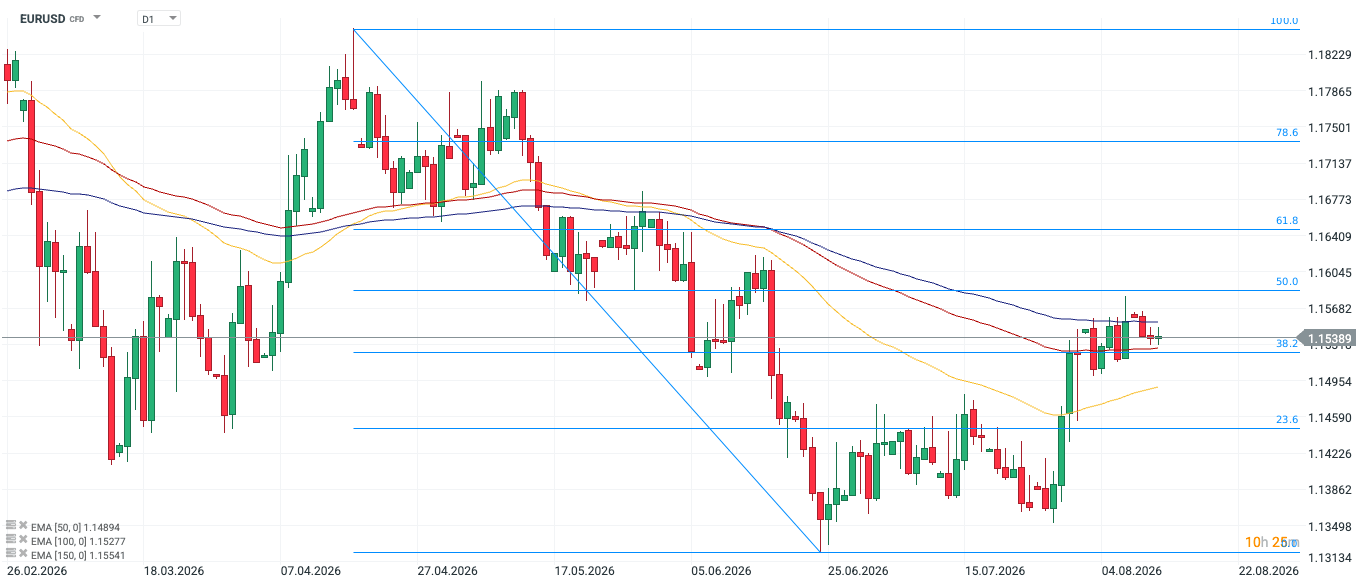
The EURUSD pair remains extremely calm. Since the beginning of the week, its decline has reached 0.2%, driven primarily by headlines from the Middle East. Ship traffic in the Strait of Hormuz has fallen to its lowest level in a week (approx. 10 ships per day).
We must pay over $89 for a barrel of Brent. It continued to rise yesterday, despite optimistic declarations from the Pakistani Ministry of Foreign Affairs.
Overnight, Donald Trump stated in media interviews that the US has "total control" (100%) over the Strait of Hormuz. The Iranian side has, in turn, set tough conditions for reopening the route, demanding the lifting of US sanctions, an end to the naval blockade, and the payment of war reparations by the US.
Figure 5: EUR/USD Exchange Rate (26.02.2026 - 12.08.2026)
 Source: xStation, 12.08.2026
-
Michał Jóźwiak, XTB Financial Markets Analyst



Daily Summary: "Heat" of the NFP Print Cools Market Sentiment ⬇️


Three Markets to Watch Next Week (04.09.2026)

🟡Gold drops sharply following strong NFP

BREAKING: NFP with a massive upside; EURUSD dips 🚨
The material on this page does not constitute as financial advice and does not take into account your level of understanding, investment objectives, financial situation or any other particular needs.
All the information provided, including opinions, market research, mathematical results and technical analyses published on the website or transmitted to you by other means is provided for information purposes only and should in no event be interpreted as an offer of, or solicitation for, a transaction in any financial instrument, nor should the information provided be construed as advice of legal or fiscal nature.
Any investment decisions you make shall be based exclusively on your level of understanding, investment objectives, financial situation or any other particular needs. Any decision to act on information published on the website or transmitted to you by other means is entirely at your own risk. You are solely responsible for such decisions.
If you are in doubt or are not sure that you understand a particular product, instrument, service, or transaction, you should seek professional or legal advice before trading.
Investing in OTC Derivatives carries a high degree of risk, as they are leveraged based products and often small movements in the market could lead to much larger movements in the value of your investment and this could work against you or for you. Please ensure that you fully understand the risks involved, taking into account your investments objectives and level of experience, before trading, and if necessary, seek independent advice.
