



Consumer Inflation (CPI) – USA
-
CPI Inflation (m/m): actual 0,6% forecast 0.6% (previously 0.9%)
-
Core CPI Inflation (m/m): actual 0,3% forecast 0.4% (previously 0.2%)
-
CPI Inflation (y/y): actual 3,8% forecast 3.7% (previously 3.3%)
-
Core CPI Inflation (y/y): actual 2,8% forecast 2.7% (previously 2.6%)
Why is this data important?
Consumer inflation (CPI) is the most important indicator measuring the pace of price growth for goods and services from the consumer’s perspective. It shows how the cost of living for households is changing and serves as a key reference point for the monetary policy of the Federal Reserve (Fed).
A higher-than-expected CPI reading suggests persistent inflationary pressure in the economy, which may increase the likelihood of interest rates remaining higher for longer or even further monetary tightening. On the other hand, weaker data may support expectations for interest rate cuts and a more dovish Fed stance.
Particularly important is Core CPI inflation, which excludes the most volatile components such as food and energy. This provides a clearer picture of long-term inflation trends and is closely monitored by the central bank.
The CPI report has a major impact on financial markets. Higher inflation typically supports the U.S. dollar and pushes Treasury yields higher, as investors anticipate a more restrictive Fed policy. Conversely, lower-than-expected inflation data may weaken the dollar, support equity markets, and increase expectations for future rate cuts.
Actual Data
The latest U.S. CPI report delivered mixed signals for the market. Monthly headline inflation matched expectations at 0.6%, while Core CPI came in slightly above forecasts at 0.4% versus the expected 0.3%, suggesting some moderation in underlying price pressures in the short term.
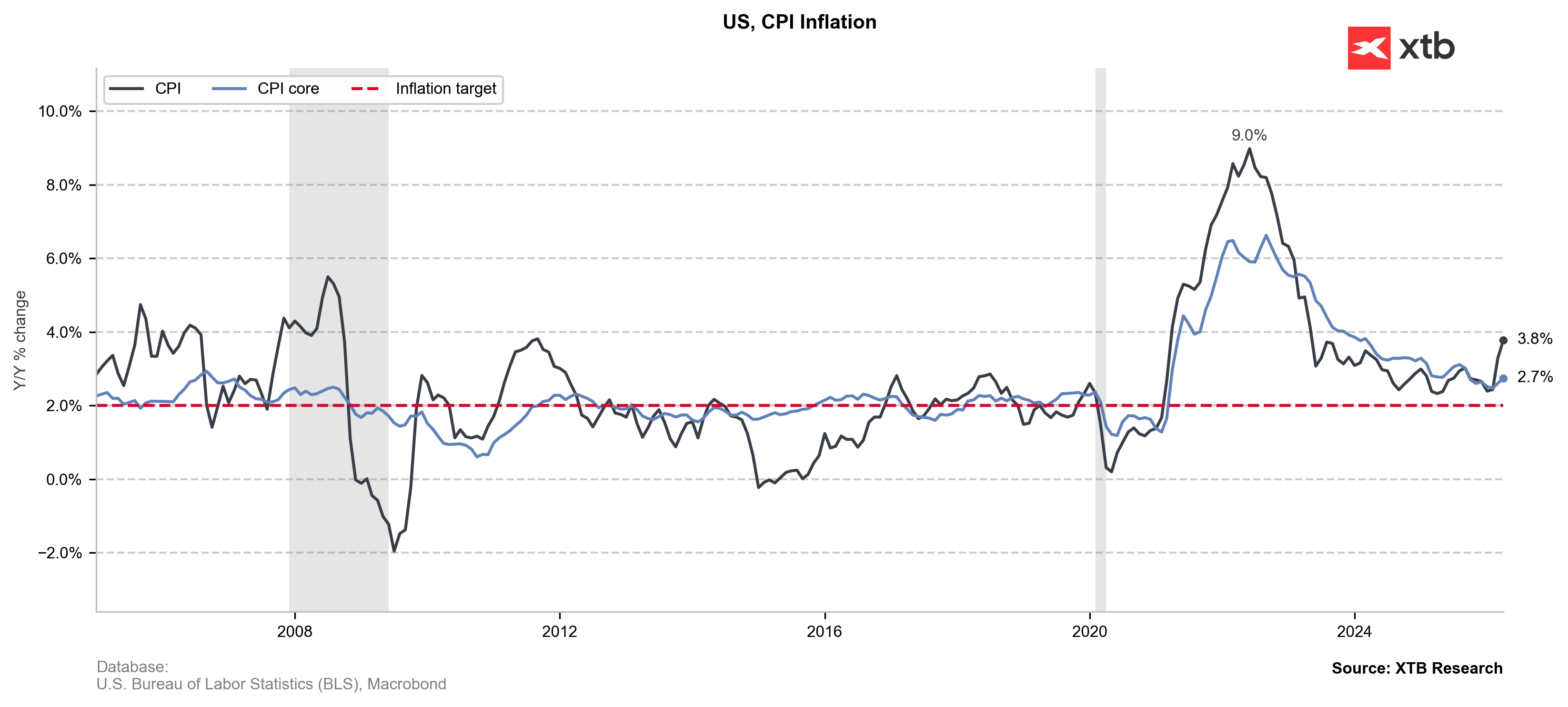
However, annual inflation figures surprised slightly to the upside. Headline CPI accelerated to 3.8% y/y, above the 3.7% consensus and significantly higher than the previous 3.3%. Core CPI also rose to 2.8% y/y, exceeding expectations of 2.7%.
Overall, the data still points to persistent inflationary pressure in the U.S. economy, even though the softer monthly core reading may provide some relief to markets. The report is likely to keep the Federal Reserve cautious regarding potential interest rate cuts in the near term.
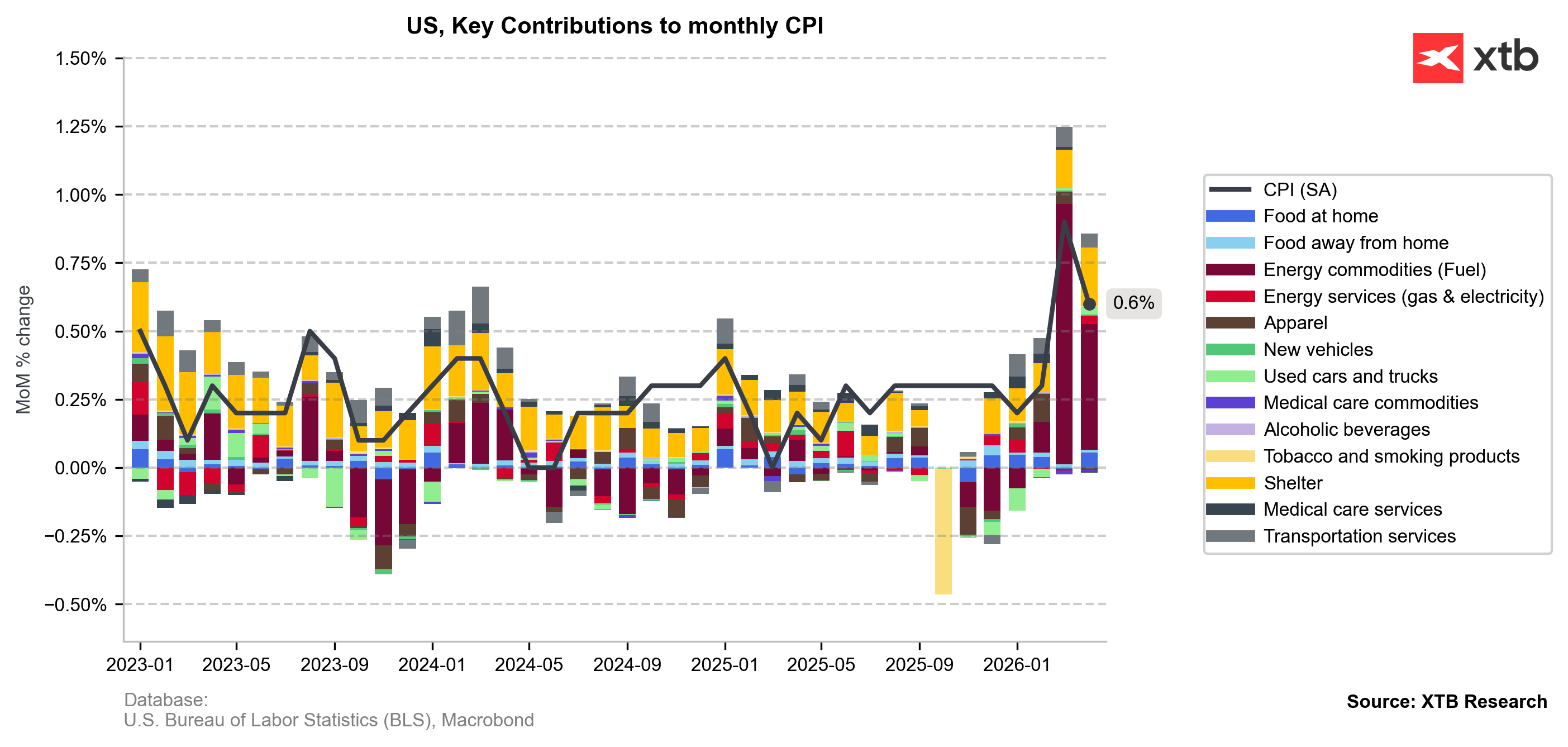
For financial markets, the higher yearly inflation readings may support the U.S. dollar and Treasury yields, while limiting bullish momentum in equities. In the FX market, EUR/USD could remain under pressure as investors continue to price in a relatively hawkish Fed stance.
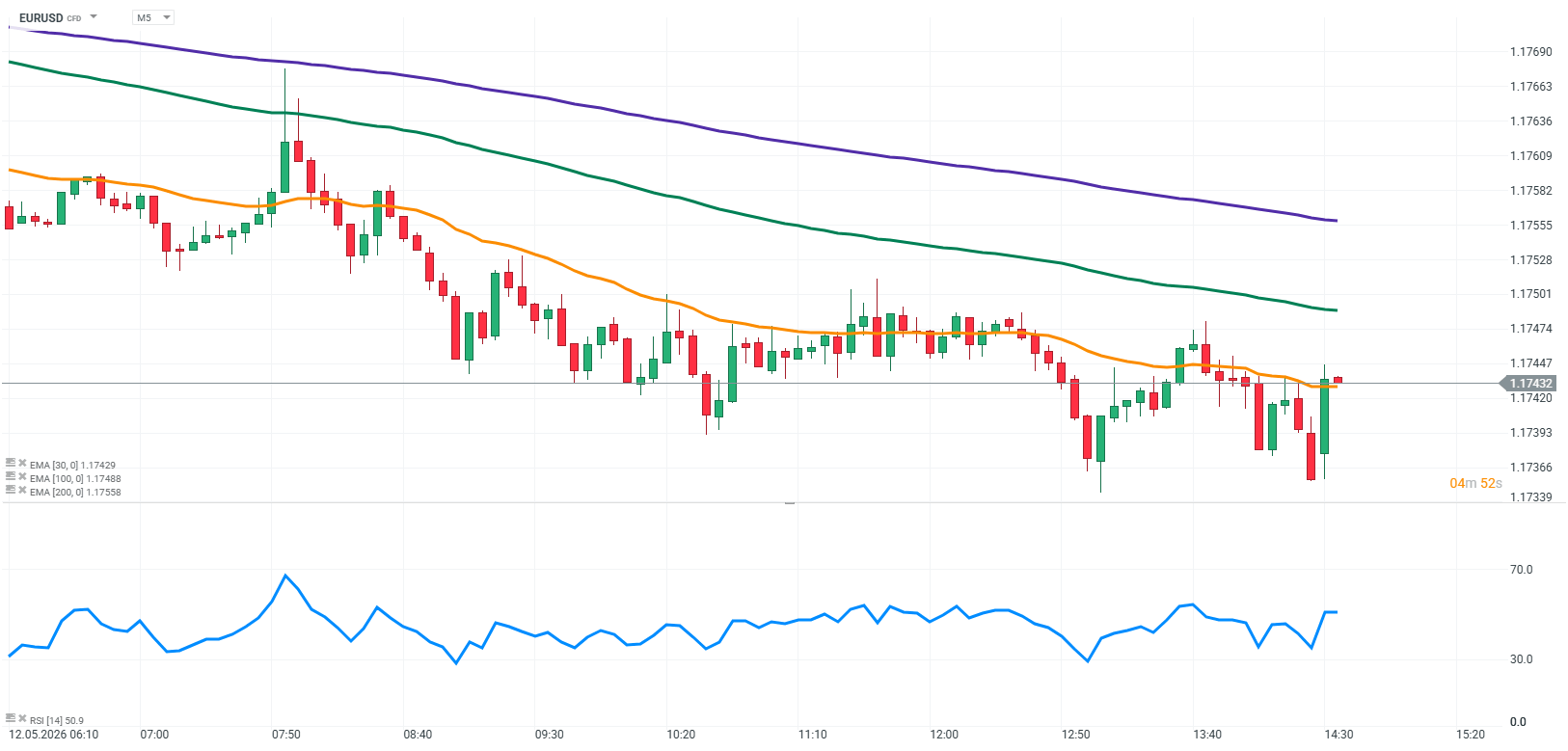
Source: xStation5



Daily Summary: Bitcoin Excites Investors Despite the Fed's Hawkish Shift🏛️



What could halt the uptrend❓


BREAKING: US industrial production & manufacturing data lower than expected



Market warp: Rate Forecasts and Semiconductors in the Spotlight
The material on this page does not constitute as financial advice and does not take into account your level of understanding, investment objectives, financial situation or any other particular needs.
All the information provided, including opinions, market research, mathematical results and technical analyses published on the website or transmitted to you by other means is provided for information purposes only and should in no event be interpreted as an offer of, or solicitation for, a transaction in any financial instrument, nor should the information provided be construed as advice of legal or fiscal nature.
Any investment decisions you make shall be based exclusively on your level of understanding, investment objectives, financial situation or any other particular needs. Any decision to act on information published on the website or transmitted to you by other means is entirely at your own risk. You are solely responsible for such decisions.
If you are in doubt or are not sure that you understand a particular product, instrument, service, or transaction, you should seek professional or legal advice before trading.
Investing in OTC Derivatives carries a high degree of risk, as they are leveraged based products and often small movements in the market could lead to much larger movements in the value of your investment and this could work against you or for you. Please ensure that you fully understand the risks involved, taking into account your investments objectives and level of experience, before trading, and if necessary, seek independent advice.