


Just yesterday, we analyzed Intel’s decision to issue approximately $15 billion worth of new shares. At the time, the key question was whether the capital raise should be viewed as a sign of financial difficulties or as part of a broader investment strategy. Today, the situation looks somewhat different. Intel has decided to increase the size of the offering to $20 billion, adding another $5 billion. The decision is interesting not only because of the scale of the transaction, but also because it shows how much capital the company intends to deploy in pursuit of its strategy.
Intel is raising the stakes at a time when the market is increasingly confident in the possibility of the company’s recovery. This is an important difference compared with the period when the stock was trading significantly lower and investors had much greater doubts about the chipmaker’s future. Today, the higher share price allows Intel to raise more money from the market. From the company’s perspective, this is therefore an exceptionally favorable moment to carry out such an operation.
At the same time, increasing the size of the offering shows that Intel wants to take full advantage of this opportunity. The goal is no longer simply to raise the minimum amount needed to fund its investments. The company is increasing the scale of financing because it apparently wants greater access to capital at a time when the growth opportunities in semiconductors and AI infrastructure are particularly significant.
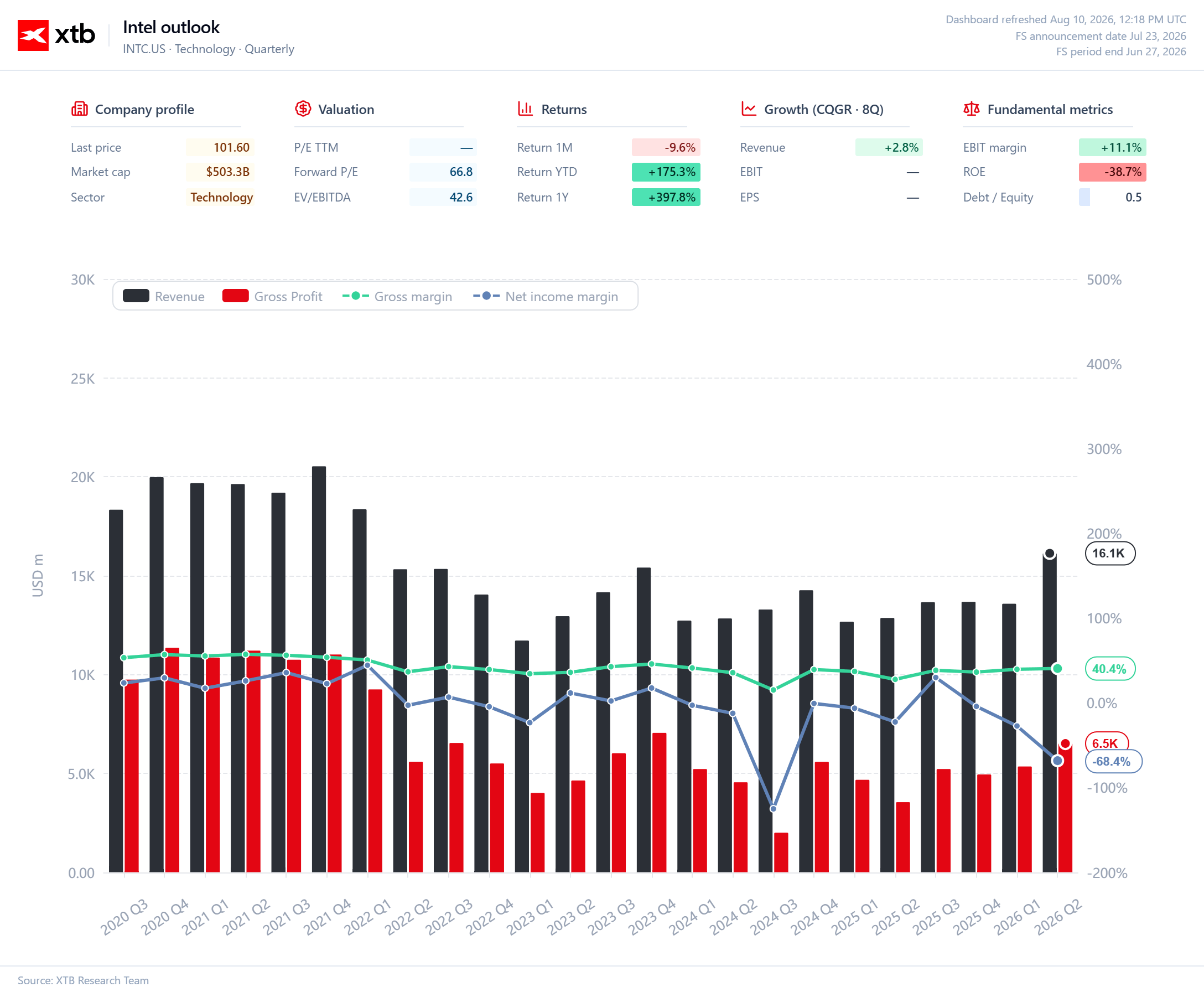
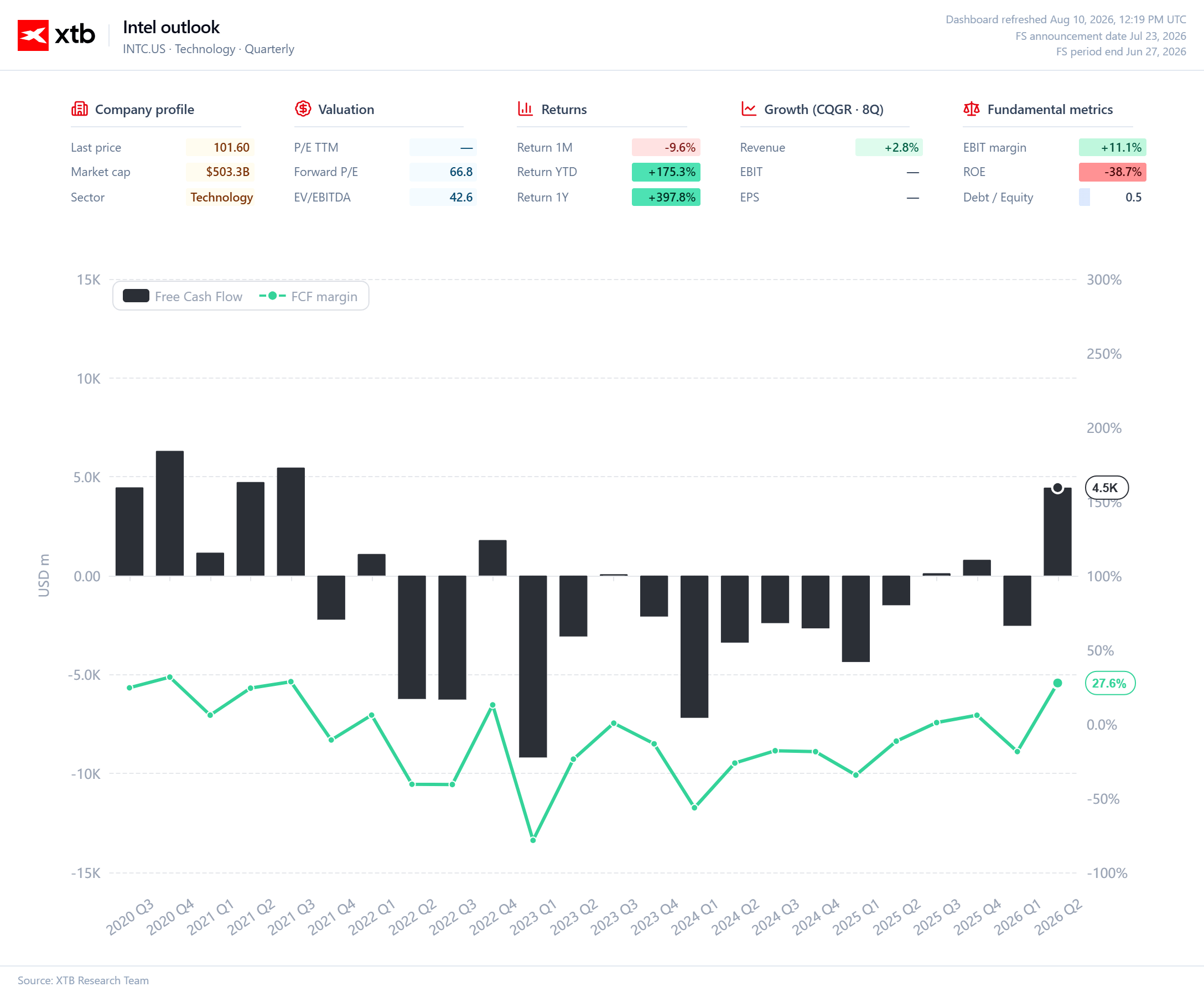
However, this also creates very specific expectations. The more capital Intel raises, the less room there is for disappointment in future results. Investors may accept dilution if they receive a significantly larger business in return. If, however, the additional billions fail to translate into sufficient growth in revenue, margins, and cash flow, the argument that the capital is being used to fund expansion will quickly lose credibility.
In this sense, today’s announcement changes not so much the assessment of the offering itself as the scale of the bet Intel is making with the market. The company is raising capital at a high valuation in order to expand its investment capacity. Now it must prove that it can generate a return on that capital that is higher than the cost of dilution borne by existing shareholders.
It is also worth looking at the broader sector. Intel is not an exception here. Memory manufacturers, foundries, and semiconductor infrastructure suppliers are increasing capital spending because the growth of artificial intelligence is creating demand for more chips and increasingly advanced manufacturing processes. The semiconductor industry has entered a period in which competitive advantages may belong not only to companies with the best technology, but also to those capable of financing its development at sufficient scale.
And this is precisely where Intel is trying to build its advantage. Access to capital could allow the company to expand manufacturing capacity more quickly and strengthen its foundry business. However, capital alone is no guarantee of success. The money must be converted into real contracts, utilized production capacity, and sufficiently high margins.
From a shareholder’s perspective, the key question will therefore not be whether Intel raises $15 billion or $20 billion, but how much additional cash flow it will be able to generate with that money. That is what will ultimately determine whether the offering proves to be a beneficial way to finance expansion or an expensive form of dilution.
A high valuation gives Intel the opportunity to raise a huge amount of capital. Growing demand gives the company a chance to put that capital to work. Now comes the hardest part of the story: turning that money into results.
Intel has therefore increased not only the size of the offering, but also the market’s expectations. The more capital flows into the company, the greater the impact that capital will ultimately have to deliver.
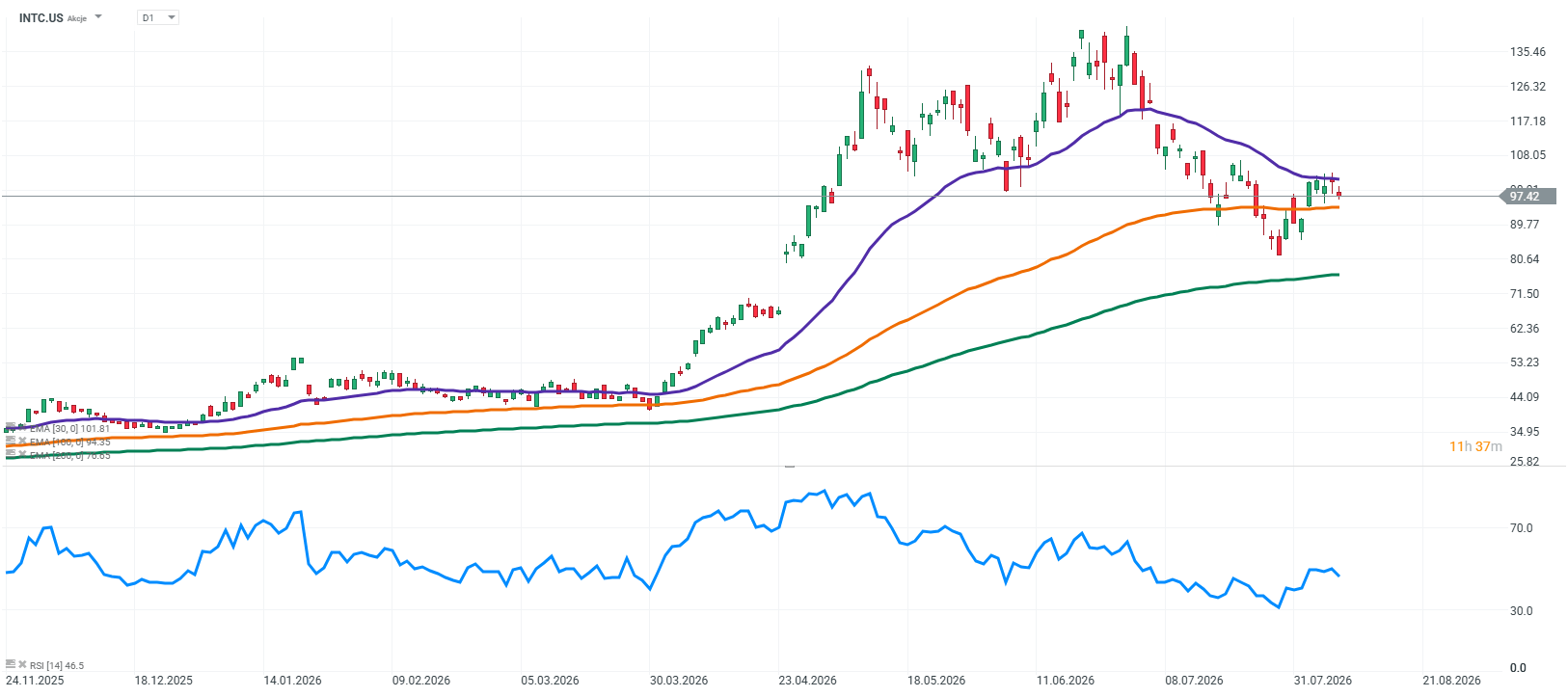
Source: xStation5


Russia is taking over Nestlé's domestic assets 🍫 Shares are down nearly 3% 💥



Market warp: Rate Forecasts and Semiconductors in the Spotlight


Daily Summary: Hawkish Fed fails to scare the markets (17.09.2026)


Nasdaq 100 Up 1.7%
The material on this page does not constitute as financial advice and does not take into account your level of understanding, investment objectives, financial situation or any other particular needs.
All the information provided, including opinions, market research, mathematical results and technical analyses published on the website or transmitted to you by other means is provided for information purposes only and should in no event be interpreted as an offer of, or solicitation for, a transaction in any financial instrument, nor should the information provided be construed as advice of legal or fiscal nature.
Any investment decisions you make shall be based exclusively on your level of understanding, investment objectives, financial situation or any other particular needs. Any decision to act on information published on the website or transmitted to you by other means is entirely at your own risk. You are solely responsible for such decisions.
If you are in doubt or are not sure that you understand a particular product, instrument, service, or transaction, you should seek professional or legal advice before trading.
Investing in OTC Derivatives carries a high degree of risk, as they are leveraged based products and often small movements in the market could lead to much larger movements in the value of your investment and this could work against you or for you. Please ensure that you fully understand the risks involved, taking into account your investments objectives and level of experience, before trading, and if necessary, seek independent advice.