


Monetary Policy and Trade Wars
US interest rates have remained unchanged for an extended period, a situation not expected to shift before September. A slightly higher US inflation reading, increasingly reflecting the impact of tariffs, is dimming prospects for more aggressive rate cuts in the United States, despite pressure from the Trump administration on the Federal Reserve. Conversely, Japan shows no immediate signs of rate hikes. Furthermore, the risk of stagflation in Japan is growing, particularly with the imposition of 25% tariffs by the United States.
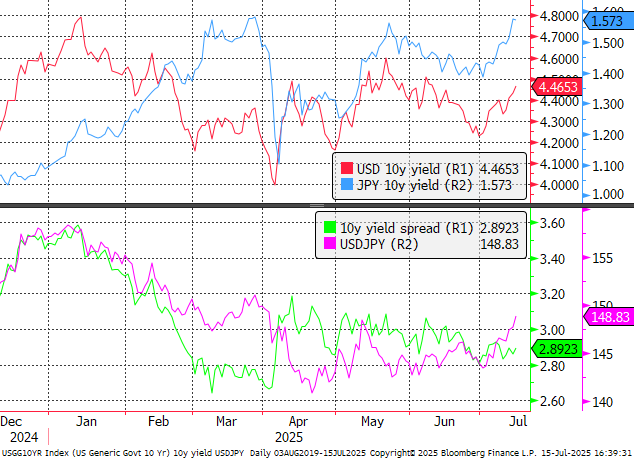
While Japanese yields are rising, this is not due to expectations of higher rates but rather diminishing confidence in the country's fiscal stability. In contrast, US yields are increasing due to the lack of near-term rate cut prospects. The yield spread has recently stabilized. Source: Bloomberg Finance LP
It is worth noting that Japan recently announced a stimulus package of ¥900 billion, which will significantly increase borrowing needs and could threaten fiscal stability. Trump's tariffs are also expected to exert pressure for a weaker yen, aiming to boost the competitiveness of Japanese exports.
Investors Withdraw from the Yen
Amidst a reversal from the US dollar and in anticipation of Fed rate hikes, we observed a record increase in long positions on the yen. It also appeared that investors would close carry-trade transactions at an unprecedented pace. Recently, however, there has likely been a return to borrowing in yen, especially in anticipation of its weakness.
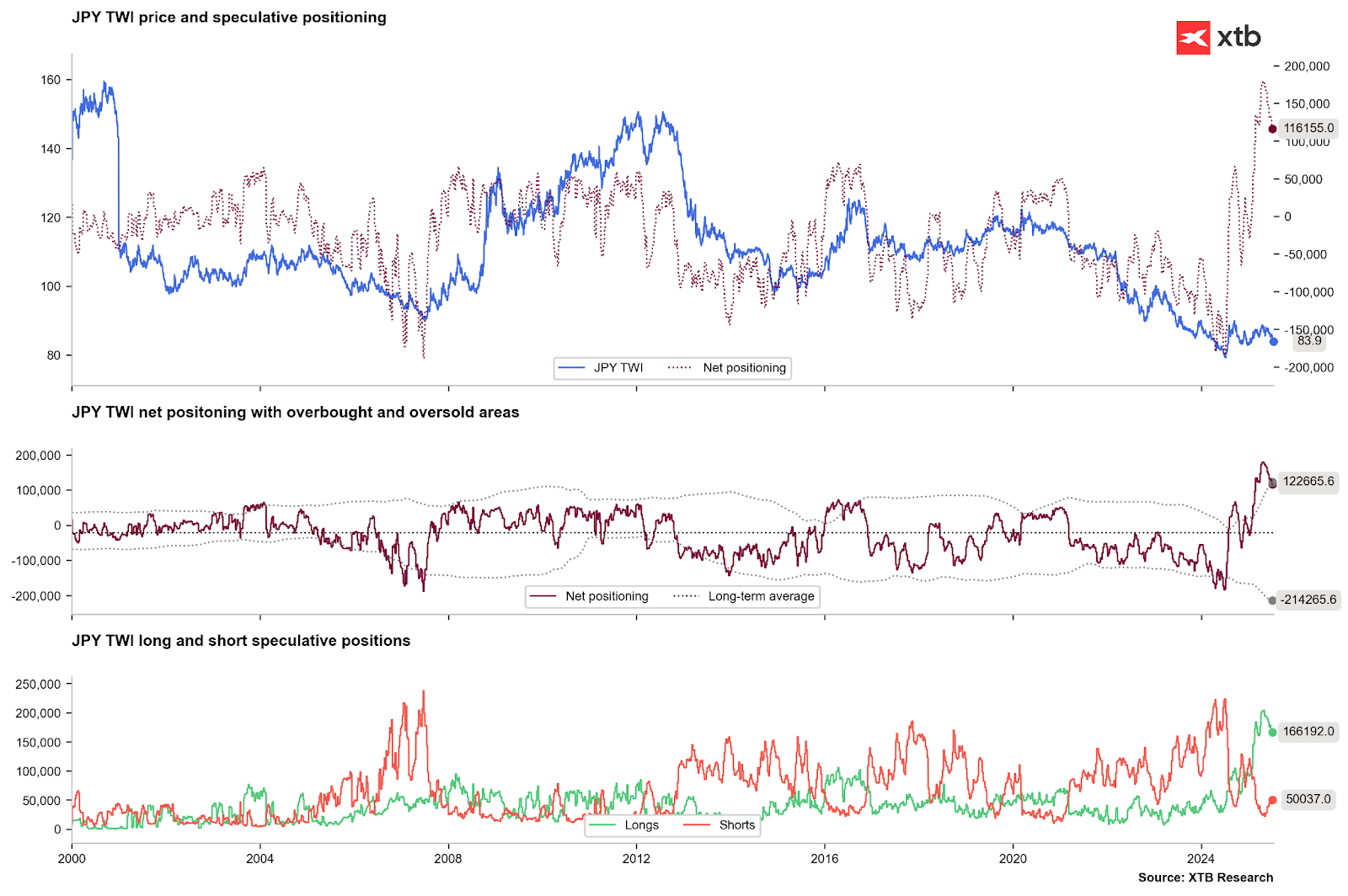
There has been a clear reversal of long positions and an increase in short positions. Source: Bloomberg Finance LP, XTB
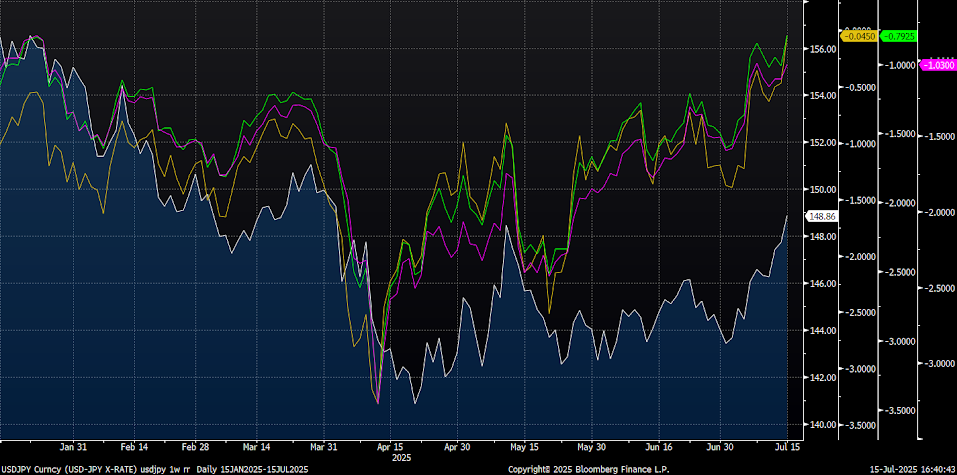
We are also observing a significant shift in the options market. The difference between out-of-the-money (OTM) call and put options is rising to its highest level since 2022. Currently, the price advantage of put options is only marginal. Similar movements were observed in 2022 when the pair experienced very strong gains. Source: Bloomberg Finance LP
Technical Outlook
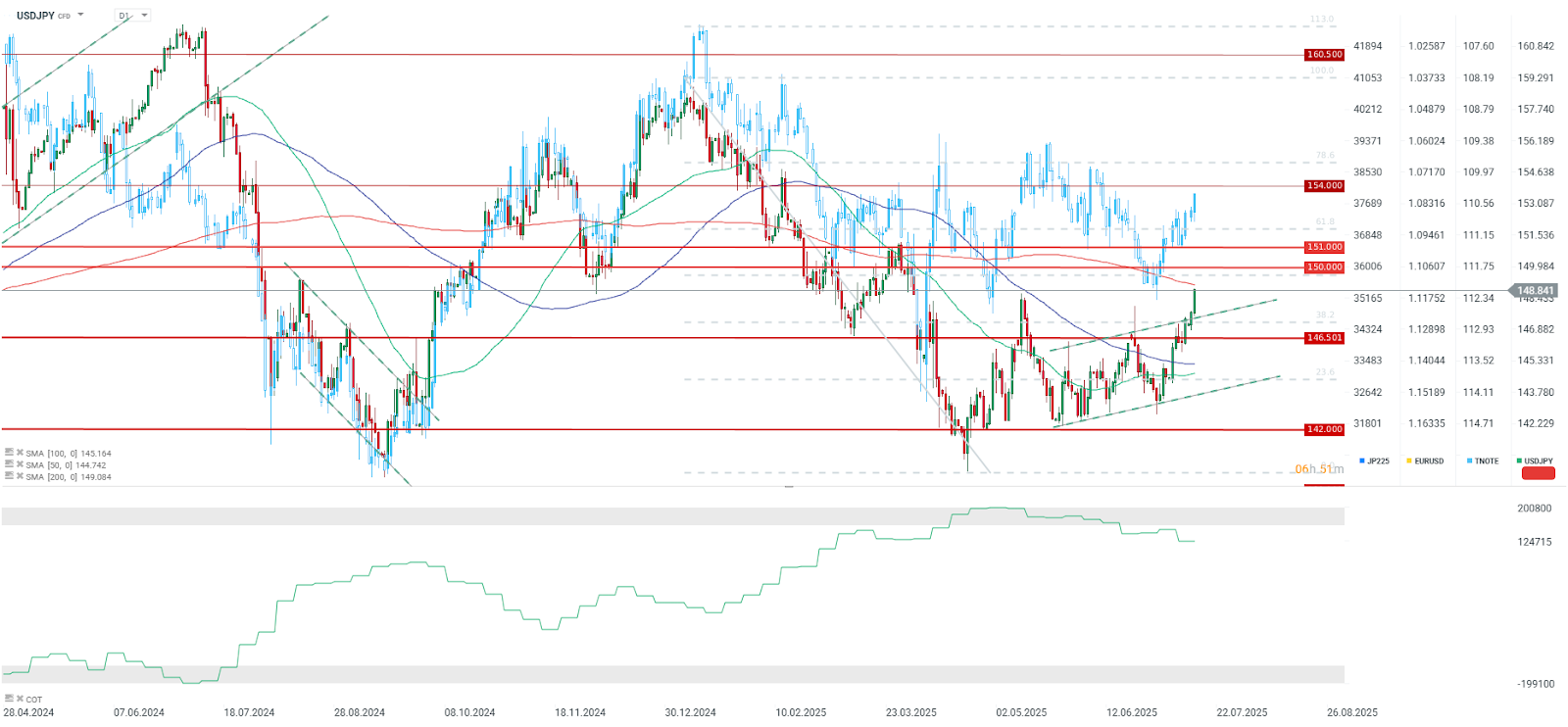
The USDJPY pair is experiencing its third consecutive strongly bullish session, approaching the 149 level and the 200-period moving average, which was last breached in March. Since the beginning of the month, the pair has already surged by 3.5%. The target for the pair, given the current upward momentum, could be the zone between 150 and 151. However, it is important to note that the yen also faces risk from the upper house parliamentary elections this coming Sunday. If yen weakness were to persist, the 155-160 range, where the Bank of Japan last intervened, would be a key area to watch. Conversely, if a pullback were to occur, support is located at the 38.2 Fibonacci retracement level of 147.3.



Market Wrap: European Stocks Are Trying to Rebound as the Week Comes to an End💡


BREAKING: Eurozone recovery? Positive PMI data tempered by high oil and gas prices



Economic Calendar: Industry’s condition in the shadow of oil prices

Chart of the Day 🚩OIL Pulls Back to Test $92.5 per Barrel (24.07.2026)
The material on this page does not constitute as financial advice and does not take into account your level of understanding, investment objectives, financial situation or any other particular needs.
All the information provided, including opinions, market research, mathematical results and technical analyses published on the website or transmitted to you by other means is provided for information purposes only and should in no event be interpreted as an offer of, or solicitation for, a transaction in any financial instrument, nor should the information provided be construed as advice of legal or fiscal nature.
Any investment decisions you make shall be based exclusively on your level of understanding, investment objectives, financial situation or any other particular needs. Any decision to act on information published on the website or transmitted to you by other means is entirely at your own risk. You are solely responsible for such decisions.
If you are in doubt or are not sure that you understand a particular product, instrument, service, or transaction, you should seek professional or legal advice before trading.
Investing in OTC Derivatives carries a high degree of risk, as they are leveraged based products and often small movements in the market could lead to much larger movements in the value of your investment and this could work against you or for you. Please ensure that you fully understand the risks involved, taking into account your investments objectives and level of experience, before trading, and if necessary, seek independent advice.
