



Amazon is in talks to sell its proprietary AI chips to external data center customers. This move could signal a major shift in the balance of power within the artificial intelligence infrastructure market and intensify competitive pressure on Nvidia.
According to available reports, this initiative would expand the current business model, where Amazon’s custom silicon—such as Trainium—is utilized primarily within Amazon Web Services (AWS). The company is now considering making these chips available to other entities building out their own AI infrastructure.
At first glance, this may look like a natural evolution of AWS’s ecosystem strategy, but the broader implications are far-reaching. If Amazon commercializes its own AI accelerators, it would transition from a closed cloud infrastructure vendor into a direct merchant market competitor in a semiconductor landscape currently dominated by Nvidia.
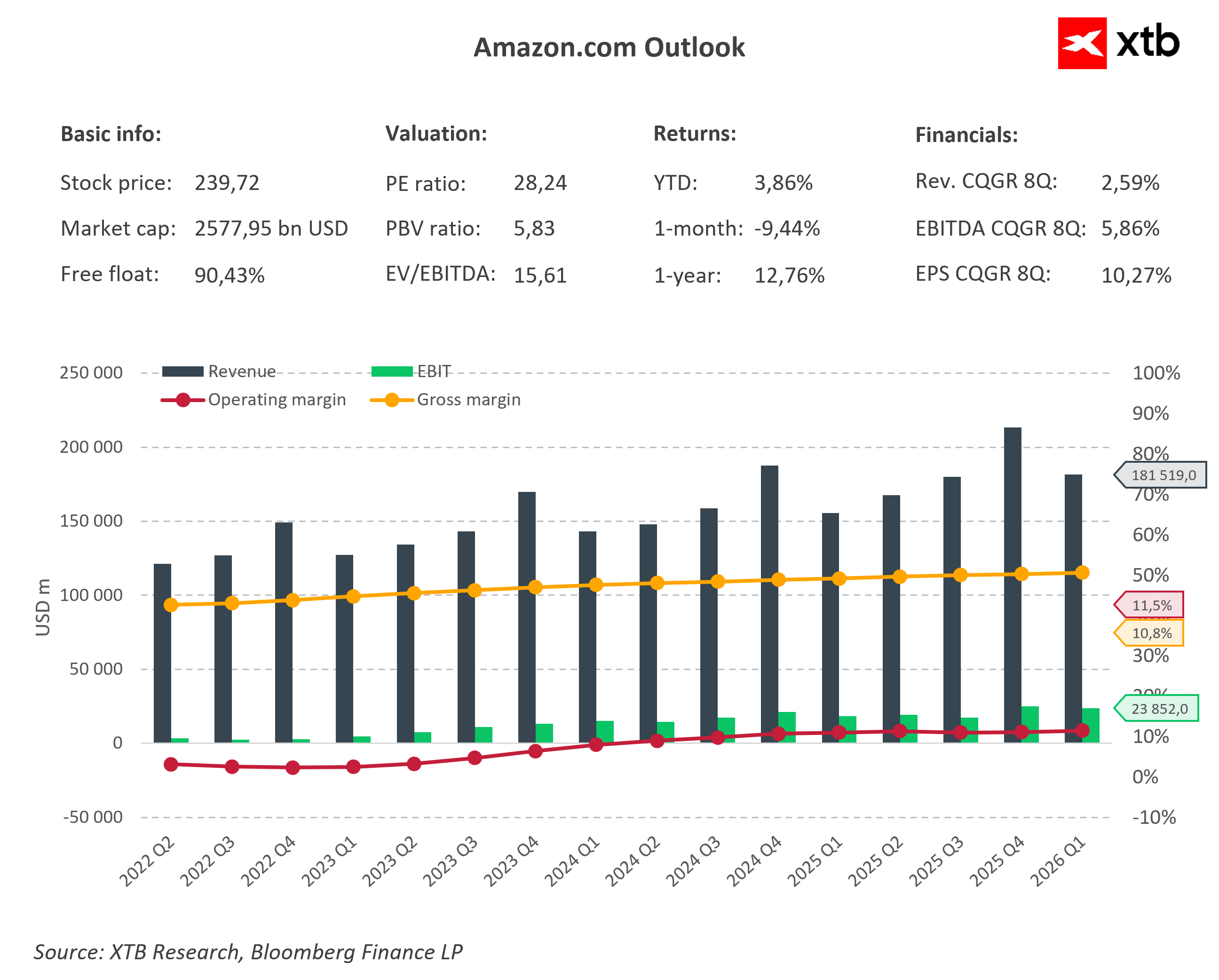
A Long-Term Shift in Tech Demand Structure
From Nvidia’s perspective, the primary threat is not an immediate risk of revenue loss, but a fundamental alteration of long-term market demand.
-
The Traditional Hyper-scaler Model: For years, Nvidia's exponential growth model relied on hyperscalers like Amazon, Microsoft, Google, and Meta acting strictly as high-volume buyers of its GPUs rather than direct rivals. This dynamic guaranteed massive pricing power and insulation for Nvidia.
-
The New Dual-Competitor Era: Amazon's entry into the merchant chip market accelerates a more complex model where cloud giants not only lease compute capacity but design, build, and distribute alternative AI hardware stacks. In practice, Amazon ceases to be just an Nvidia customer and pivots into a partial competitor.
This trend mirrors a macro shift sweeping across the tech sector. Hyperscalers are aggressively scaling up investments in custom silicon to insulate themselves from supply shortages, mitigate soaring Nvidia costs, and optimize efficiency for specialized internal workloads. The potential commercialization of these proprietary chips represents the next frontier of this strategy—moving past captive consumption to capture open market share.
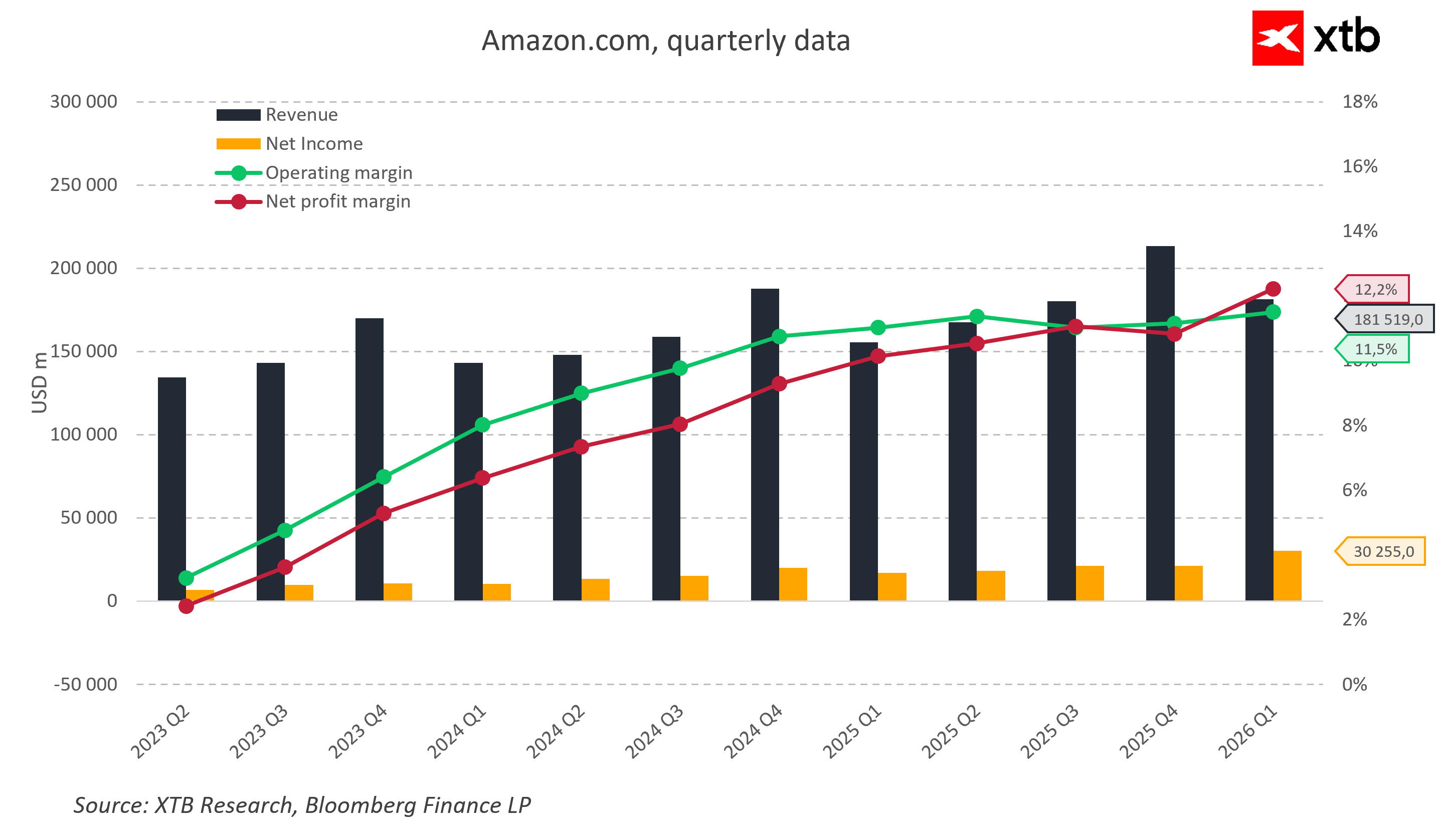
Strategic Alternatives for AWS Infrastructure
Amazon’s chip division is already growing dynamically under the AWS umbrella. The company is currently deploying a dual-track strategy: rapidly iterating its own architecture while concurrently utilizing Nvidia's bleeding-edge systems. This demonstrates that Amazon is not abandoning Nvidia in the near term, but is instead systematically weaponizing a secondary alternative to bolster its future supply independence.
For Wall Street investors, the critical question is whether this is merely an extension of internal AWS infrastructure optimization or the starting gun for a broader enterprise strategy where Amazon actively competes with Nvidia for raw silicon sales to third-party data centers.
In the long run, the significance of this development goes far beyond a new hardware revenue line for Amazon. If successful, it could gradually erode Nvidia’s near-monopoly—not through a direct price war, but by structurally decentralizing how global AI infrastructure is engineered, deployed, and consumed.
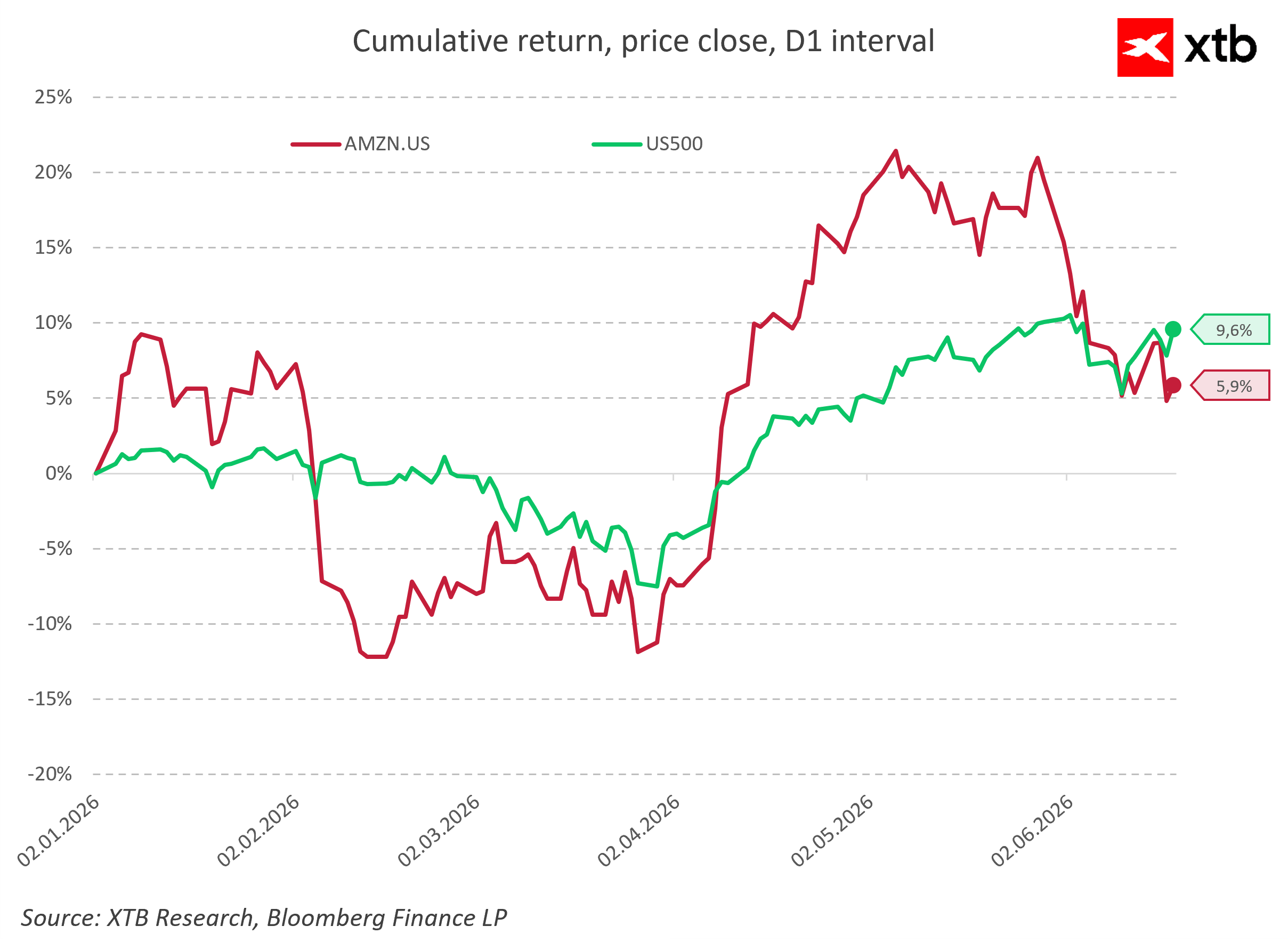
Current Market Standing
For now, Nvidia’s competitive moat remains exceptionally deep. The firm continues to dictate the performance benchmark for high-end AI acceleration, and the vast majority of cloud ecosystems remain deeply tethered to its proprietary CUDA software stack. Nonetheless, Amazon's exploratory move serves as another clear signal that the AI hardware market is inexorably drifting toward greater fragmentation and deep vertical integration among mega-cap cloud providers.



US OPEN: Anthropic filing and Iran talks support the market

Anthropic files prospectus ahead of IPO with "ANT" ticker on Nasdaq. The launch date and price remain a mystery



Musk Borrows $40 Billion for AI and Warns Rivals: Neocloud Providers Could Face Serious Trouble



Three markets to watch next week (23.10.2026)
The content of this report has been created by XTB S.A., with its registered office in Warsaw, at Prosta 67, 00-838 Warsaw, Poland, (KRS number 0000217580) and supervised by Polish Supervision Authority ( No. DDM-M-4021-57-1/2005). This material is a marketing communication within the meaning of Art. 24 (3) of Directive 2014/65/EU of the European Parliament and of the Council of 15 May 2014 on markets in financial instruments and amending Directive 2002/92/EC and Directive 2011/61/EU (MiFID II). Marketing communication is not an investment recommendation or information recommending or suggesting an investment strategy within the meaning of Regulation (EU) No 596/2014 of the European Parliament and of the Council of 16 April 2014 on market abuse (market abuse regulation) and repealing Directive 2003/6/EC of the European Parliament and of the Council and Commission Directives 2003/124/EC, 2003/125/EC and 2004/72/EC and Commission Delegated Regulation (EU) 2016/958 of 9 March 2016 supplementing Regulation (EU) No 596/2014 of the European Parliament and of the Council with regard to regulatory technical standards for the technical arrangements for objective presentation of investment recommendations or other information recommending or suggesting an investment strategy and for disclosure of particular interests or indications of conflicts of interest or any other advice, including in the area of investment advisory, within the meaning of the Trading in Financial Instruments Act of 29 July 2005 (i.e. Journal of Laws 2019, item 875, as amended). The marketing communication is prepared with the highest diligence, objectivity, presents the facts known to the author on the date of preparation and is devoid of any evaluation elements. The marketing communication is prepared without considering the client’s needs, his individual financial situation and does not present any investment strategy in any way. The marketing communication does not constitute an offer of sale, offering, subscription, invitation to purchase, advertisement or promotion of any financial instruments. XTB S.A. is not liable for any client’s actions or omissions, in particular for the acquisition or disposal of financial instruments, undertaken on the basis of the information contained in this marketing communication. In the event that the marketing communication contains any information about any results regarding the financial instruments indicated therein, these do not constitute any guarantee or forecast regarding the future results.