



- The market is pricing in roughly 2.5 U.S. rate hikes in total by June 2027, while the expected Fed rate for mid-2027 has risen to around 4.3%.
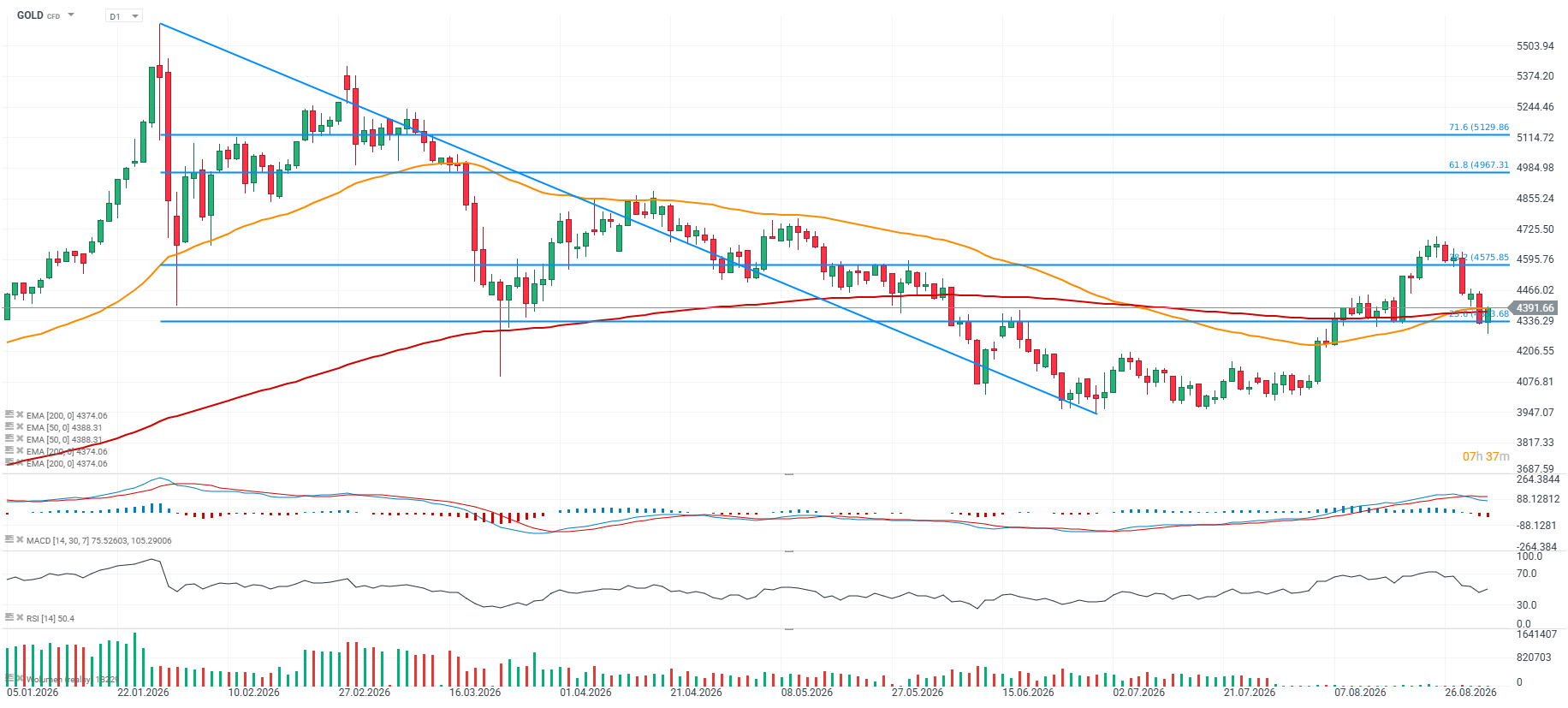
- The U.S. 10-year Treasury yield climbed to around 4.8%, weighing heavily on gold and pushing prices down from roughly $4,700 to a test of $4,300 per ounce, although today we are seeing an attempt to move back above $4,400.
- Pressure on yields is being driven not only by expectations for the Fed, but also by structural factors including heavy U.S. government debt issuance, the AI investment boom and shifts in the global savings-investment balance.
- In the short term, higher yields and the prospect of further monetary tightening remain the main negative factors for gold.
- At the same time, the longer-term outlook for the metal remains more constructive due to the large U.S. fiscal deficit, the risk of a higher inflation premium and limited room for aggressive tightening given elevated government debt.
- Long-term investors are not showing signs of capitulation: gold holdings in ETFs remain close to local highs at around 98.95 million ounces. Long speculative positions in gold futures are also rebuilding in both the U.S. and China.
- From a technical perspective, key levels remain the U.S. 10-year yield around 4.81% and 5%; a further move higher could keep pressure on gold.
- A stronger recovery scenario for gold could emerge if U.S. data continues to come in below expectations — recent ISM and JOLTS readings, as well as today’s ADP report, disappointed — while oil prices begin to decline from current levels.
- Higher interest rates could eventually lead to a more pronounced economic slowdown or stress in the financial sector, forcing the Fed to pivot back toward a more accommodative policy stance later on.
GOLD chart, D1 interval
Source: xStation5
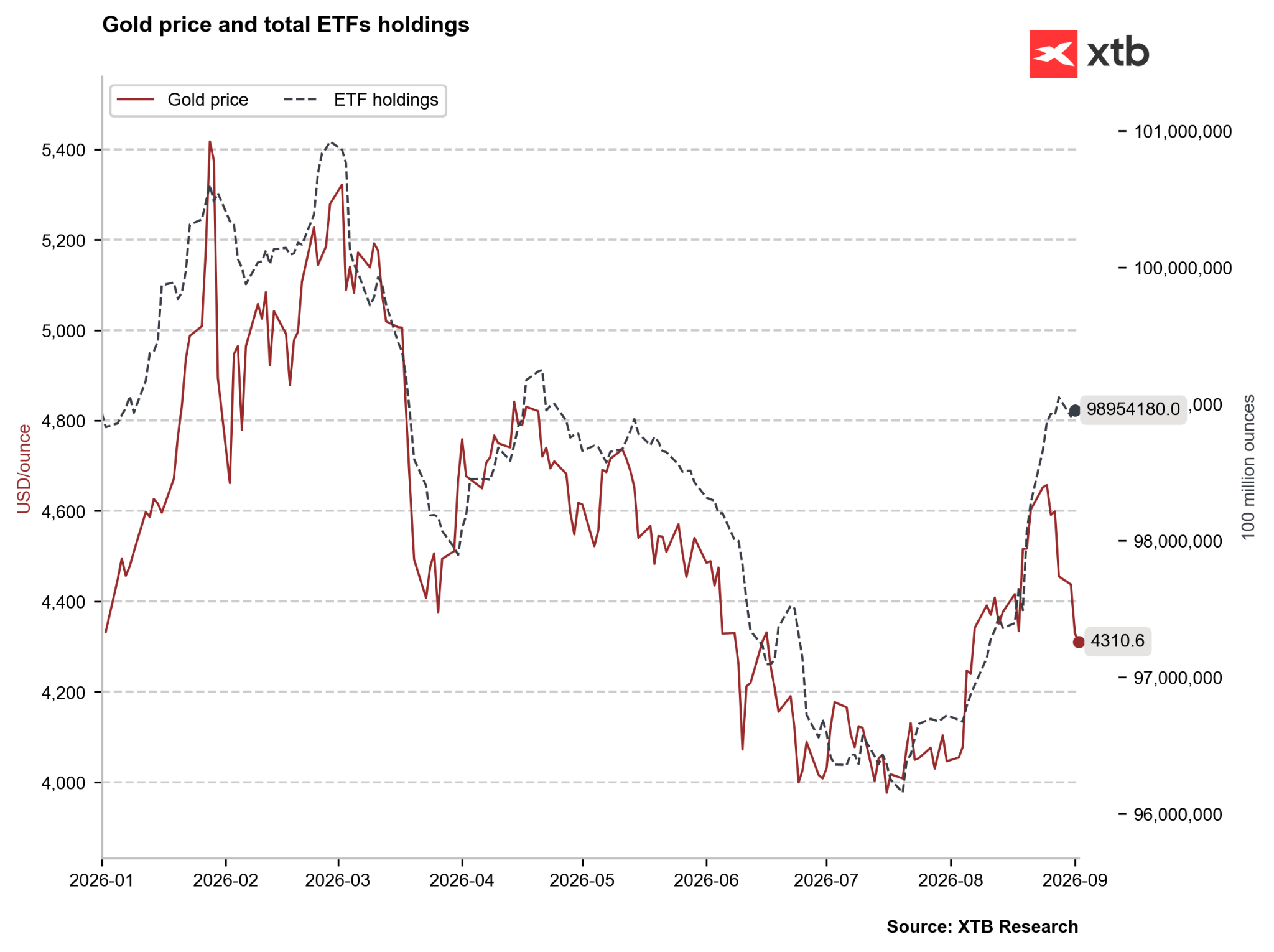
Source: XTB Research



Dollar in Limbo Ahead of CPI 🚨


Economic Calendar: US CPI Inflation Data in Focus (14.10.2026)
Chart of the Day 📈 EURUSD attempts to rebound ahead of US inflation data (14.10.2026)



Daily Summary: Earnings Season Kicks Off on Wall Street Amid Mixed Sentiment
The content of this report has been created by XTB S.A., with its registered office in Warsaw, at Prosta 67, 00-838 Warsaw, Poland, (KRS number 0000217580) and supervised by Polish Supervision Authority ( No. DDM-M-4021-57-1/2005). This material is a marketing communication within the meaning of Art. 24 (3) of Directive 2014/65/EU of the European Parliament and of the Council of 15 May 2014 on markets in financial instruments and amending Directive 2002/92/EC and Directive 2011/61/EU (MiFID II). Marketing communication is not an investment recommendation or information recommending or suggesting an investment strategy within the meaning of Regulation (EU) No 596/2014 of the European Parliament and of the Council of 16 April 2014 on market abuse (market abuse regulation) and repealing Directive 2003/6/EC of the European Parliament and of the Council and Commission Directives 2003/124/EC, 2003/125/EC and 2004/72/EC and Commission Delegated Regulation (EU) 2016/958 of 9 March 2016 supplementing Regulation (EU) No 596/2014 of the European Parliament and of the Council with regard to regulatory technical standards for the technical arrangements for objective presentation of investment recommendations or other information recommending or suggesting an investment strategy and for disclosure of particular interests or indications of conflicts of interest or any other advice, including in the area of investment advisory, within the meaning of the Trading in Financial Instruments Act of 29 July 2005 (i.e. Journal of Laws 2019, item 875, as amended). The marketing communication is prepared with the highest diligence, objectivity, presents the facts known to the author on the date of preparation and is devoid of any evaluation elements. The marketing communication is prepared without considering the client’s needs, his individual financial situation and does not present any investment strategy in any way. The marketing communication does not constitute an offer of sale, offering, subscription, invitation to purchase, advertisement or promotion of any financial instruments. XTB S.A. is not liable for any client’s actions or omissions, in particular for the acquisition or disposal of financial instruments, undertaken on the basis of the information contained in this marketing communication. In the event that the marketing communication contains any information about any results regarding the financial instruments indicated therein, these do not constitute any guarantee or forecast regarding the future results.