



While most investors still view Nvidia primarily through the lens of powerful graphics processors driving data centers, the company has just proven that its ambitions extend much further. Jensen Huang presented a move that can be interpreted as a fundamental pivot and at the same time a clear signal that the company intends to set the direction for the entire semiconductor market. Nvidia is officially ceasing to be merely a graphics chip maker and is becoming a global infrastructure company. This strategy relies on building so called AI factories, which are large scale integrated systems combining computing power, networking, software, and infrastructure. They are designed to bring businesses real revenue from every digitally generated token, meaning that the company wants to control the entire value chain of modern technology.
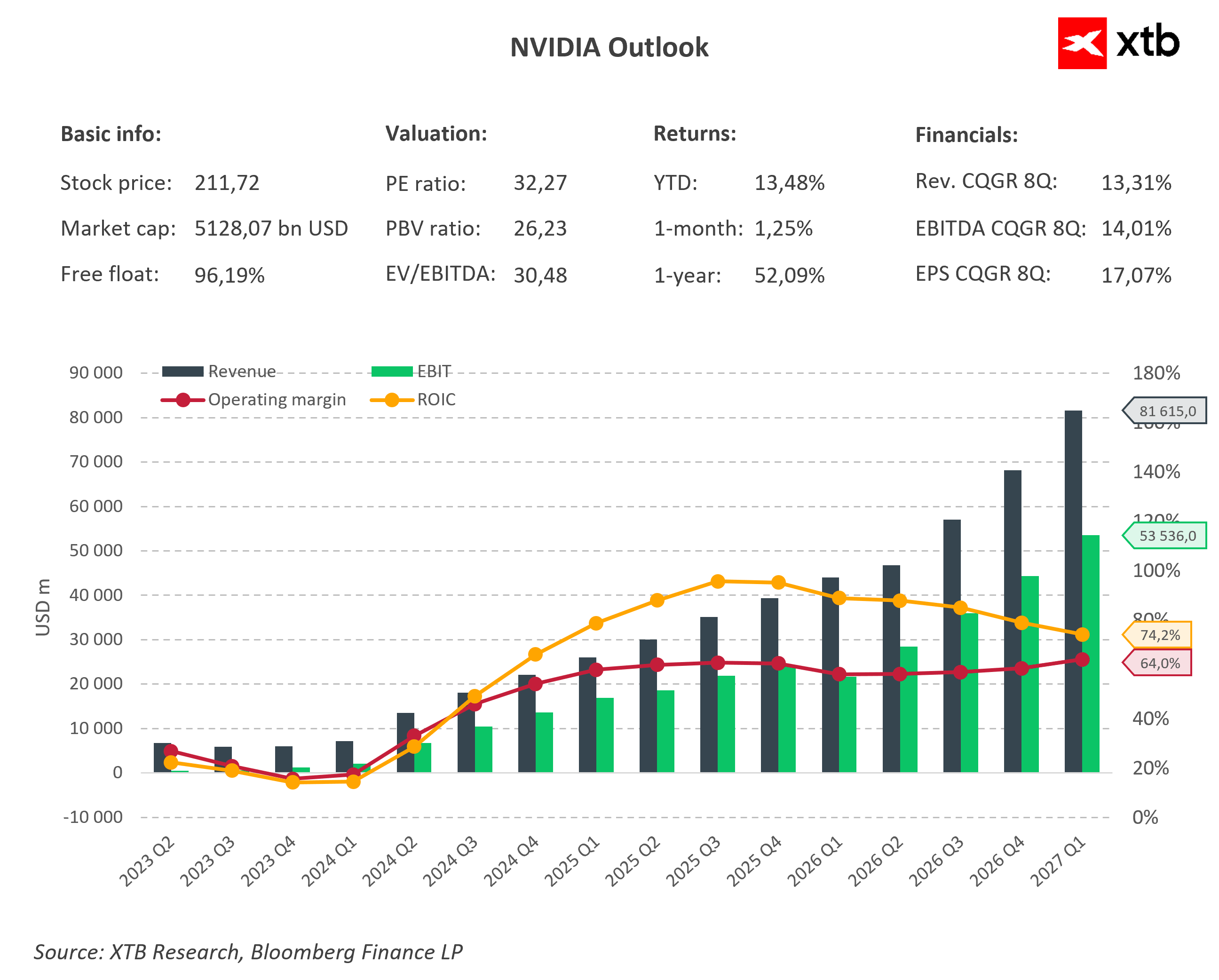
The latest move suggests that the firm wants to bring artificial intelligence directly to personal computers and turn them into a new category of devices ready for the era of autonomous digital agents. The biggest surprise for the broader market is Nvidia's direct attack on a bastion that has been uncontestedly ruled by Intel and AMD for decades, namely the Windows laptop and desktop market. The unveiled RTX Spark superchip, created in partnership with MediaTek and Microsoft, introduces an efficient Arm architecture straight to the doorsteps of demanding users. In practice, this means the company is extending its presence from data center infrastructure all the way to the end user.
The personal computer market has not been an easy place to build a new competitive advantage for years, but Nvidia is approaching it differently than incumbent players. RTX Spark is designed to be optimized not only for high performance but also for local artificial intelligence operation, content creation, and gaming, which are applications that can realistically redefine what a modern computer is supposed to be in the first place. This no longer looks like a simple expansion of a product portfolio, but rather an attempt to build a new equipment category where AI is not an add on but the central element of the entire design.
Simultaneously, Nvidia is securing its position in data centers by introducing the Vera CPU architecture. This is a direct response to the concerns of skeptics who claimed that server room development would shift toward general purpose processors, potentially making Nvidia accelerators less crucial. Vera is the company's first standalone server processor to enter an open duel with the Intel Xeon and AMD Epyc lines. According to company declarations, it is expected to be nearly twice as fast in AI related workloads than traditional x86 architecture, and the first tech giants, including OpenAI, Anthropic, and SpaceX, have already secured their initial shipments. Additionally, Nvidia emphasizes that the new software solutions improve power efficiency to such an extent that data center operators can run up to forty percent more accelerator chips within the same power budget, which represents a massive economic advantage for the entire industry.
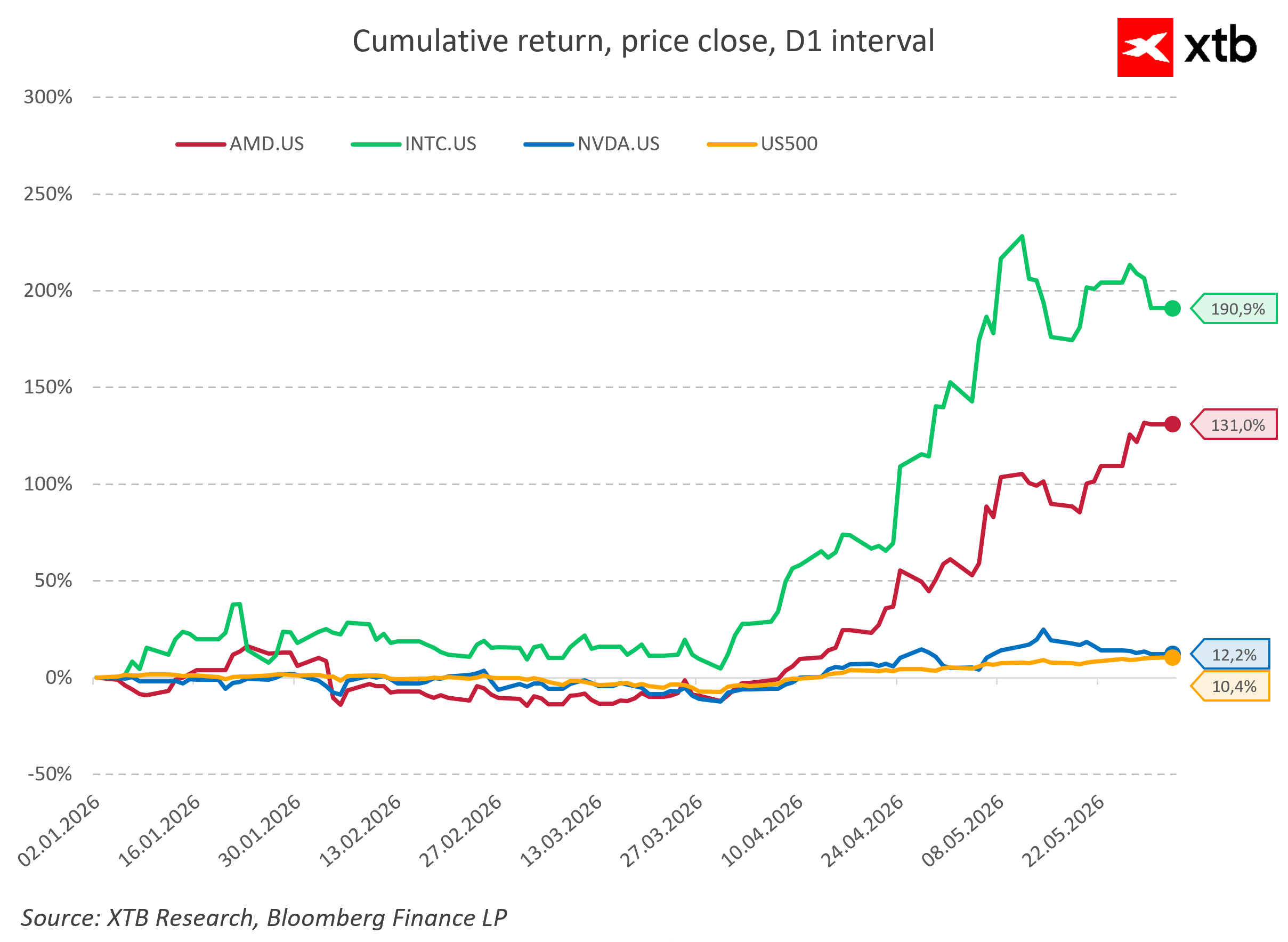
From a market perspective, this is an incredibly powerful narrative. Even though the company's stock price has behaved a bit more modestly this year compared to the broader semiconductor sector index, the announced innovations could act as a potent catalyst for growth. Financially, Nvidia is a giant today, with its revenue from the most recent quarter roughly equal to the annual totals of Intel and AMD combined. If Nvidia successfully opens this new market and convinces hardware manufacturers and end users to embrace these next era devices, the company will gain another powerful growth vector alongside its already dominant server business. Crucially for shareholders worried about production bottlenecks, Nvidia assured that global component supply constraints will not affect the availability of the new chips, which will be produced in TSMC factories using 3N process technology.
Consequently, it is becoming increasingly difficult to look at Nvidia solely as a component manufacturer. The company is becoming the foundation of the entire artificial intelligence infrastructure, connecting premium laptops with the world's most powerful servers and building a business moat that will be incredibly difficult for rivals to cross. Nvidia is not only capitalizing on the technological revolution, but is actively expanding and accelerating it, and the upcoming device launches could permanently shift the balance of power in the financial markets.
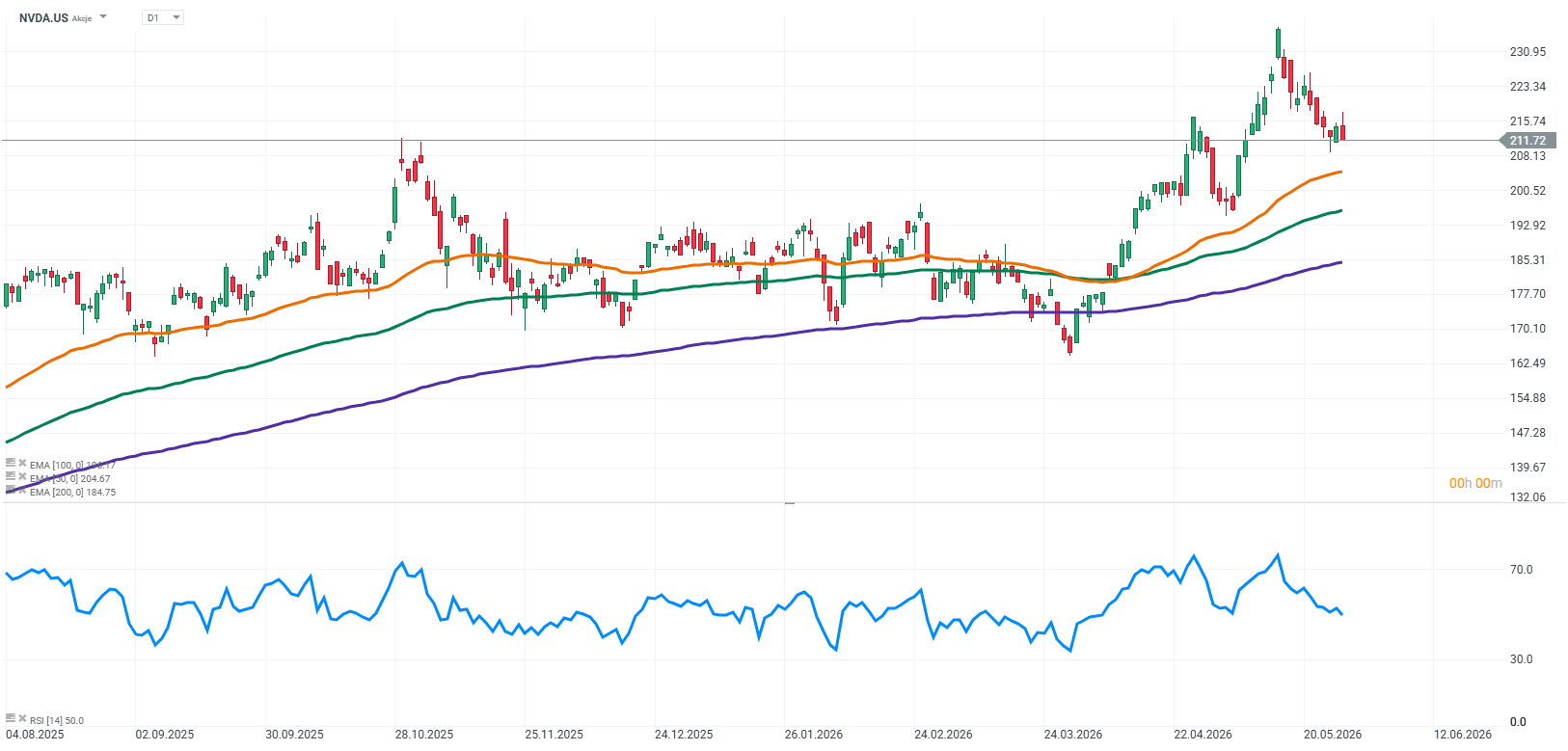
Source: xStation5



Three markets to watch next week (23.10.2026)



Daily Summary: Oil at five-month highs, indices under pressure (23.10.2026)

US Open: Further declines on Wall Street, Brent above 111 USD, AI correction continues (14.10.2026)



Morning Wrap: AI profitability concerns spark market Sell-Off
The content of this report has been created by XTB S.A., with its registered office in Warsaw, at Prosta 67, 00-838 Warsaw, Poland, (KRS number 0000217580) and supervised by Polish Supervision Authority ( No. DDM-M-4021-57-1/2005). This material is a marketing communication within the meaning of Art. 24 (3) of Directive 2014/65/EU of the European Parliament and of the Council of 15 May 2014 on markets in financial instruments and amending Directive 2002/92/EC and Directive 2011/61/EU (MiFID II). Marketing communication is not an investment recommendation or information recommending or suggesting an investment strategy within the meaning of Regulation (EU) No 596/2014 of the European Parliament and of the Council of 16 April 2014 on market abuse (market abuse regulation) and repealing Directive 2003/6/EC of the European Parliament and of the Council and Commission Directives 2003/124/EC, 2003/125/EC and 2004/72/EC and Commission Delegated Regulation (EU) 2016/958 of 9 March 2016 supplementing Regulation (EU) No 596/2014 of the European Parliament and of the Council with regard to regulatory technical standards for the technical arrangements for objective presentation of investment recommendations or other information recommending or suggesting an investment strategy and for disclosure of particular interests or indications of conflicts of interest or any other advice, including in the area of investment advisory, within the meaning of the Trading in Financial Instruments Act of 29 July 2005 (i.e. Journal of Laws 2019, item 875, as amended). The marketing communication is prepared with the highest diligence, objectivity, presents the facts known to the author on the date of preparation and is devoid of any evaluation elements. The marketing communication is prepared without considering the client’s needs, his individual financial situation and does not present any investment strategy in any way. The marketing communication does not constitute an offer of sale, offering, subscription, invitation to purchase, advertisement or promotion of any financial instruments. XTB S.A. is not liable for any client’s actions or omissions, in particular for the acquisition or disposal of financial instruments, undertaken on the basis of the information contained in this marketing communication. In the event that the marketing communication contains any information about any results regarding the financial instruments indicated therein, these do not constitute any guarantee or forecast regarding the future results.