



Nvidia, the long-standing leader and undisputed frontrunner of the AI revolution in the GPU segment, is now sending one of its strongest strategic signals since the beginning of the artificial intelligence boom. The central processing unit (CPU) market is becoming the company’s next expansion front. The projection that the global CPU market could reach a value of $200 billion is not merely an ambitious estimate. It is a clear statement that Nvidia intends to enter a segment long dominated by Intel and AMD and capture part of the next-generation data center infrastructure market.
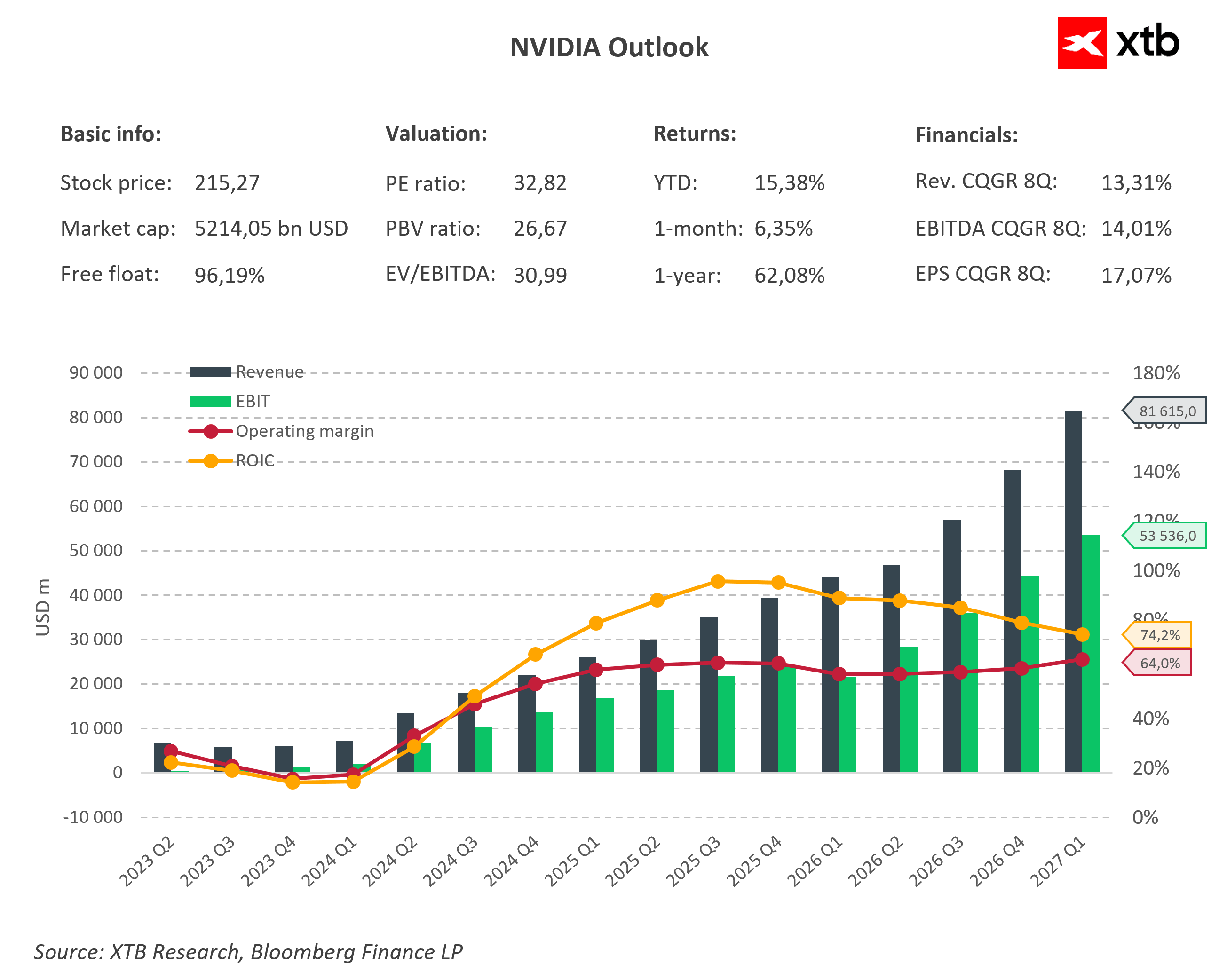
A key pillar of this strategy remains the development of in-house chips based on ARM architecture, including the Grace series. Nvidia is increasingly building a vision of a full-stack AI ecosystem, spanning GPUs, CPUs, and a complete server architecture for hyperscalers and data centers running artificial intelligence models.
The biggest surprise for the market, however, is the fact that Nvidia has explicitly included China in its $200 billion CPU market forecast. This is a highly significant signal for investors, as it shows that the company is not planning to abandon one of the world’s largest technology markets despite ongoing export restrictions between the United States and China.
From a market perspective, this creates a classic “China paradox.” On one hand, investors receive a signal that Nvidia believes it can continue monetizing demand from China. ARM-based architecture and the development of CPU platforms may offer more regulatory flexibility than the most advanced GPU chips subject to US export controls. This strengthens the narrative that the global AI boom is still in its early stages and that Nvidia continues to face a vast addressable market.
On the other hand, including China in long-term forecasts remains highly exposed to geopolitical risk. Any escalation in US–China policy tensions could restrict Nvidia’s access to the Chinese market and force a revision of revenue expectations. As a result, investors are simultaneously buying into a strong AI growth story while having to account for elevated valuation volatility driven by geopolitical uncertainty.
Strategically, this represents a major shift for the entire semiconductor sector. Nvidia is no longer viewed solely as a GPU manufacturer and is increasingly positioning itself as a dominant provider of full AI infrastructure for modern data centers. This is a direct challenge to Intel and AMD.
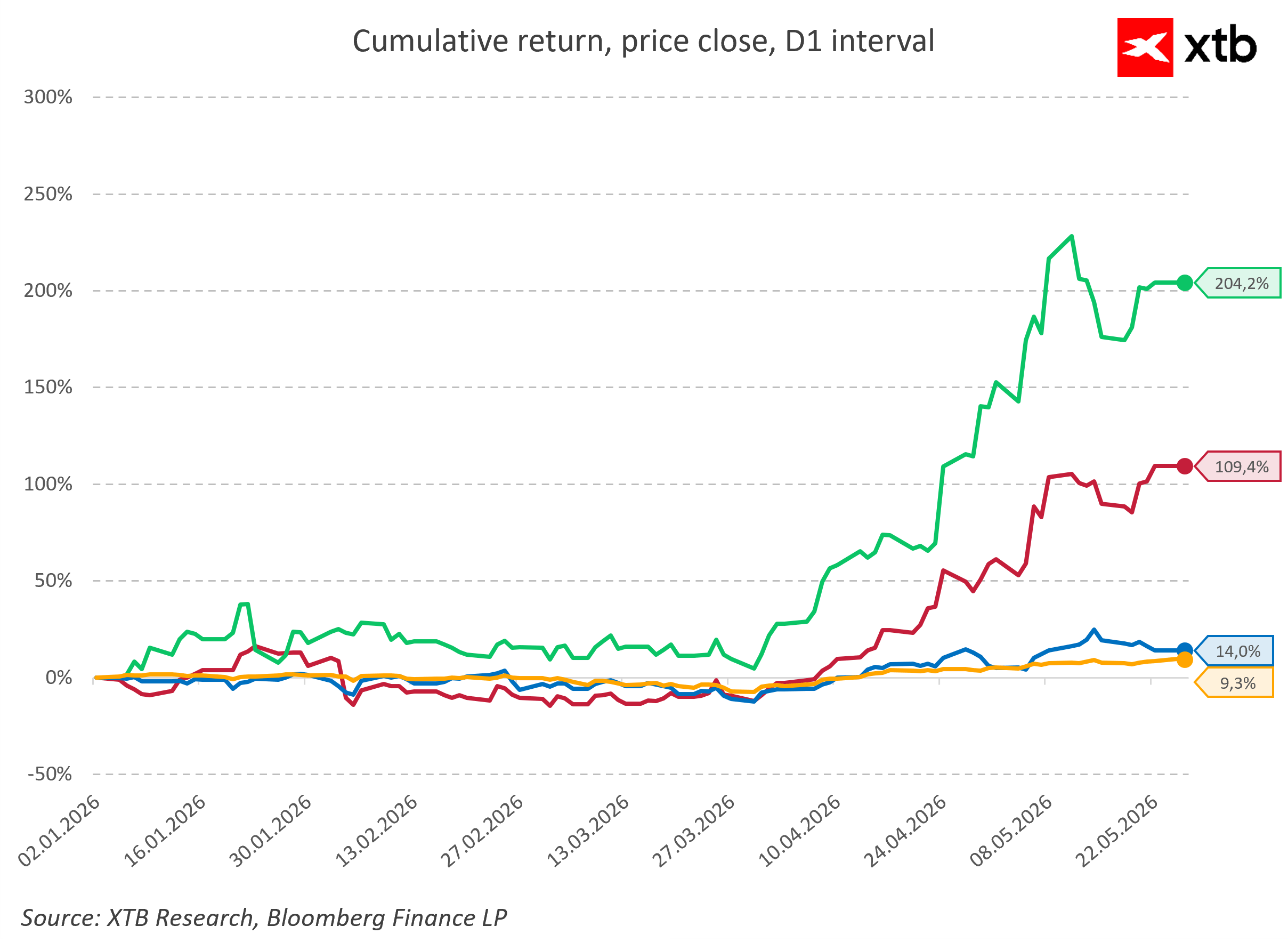
If major cloud providers such as Amazon, Microsoft, and Google begin to more broadly adopt Nvidia’s CPU solutions, it could lead to a structural shift in industry dynamics. The market would then start pricing not only Nvidia’s dominance in AI accelerators but also its potential to capture a meaningful share of the multi-billion-dollar CPU market.
For NVDA shareholders, the message remains clearly bullish. Nvidia is expanding its total addressable market, opening up new long-term revenue streams. Even limited success in the CPU segment could translate into tens of billions of dollars in additional annual revenue.



Daily Summary: Valuations Under Pressure, Capital Moves Away From Technology


US OPEN: Earnings misses and rising oil push indexes lower

Market Wrap: "Decent" results are not enough – tech stocks fall further; oil highest since May (22.10.2026)


Lam Research: Strong Numbers, Limited Upside Surprise
The content of this report has been created by XTB S.A., with its registered office in Warsaw, at Prosta 67, 00-838 Warsaw, Poland, (KRS number 0000217580) and supervised by Polish Supervision Authority ( No. DDM-M-4021-57-1/2005). This material is a marketing communication within the meaning of Art. 24 (3) of Directive 2014/65/EU of the European Parliament and of the Council of 15 May 2014 on markets in financial instruments and amending Directive 2002/92/EC and Directive 2011/61/EU (MiFID II). Marketing communication is not an investment recommendation or information recommending or suggesting an investment strategy within the meaning of Regulation (EU) No 596/2014 of the European Parliament and of the Council of 16 April 2014 on market abuse (market abuse regulation) and repealing Directive 2003/6/EC of the European Parliament and of the Council and Commission Directives 2003/124/EC, 2003/125/EC and 2004/72/EC and Commission Delegated Regulation (EU) 2016/958 of 9 March 2016 supplementing Regulation (EU) No 596/2014 of the European Parliament and of the Council with regard to regulatory technical standards for the technical arrangements for objective presentation of investment recommendations or other information recommending or suggesting an investment strategy and for disclosure of particular interests or indications of conflicts of interest or any other advice, including in the area of investment advisory, within the meaning of the Trading in Financial Instruments Act of 29 July 2005 (i.e. Journal of Laws 2019, item 875, as amended). The marketing communication is prepared with the highest diligence, objectivity, presents the facts known to the author on the date of preparation and is devoid of any evaluation elements. The marketing communication is prepared without considering the client’s needs, his individual financial situation and does not present any investment strategy in any way. The marketing communication does not constitute an offer of sale, offering, subscription, invitation to purchase, advertisement or promotion of any financial instruments. XTB S.A. is not liable for any client’s actions or omissions, in particular for the acquisition or disposal of financial instruments, undertaken on the basis of the information contained in this marketing communication. In the event that the marketing communication contains any information about any results regarding the financial instruments indicated therein, these do not constitute any guarantee or forecast regarding the future results.