


TSMC, the world’s largest contract chipmaker, is exploring opportunities to expand its operations in Texas and has confirmed that it is in talks about Terafab, a semiconductor project spearheaded by Elon Musk. The discussions come at a pivotal time for the chip industry, as demand for AI processors continues to surge. Even companies with deep pockets are increasingly looking for ways to secure reliable supplies of advanced chips.
TSMC has already sent teams to Texas to evaluate potential investment opportunities. However, no agreement has been reached, and the structure of any potential investment remains undecided. The company’s chairman stressed that any facility manufacturing TSMC chips would have to be operated by TSMC itself, a Taiwanese company. That condition is significant because Musk has previously said that Tesla and SpaceX would build and run Terafab on their own. As a result, the talks are likely to focus not only on funding and production capacity, but also on who would ultimately control the manufacturing process.
For Musk, the main goal is to reduce reliance on outside suppliers. Tesla needs increasingly sophisticated chips for its self-driving technology and robots, SpaceX is expanding its own infrastructure, and xAI requires vast amounts of computing power. Building dedicated manufacturing capacity could help Musk’s companies secure chip supplies and develop processors tailored to their specific needs. Still, Terafab is unlikely to replace existing suppliers anytime soon. Building a semiconductor fab is one challenge; achieving high yields, consistent quality, and large-scale production is another.
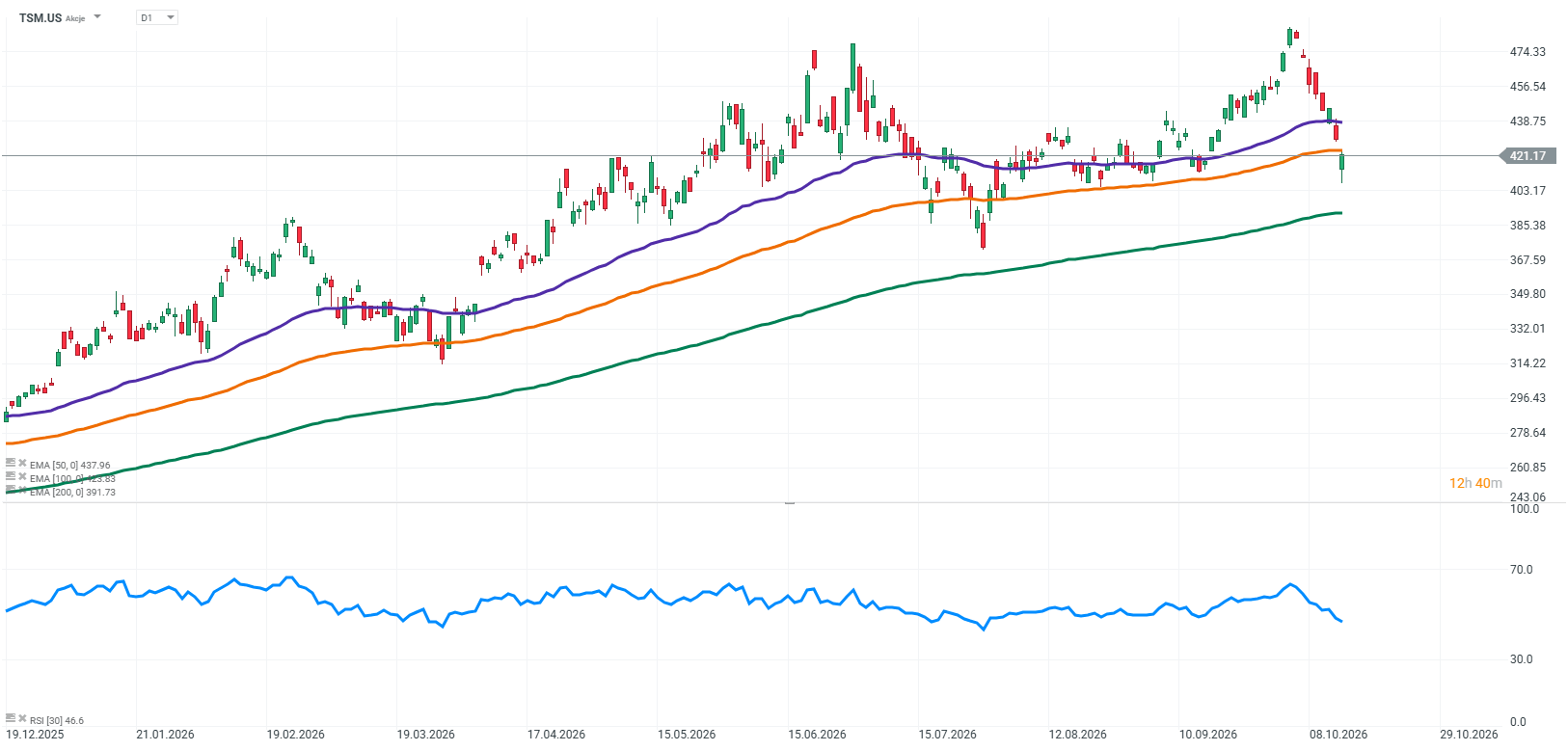
For TSMC, a potential partnership would open the door to another major project at a time when the company is already racing to expand its manufacturing capacity. In the third quarter of 2026, revenue rose 51% year over year to $46.7 billion, while net profit climbed 69% to $23.6 billion. TSMC expects to spend between $60 billion and $64 billion on capital investments in 2026 and has raised its forecast for full-year revenue growth to around 44%.
The talks also reflect a broader shift across the semiconductor industry. TSMC’s biggest customers are looking to secure access to chips, and some are developing their own processors at the same time. This could reshape the relationship between chipmakers and technology companies. Rather than relying solely on external suppliers, major players are increasingly seeking greater control over their entire supply chains. For TSMC, that creates opportunities to win new business, but it also makes capacity planning more complicated as customers pursue increasingly different strategic goals.
For now, Terafab remains a proposal under discussion, not an operational factory that could materially affect either company’s financial performance. If TSMC does join the project, it would suggest that even Musk, who is known for his drive to build things in-house, recognizes how difficult it would be to replicate the Taiwanese chipmaker’s expertise quickly. For investors, the key question is whether Terafab will eventually deliver meaningful additional production capacity or remain an expensive attempt to reduce dependence on existing chip suppliers.
Source: XTB Research


Daily summary 📈 Precious metals and stock indices rebound as Treasury yields fall

US Open: Nasdaq 100 extends losses 🚩 AI stocks under pressure, CoreWeave falls 8%



Market Wrap: Tech Sell-Off Hits Europe, Gold Shines Again


TSMC breaks records once again driven by the AI boom
The content of this report has been created by XTB S.A., with its registered office in Warsaw, at Prosta 67, 00-838 Warsaw, Poland, (KRS number 0000217580) and supervised by Polish Supervision Authority ( No. DDM-M-4021-57-1/2005). This material is a marketing communication within the meaning of Art. 24 (3) of Directive 2014/65/EU of the European Parliament and of the Council of 15 May 2014 on markets in financial instruments and amending Directive 2002/92/EC and Directive 2011/61/EU (MiFID II). Marketing communication is not an investment recommendation or information recommending or suggesting an investment strategy within the meaning of Regulation (EU) No 596/2014 of the European Parliament and of the Council of 16 April 2014 on market abuse (market abuse regulation) and repealing Directive 2003/6/EC of the European Parliament and of the Council and Commission Directives 2003/124/EC, 2003/125/EC and 2004/72/EC and Commission Delegated Regulation (EU) 2016/958 of 9 March 2016 supplementing Regulation (EU) No 596/2014 of the European Parliament and of the Council with regard to regulatory technical standards for the technical arrangements for objective presentation of investment recommendations or other information recommending or suggesting an investment strategy and for disclosure of particular interests or indications of conflicts of interest or any other advice, including in the area of investment advisory, within the meaning of the Trading in Financial Instruments Act of 29 July 2005 (i.e. Journal of Laws 2019, item 875, as amended). The marketing communication is prepared with the highest diligence, objectivity, presents the facts known to the author on the date of preparation and is devoid of any evaluation elements. The marketing communication is prepared without considering the client’s needs, his individual financial situation and does not present any investment strategy in any way. The marketing communication does not constitute an offer of sale, offering, subscription, invitation to purchase, advertisement or promotion of any financial instruments. XTB S.A. is not liable for any client’s actions or omissions, in particular for the acquisition or disposal of financial instruments, undertaken on the basis of the information contained in this marketing communication. In the event that the marketing communication contains any information about any results regarding the financial instruments indicated therein, these do not constitute any guarantee or forecast regarding the future results.