



The publication of this week's most critical macroeconomic data is scheduled for 1:30 PM – July CPI inflation in the United States. The latest labour market reading (NFP) missed expectations significantly, calling further monetary policy tightening by the Fed into question.
The market has recently revised its expectations regarding the next moves from the FOMC. Until recently, investors had fully priced in an interest rate hike for September. Currently, the market-implied probability of such a move is akin to a coin toss.
What stands behind the dovish repricing?
-
The unreliable rhetoric of Kevin Warsh
During the last conference concluding the FOMC meeting, the Fed Chair again emphasised an uncompromising approach to inflation, attempting to convince markets of his purported hawkishness. While this was sufficient in June, investors expected much more in July.
Investors are beginning to doubt whether bold announcements will be followed by action, recalling Warsh’s statements from a year ago. At that time, he frequently signalled support for cuts in interviews – on FOX News, he openly sided with the President, stating that Donald Trump’s frustration with Powell’s monetary policy was fully justified, while criticising the institution for lowering interest rates too slowly and for an excessive attachment to backward-looking economic data.
-
Weak NFP data
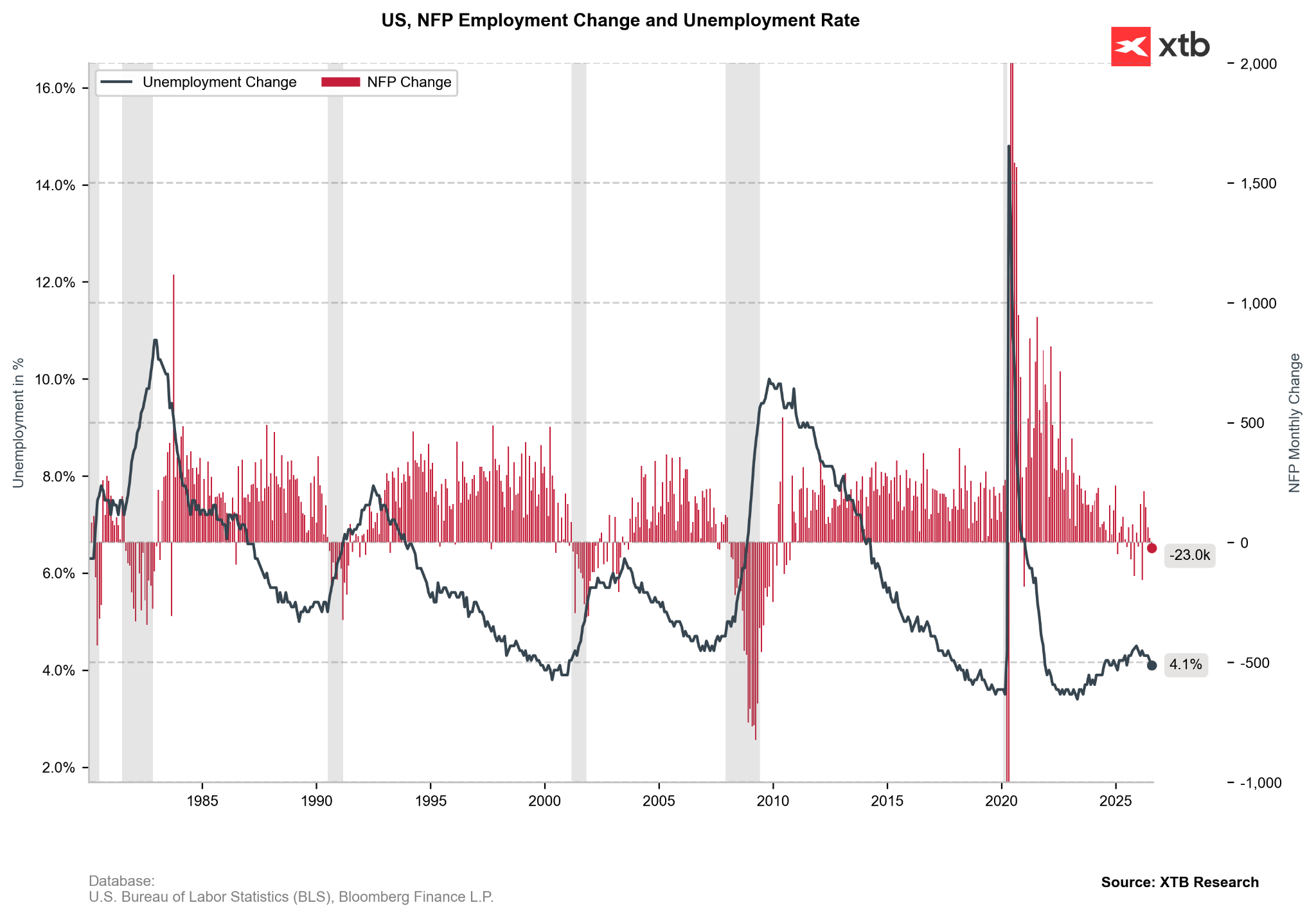
The number of new jobs in the US economy (non-farm sectors) fell by 23,000 in July, missing expectations by 5 standard deviations. Assuming the data follows a standard distribution, we would have to wait 290,000 years for another such reading.
It is hard to deny that the data was simply poor – to the drop of 23,000, one must add the downward revisions of the data for the last two months (by 103,000). However, it is worth noting that the decline was largely conditioned by a lower number of jobs in the public education sector, which can be seen as a seasonal factor. Furthermore, the unemployment rate (4.1%) surprised to the downside; this is said to be the preferred indicator for many FOMC policymakers in current conditions.
The labour market remains, it seems, in a 'low fire-low hire' state – until committee members receive convincing evidence that layoffs are rising, the absolute priority should be stabilising inflation at the desired level.
Figure 1: NFP and Unemployment Rate (1980 - 2026)
 Source: XTB Research, 12.08.2026
What did the last CPI reading show?
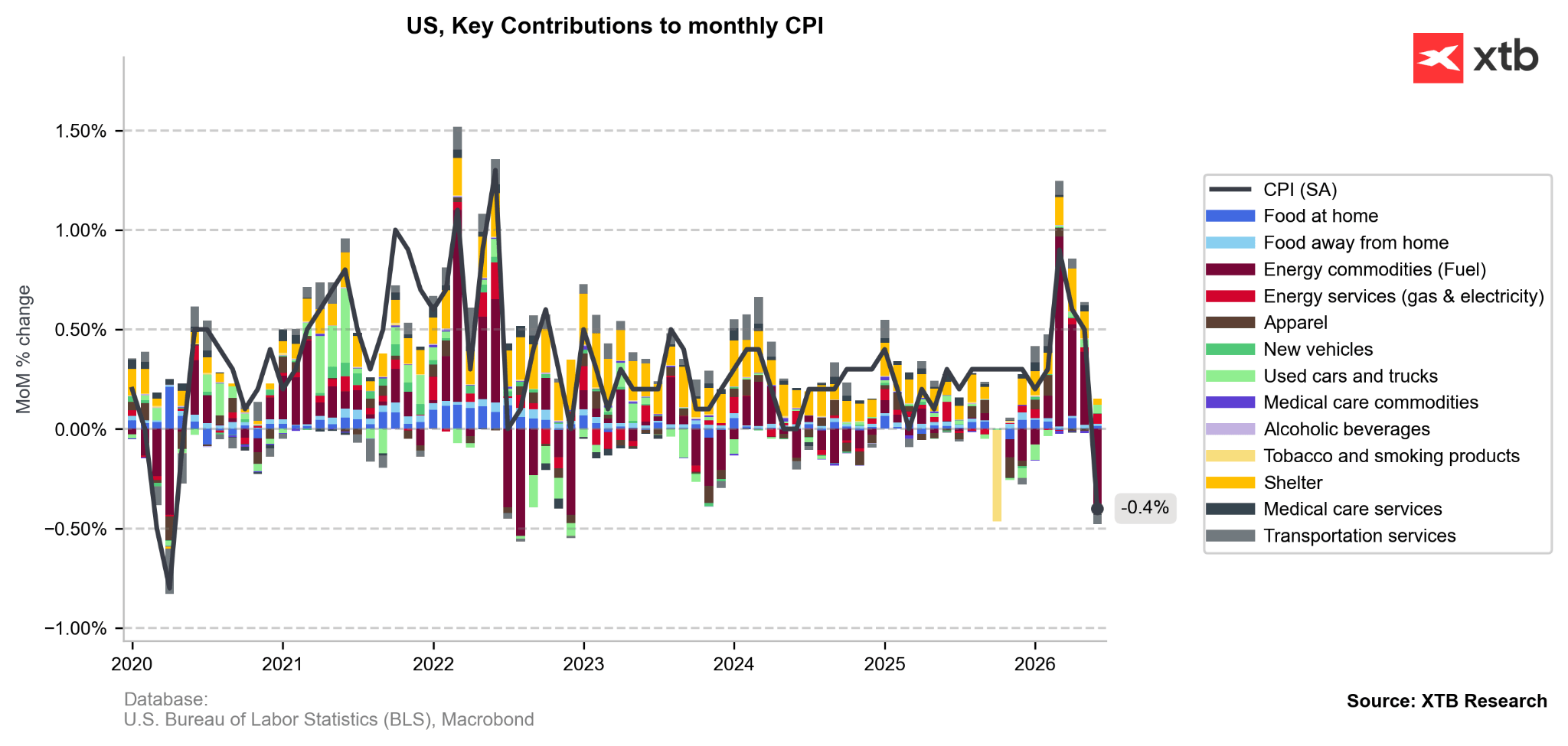
In June, data came in well below expectations. Particularly encouraging was the lack of price growth in core terms, i.e., excluding the most volatile energy and food prices. Shelter cost growth slowed, which may be particularly good news for the FOMC.
Figure 2: US CPI Inflation + Key Contributions [m/m] (2019 - 2026)
 Source: XTB Research, 12.08.2026
What can we expect today?
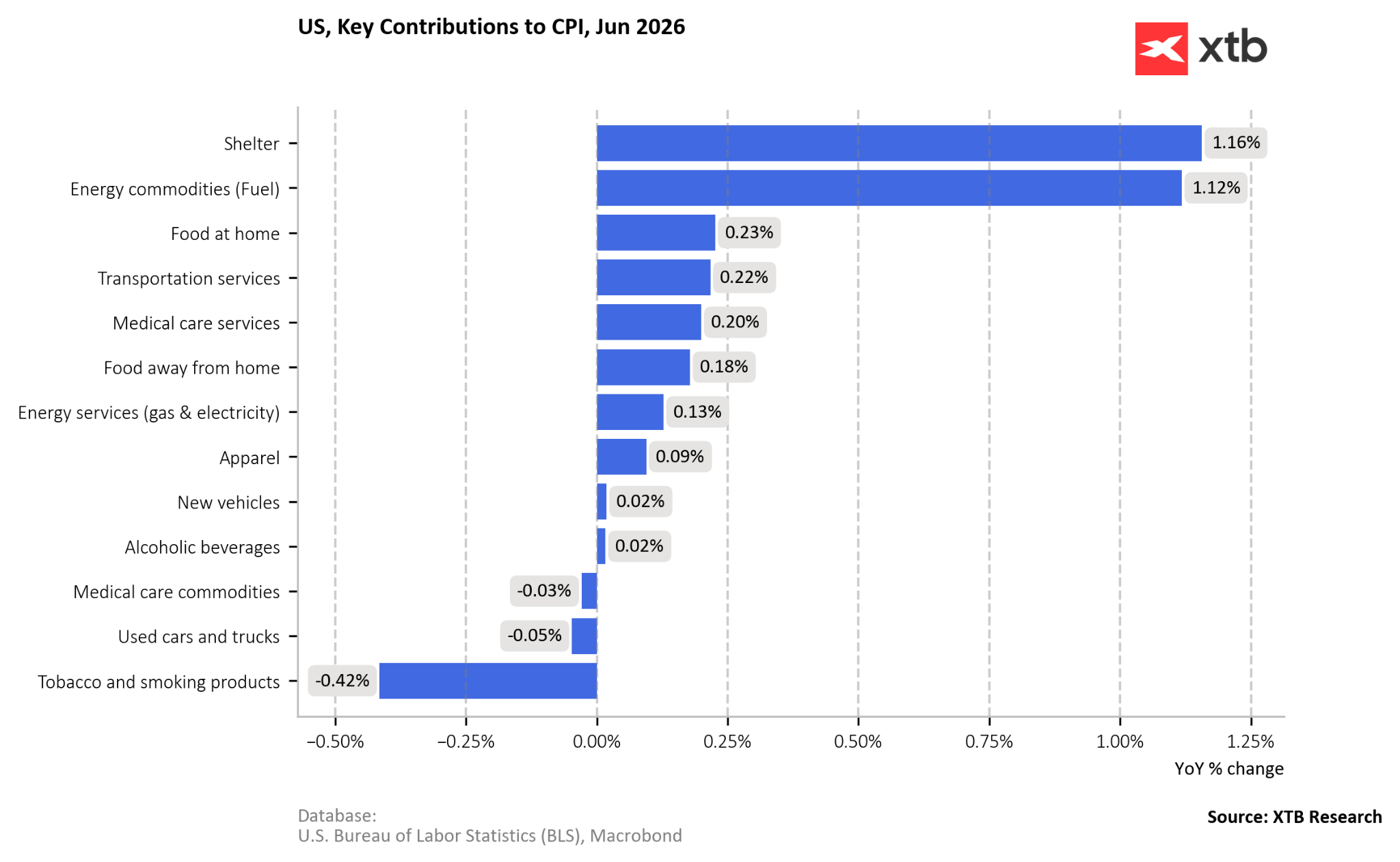
Attention will focus on the core measure, which is expected to fall to its lowest level since March 2021 (the consensus is 2.5%). Its momentum in the services sector will be particularly interesting.
Figure 3: Key Contributions to June CPI Inflation
 Source: XTB Research, 12.08.2026
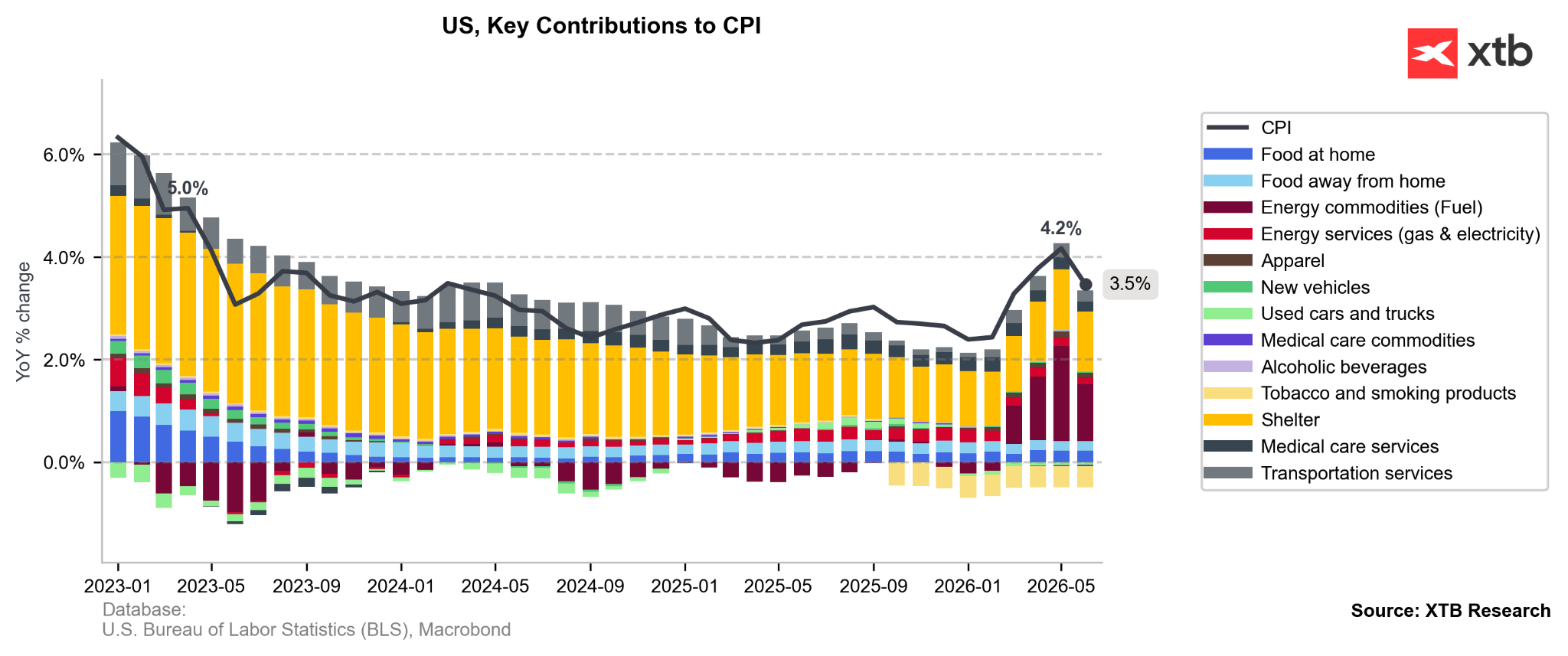
The headline measure is also expected to continue its downward movement (expectations at 3.4%), which should be driven, among other things, by lower fuel prices. These should also influence lower airfare and hotel prices. However, an increase in food prices is expected.
What else is worth knowing?
- The effect of tariffs seems already fully priced in by the market – this is visible in categories such as audio equipment, tools, or sports equipment.
- The severe memory chip shortage should continue to drive up computer and software prices.
Figure 4: Impact of Sectors on Change in US Annual Inflation Dynamics (2023 - 2026)
 Source: XTB Research, 12.08.2026
Markets before the print
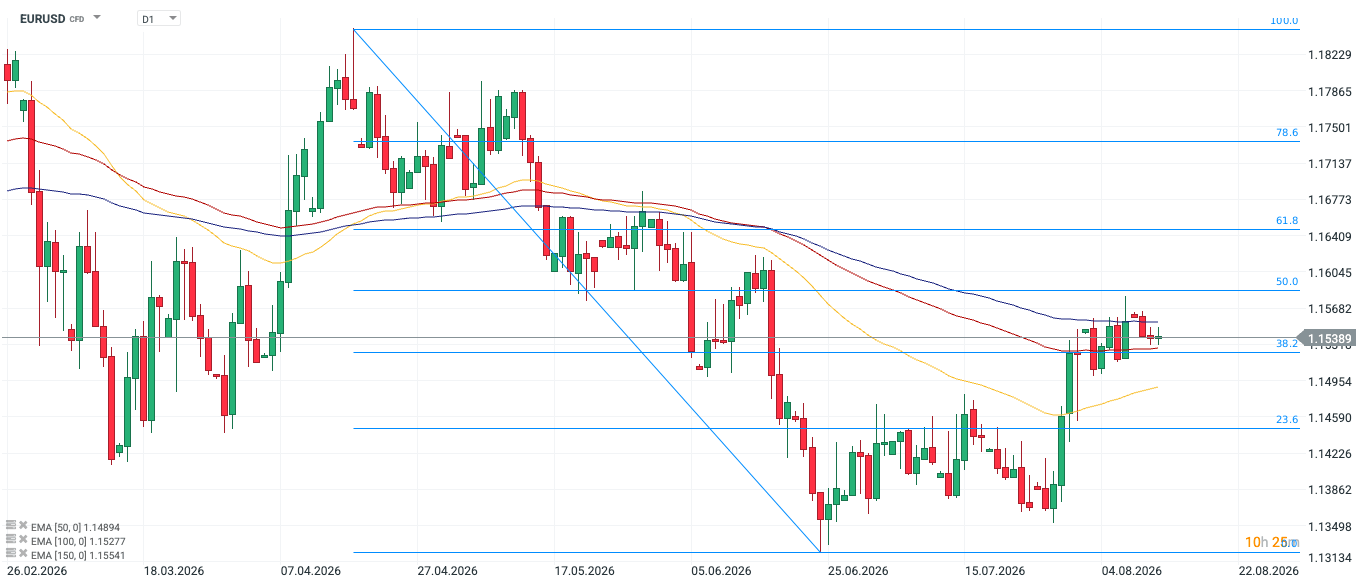
The EURUSD pair remains extremely calm. Since the beginning of the week, its decline has reached 0.2%, driven primarily by headlines from the Middle East. Ship traffic in the Strait of Hormuz has fallen to its lowest level in a week (approx. 10 ships per day).
We must pay over $89 for a barrel of Brent. It continued to rise yesterday, despite optimistic declarations from the Pakistani Ministry of Foreign Affairs.
Overnight, Donald Trump stated in media interviews that the US has "total control" (100%) over the Strait of Hormuz. The Iranian side has, in turn, set tough conditions for reopening the route, demanding the lifting of US sanctions, an end to the naval blockade, and the payment of war reparations by the US.
Figure 5: EUR/USD Exchange Rate (26.02.2026 - 12.08.2026)
 Source: xStation, 12.08.2026
-
Michał Jóźwiak, XTB Financial Markets Analyst



Morning Wrap: Tech Crash in Asia and Hawkish Central Banks in the Shadow of an Oil Shock (13.10.2026)



Daily Summary: Investors Concerns Rise Ahead of Earnings Season


European gas at its highest level in 3 years🚨


US OPEN: Wall Street under pressure from oil and semiconductors
The content of this report has been created by XTB S.A., with its registered office in Warsaw, at Prosta 67, 00-838 Warsaw, Poland, (KRS number 0000217580) and supervised by Polish Supervision Authority ( No. DDM-M-4021-57-1/2005). This material is a marketing communication within the meaning of Art. 24 (3) of Directive 2014/65/EU of the European Parliament and of the Council of 15 May 2014 on markets in financial instruments and amending Directive 2002/92/EC and Directive 2011/61/EU (MiFID II). Marketing communication is not an investment recommendation or information recommending or suggesting an investment strategy within the meaning of Regulation (EU) No 596/2014 of the European Parliament and of the Council of 16 April 2014 on market abuse (market abuse regulation) and repealing Directive 2003/6/EC of the European Parliament and of the Council and Commission Directives 2003/124/EC, 2003/125/EC and 2004/72/EC and Commission Delegated Regulation (EU) 2016/958 of 9 March 2016 supplementing Regulation (EU) No 596/2014 of the European Parliament and of the Council with regard to regulatory technical standards for the technical arrangements for objective presentation of investment recommendations or other information recommending or suggesting an investment strategy and for disclosure of particular interests or indications of conflicts of interest or any other advice, including in the area of investment advisory, within the meaning of the Trading in Financial Instruments Act of 29 July 2005 (i.e. Journal of Laws 2019, item 875, as amended). The marketing communication is prepared with the highest diligence, objectivity, presents the facts known to the author on the date of preparation and is devoid of any evaluation elements. The marketing communication is prepared without considering the client’s needs, his individual financial situation and does not present any investment strategy in any way. The marketing communication does not constitute an offer of sale, offering, subscription, invitation to purchase, advertisement or promotion of any financial instruments. XTB S.A. is not liable for any client’s actions or omissions, in particular for the acquisition or disposal of financial instruments, undertaken on the basis of the information contained in this marketing communication. In the event that the marketing communication contains any information about any results regarding the financial instruments indicated therein, these do not constitute any guarantee or forecast regarding the future results.