



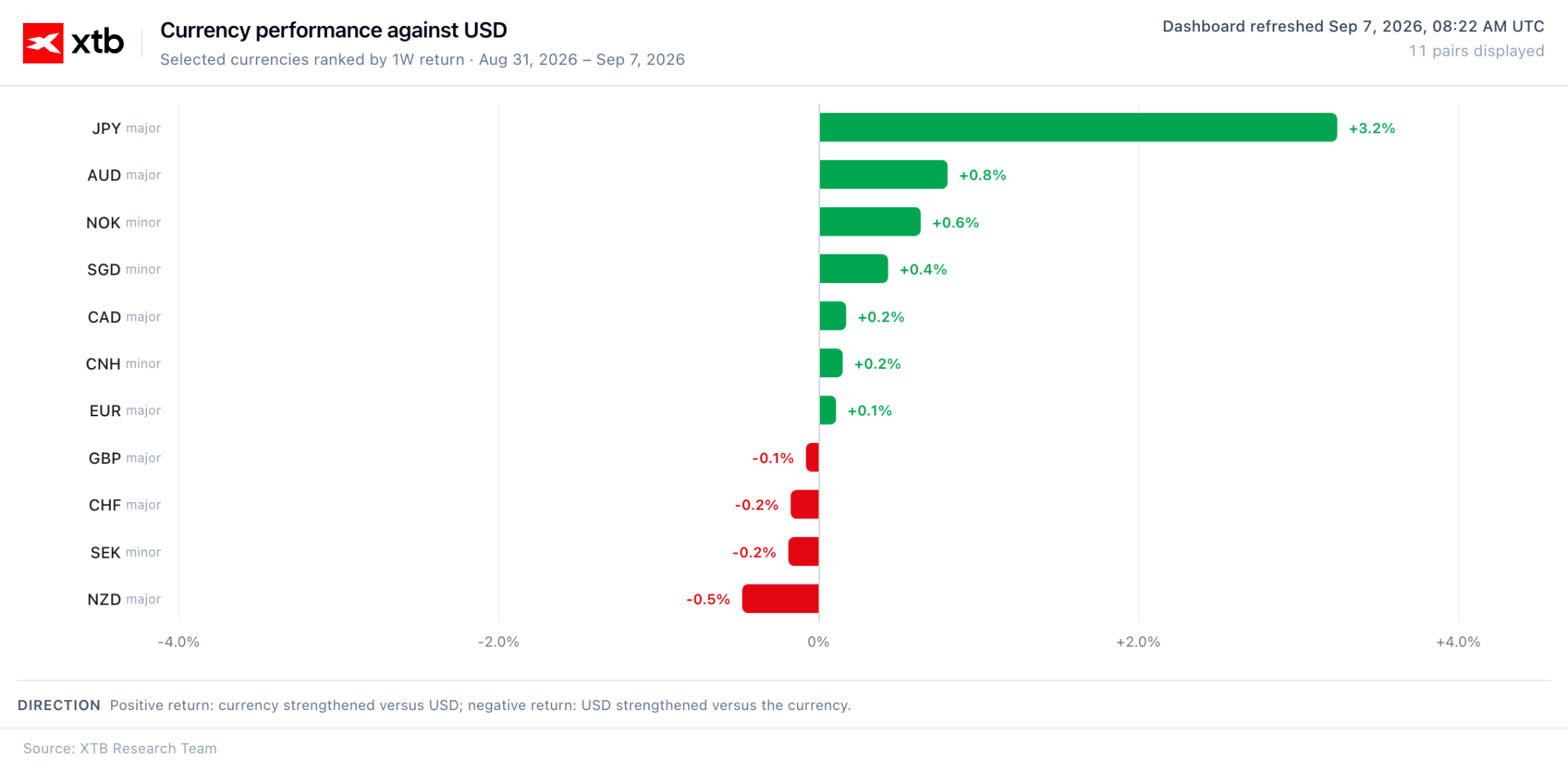
The yen continues its appreciation, which began on September 2. On a weekly basis, the Japanese currency has strengthened against the US dollar by over 3%.
Figure 1: G10 Currency Performance (31.08.2026 - 07.09.2026)
 Source: XTB Research, 07.09.2026
Shift in Fundamentals?
There are many indications that the move was not the result of direct market intervention, but was supported by hawkish repricing following a change in rhetoric from Bank of Japan officials.
On September 2, during a speech to business leaders in Sapporo, Hajime Takata, one of the BoJ policymakers, described the current year as a "regime change year," implying greater flexibility in responding to incoming data. He stated at the time that the bank should be more aggressive than the market expects, pointing to the need for dynamic interest rate hikes to quell gathering inflation pressure.
Rate hike expectations were further fueled on the same day by Bank Governor Kazuo Ueda himself. As he highlighted: "we have concluded that within our monetary policy, we must pay greater attention than before to the risk of further inflation increases."
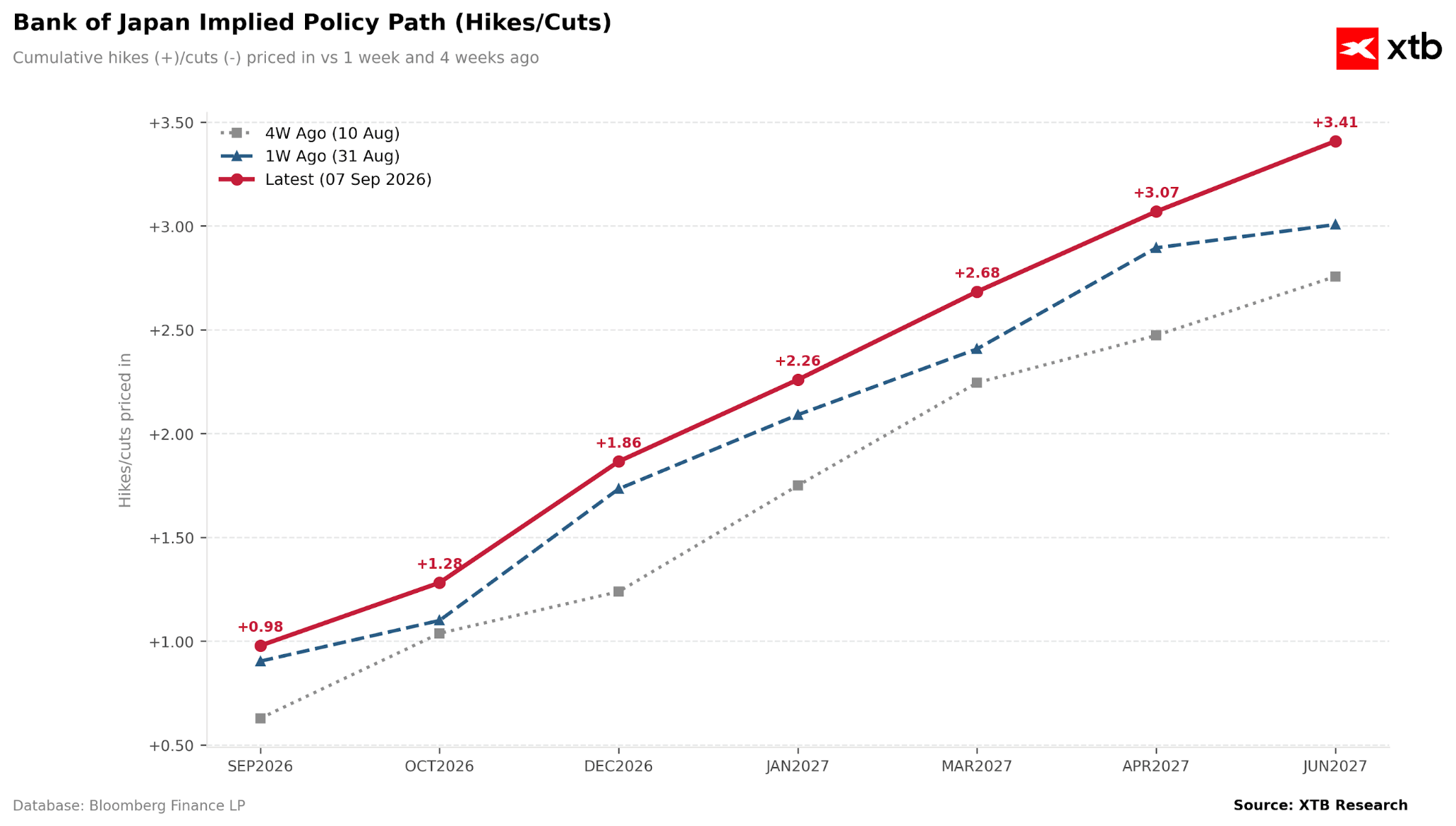
The next meeting is as soon as September 18 (next Friday). Investors have little doubt that it will bring an interest rate hike. What will be more important is whether another hike will follow before the end of the year (and whether there is a chance for another upward move as early as October).
Figure 2: Market-Implied BoJ Interest Rate Path (2026 - 2027)
 Source: XTB Research, 07.09.2026
Reserves Are Shrinking
A significant shift in the BoJ's monetary policy is exactly what the markets have been waiting for. In previous months, we saw regular interventions from the Ministry of Finance and the Bank of Japan - however, they did not lead to a lasting stabilization of the exchange rate.
This does not mean, of course, that they are not still a valuable tool in the arsenal of the MoF and BoJ. Foreign exchange reserves, although shrinking by a record $80 billion in August, remain at a very high level ($1.21 trillion), corresponding to nearly 20 months of imports. This is several times more than in most other developed economies.
Moment of Truth?
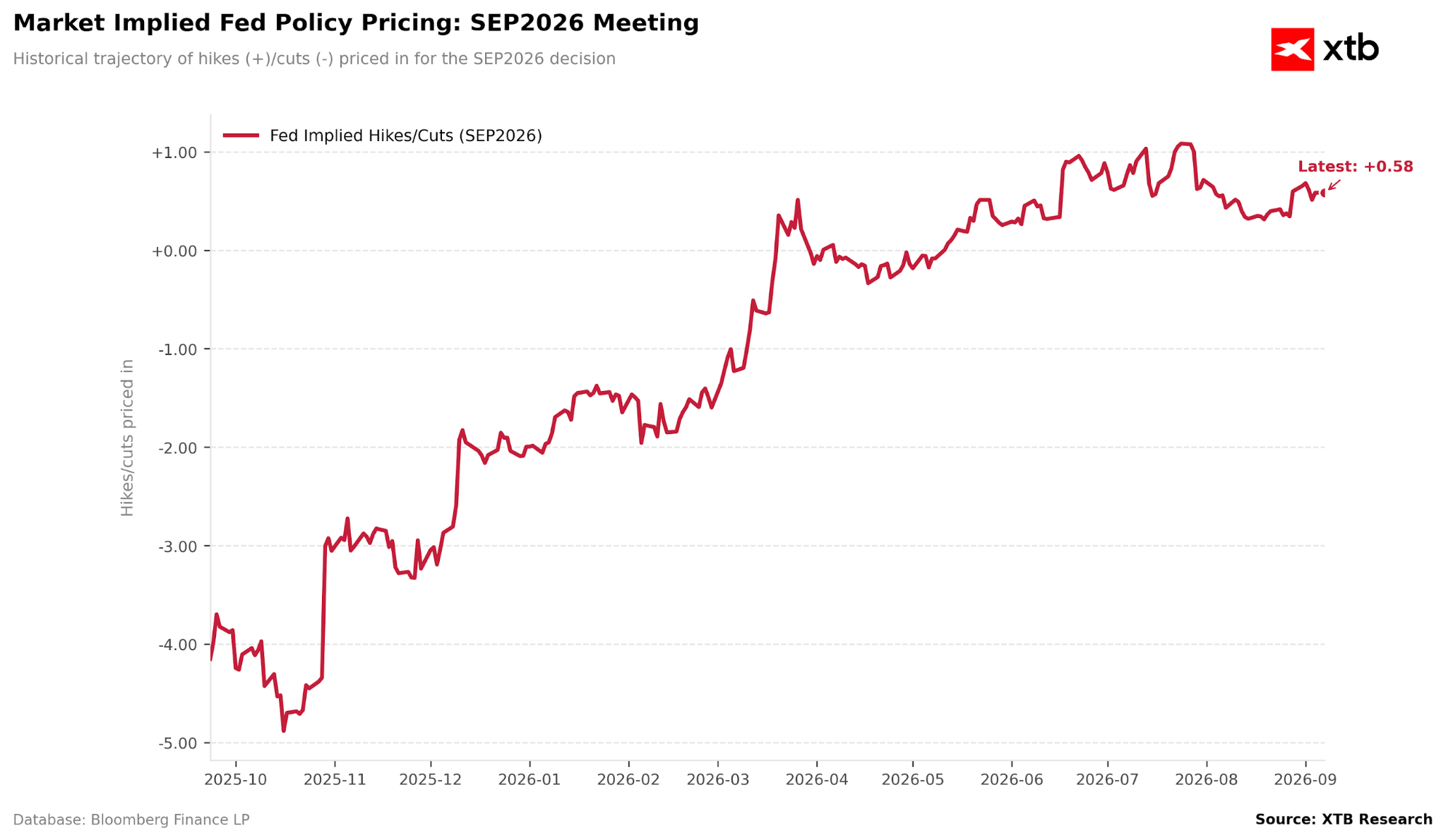
USDJPY pair will, of course, depend not only on developments in the Land of the Rising Sun. Market attention this Friday will turn to the August US CPI inflation reading, which could ultimately decide the FOMC's decision at next week's meeting.
In this context, it is worth recalling the words of Christopher Waller, who stated last Thursday that the disinflation process is progressing, and core inflation looks even better than the main indicators suggest. He noted at the time that unless the upcoming CPI inflation reading presents a negative surprise, he will likely support keeping interest rates unchanged at the upcoming meeting.
Figure 3: Change in Market-Implied Probability of a September Rate Hike in the US (2025 - 2026)
 Source: XTB Research, 07.09.2026
Technical Analysis
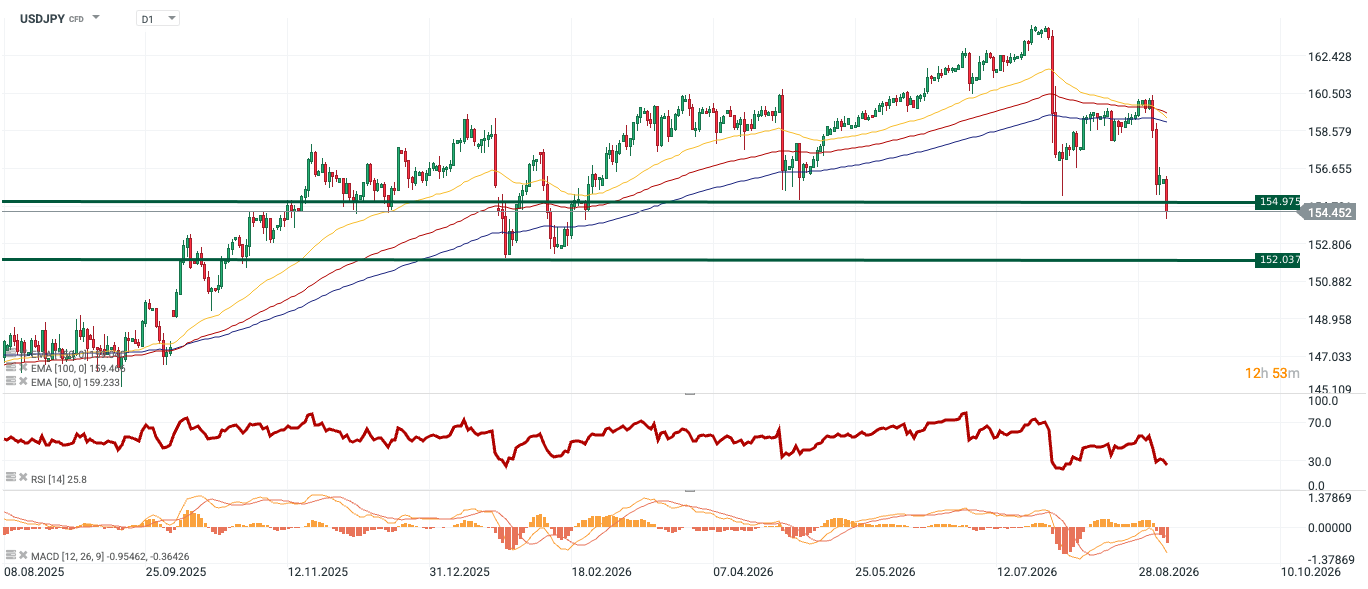
Figure 4: USDJPY [D1] (08.08.2025 - 07.09.2026)
 Source: xStation, 07.09.2026
As a result of the recent combined intervention and hawkish statements from BoJ officials, the rate fell significantly below all established moving averages (EMA 50, 100, 150). The pair broke below the previous low from the second half of April (around 155).
The RSI indicator entered a deep oversold zone (25.8), which may suggest a slowdown in aggressive declines, increasing the probability of an upward correction in the coming days. However, MACD does not signal a trend reversal at this point.
---
Michał Jóźwiak, Financial Markets Analyst at XTB



Daily Summary: Buyers Refuse to Give In



📈Morning Brefieng: AI sector rebound collides with still-expensive oil (20.10.2026)


Chart of the Day: What’s next for tech stocks after the deepest sell-off since April 2025? (19.10.2026)

Morning Wrap: Nasdaq rebounds ahead of Mag7 earnings, bonds regain favour, oil falls from peak (19.10.2026)
The content of this report has been created by XTB S.A., with its registered office in Warsaw, at Prosta 67, 00-838 Warsaw, Poland, (KRS number 0000217580) and supervised by Polish Supervision Authority ( No. DDM-M-4021-57-1/2005). This material is a marketing communication within the meaning of Art. 24 (3) of Directive 2014/65/EU of the European Parliament and of the Council of 15 May 2014 on markets in financial instruments and amending Directive 2002/92/EC and Directive 2011/61/EU (MiFID II). Marketing communication is not an investment recommendation or information recommending or suggesting an investment strategy within the meaning of Regulation (EU) No 596/2014 of the European Parliament and of the Council of 16 April 2014 on market abuse (market abuse regulation) and repealing Directive 2003/6/EC of the European Parliament and of the Council and Commission Directives 2003/124/EC, 2003/125/EC and 2004/72/EC and Commission Delegated Regulation (EU) 2016/958 of 9 March 2016 supplementing Regulation (EU) No 596/2014 of the European Parliament and of the Council with regard to regulatory technical standards for the technical arrangements for objective presentation of investment recommendations or other information recommending or suggesting an investment strategy and for disclosure of particular interests or indications of conflicts of interest or any other advice, including in the area of investment advisory, within the meaning of the Trading in Financial Instruments Act of 29 July 2005 (i.e. Journal of Laws 2019, item 875, as amended). The marketing communication is prepared with the highest diligence, objectivity, presents the facts known to the author on the date of preparation and is devoid of any evaluation elements. The marketing communication is prepared without considering the client’s needs, his individual financial situation and does not present any investment strategy in any way. The marketing communication does not constitute an offer of sale, offering, subscription, invitation to purchase, advertisement or promotion of any financial instruments. XTB S.A. is not liable for any client’s actions or omissions, in particular for the acquisition or disposal of financial instruments, undertaken on the basis of the information contained in this marketing communication. In the event that the marketing communication contains any information about any results regarding the financial instruments indicated therein, these do not constitute any guarantee or forecast regarding the future results.