



The observed declines in the stock prices of companies involved in quantum computing should not be interpreted as a signal of the sector’s demise. Despite short-term selling pressure, the industry remains in a phase of dynamic technological development, and its fundamentals remain stable. Quantum computers in their current form are largely experimental and are not suited for mass-market consumer applications. Realistic forecasts indicate that broader industrial and corporate deployments may only materialize in the second half of the next decade. In this context, the current price declines should be seen more as a period of risk repricing and market correction following quarters of speculative optimism, rather than a permanent loss of market interest.
The technological foundations and potential of the sector remain significant. Leading quantum computing companies have demonstrated substantial technical progress in recent years. Key developments and achievements include:
-
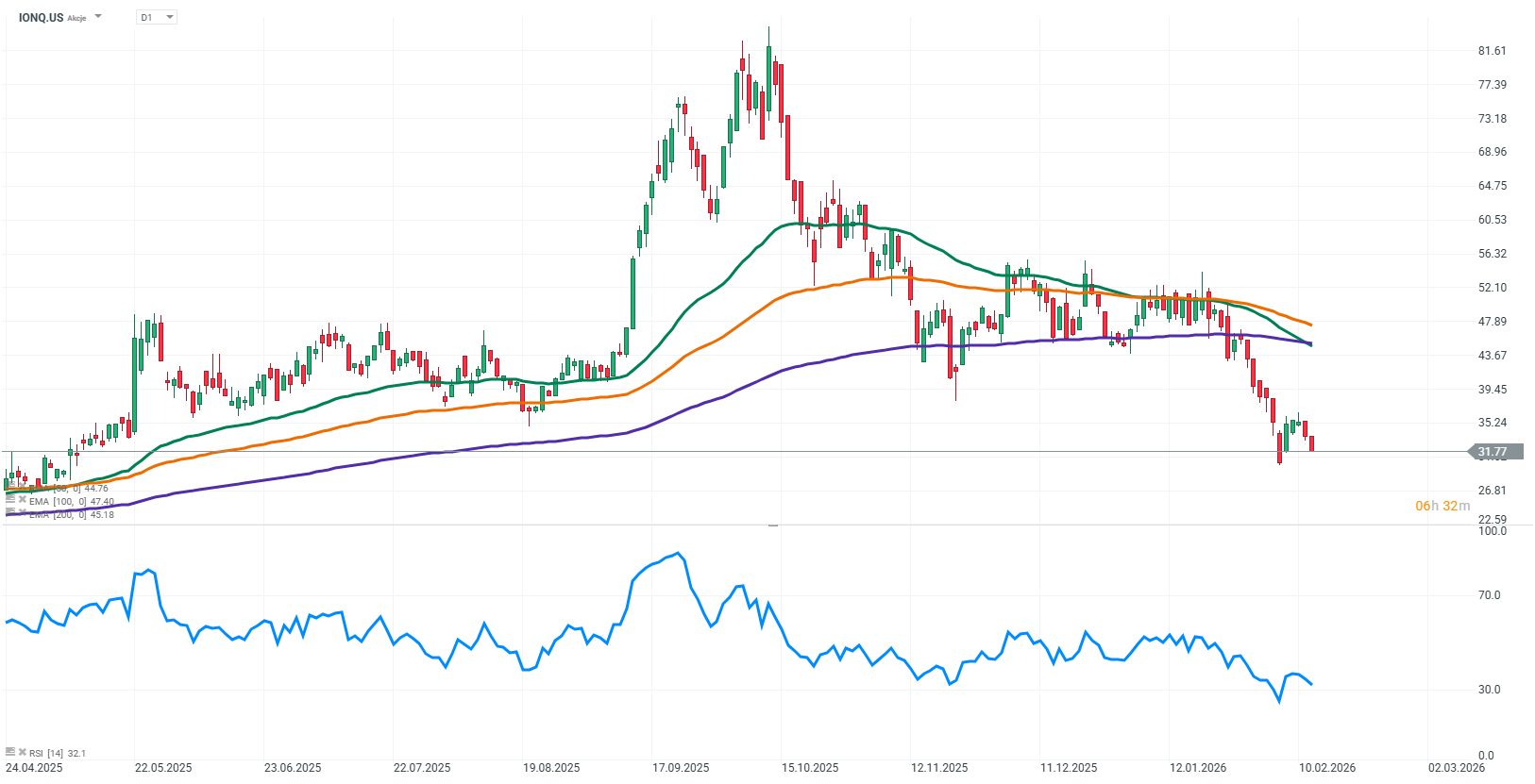
IonQ is conducting intensive research and development, advancing its technology, and pursuing acquisitions and strategic partnerships. These efforts aim to accelerate the development of scalable quantum systems by 2030.
Source: xStation5
-
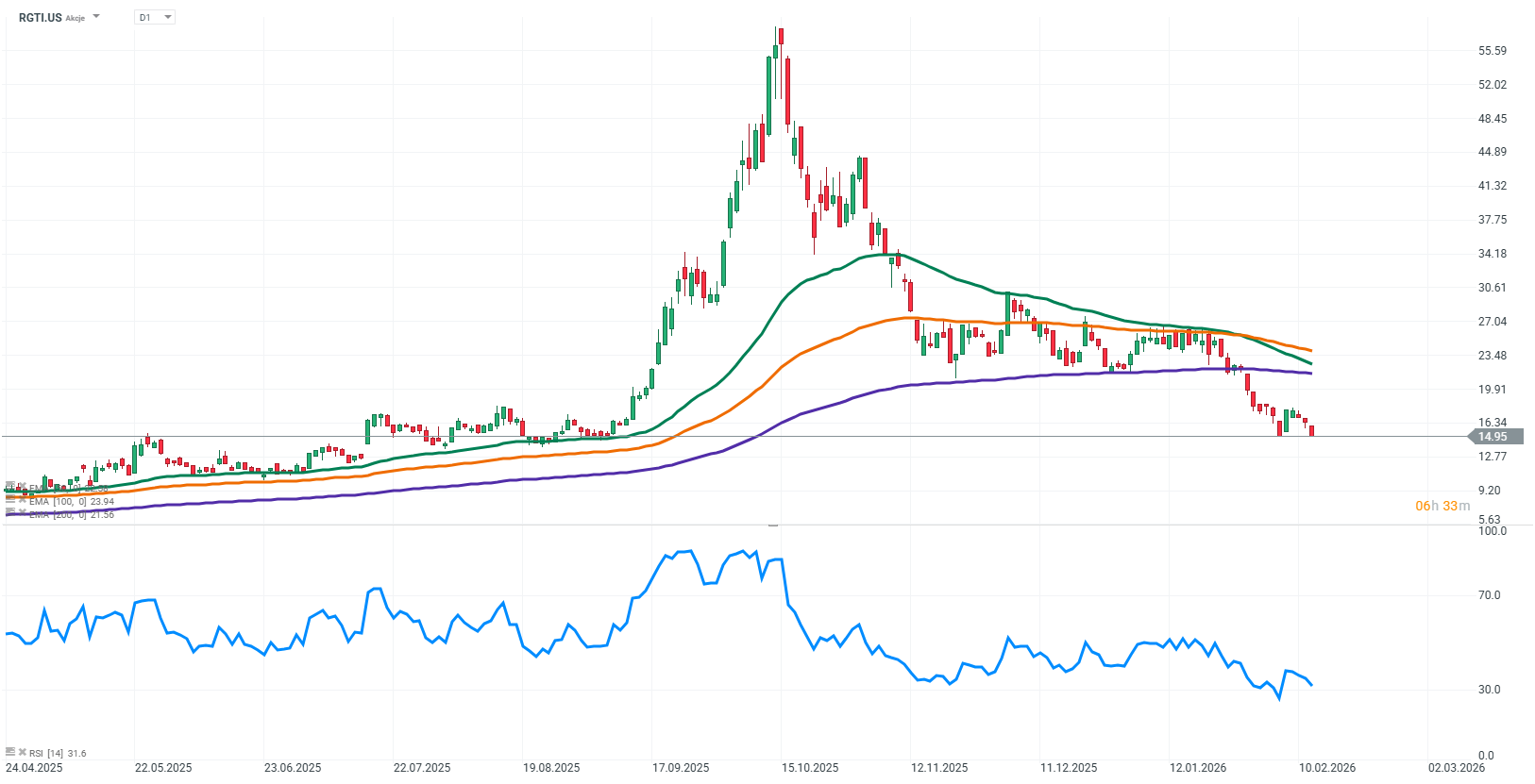
Rigetti Computing continues to increase the number of qubits and the performance of its machines while executing research contracts, including with government institutions. These activities indicate growing institutional interest in quantum technology.
Source: xStation5
-
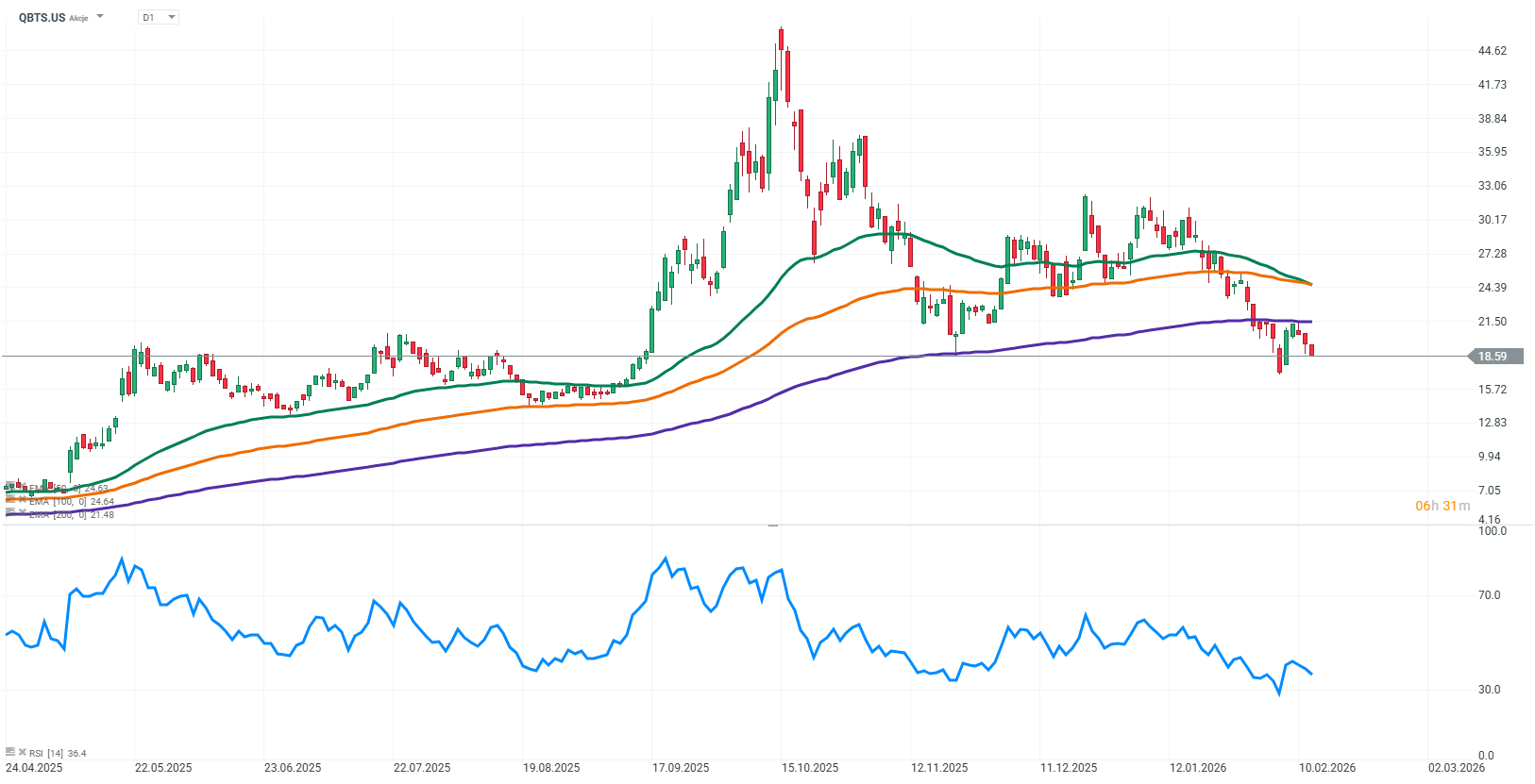
D‑Wave Quantum has achieved commercial applications in quantum systems and is developing them to optimize business processes. These efforts translate into growing revenues and real-world deployments in enterprises.
Source: xStation5
-
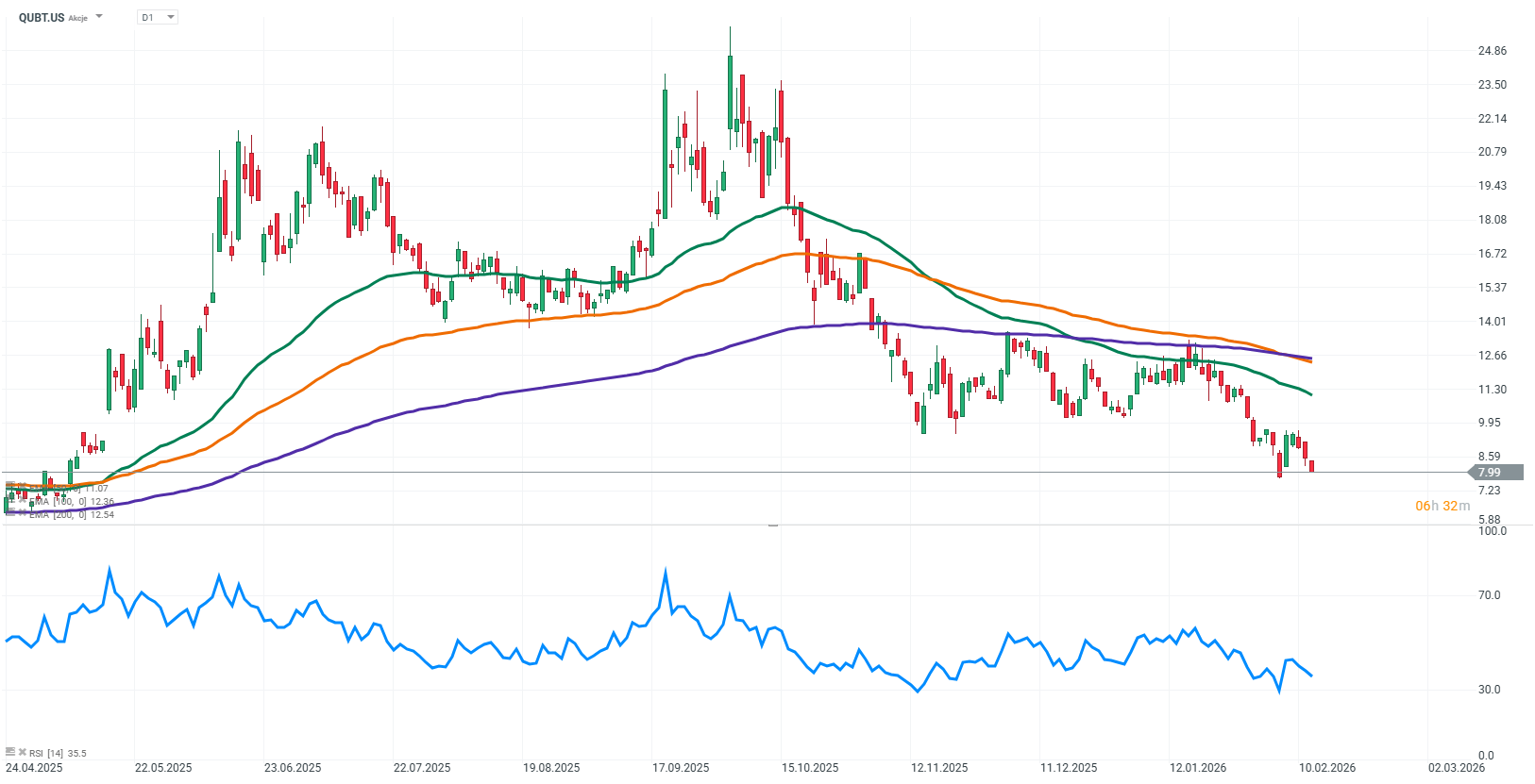
Quantum Computing Inc. despite neutral analyst assessments and market debate over its business model, is gradually improving financial liquidity and reporting profits, which is rare in this sector.
 Source: xStation5
Quantum technology is evolving along multiple paths, from improving qubits and developing quantum algorithms to integrating with classical computing systems. Each subsequent breakthrough in this area has the potential to create new markets or significantly enhance the efficiency of existing processes in sectors such as computational chemistry, pharmaceuticals, finance, and logistics. The growth potential of quantum companies remains significant, even if short-term financial results are limited.
Valuations of quantum companies remain high and volatile, reflecting both market expectations and the nature of a technology in development. Historical stock price increases have been spectacular, but corrections can be equally dramatic. Current price declines should be viewed as a natural market reaction to risk repricing, rather than a permanent loss of sector value. Quantum computing technology remains one of the most innovative areas in technology, and its full commercialization and tangible market benefits are expected to develop gradually over the coming years. The development outlook suggests that quantum companies can continue to represent an attractive area for investors with a longer-term horizon.



US100 drops 1.8% 🚨

Tesla was supposed to burn $5 billion, but posted a positive result. Will Tesla still be a car company in a year?

Record-breaking Meta, though with a cash loss. Investors (for now) are buying Zuckerberg's plan anyway


US OPEN: Preparations for Tesla's mega-merger with SpaceX. Diplomatic stalemate with Iran cools Wall Street's enthusiasm
The content of this report has been created by XTB S.A., with its registered office in Warsaw, at Prosta 67, 00-838 Warsaw, Poland, (KRS number 0000217580) and supervised by Polish Supervision Authority ( No. DDM-M-4021-57-1/2005). This material is a marketing communication within the meaning of Art. 24 (3) of Directive 2014/65/EU of the European Parliament and of the Council of 15 May 2014 on markets in financial instruments and amending Directive 2002/92/EC and Directive 2011/61/EU (MiFID II). Marketing communication is not an investment recommendation or information recommending or suggesting an investment strategy within the meaning of Regulation (EU) No 596/2014 of the European Parliament and of the Council of 16 April 2014 on market abuse (market abuse regulation) and repealing Directive 2003/6/EC of the European Parliament and of the Council and Commission Directives 2003/124/EC, 2003/125/EC and 2004/72/EC and Commission Delegated Regulation (EU) 2016/958 of 9 March 2016 supplementing Regulation (EU) No 596/2014 of the European Parliament and of the Council with regard to regulatory technical standards for the technical arrangements for objective presentation of investment recommendations or other information recommending or suggesting an investment strategy and for disclosure of particular interests or indications of conflicts of interest or any other advice, including in the area of investment advisory, within the meaning of the Trading in Financial Instruments Act of 29 July 2005 (i.e. Journal of Laws 2019, item 875, as amended). The marketing communication is prepared with the highest diligence, objectivity, presents the facts known to the author on the date of preparation and is devoid of any evaluation elements. The marketing communication is prepared without considering the client’s needs, his individual financial situation and does not present any investment strategy in any way. The marketing communication does not constitute an offer of sale, offering, subscription, invitation to purchase, advertisement or promotion of any financial instruments. XTB S.A. is not liable for any client’s actions or omissions, in particular for the acquisition or disposal of financial instruments, undertaken on the basis of the information contained in this marketing communication. In the event that the marketing communication contains any information about any results regarding the financial instruments indicated therein, these do not constitute any guarantee or forecast regarding the future results.