



Shares of European automotive groups are posting strong gains during Wednesday’s session following the European Commission’s decision to introduce quantitative limits on imports of hybrid cars. Volkswagen is up nearly 6%, Stellantis 5.5%, BMW 5%, and Renault more than 4%. Gains also extend to automotive component makers, including Continental and Michelin. Brussels’ decision may reduce price pressure in one of the most important segments of the European car market.
The regulations, which will take effect on 1 December, will cover cars equipped with conventional hybrid systems, as well as mild hybrids and plug-in hybrids. Unlike the tariffs previously imposed on Chinese electric cars, the new rules prevent imports of vehicles above the country-specific limits that have been allocated. Although the restrictions apply to most non-EU manufacturers, their consequences will be felt most strongly by China.
The annual equivalent of the quota granted to Beijing is about 350,000 cars, roughly half of the expected imports from that country this year. According to ACEA, the share of Chinese brands in Europe’s conventional hybrid market rose from 2% in 2024 to 14% in the first half of 2026. This expansion partly reflects a shift in strategy by Chinese manufacturers after the EU imposed additional tariffs on fully electric cars in 2024.
A growing market and growing problems
Brussels’ intervention comes at a time of a clear improvement in demand in the European automotive market, with Asian manufacturers increasingly benefiting from it. According to ACEA data, in the first ten months of 2026 the number of new car registrations in the EU rose by about 5.4% year on year to 9.46 million vehicles.
In context, registrations of conventional and mild hybrids increased by 9.6%, plug-in hybrids by 17%, and fully electric cars by 50%. At the same time, sales of cars powered exclusively by gasoline engines fell by around 20%.
Hybrids now account for more than 46% of the EU new car market in total. This segment is a particularly important and increasingly significant source of revenue for European groups during a difficult period for the industry.
The scale of the problem is illustrated by data included in the European Commission’s investigation. An analysis of comparable car models showed that prices of imported hybrids were on average 18.3% lower than prices of vehicles produced in the EU. In some segments, the difference approached 30%. Meanwhile, the profitability indicator for European hybrid producers fell by 57% compared with 2023, with capacity utilization remaining above 60%.
Outlook
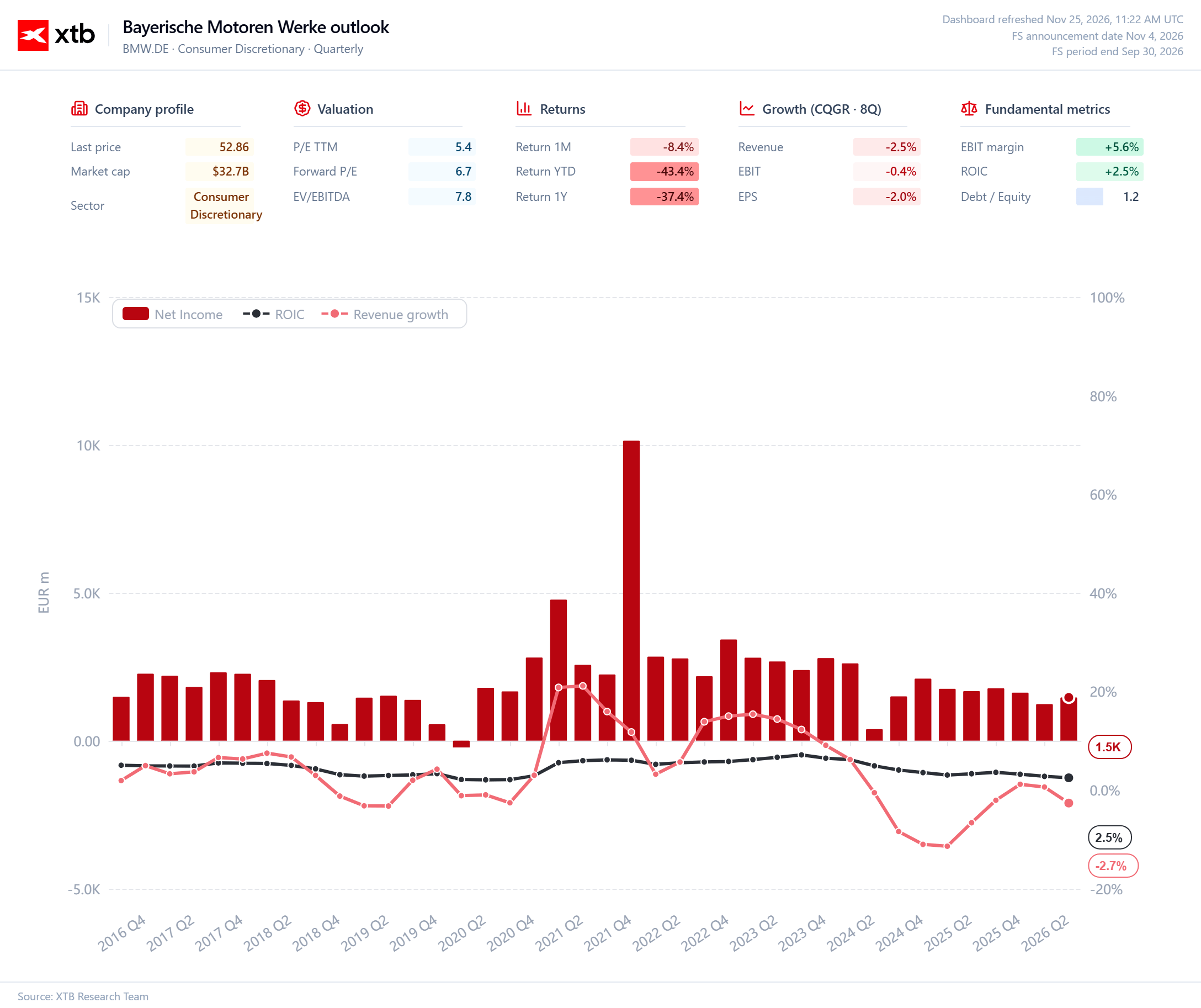
From shareholders’ perspective, the most important consequence of the new regulations may prove to be not so much regaining market share as reducing the need to compete on price. In an industry characterized by a high share of fixed costs, a simultaneous improvement in average selling prices and capacity utilization can lead to a disproportionately large increase in operating profits.
According to Citi analysts, Renault could be a particular beneficiary of the regulations, as its exposure to Europe’s mass-market segment makes it especially vulnerable to competition from Chinese brands. The bank also points to potential price improvement in the fleet sales segment. At the same time, analysts note that it is still too early to raise forecasts for volumes and margins.
However, the regulations are not without costs for European groups themselves. Quotas are allocated by the country of origin of the vehicle, not by the nationality of the manufacturer. The restrictions will therefore also cover part of the production of European brands carried out in Turkey, Morocco, or China.
The strong stock market reaction reflects improved profitability prospects for the sector, but not necessarily its long-term competitiveness. Europe may limit imports of cheaper cars, but it cannot permanently eliminate the cost advantage of their manufacturers in this way.


BREAKING: Germany accelerates, France slows down. PMIs show widening gap



🔴Morning Wrap: Technical rebound after AI crash and Asian interventions


Market Wrap: Global stocks post 7th consecutive session of losses, Anthropic failed to reassure the market (20.11.2026)

Gold loses a third of its value. It's liquidity and the Fed, not peace in Shenzhen
The content of this report has been created by XTB S.A., with its registered office in Warsaw, at Prosta 67, 00-838 Warsaw, Poland, (KRS number 0000217580) and supervised by Polish Supervision Authority ( No. DDM-M-4021-57-1/2005). This material is a marketing communication within the meaning of Art. 24 (3) of Directive 2014/65/EU of the European Parliament and of the Council of 15 May 2014 on markets in financial instruments and amending Directive 2002/92/EC and Directive 2011/61/EU (MiFID II). Marketing communication is not an investment recommendation or information recommending or suggesting an investment strategy within the meaning of Regulation (EU) No 596/2014 of the European Parliament and of the Council of 16 April 2014 on market abuse (market abuse regulation) and repealing Directive 2003/6/EC of the European Parliament and of the Council and Commission Directives 2003/124/EC, 2003/125/EC and 2004/72/EC and Commission Delegated Regulation (EU) 2016/958 of 9 March 2016 supplementing Regulation (EU) No 596/2014 of the European Parliament and of the Council with regard to regulatory technical standards for the technical arrangements for objective presentation of investment recommendations or other information recommending or suggesting an investment strategy and for disclosure of particular interests or indications of conflicts of interest or any other advice, including in the area of investment advisory, within the meaning of the Trading in Financial Instruments Act of 29 July 2005 (i.e. Journal of Laws 2019, item 875, as amended). The marketing communication is prepared with the highest diligence, objectivity, presents the facts known to the author on the date of preparation and is devoid of any evaluation elements. The marketing communication is prepared without considering the client’s needs, his individual financial situation and does not present any investment strategy in any way. The marketing communication does not constitute an offer of sale, offering, subscription, invitation to purchase, advertisement or promotion of any financial instruments. XTB S.A. is not liable for any client’s actions or omissions, in particular for the acquisition or disposal of financial instruments, undertaken on the basis of the information contained in this marketing communication. In the event that the marketing communication contains any information about any results regarding the financial instruments indicated therein, these do not constitute any guarantee or forecast regarding the future results.