


The collaboration between Samsung Electronics and Nvidia is entering a new phase that could significantly impact the semiconductor market and the stock performance of both companies. The two corporations have decided to expand their existing supplier-client relationship into a strategic research and development project covering next-generation memory and AI-based networking solutions. This partnership allows both companies not only to jointly develop cutting-edge technologies but also to strengthen their position within the global semiconductor and AI infrastructure ecosystem. This move sends a clear signal to investors that Samsung and Nvidia aim not only to maintain technological leadership but also to set the standards for the next decade of memory and computing infrastructure development.
Innovations in NAND Memory
A central element of the collaboration is the development of NAND flash memory with enormous scaling potential. These types of memory offer higher density and performance while consuming less power, which is crucial for applications in machine learning, data centers, and next-generation graphics processors. Ferro-electric NAND technology is supported by AI-optimized tools, enabling more precise simulations and accelerating the development of new products. The successful implementation of this project could significantly increase Samsung’s competitive advantage and reinforce its role as a leader in the semiconductor memory segment.
Role in Developing AI-Native Networks
Another important aspect of the collaboration is the integration of Samsung’s networking solutions with Nvidia’s data processing acceleration. Samsung is testing vRAN and AI-RAN systems, which leverage artificial intelligence to optimize data flow in 5G and future 6G networks. Success in this area will enable the commercialization of new network services and open additional revenue streams for Samsung, particularly in the telecom operator segment and among enterprises relying on advanced AI infrastructure.
HB4 Memory Supplies for Nvidia
It is also worth noting that Samsung has already signed contracts to supply HB4 memory for Nvidia, which will play a key role in the company’s next-generation graphics processors. HB4 memory forms the foundation for Nvidia’s high-performance computing solutions and is critical for future products in the data center and AI segments. Including this type of memory in Samsung’s portfolio provides the company with stable revenue streams and a strategic position in Nvidia’s projects, potentially leading to further market value growth and a competitive advantage.
Market Implications and Investment Outlook
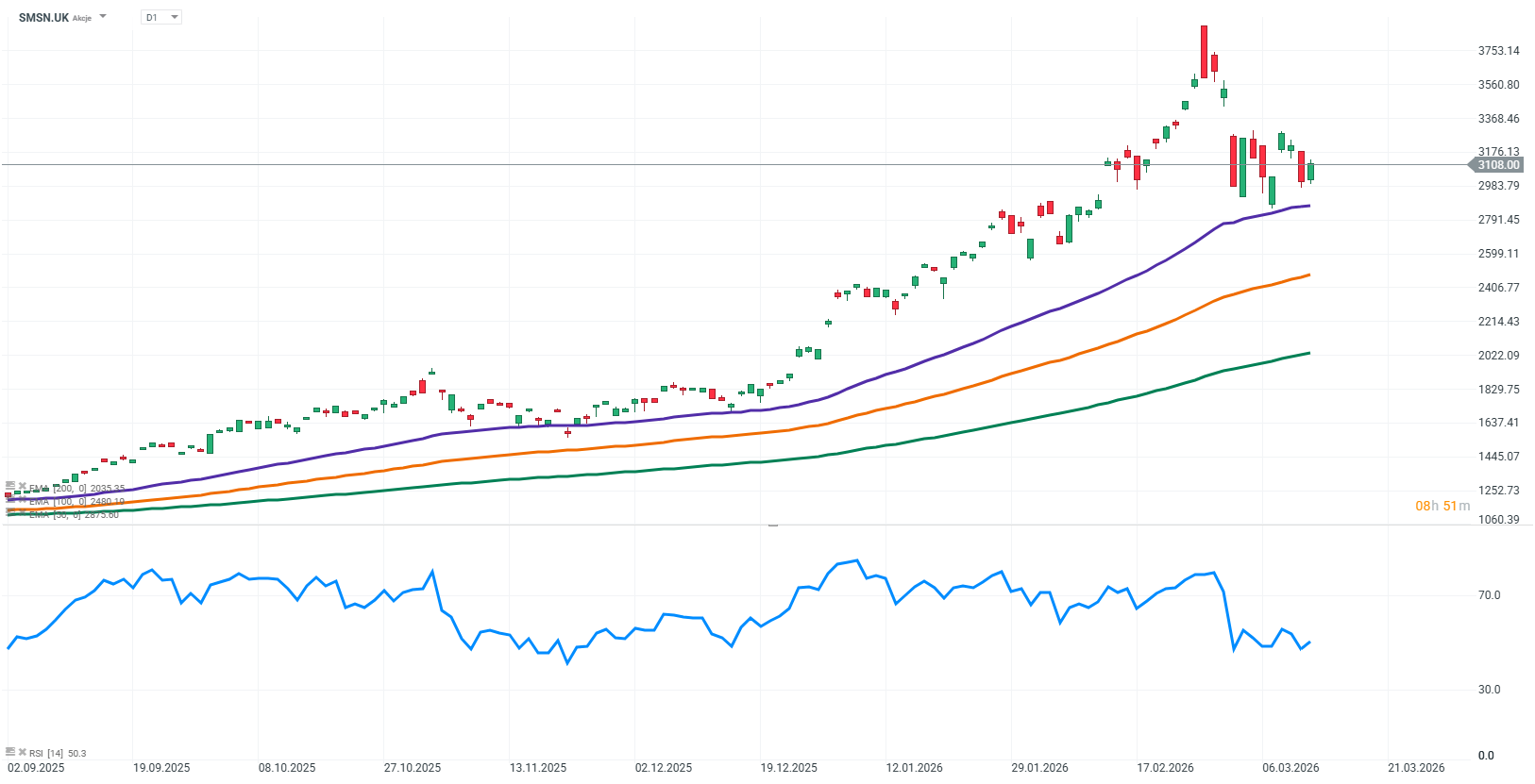
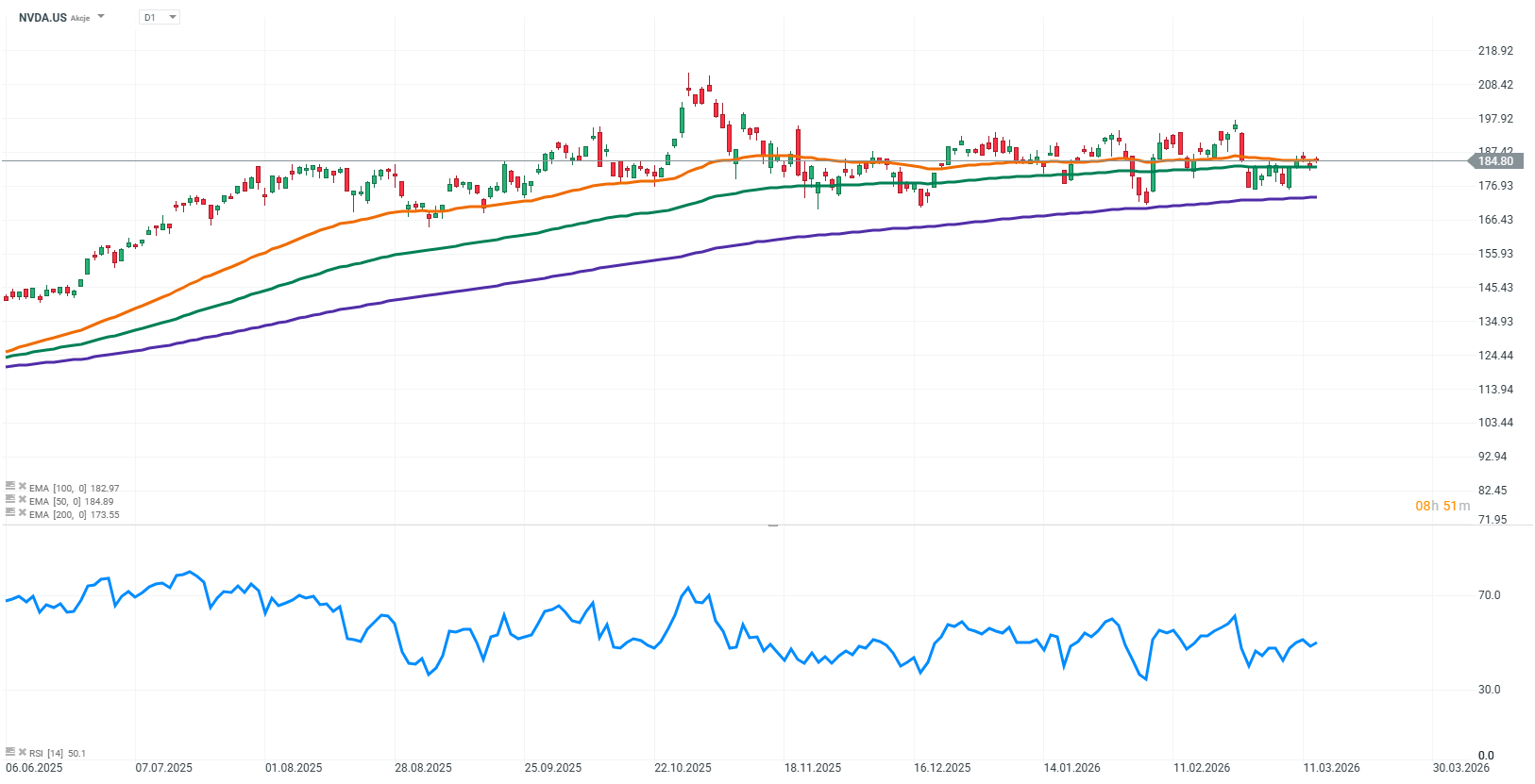
The long-term consequences of this partnership are significant for the semiconductor market. Samsung can expect increased demand for advanced memory and AI infrastructure solutions, as well as strengthened positioning against competitors such as SK Hynix and TSMC. For investors, this implies potential growth in expected revenues from high-performance memory products and networking services. At the same time, the success of this partnership requires effective technology commercialization and maintaining an edge over rising competition, which remains a key risk factor. This move is not hype or marketing noise; it lays the foundation for the next decade of AI infrastructure, where memory ceases to be a mere commodity and becomes a strategic element of competitive advantage.
Source: xStation5
Source: xStation5



Daily Summary: A Shallow Rebound Ahead of Earnings Season


Lumentum: Demand for AI infrastructure exceeds capacity



US OPEN: Trump de-escalates, OpenAI supports Wall Street sentiment


Morning Wrap: OpenAI Revenue Concerns Weigh on Wall Street
The content of this report has been created by XTB S.A., with its registered office in Warsaw, at Prosta 67, 00-838 Warsaw, Poland, (KRS number 0000217580) and supervised by Polish Supervision Authority ( No. DDM-M-4021-57-1/2005). This material is a marketing communication within the meaning of Art. 24 (3) of Directive 2014/65/EU of the European Parliament and of the Council of 15 May 2014 on markets in financial instruments and amending Directive 2002/92/EC and Directive 2011/61/EU (MiFID II). Marketing communication is not an investment recommendation or information recommending or suggesting an investment strategy within the meaning of Regulation (EU) No 596/2014 of the European Parliament and of the Council of 16 April 2014 on market abuse (market abuse regulation) and repealing Directive 2003/6/EC of the European Parliament and of the Council and Commission Directives 2003/124/EC, 2003/125/EC and 2004/72/EC and Commission Delegated Regulation (EU) 2016/958 of 9 March 2016 supplementing Regulation (EU) No 596/2014 of the European Parliament and of the Council with regard to regulatory technical standards for the technical arrangements for objective presentation of investment recommendations or other information recommending or suggesting an investment strategy and for disclosure of particular interests or indications of conflicts of interest or any other advice, including in the area of investment advisory, within the meaning of the Trading in Financial Instruments Act of 29 July 2005 (i.e. Journal of Laws 2019, item 875, as amended). The marketing communication is prepared with the highest diligence, objectivity, presents the facts known to the author on the date of preparation and is devoid of any evaluation elements. The marketing communication is prepared without considering the client’s needs, his individual financial situation and does not present any investment strategy in any way. The marketing communication does not constitute an offer of sale, offering, subscription, invitation to purchase, advertisement or promotion of any financial instruments. XTB S.A. is not liable for any client’s actions or omissions, in particular for the acquisition or disposal of financial instruments, undertaken on the basis of the information contained in this marketing communication. In the event that the marketing communication contains any information about any results regarding the financial instruments indicated therein, these do not constitute any guarantee or forecast regarding the future results.