



Producer Price Inflation (PPI) – Germany
• PPI inflation (m/m): actual -0.3% (forecast -0.2%, previous 0.3%)
• PPI inflation (y/y): actual 1.8% (forecast –, previous 2.2%)
Why are these data important?
Producer Price Inflation (PPI) in Germany measures changes in the prices of goods at the producer level, before they reach consumers. It is an important leading indicator for consumer inflation (CPI), as changes in production costs can eventually be passed on to final prices. Given Germany’s role as the largest economy in the euro area, PPI data are particularly important for assessing the future inflation outlook across the region.
A stronger-than-expected increase in PPI would indicate persistent cost pressures in the German economy and could limit the European Central Bank’s ability to ease monetary policy. On the other hand, weaker data, such as the latest reading showing a monthly decline in producer prices and a lower annual growth rate, suggest a gradual fading of inflationary pressures and provide the ECB with greater flexibility in its interest rate decisions.
PPI data are especially relevant in the current environment, as the German industrial sector continues to face weak demand and elevated operating costs. Continued disinflation could support a more dovish approach from the ECB, particularly if future releases confirm further moderation in price growth across the euro area.
The publication also has implications for financial markets. A stronger-than-expected rise in PPI could lead to higher European bond yields and support the euro through expectations of a more restrictive ECB policy stance. Conversely, weaker data pointing to limited price pressures could have the opposite effect, reinforcing expectations of a more accommodative monetary policy and potentially putting additional pressure on the euro.
What did the release show?
Germany’s PPI data pointed to a further easing of price pressures at the producer level, with the latest reading coming in weaker than market expectations. Producer prices declined by 0.3% month-over-month, compared with the expected drop of 0.2%, while the annual growth rate slowed to 1.8% from 2.2% previously.
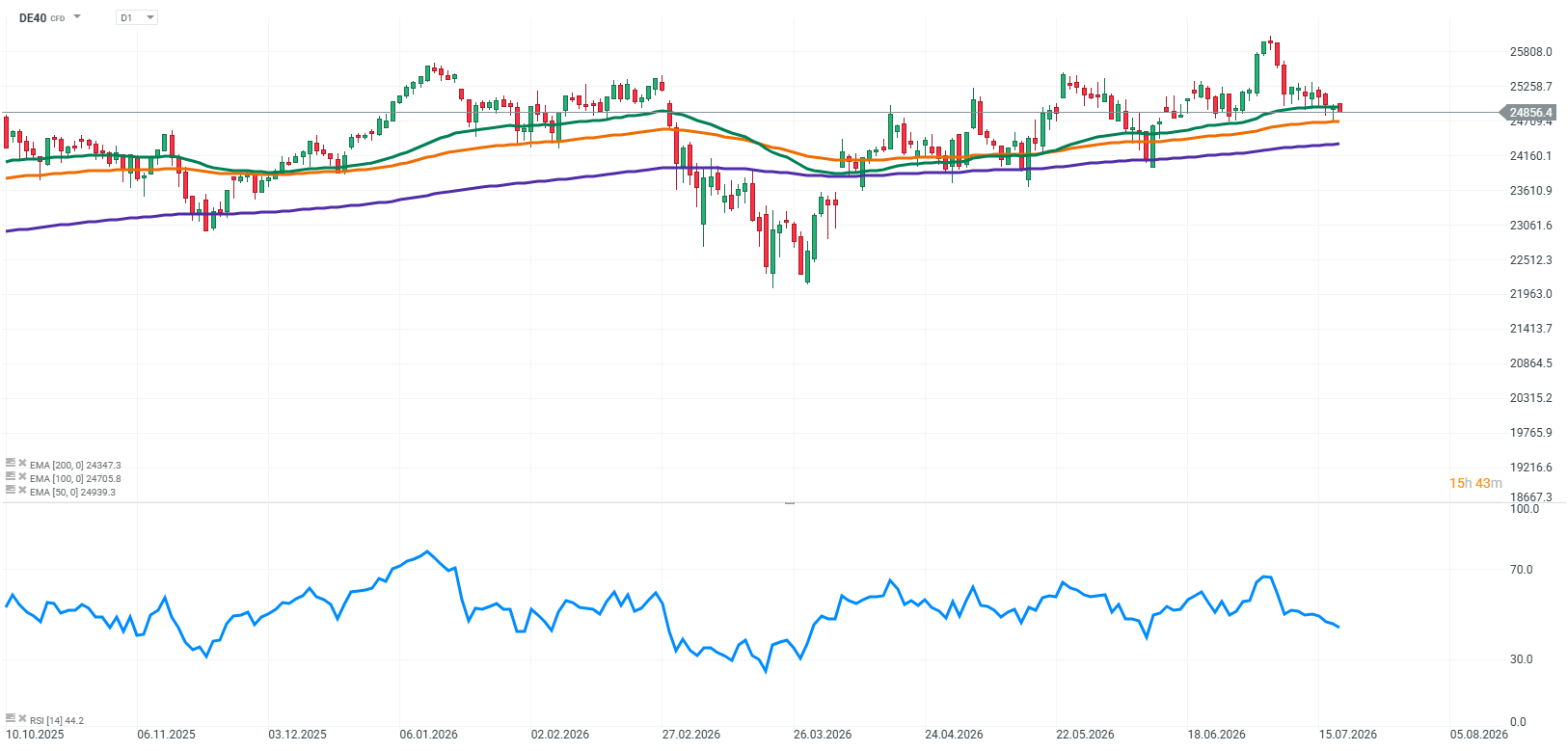
The data suggest that German companies continue to face limited ability to pass higher costs on to customers, reflecting weaker demand and ongoing challenges in the industrial sector. The release supports the narrative of gradually cooling inflationary pressures across the euro area and may strengthen expectations for a more cautious approach from the European Central Bank regarding monetary policy.
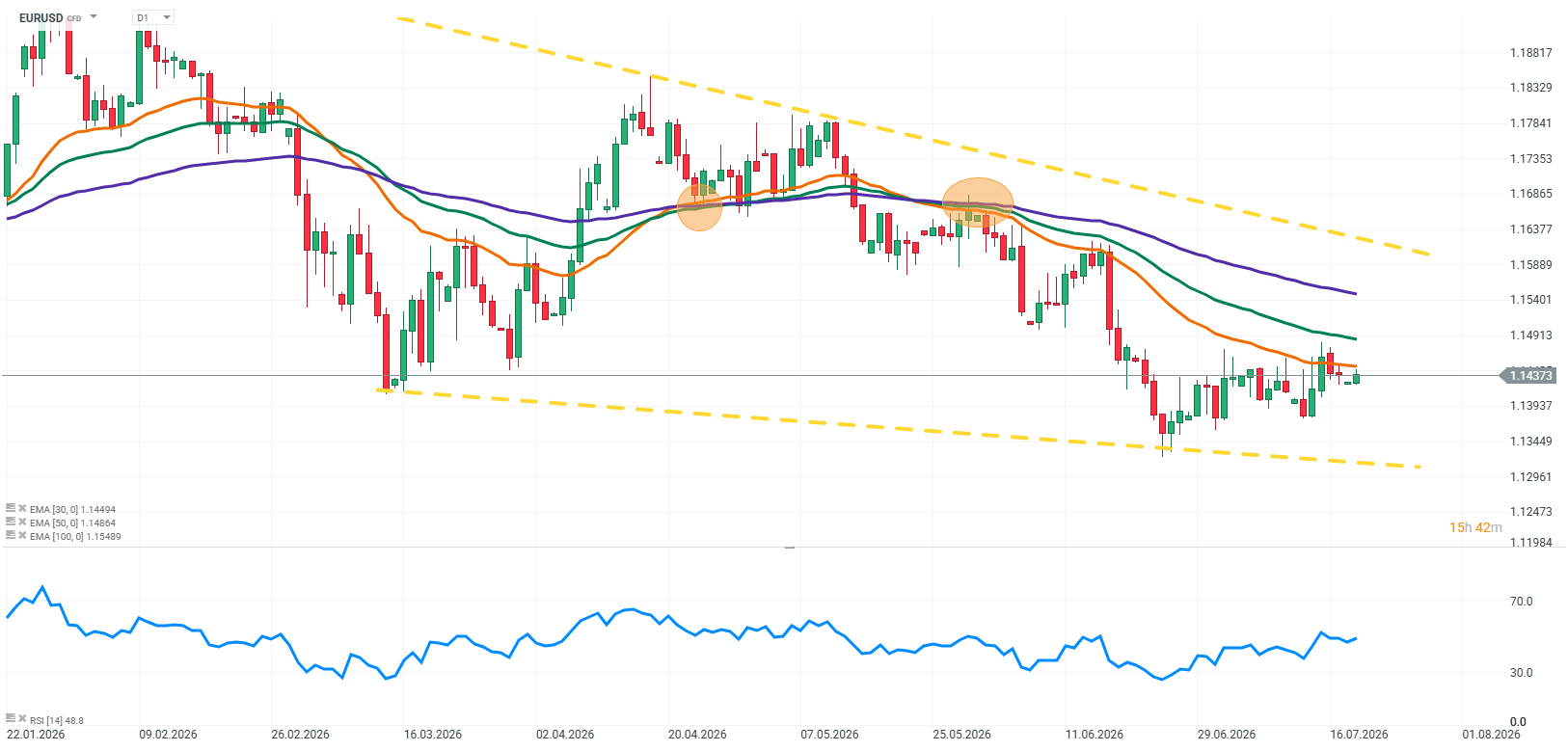
From a foreign exchange market perspective, the publication is moderately negative for the euro, as it confirms the absence of strong inflationary impulses and highlights continued weakness in the German economy.
Source: xStation5
Source: xStation5


🚩 US100 loses 0.7%


🖥️Chart of the Day - US100: Is the KOSPI crash a foretaste of Nasdaq's troubles?



Economic Calendar - Start of Wall Street Earnings Season, Hawkish RBA, and Middle East Tensions (13.10.2026)



Morning Wrap: Tech Crash in Asia and Hawkish Central Banks in the Shadow of an Oil Shock (13.10.2026)
The content of this report has been created by XTB S.A., with its registered office in Warsaw, at Prosta 67, 00-838 Warsaw, Poland, (KRS number 0000217580) and supervised by Polish Supervision Authority ( No. DDM-M-4021-57-1/2005). This material is a marketing communication within the meaning of Art. 24 (3) of Directive 2014/65/EU of the European Parliament and of the Council of 15 May 2014 on markets in financial instruments and amending Directive 2002/92/EC and Directive 2011/61/EU (MiFID II). Marketing communication is not an investment recommendation or information recommending or suggesting an investment strategy within the meaning of Regulation (EU) No 596/2014 of the European Parliament and of the Council of 16 April 2014 on market abuse (market abuse regulation) and repealing Directive 2003/6/EC of the European Parliament and of the Council and Commission Directives 2003/124/EC, 2003/125/EC and 2004/72/EC and Commission Delegated Regulation (EU) 2016/958 of 9 March 2016 supplementing Regulation (EU) No 596/2014 of the European Parliament and of the Council with regard to regulatory technical standards for the technical arrangements for objective presentation of investment recommendations or other information recommending or suggesting an investment strategy and for disclosure of particular interests or indications of conflicts of interest or any other advice, including in the area of investment advisory, within the meaning of the Trading in Financial Instruments Act of 29 July 2005 (i.e. Journal of Laws 2019, item 875, as amended). The marketing communication is prepared with the highest diligence, objectivity, presents the facts known to the author on the date of preparation and is devoid of any evaluation elements. The marketing communication is prepared without considering the client’s needs, his individual financial situation and does not present any investment strategy in any way. The marketing communication does not constitute an offer of sale, offering, subscription, invitation to purchase, advertisement or promotion of any financial instruments. XTB S.A. is not liable for any client’s actions or omissions, in particular for the acquisition or disposal of financial instruments, undertaken on the basis of the information contained in this marketing communication. In the event that the marketing communication contains any information about any results regarding the financial instruments indicated therein, these do not constitute any guarantee or forecast regarding the future results.