



USD Index (USDIDX) slides 0.5%, resuming downtrend following announced opening of the Strait of Hormuz.
Despite limited volatility at the start of the session, the FX market grew turbulent at the very end of the week in response to a report published by Axios regarding a negotiated 3-page peace plan between Iran and the USA. The announcement by the Iranian Foreign Minister of the full opening of the Strait of Hormuz sealed the deal, deepening the dollar's decline and triggering euphoria across equity markets.
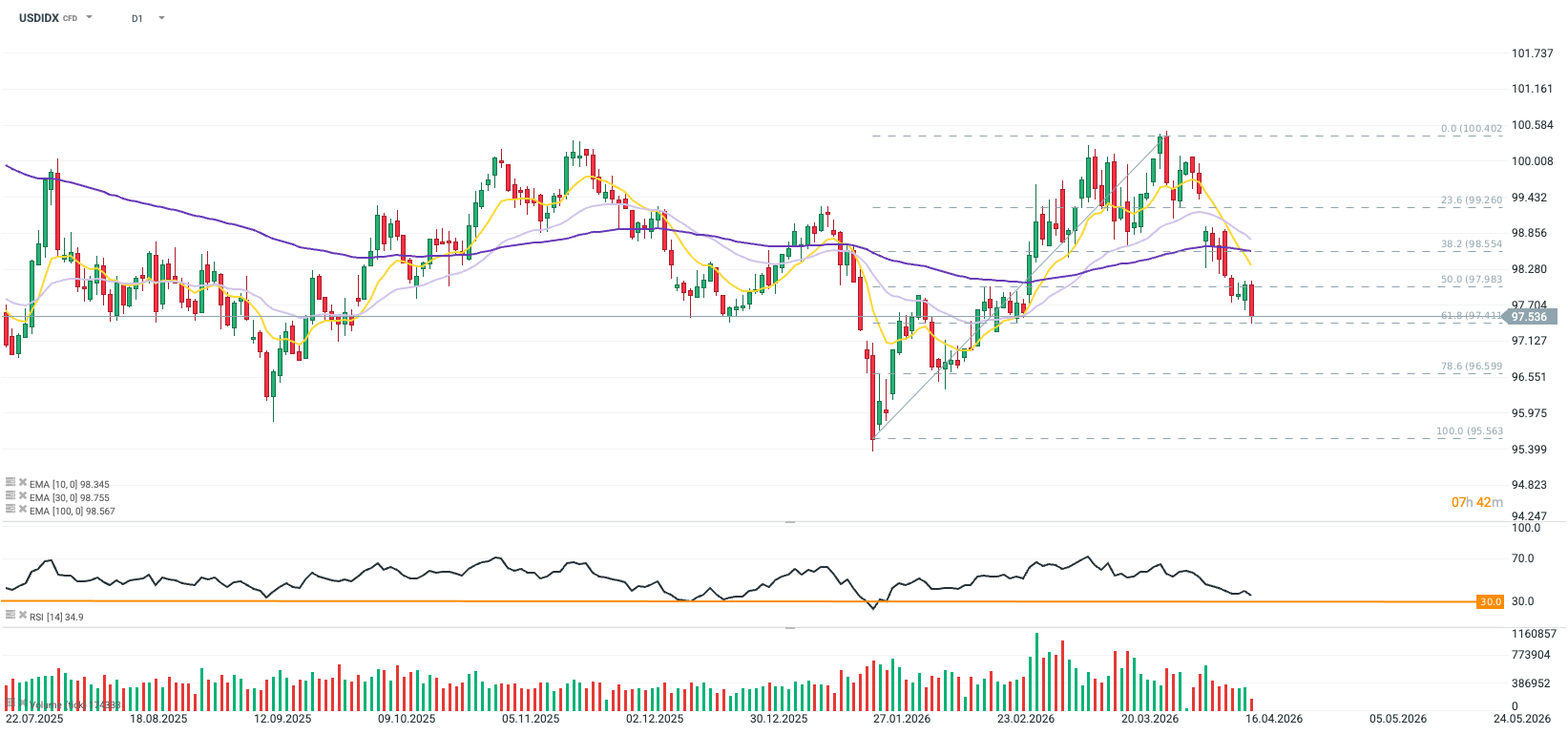
The collapse in oil contracts pulled the dollar down with it, as the greenback surrendered gains accumulated due to geopolitical uncertainty. USDIDX is trading at its lowest level in over 1.5 months, and bearish momentum is confirmed by the EMA10 crossing below the EMA30 and EMA100. The RSI has not yet dropped below the overbought threshold, although the price has stalled at the 61.8% Fibonacci retracement level of the recent upward wave. Source: xStation5
EURUSD at 2-month highs
With the outbreak of the war in Iran, discussions returned regarding potential euro-dollar parity in the event of a sustained stall in the European economic recovery. However, the market quickly priced in a return to normalcy, and EURUSD returned to the offensive shortly after breaking out of a local bottom near 1.1400. Currently, the pair is above 1.18, trading at levels seen before the Middle East conflict when the primary narrative was the market-anticipated return of U.S. interest rate cuts.
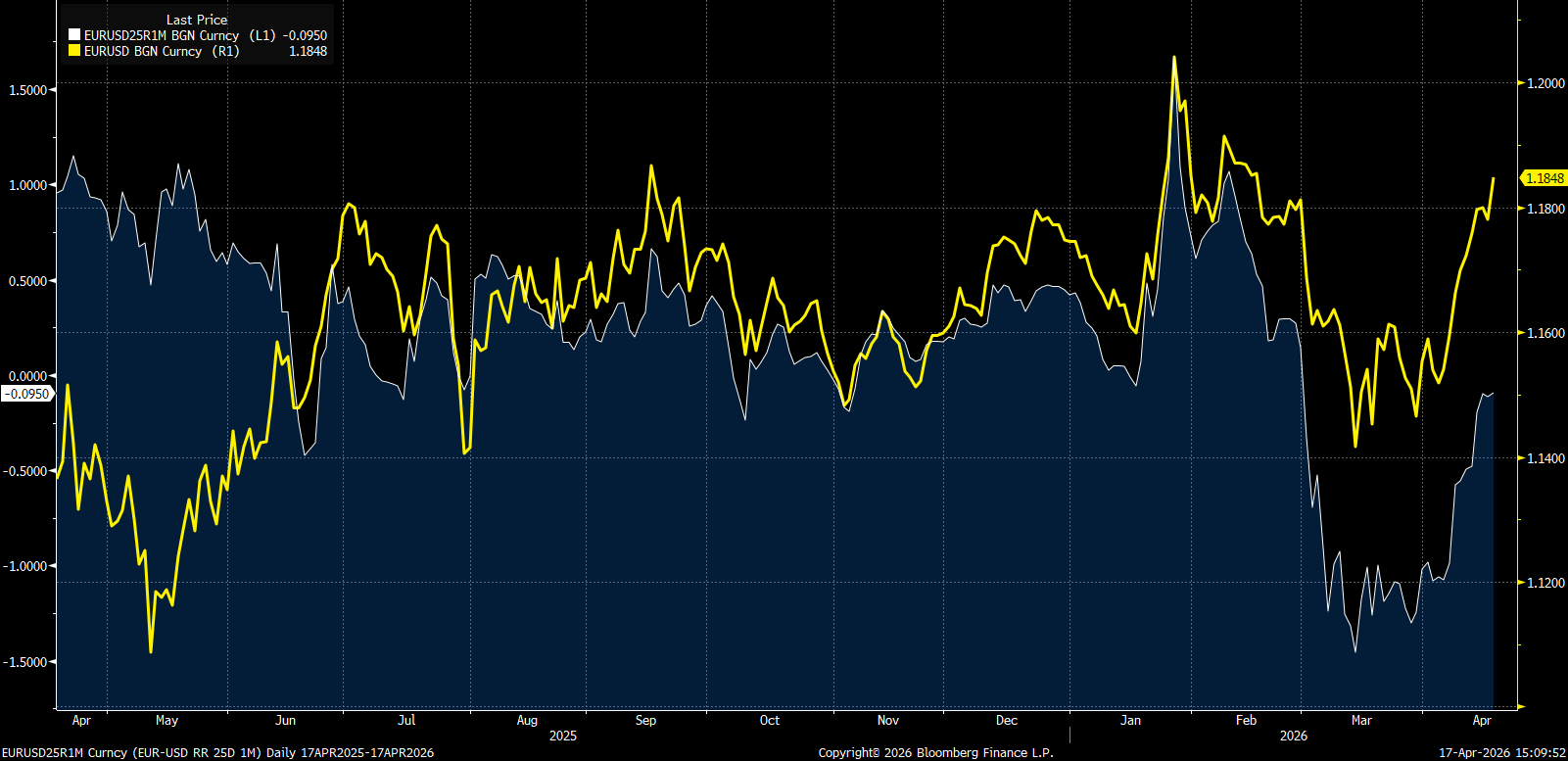
Alongside the gains in EURUSD (yellow), we are observing a very strong rebound in the Risk Reversal indicator in the options market (white). In other words, investors have abruptly stopped hedging against EURUSD declines (in this case, for a 1-month period). Source: Bloomberg Finance LP
Central banks return to center stage
With the gradual de-escalation of the Middle East conflict, monetary policy will once again become the primary driver of volatility in the FX market. For two weeks, we have observed a clear decline in bond yields on both sides of the Atlantic, suggesting that investors have been discounting a decrease in the risk of a long-term surge in energy prices—and thus a global return to rate hikes—for some time. The swap market has already abandoned pricing in U.S. rate hikes, while for the ECB, a 98% chance of a hawkish +25 bps move in July remains. Investor positioning was also bolstered by today’s statements from the ECB's Madis Muller, who "would not rule out a move in April." However, these words were spoken before the opening of the Strait of Hormuz, which should nonetheless explain the pressure on the bond spread between Germany and the US.
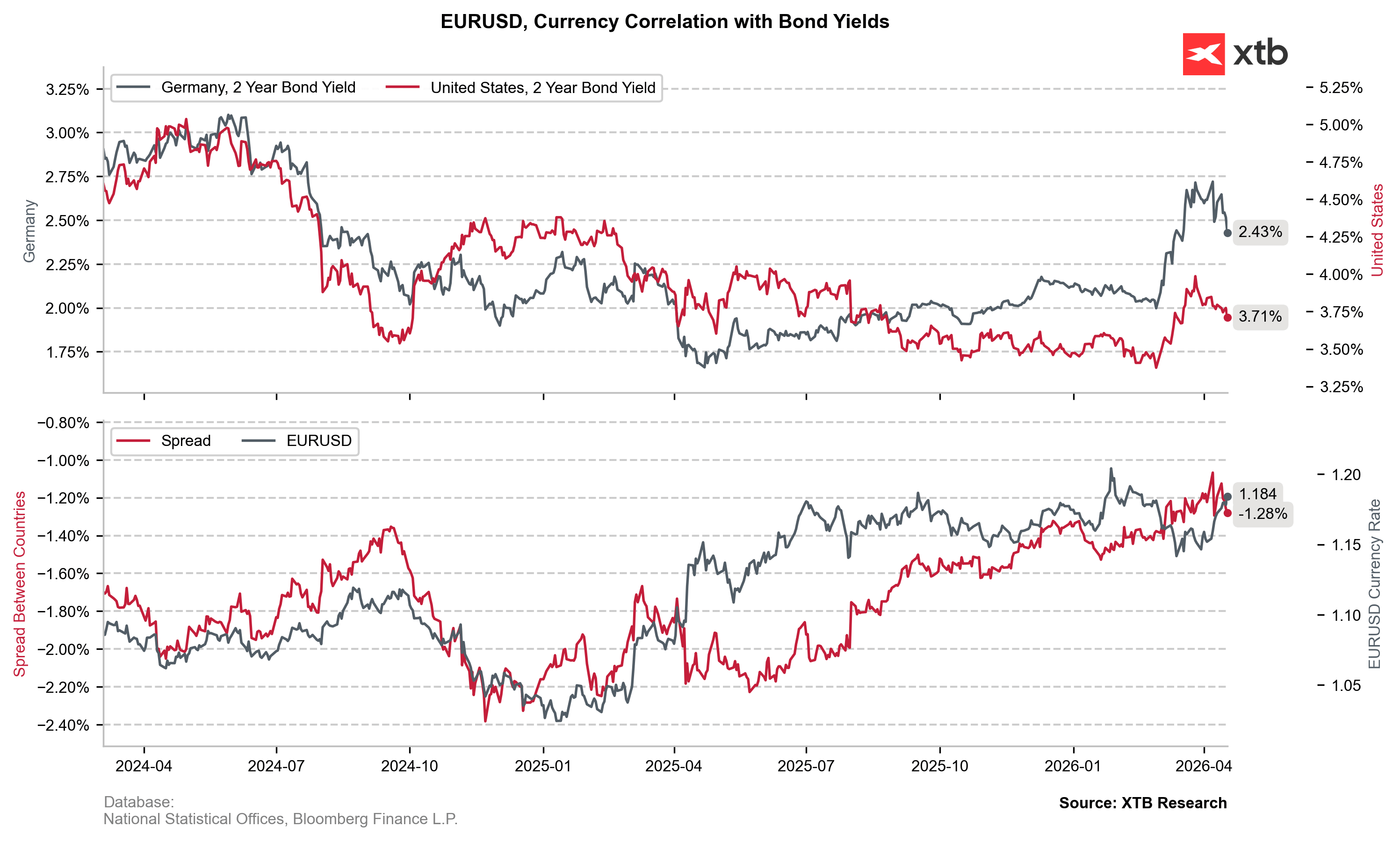
The EURUSD rate has effectively caught up with the spread between German and U.S. 2-year yields, which rose consistently despite the geopolitical chaos. While the potential end of the war and the opening of the Strait of Hormuz reduce the risk of rate hikes on both sides of the Atlantic, the ECB should remain relatively more hawkish than the Fed, for which the pre-war scenario involved further rate cuts—and consequently, downward pressure on the dollar. Source: XTB Research
Aleksander Jablonski
Quant Analyst, XTB



Three Markets to Watch Next Week (09.10.2026)



Daily Summary: A Shallow Rebound Ahead of Earnings Season



US OPEN: Trump de-escalates, OpenAI supports Wall Street sentiment

🔼 Gold gains 1.2%
The content of this report has been created by XTB S.A., with its registered office in Warsaw, at Prosta 67, 00-838 Warsaw, Poland, (KRS number 0000217580) and supervised by Polish Supervision Authority ( No. DDM-M-4021-57-1/2005). This material is a marketing communication within the meaning of Art. 24 (3) of Directive 2014/65/EU of the European Parliament and of the Council of 15 May 2014 on markets in financial instruments and amending Directive 2002/92/EC and Directive 2011/61/EU (MiFID II). Marketing communication is not an investment recommendation or information recommending or suggesting an investment strategy within the meaning of Regulation (EU) No 596/2014 of the European Parliament and of the Council of 16 April 2014 on market abuse (market abuse regulation) and repealing Directive 2003/6/EC of the European Parliament and of the Council and Commission Directives 2003/124/EC, 2003/125/EC and 2004/72/EC and Commission Delegated Regulation (EU) 2016/958 of 9 March 2016 supplementing Regulation (EU) No 596/2014 of the European Parliament and of the Council with regard to regulatory technical standards for the technical arrangements for objective presentation of investment recommendations or other information recommending or suggesting an investment strategy and for disclosure of particular interests or indications of conflicts of interest or any other advice, including in the area of investment advisory, within the meaning of the Trading in Financial Instruments Act of 29 July 2005 (i.e. Journal of Laws 2019, item 875, as amended). The marketing communication is prepared with the highest diligence, objectivity, presents the facts known to the author on the date of preparation and is devoid of any evaluation elements. The marketing communication is prepared without considering the client’s needs, his individual financial situation and does not present any investment strategy in any way. The marketing communication does not constitute an offer of sale, offering, subscription, invitation to purchase, advertisement or promotion of any financial instruments. XTB S.A. is not liable for any client’s actions or omissions, in particular for the acquisition or disposal of financial instruments, undertaken on the basis of the information contained in this marketing communication. In the event that the marketing communication contains any information about any results regarding the financial instruments indicated therein, these do not constitute any guarantee or forecast regarding the future results.